The Insane Planning That Went Into Full Metal Jacket’s Unique Cinematography
15 Jan 2022 Leave a comment
in movies
The Fake Buildings That Hide LA’s Massive Oil Industry
15 Jan 2022 Leave a comment
in energy economics, environmental economics Tags: oil pollution
Joe Biden’s Suicidal Energy Bill Threatens to Destroy America’s Power Grid
14 Jan 2022 Leave a comment

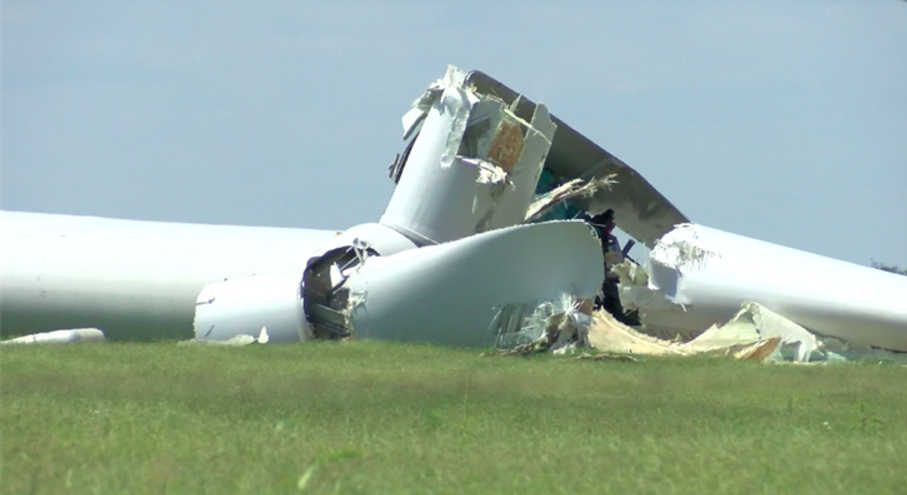
From the outside it looks like treason, to the insider it’s merely the extension of the most massive subsidy scam in history. For nearly 40 years, the wind and solar industries have been telling us that they’ll soon be standing on their own two feet. But their greatest fear is being given the chance to actually do so.
The renewable energy rent seekers traipsing the halls of power in Washington are desperate to ensure that the subsidies upon which the greatest economic and environmental fraud of all time critically depend are extended in perpetuity.
With the Squad firmly in charge, and Joe Biden wandering the Oval Office in a befuddled daze, crony capitalists have already given a list of demands to Democrats ready to deliver: decade-long extensions of the Federal tax credits that will allow wind and solar generators to continue to profit obscenely at taxpayers’ expense.
Alex Epstein describes…
View original post 828 more words
Socialism(s) – Part Two
14 Jan 2022 Leave a comment

Sweden’s Imaginary Socialism as a Non-Model
Part One of this essay was posted a couple of days ago. In it, I reviewed some of the avatars and zombies of the vague words “socialist” and “socialism.” I arrived at the inescapable conclusion that Sen. Sanders “democratic socialism” means only Scandinavian and, specifically, Swedish “socialism.” I look at that social and fiscal arrangement below.
First, let me say that Sweden is a good place to live; it’s a very civilized country. I just don’t know in what sense it’s “socialist.” Center-left parties took part in governing the country for most of the 20th century, true. Yet, little of Swedish commerce or industry is nationalized, or in any way public property. The Swedish government tends not to be invasive with regulations or direct intervention. Sweden even ranks a little higher than the US in “business freedom” on the 2016 (international) Index of…
View original post 1,289 more words
Climate Realism & Alarmism, with Bjorn Lomborg & David Wallace-Wells
14 Jan 2022 Leave a comment
in energy economics, environmental economics, global warming Tags: climate alarmism
Yes, Starve the Beast
14 Jan 2022 Leave a comment

As part of a recent discussion with Gene Tunny in Australia, I explained why I support “Starve the Beast,” which means keeping taxes as low as possible to help achieve the goal of spending restraint.
The premise of Starve the Beast is very simple.
Politicians like to spend money and they don’t particularly care whether that spending is financed by taxes or financed by borrowing (both bad options).
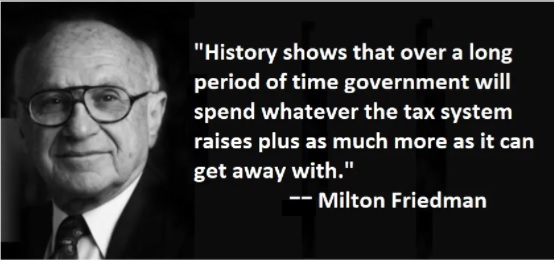 As Milton Friedman sagely observed, that means they will spend every penny they collect in taxes plus as much additional spending financed by borrowing that the political system will allow.
The IMF published a study on this issue about 10 years ago. The authors (Michael Kumhof, Douglas Laxton, and Daniel Leigh) assert that there’s no way of knowing whether Starve the Beast will lead to good or bad results.
…there is no consensus regarding the macroeconomic…
View original post 740 more words
Protecting our precious democracy: professors tutor PM on governance (and how “Treaty partnership” has been misinterpreted)
14 Jan 2022 Leave a comment

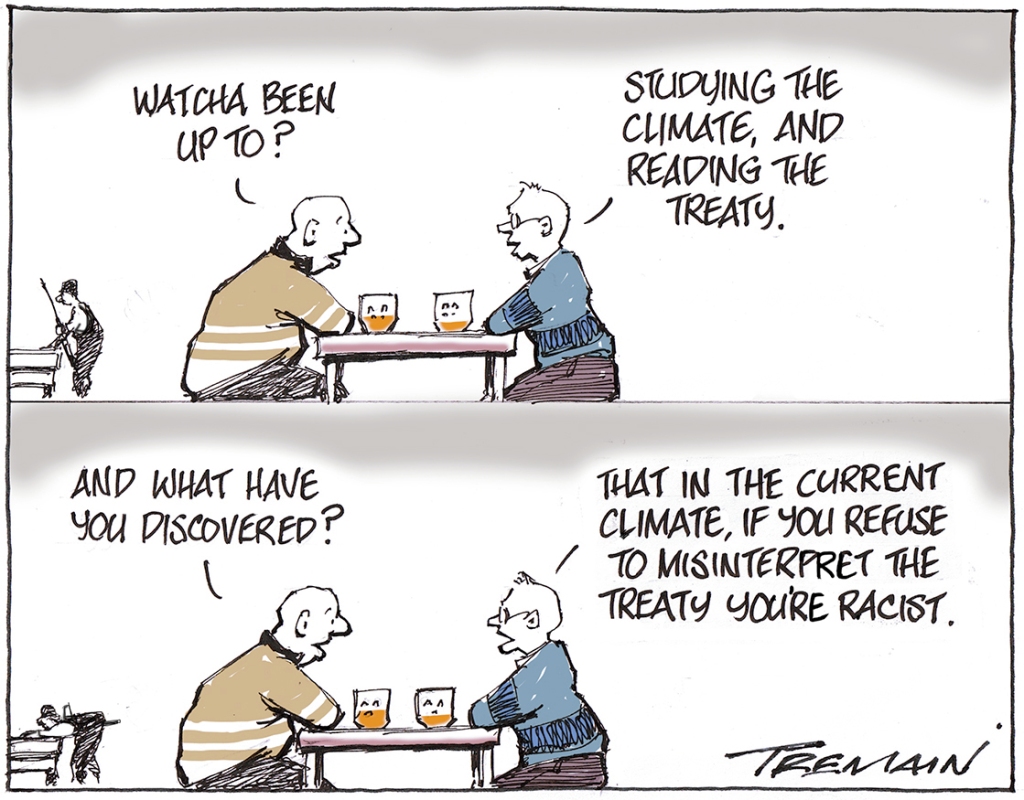
Dame Anne Salmond, a Distinguished Professor in anthropology at the University of Auckland and 2013 New Zealander of the Year, had good advice for the Ardern government in an article on the Three Waters plan and The Treaty.
She was writing about the comprehensive Three Waters reform and the manner in which it is being imposed on local authorities, making nonsense of any notion they and the citizenry are being consulted.
This must be an opportunity for listening, not for a government imposing its view of water as ‘assets’, she urged in an article which concluded:
“In dealing with the Three Waters debate, the Sixth Labour Government should learn from the mistakes of the Fourth, and not try to operate by executive fiat.
“Democracy is too precious to be set aside, even by those with the best of intentions; and waterways are not ‘assets,’ but the lifeblood of the land.”
View original post 1,383 more words


Recent Comments