Redrawing of the political battle lines is foreshadowed
20 Dec 2021 Leave a comment

Covid-19 still dominates the news bulletins and there is only a shadowy outline of the political debate that will emerge in sharper focus as Christopher Luxon settles into the leadership of the National Party.
His supporters were encouraged by the bounce upward for National in the first sampling of public opinion since he took over. National rose to 33%, up 7%, in the Curia poll.
As Curia’s David Farrar noted, the overall gap between the centre-left and centre-right is basically unchanged at 6%, so the centre-right needs to pick up another 4% or so to be in a position to form a Government.
“The key difference to last month, is that people now want to hear from National, and both National and Labour are in the 30s.Also very noteworthy is Luxon’s ratings. He enters the Preferred PM ratings at 20% (Ardern 39%). That 20% rating is the highest outside an…
View original post 593 more words
Chile Election Week, Part IV: What’s at Stake in Today’s Vote?
20 Dec 2021 Leave a comment

Greetings from Santiago. Chileans vote today for a new president and there’s a risk that a Venezuelan-style leftist, Gabriel Boric, will prevail.
And that puts at risk the economic progress described in this video.
The video has a good discussion of Chile’s very successful system of private pensions (which will be in danger if Boric wins).
But it also points out how free trade helped create the prosperity of modern Chile.
And that narrative is confirmed by looking at Chile’s score from the Fraser Institute’s Economic Freedom of the World.
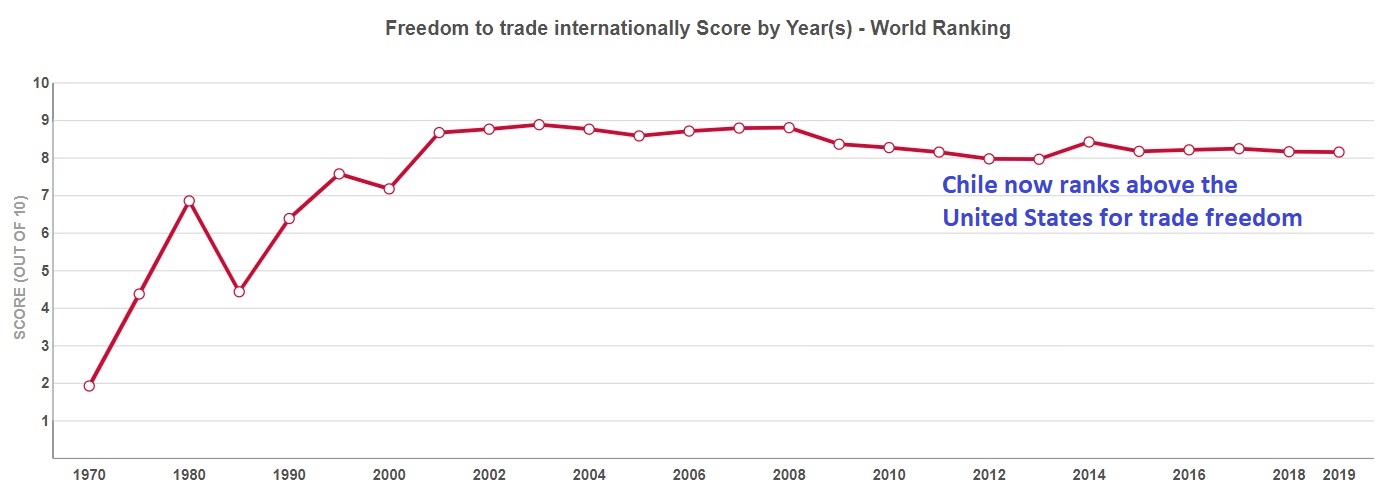
I’m always happy to sing the praises of free trade and condemn protectionism, but let’s keep the focus on today’s election in Chile and why it matters.
That’s why this tweet tells you everything you need to know.
Notice how Chile began to prosper after it began to shift to free markets around 1980 and notice…
View original post 146 more words
The Thames Barrier must never fail. Here’s why it doesn’t.
20 Dec 2021 Leave a comment
in economics of natural disasters, transport economics, urban economics Tags: London
A Career Anti-Fascist – George Orwell – WW2 Biography Special
20 Dec 2021 Leave a comment
in defence economics, laws of war, war and peace Tags: British empire, World War II
Why nuclear plants are shutting down
20 Dec 2021 Leave a comment
in energy economics, environmental economics
Southern American Territorial Disputes
20 Dec 2021 Leave a comment
in defence economics, international economic law, international economics, International law, law and economics Tags: economics of borders, maps
What If The U.S. Honored Its Native Treaties?
20 Dec 2021 Leave a comment
in defence economics, economic history, economics of bureaucracy, income redistribution, law and economics, politics - USA, property rights, Public Choice Tags: constitutional law
(Book Review) Keynes the Man by Murray Rothbard
19 Dec 2021 Leave a comment

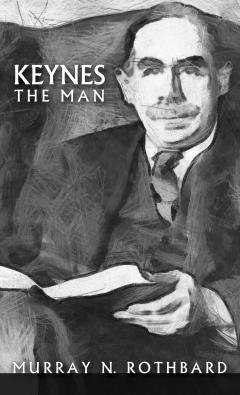
Considering that economics for the way it is taught within institutions of education is largely and homogeneously based on Keynesian theory and principles, it is important to understand John Maynard Keynes’s inspirations for his works in economics. One may inquire “‘For what reasons are understanding Keynes’s inspirations behind his works important to the field?.” Understanding Keynes, his theory, and his inspiration behind his theory is salient because endorsement of his theory is not limited to just academia and admiring scholars, but it has also affected the policies and actions politicians choose to adopt. Keynesian theory is not only the foundational basis on which economics is instructed in academia, but it is also the adumbration that policy-makers of both fiscal and monetary policy all around the world have referenced for nearly each and every decision they have birthed into existence since the mid 20th century..
Furthermore, since the world economy has…
View original post 589 more words
Chile Election Week, Part III: Death Knell for the Private Pension System?
19 Dec 2021 Leave a comment
One reason I’m interested in Chile’s election is that the leftist candidate, Gabriel Boric, wants to eviscerate the nation’s successful private pension system.
Bettina Horst of Libertad Y Desarrollo gave me her analysis.
As an economist and Executive Director of the nation’s pro-market think tank, Ms. Horst understands that Chile’s system has helped workers by giving them real ownership of real assets.
And that’s much better than “pay-as-you-go” systems, like we have in the United States.
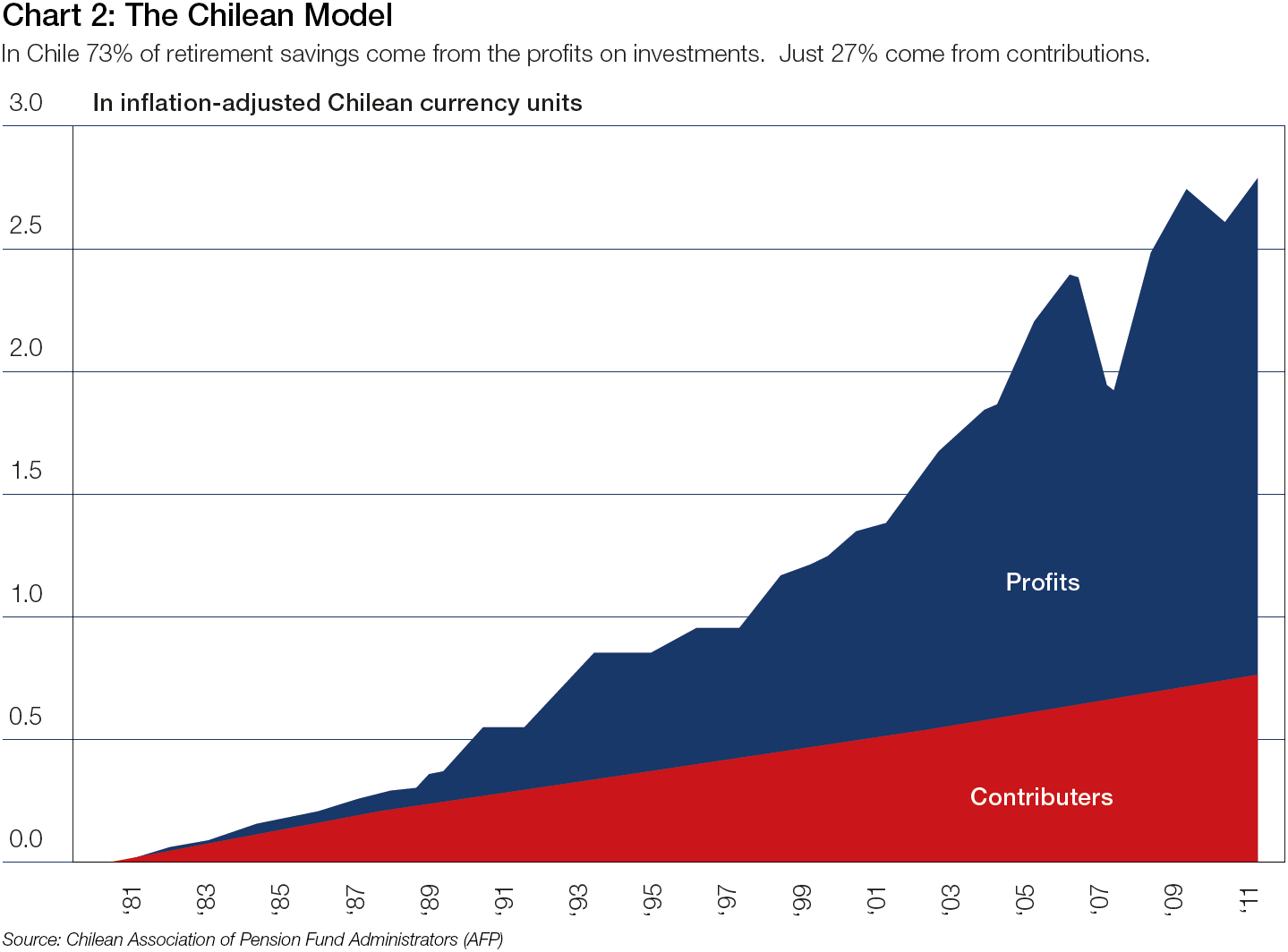 Chile’s private retirement accounts have enabled workers to build nest eggs, and the system has also provided a valuable source of capital for the nation’s economy.
So why would Chile’s voters consider a candidate like Boric, who wants to wreck that system?
We’ll find out Sunday night after the votes are counted, but a Boric victory would indicate that Chile’s workers decided to trust the free-lunch promises of a politician.
In
View original post 408 more words
Winter’s Inevitable Wind & Solar Output Collapses Guarantee More Deadly Blackouts
19 Dec 2021 Leave a comment

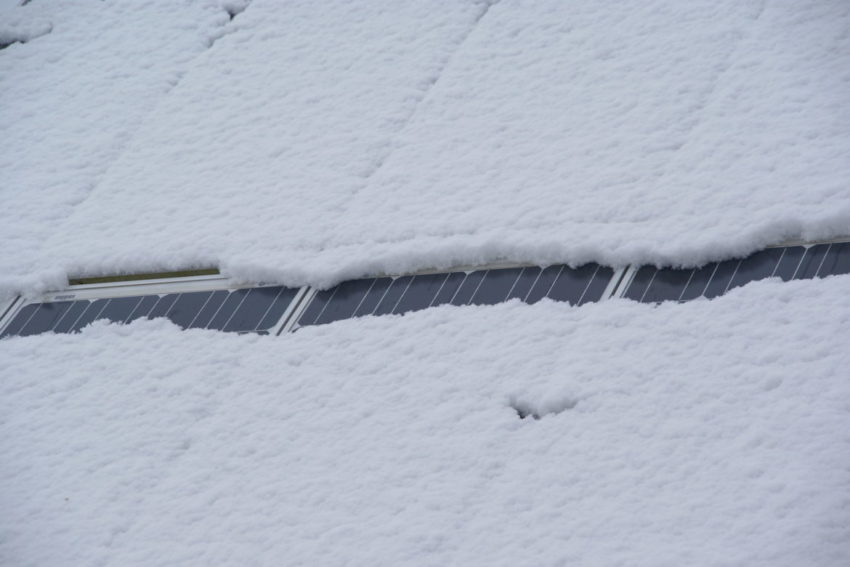
As another northern winter bites, it’s worth revisiting the deadly renewable energy calamity that hit America’s heartland back in February. Hundreds died in freezing homes, left without electricity thanks to hundreds of iced-up wind turbines, left frozen solid, and breathless frigid conditions that meant the remainder delivered no power, in any event. Solar fared no better, panels were plastered in snow and ice from horizon to horizon, delivering nothing but a twisted sense of virtue.
The Lone Star State – America’s wind and solar capital – was the worst hit. It took days to restore power to Texans, and hundreds of thousands of others across the Midwest were in the same perilous predicament.
The deadly catastrophe was as perfectly predictable as it was perfectly avoidable.
Had Texans maintained their reliance on ever-reliable coal, nuclear and gas, instead of obsessing about subsidised wind turbines and solar panels, the disaster would have…
View original post 853 more words
November 21, 1916: Death of Emperor Franz Joseph of Austria, King of Hungary
19 Dec 2021 Leave a comment

Franz Joseph I (August 18, 1830 – November 21, 1916) was Emperor of Austria, King of Hungary, Croatia, and Bohemia, and monarch of other states of the Austro-Hungarian Empire, from December 2, 1848 until his death. From May 1, 1850 to August 24, 1866 he was also President of the German Confederation. He was the longest-reigning ruler of Austria and Hungary, as well as the sixth-longest-reigning monarch of any country.
Franz Joseph was born August 18, 1830 in the Schönbrunn Palace in Vienna (on the 65th anniversary of the death of Franz of Lorraine, Holy RomanEmperorFranz I) as the eldest son of Archduke Franz Charles (the younger son of Holy Roman Emperor Francis II), and his wife Princess Sophie of Bavaria.
His mother, Princess Sophie of Bavaria (1805 – 1872) was born to King Maximilian I Joseph of Bavaria and his second wife Caroline of Baden. She was the identical…
View original post 804 more words


Recent Comments