Western Front Artillery At The Outbreak of World War 1 I THE GREAT WAR Special
08 Sep 2021 Leave a comment
in defence economics, war and peace Tags: World War I
The Untapped Potential of Nuclear Energy
08 Sep 2021 Leave a comment
in energy economics, environmental economics, global warming Tags: atomic energy
NAVY WORLD WAR II SURVIVAL FILM PART 1
08 Sep 2021 Leave a comment
in defence economics, movies, war and peace Tags: World War II
William I the Conqueror as King of the English. Part V.
07 Sep 2021 Leave a comment

Language
One of the most obvious effects of the conquest was the introduction of Anglo-Norman, a northern dialect of Old French with limited Nordic influences, as the language of the ruling classes in England, displacing Old English. Norman French words entered the English language, and a further sign of the shift was the usage of names common in France instead of Anglo-Saxon names. Male names such as William, Robert, and Richard soon became common; female names changed more slowly.
The Norman invasion had little impact on placenames, which had changed significantly after earlier Scandinavian invasions. It is not known precisely how much English the Norman invaders learned, nor how much the knowledge of Norman French spread among the lower classes, but the demands of trade and basic communication probably meant that at least some of the Normans and native English were bilingual. Nevertheless, William the Conqueror never developed a working…
View original post 482 more words
Edith Eleanor McLean- The 1st incubator baby.
07 Sep 2021 Leave a comment

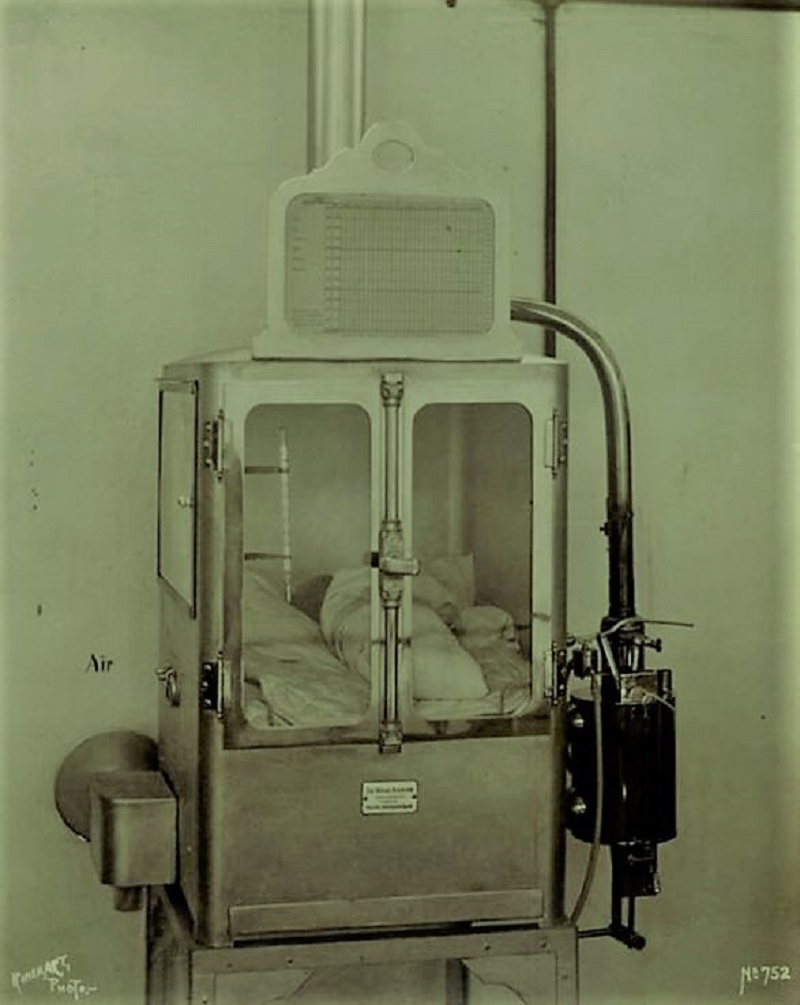
Seeing babies in incubators nowadays is a fairly common sight.
Infant incubators are used to provide a warm environment for babies born prematurely or for other infants who are unable to maintain a normal body temperature. The infant incubator is a relatively small, glass-walled box that may have portholes fitted with long rubber gloves through which nurses can handle and care for the infant. Most infant incubators are fitted with special devices that can control the concentration of oxygen inside the incubator; this is necessary because some infants need either greater or lesser amounts of oxygen owing to particular diseases they may have. Infant incubators also regulate the humidity inside the enclosure.
The concept of the incubator was developed in France as early as 1857. The first device in the USA was built by William Champion Deming at the State Emigrant Hospital on Ward’s Island, New York.
The device was…
View original post 107 more words
Origins of the Holy Roman Empire. Conclusions
07 Sep 2021 Leave a comment
The Imperial title
Another aspect of examining the origins of the Holy Roman Empire is to examine the history of the Imperial title itself. In other words, the history of the title gives us some understanding of the history of the empire itself.
The Holy Roman Emperor’s standard designation was simply, originally and officially “August Emperor of the Romans.” In Latin this was translated as “Romanorum Imperator Augustus.” In native German the title was translated as Kaiser der Römer.
Let me expand on this a little further. In German-language historiography, the term Römisch-Deutscher Kaiser (“Roman-German Emperor”) is used to distinguish the title from that of Roman Emperor on one hand, and that of German Emperor (Deutscher Kaiser) on the other, the title held by the Hohenzollern Emperors from 1871 until 1918.
The English term “Holy Roman Emperor” is modern shorthand for “Emperor of the Holy Roman Empire” and not corresponding…
View original post 742 more words
Britain forced to fire up coal plant amid record power prices and winter squeeze
07 Sep 2021 Leave a comment
America’s Labor Laws Are (Relatively Speaking) Great for Workers
07 Sep 2021 Leave a comment

In my fantasy country of Libertaria, there is no Department of Labor, no regulation of employment contracts between consenting adults, and no favoritism for either labor or management.
In the real world, the relevant question is the degree of regulation and intervention. Especially compared to other nations, which is why the the Employment Flexibility Index is a useful measuring stick.
The Employment Flexibility Index is a quantitative comparison of regulatory policies on employment regulation in EU and OECD countries. …Higher values of the Employment Flexibility Index reflect more flexible labor regulations.
The good news, for American workers and American companies, is that the United States has the second-best system among developed nations, trailing only Denmark (another reason why pro-market people should appreciate that Scandinavian nation).
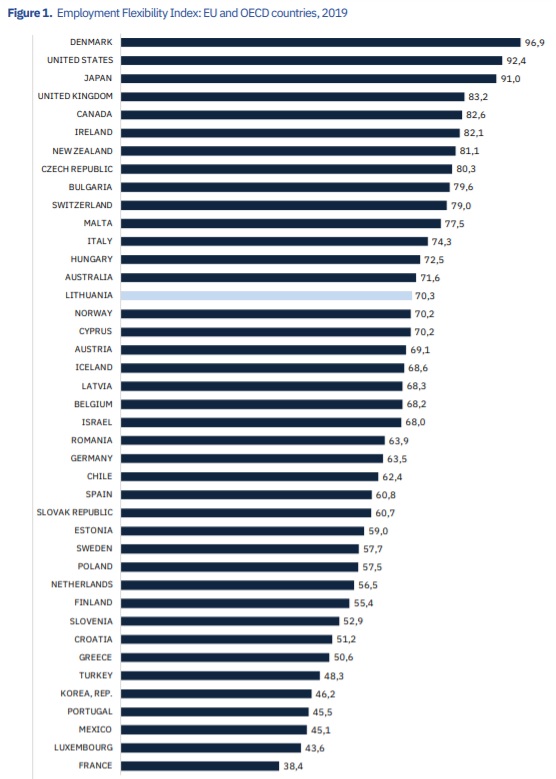
It’s hardly a surprise that France is in last place, notwithstanding President Macron’s attempt to push policy in the right direction.
It’s worth…
View original post 694 more words
6 Toilets From History, and What They Taught Us
07 Sep 2021 Leave a comment
in economics of media and culture


Recent Comments