Reflections on The Age of Empire: 1875 to 1914 by Eric Hobsbawm (1987)
21 Aug 2021 Leave a comment

Critique of Hobsbawm’s Marxisant approach
In the third of his mighty trilogy of histories of the long nineteenth century, The Age of Empire: 1875 to 1914, as in its two predecessors, Hobsbawm makes no attempt to hide his strongly Marxist point of view. Every page shouts his contempt for the era’s ‘bourgeois’ men of business, its ‘capitalists’ and bankers, the despicable ‘liberal’ thinkers of the period and so on. From time to time his contempt for the bourgeoisie rises to the level of actual abuse.
The most that can be said of American capitalists is that some of them earned money so fast and in such astronomic quantities that they were forcibly brought up against the fact that mere accumulation in itself is not an adequate aim in life for human beings, even bourgeois ones. (p.186)
Replace that final phrase with ‘even Jewish ones’ or ‘even Muslim ones’…
View original post 7,324 more words
Net zero switch threatens new oil shock, warns top economist
21 Aug 2021 Leave a comment

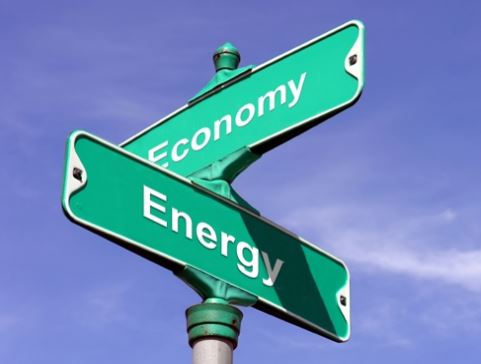 This economist clearly has faith in IPCC climate models and theories, but he may be in for his own shock by putting all his climate eggs in the carbon dioxide emissions basket. Meanwhile, brace for economic pain.
– – –
The vast expense of ending global warming [Talkshop comment: reality may differ] will trigger a blow to the world economy that is as damaging as the 1974 oil shock, a top international economist has warned. The Telegraph reporting.
A scramble to cut carbon emissions is likely to send energy prices rocketing and hold back living standards for years to come, Jean Pisani-Ferry said in a report published by the Peterson Institute for International Economics.
Mr Pisani-Ferry – a public policy expert who has served in senior economic roles in the European Union for decades – said that although the bill is both manageable and necessary to halt climate change…
View original post 234 more words
Rodney Dangerfield Steals the Show at the Oscars (1987)
20 Aug 2021 Leave a comment
in movies, television
Funding for lending
20 Aug 2021 Leave a comment

I was, conditionally, sympathetic to the Funding for Lending programme the Reserve Bank put in place late last year. At the time they thought (and it seemed plausible they were right) that more monetary stimulus was needed, and – through their own neglect and incompetence over several years – they asserted that a negative OCR could not yet be implemented. The announcement of the scheme clearly narrowed the gap between wholesale and retail interest rates, lowering the latter. This chart from this week’s MPS is one way of illustrating the point.
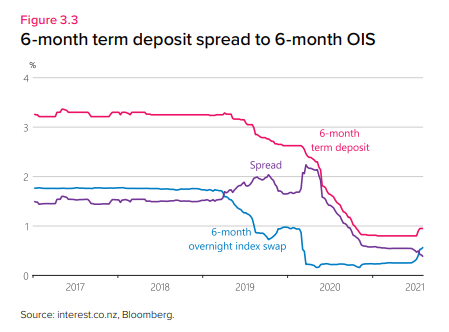
The effect was achieved by making it known the scheme was coming, and then available. Relatively little was actually borrowed, especially early in the piece.
The scheme works by offering funding to banks (only) at an interest rate equal to the OCR (floating rate, so the rate changes as the OCR does) for terms of three years. The loans…
View original post 1,324 more words
Rand Paul successfully debates Jake Tapper on climate change
20 Aug 2021 Leave a comment

When President Trump announced he would withdraw the United States from the Paris Climate Agreement, Kentucky U.S. Senator Rand Paul was interviewed by Jake Tapper on CNN. In this interview, Paul does a masterful job of not only defending the president’s decision but also overcoming Tapper’s climate alarmism.
August 19, 1596: Birth of Princess Elizabeth (Stuart) of England, Scotland and Ireland. Part I.
20 Aug 2021 Leave a comment

Elizabeth Stuart (August 19, 1596 – February 13, 1662) was Electress of the Palatinate and briefly Queen of Bohemia as the wife of Friedrich V of the Palatinate. Because her husband’s reign in Bohemia as King and in the Palatinate as Prince-Elector lasted for just one winter, Elizabeth is often referred to as the “Winter Queen”.
Elizabeth was the second child and eldest daughter of James I-VI, King of England, Scotland and Ireland, and his wife, Anne of Denmark. Anne of Denmark was the second daughter of daughter of King Frederik II of Denmark and Norway and Sophie of Mecklenburg-Güstrow. Elizabeth had two siblings, infancy: Henry Frederick, Prince of Wales, who predeceased his parents and James’s future successor, Charles I. Other siblings, Margaret (1598–1600), Robert Bruce Stuart, Duke of Kintyre and Lorne (January 18, 1602 – May 27, 1602), Mary Stuart (1605–1607), and Sophia (June 22, 1606 – June 23…
View original post 917 more words
Primitive Keynesianism from the Joint Economic Committee
20 Aug 2021 Leave a comment

Washington is filled with dishonest and self-serving analysis. Much of that shoddy output is driven by privileged groups seeking bailouts, subsidies, protectionism, or a tilted playing field.
- The health insurance and pharmaceutical companies supported Obamacare.
- Big agribusiness firms support farm subsidies.
- The big Wall Street Firms supported Dodd-Frank.
But that’s not the only type of dishonest and self-serving you find in Washington.
Let’s take the example of President Biden’s proposal to gut welfare reform with per-child handouts.
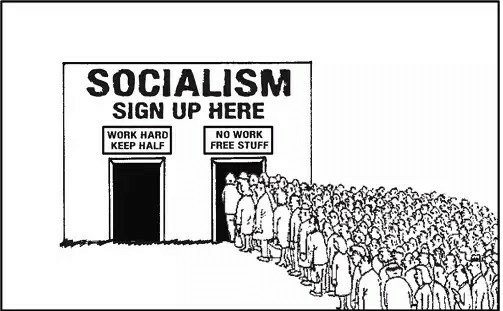 The micro-economic problem with that policy is that it reduces incentives to work – as illustrated by this Wizard-of-Id parody or this cartoon about socialism.
The macro-economic problem with that policy is that it’s part of a radical expansion in the burden of government that will make the U.S. more like Europe.
For today’s topic, though, I want to call attention to a recent…
View original post 308 more words
The iron law of electricity
20 Aug 2021 Leave a comment
“In 2019, the government’s Interim Climate Change Committee estimated 100% renewables could produce 100 times more blackouts than business as usual. “
Recalling a Parliament Already Dissolved? Not in Canada: the 43rd Parliament Is Dead
20 Aug 2021 Leave a comment


Introduction
On 15 August 2021, Prime Minister Boris Johnson requested that the Speaker recall the House of Commons from its summer recess early so that MPs could hold an emergency debate over the fallout of the American withdrawal from Afghanistan, which the Taliban took as an opportunity to recapture Kabul and to install themselves as the de facto government once more.[1]The House of Commons would originally have reconvened on 6 September under its regular sitting calendar but met instead on 18 August.[2] The Lords Speaker also recalled the House of Lords for the same day. The British House of Commons and House of Lords could meet to discuss the British response and efforts to evacuate their diplomatic personnel and refugees because the two houses had merely adjourned for their regular summer recess. The British House of Commons has cut short its adjournments in such a manner…
View original post 2,459 more words
Another Discussion with David Friedman about interesting ideas
20 Aug 2021 Leave a comment
in applied price theory, applied welfare economics, comparative institutional analysis, constitutional political economy, David Friedman, economics of crime, economics of education, economics of regulation, history of economic thought, industrial organisation, law and economics, liberalism, libertarianism, property rights


Recent Comments