The Second World Wars: How the First Global Conflict Was Fought and Won
20 Aug 2021 Leave a comment
in defence economics, laws of war, war and peace Tags: World War II
Why Justin Trudeau’s Snap Election in 2021 Does Not Break the Fixed-Date Elections Law
20 Aug 2021 Leave a comment

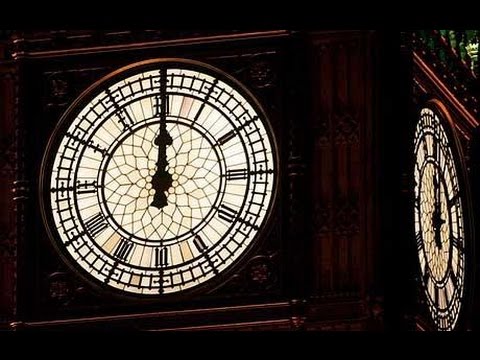
The Signs Pointing to a Snap Election, June to August 2021
Since at least mid-June, the media had treated an early election as a fait accompli, and politicians and political parties began acting as if the writ had already begun by early July. On 15 June, several MPs in the House of Commons delivered their “Farewell Speeches”, including Jack Harris (New Democratic Member for St. John’s East), Simon Marcil (Blocist Member for Mirabel), and Kate Young (Liberal Member for London West).[1]The very same day, Elections Canada announced that it could administer a general election during the pandemic without the statutory amendments contemplated by Parliament which ultimately died on the Order Paper on 15 August.[2]On 22 June, Prime Minister Trudeau denounced the 43rd Parliament for its “obstructionism and toxicity,” not the sort of thing that one would say in advance of a…
View original post 4,532 more words
Douglas Murray and His Continuing Fight against the “Madness of Crowds”
19 Aug 2021 Leave a comment
in economics of education, law and economics, liberalism, Marxist economics, politics - Australia, politics - New Zealand, politics - USA
On the MPS
19 Aug 2021 Leave a comment

In the end, of course, the bottom line of yesterday’s Reserve Bank announcement was unsurprising and perhaps inevitable – action deferred on account of Covid. It wasn’t as if they were on some statutory schedule, so they could easily have postponed the decision for a couple of weeks, but in the scheme of things the difference between that and waiting for the next scheduled review (6 October) isn’t great. It is clear from the Bank’s forecast numbers they had not been minded to raise the OCR by 50 basis points this time, so if need be they can always catch up by acting a bit more firmly in October.
There was even something to praise. The Bank had revamped the look of the document and – bad-wig new logo aside – it was a definite improvement, even if it is hard to be sure what (if anything) the front cover…
View original post 1,331 more words
F. A. Hayek on Monetary Policy, the Gold Standard, Deficits, Inflation, and John Maynard Keynes
19 Aug 2021 Leave a comment
in Austrian economics, business cycles, F.A. Hayek, history of economic thought, macroeconomics, monetary economics Tags: Keynesian macroeconomics, monetary policy
William I, the Conqueror, as King of the English. Part IV.
19 Aug 2021 Leave a comment

Elite replacement
A direct consequence of the invasion was the almost total elimination of the old English aristocracy and the loss of English control over the Catholic Church in England. William systematically dispossessed English landowners and conferred their property on his continental followers. The Domesday Book meticulously documents the impact of this colossal programme of expropriation, revealing that by 1086 only about 5 percent of land in England south of the Tees was left in English hands. Even this tiny residue was further diminished in the decades that followed, the elimination of native landholding being most complete in southern parts of the country.
Natives were also removed from high governmental and ecclesiastical office. After 1075 all earldoms were held by Normans, and Englishmen were only occasionally appointed as sheriffs. Likewise in the Church, senior English office-holders were either expelled from their positions or kept in place for their lifetimes and…
View original post 369 more words
The Wright Flyer: The Spectacular Birth of Modern Flight (That Many People Believed Was Fake)
19 Aug 2021 Leave a comment
in economic history, transport economics
Navigating the culture wars with Douglas Murray and Ayaan Hirsi Ali
19 Aug 2021 Leave a comment
in discrimination, economics of crime, gender, labour economics, law and economics, liberalism, Marxist economics, politics - Australia, politics - New Zealand, politics - USA Tags: free speech, Freedom of religion, political correctness, regressive left
German Defensive Strategy and Tactics At Passchendaele I THE GREAT WAR Special
19 Aug 2021 Leave a comment
in defence economics, war and peace Tags: World War I
Origins of the Holy Roman Empire. Part II.
19 Aug 2021 Leave a comment
Scholars generally concur, however, in relating an evolutionary process to the institutions and principles eventualy forming and constituting the empire, describing it as a gradual assumption of the imperial title and role of the emperor and the empire itself over the lands under its authority.
Let us delve deeper into the creation of the empire. First some background information leading to the rule of Charlemagne.
From the time of Roman Emperor Constantine I (r. 306–337), the Roman emperors had, with very few exceptions, taken on a role as promoters and defenders of Christianity. The reign of Constantine established a precedent for the position of the Christian emperor in the Church.
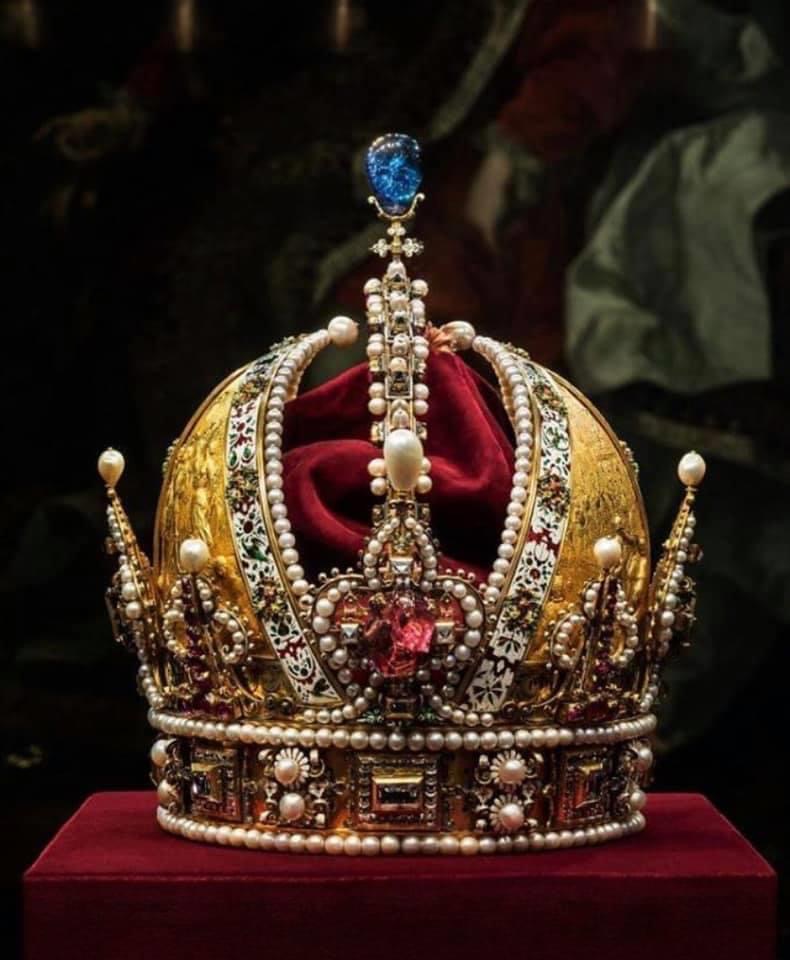 Roman Emperors considered themselves responsible to the gods for the spiritual health of their subjects, and after Constantine and his conversation to Christianity, the Emperors believed they had a duty to help the Church define and maintain orthodoxy. The emperor’s…
View original post 1,171 more words
Nineteen Eighty-Four by George Orwell (1949)
18 Aug 2021 Leave a comment

‘If you want a picture of the future, imagine a boot stamping on a human face — for ever.’
I read this when I was 16 in 1977. The Soviet Union still existed, Eastern Europe was ruled by communist dictatorships and England was visibly falling to pieces. The external situation was bad enough but being a teenager and new to this kind of adult literature, it scared the bejesus out of me, in fact it helped introduce me to what books could really do, their power to change your entire view of life.
Quite clearly Nineteen Eighty-Four is the summary towards which all of Orwell’s writings were heading. It brings together numerous themes, ideas and obsessions which thread through all his previous work:
- The theme of political lying, of the power of political propaganda if applied with ruthless consistency to utterly distort ‘the truth’ – something which Orwell had seen…
View original post 7,175 more words
The Age of Empire: 1875 to 1914 by Eric Hobsbawm (1987)
18 Aug 2021 Leave a comment
Summary
This is a very mixed bag of a book. The first quarter or so is a thrilling global overview of the main trends and developments in industrial capitalism during the period 1875 to 1914, containing a vast array of fascinating and often thrilling facts and figures. But then it mutates into a series of long, turgid, repetitive, portentous, banal and ultimately uninformative chapters about social change, the arts, sciences, social sciences and so on, which are dreadful.
And underlying it all is Hobsbawm’s unconcealed contempt for the nineteenth century ‘bourgeoisie’ and their ‘bourgeois society’, terms he uses so freely and with so little precision that they eventually degenerate into just being terms of abuse.
And in his goal of insulting the 19th century ‘bourgeoisie’ as much as possible, Hobsbawm glosses over a huge range of crucial differences – between nations and regions, between political and cultural and religious traditions…
View original post 6,250 more words


Recent Comments