How Taiwan held off Covid-19, until it didn’t
07 Jul 2021 Leave a comment
in health economics Tags: economics of pandemics
Wind & Solar ‘Powered’ Texans & Californians Face More Forced Power Rationing
06 Jul 2021 Leave a comment


Texans and Californians now have a choice between no power and getting their own diesel generators. Mass blackouts and power rationing are now the norm, thanks to an obsession with chaotically intermittent wind and solar, in both cases.
Back in February, it was a big freeze that froze turbines and plastered solar panels with blankets of snow and ice; some 4 million Texans were left powerless during that debacle.
Now as the weather heats up, it’s a case of déjà vu, all over again.
The California and Texas Greenouts
Wall Street Journal
Editorial
16 June 2021
Electric grid operators in Texas and California are again urging residents to conserve power amid a sweltering heat wave to avoid blackouts. Keeping your thermostat at 78 degrees during the summer may be the green new normal.
The Electric Reliability Council of Texas (Ercot) warned this week that a large number of unexpected power…
View original post 515 more words
ITS OFFICIAL – ‘WOKEISM’ RULES OK
06 Jul 2021 Leave a comment


Last night we were subjected to an extraordinary interview where the Human Rights Commissioner defended his decision to give taxpayer money to the Mongrel Mob in form of a koha, He said it would be ‘churlish’ of him not to do so. Then followed a long dissertation about koha being a form of respect with some obscure Maori academic weighing in that the idea of gift giving between parties shows mana to both parties … ‘if you do not give a gift then you are depleting their mana’.
What tosh. The Mongrel Mob are a criminal gang. They are major players in the manufacture, supply and distribution of illegal drugs along with a range of other criminal activity … just where does the Human Rights Commissioner think all those Harley-Davidsons replete with all the bells and whistles come from.
More evidence that Labour is a prisoner to woke thinking. Soft…
View original post 153 more words
Free-Market Health Care
06 Jul 2021 Leave a comment

Programs such as Medicare and Medicaid, along with the tax code’s healthcare exclusion, have created a system where consumers directly pay for only about 10 percent of the care they receive.
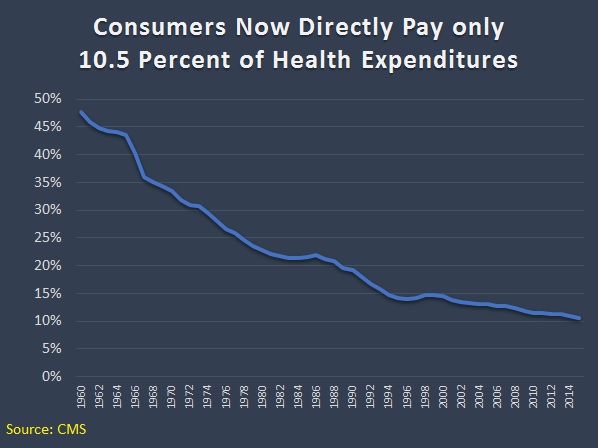 We think it’s normal and appropriate for either the government or an insurance company to foot the bill.
Yet this system of “third-party payer” explains why the health care system in the United States is inefficient and expensive.
Is it possible, though, to put the toothpaste back in the tube? Can we unwind the bad government policies that have undermined market forces?
There are certainly big-picture reforms that would be helpful. Genuine entitlement reform could address the problems with Medicare and Medicaid, and fundamental tax reform could get rid of the healthcare exclusion.
But progress is possible even without major policy change.
Reason interviewed a doctor, Lee Gross, who decided to set up a…
View original post 821 more words
French Senate blocks referendum on climate change
06 Jul 2021 Leave a comment

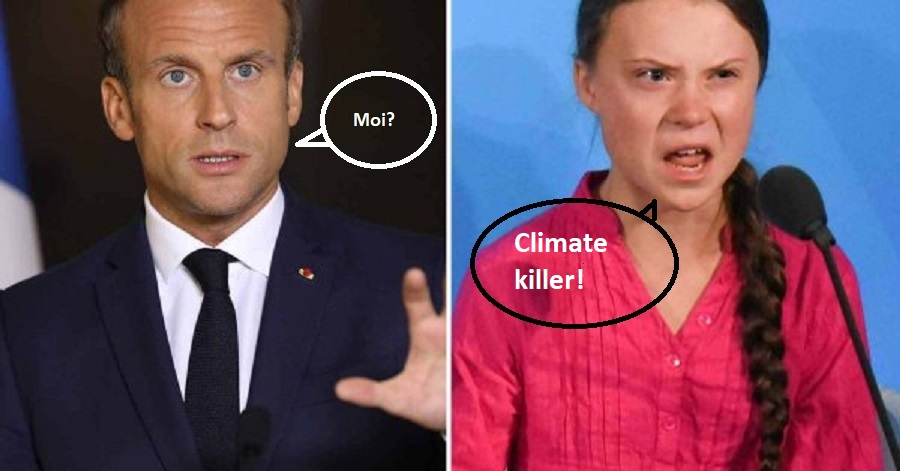 Since when were French Presidents, or any other leaders, in a position to ‘protect the planet’ or alter the weather? The sooner such obvious nonsense ends, the better.
– – –
Reuters: The French Senate has voted to block a referendum promised by President Emmanuel Macron on whether to enshrine the fight against climate change in the French constitution, it said in a statement on Monday.
Macron had pledged to organise such a vote in response to criticism that he has not done enough to protect the planet.
The Senate, the legislature’s upper house, is dominated by the opposition conservatives.
In May, it watered down draft legislation requiring the constitution to “guarantee” the fight against climate change, preferring less binding wording.
Continued here.

Long-term spending and revenue
06 Jul 2021 Leave a comment

The Public Finance Act requires that every four years The Treasury publishes a “statement on the long-term fiscal position” looking “at least” 40 years ahead. Parliament allowed them to defer the report due last year, but yesterday they published a draft – for consultation – of the report they will formally publish later this year. Quite why they have chosen to go through this additional step, of consulting formally on the draft of a report that is likely to have next to no impact even when finalised, is a little beyond me.
These long-term fiscal reports are fashionable around the world. As I’ve noted previously I was once quite keen on the idea, but have become much more sceptical. They take a lot of work/resource – which should be scarce, and thus comes at a cost of other analysis/advice The Treasury might work on – and really do little more…
View original post 2,193 more words
James Taylor – Fire And Rain (BBC In Concert, 11/16/1970)
06 Jul 2021 Leave a comment
in Music, television
Edward Glaeser & Paul Romer on Rapid Urbanization
06 Jul 2021 Leave a comment
in applied price theory, development economics, economic history, economics of bureaucracy, history of economic thought, human capital, industrial organisation, labour economics, labour supply, Public Choice, transport economics, urban economics
What Does “Keynesian” Mean?
05 Jul 2021 Leave a comment

Last week Simon Wren-Lewis wrote a really interesting post on his blog trying to find the right labels with which to identify macroeconomists. Simon, rather disarmingly, starts by admitting the ultimate futility of assigning people labels; reality is just too complicated to conform to the labels that we invent to help ourselves make sense of reality. A good label can provide us with a handle with which to gain a better grasp on a messy set of observations, but it is not the reality. And if you come up with one label, I may counter with a different one. Who’s to say which label is better?
At any rate, as I read through Simon’s post I found myself alternately nodding my head in agreement and shaking my head in disagreement. So staying in the spirit of fun in which Simon wrote his post, I will provide a commentary on his…
View original post 1,321 more words
Microfoundations (aka Macroeconomic Reductionism) Redux
05 Jul 2021 Leave a comment
In two recent blog posts (here and here), Simon Wren-Lewis wrote sensibly about microfoundations. Though triggered by Wren-Lewis’s posts, the following comments are not intended as criticisms of him, though I think he does give microfoundations (as they are now understood) too much credit. Rather, my criticism is aimed at the way microfoundations have come to be used to restrict the kind of macroeconomic explanations and models that are up for consideration among working macroeconomists. I have written about microfoundations before on this blog (here and here) and some, if not most, of what I am going to say may be repetitive, but obviously the misconceptions associated with what Wren-Lewis calls the “microfoundations project” are not going to be dispelled by a couple of blog posts, so a little repetitiveness may not be such a bad thing. Jim Buchanan liked to quote the following passage from…
View original post 2,609 more words
The Supreme Court ruling in Cherry/Miller (No.2), and the power of parliament
05 Jul 2021 Leave a comment

 This week’s Supreme Court judgment against Boris Johnson on parliament’s prorogation has shaken British politics and will be looked back on as a landmark case. Yet at the same time, Meg Russell argues, it simply reinforces the core principle of parliament’s centrality in our constitution. There has long been a myth of executive-dominance in the British system. Perhaps after this case, the fact that the government gains its power and authority from parliament will be better recognised – by those both inside and outside the system.
The Supreme Court’s judgment in the prorogation case was damning. Short of deciding that Boris Johnson had misled the Queen (which would be difficult to know, given private conversations) the court issued the strongest possible condemnation on all counts. The government had argued that prorogation was non-justiciable: i.e. not a matter in which the courts could get involved. The justices instead ruled it justiciable…
View original post 1,251 more words
Is the United States Defined by 1619 or 1776?
05 Jul 2021 Leave a comment
Since this is America’s Independence Day, I’m going to continue my tradition (see 2010, 2011, 2012, 2013, 2014, 2015, 2016, 2017, 2018, 2019, and 2020) of authoring a July 4-themed column.
What will make this year special, though, is that we’re going to tackle the heavy topic of whether the United States lives up to its own ideals.
Two years ago, the New York Times unveiled the “1619 Project,” which largely argues that slavery and racism are part of the nation’s DNA. The NYT states that the project “aims to reframe the country’s history by placing the consequences of slavery…at the very center of our national narrative.”
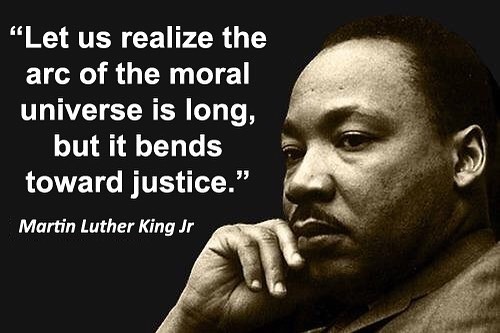 As a libertarian, I don’t believe our government is good and pure today, and I also don’t believe it was good and pure in the past. So I have…
View original post 955 more words
Waititi is championing a Treaty-based system of government – and we shouldn’t be surprised that democracy is not the objective
05 Jul 2021 Leave a comment

Democracy means government by the people, or a form of government in which the supreme power is vested in the people and exercised directly by them or by their elected agents under a free electoral system.
It is a state of society characterised by formal equality of rights and privileges.
And (in this definition, at least) it features
… the absence of hereditary or arbitrary class distinctions or privileges
Right there we can see why democracy might be problematic for Māori Party co-leader Rawiri Waititi, who would have surprised nobody when he outlined his vision for a ‘tiriti-centric Aotearoa’ where the majority doesn’t rule over Māori
In other words, he wants Maori to be politically privileged.
When he said this, he drew attention to a reality which Prime Minister Jacinda Ardern and her ministers won’t publicly acknowledge – that our democracy is being gradually debilitated by measures her…
View original post 622 more words
The End of Economic Growth? Unintended Consequences of a Declining Population
05 Jul 2021 Leave a comment
in applied price theory, applied welfare economics, economic growth, economic history, entrepreneurship, human capital, labour economics, labour supply, macroeconomics, population economics Tags: endogenous growth theory


Recent Comments