Economics of the Paris Agreement on Climate Change | Robert P. Murphy
27 Jun 2021 Leave a comment
in applied price theory, applied welfare economics, comparative institutional analysis, development economics, econometerics, economic history, energy economics, environmental economics, global warming, politics - USA Tags: climate alarmists
Steven Pinker | Full Address and Q&A | Oxford Union
27 Jun 2021 Leave a comment
in economic history, economics of education, liberalism, Marxist economics Tags: Age of Enlightenment, free speech, pessimism bias, political correctness, regressive left, The Great Enrichment
Classical Liberalism, Cosmopolitanism and Nationalism
27 Jun 2021 Leave a comment

In another thought-provoking post on Facebook (does the guy ever write mediocre stuff, I wonder?) Barry raised the question of the relation between classical liberalism, nationalism and cosmopolitanism. He wrote the following:
“On the capture of classical liberal/libertarianism by anti-cosmopolitans. This is very influential at the heart of the ‘leave’ ‘elite’ in the UK, and can only be destructive of classical liberalism/libertarianism. The immediate political consequence of Leave is the elevation of Theresa May to Tory leadership/Prime Minister’s office on a much more ‘Red Tory’, communitarian, corporatist foundation than existed under Cameron. ’To the extent to which the current wave of populism maps into a conflict over national versus transnational identity (Dan Drezner is unconvinced), the problem is not an excess of cosmopolitanism but rather its absence, especially on the conservative, free-market right.”
He seems to take a positive relation between classical liberalism and cosmopolitanism as the default position…
View original post 543 more words
American Classical Liberals Suck
27 Jun 2021 Leave a comment
This week Kevin Vallier published a new entry on neoliberalism in the Stanford Encyclopedia of Philosophy:Neoliberalism (Stanford Encyclopedia of Philosophy). It is a well-written, well-researched piece. However, it is also symbolic for the greatest deficiency of American classical liberals: they are unable or unwilling to defend the name, or label if you like, of the ideas they are associated with. Given the influence of American academia and thinks tanks on the rest of the world this is especially important. It has happened before, and it is happening now. It sucks.
This is how Vallier starts his entry:
“Though not all scholars agree on the meaning of the term, “neoliberalism” is now generally thought to label the philosophical view that a society’s political and economic institutions should be robustly liberal and capitalist, but supplemented by a constitutionally limited democracy and a modest welfare state. Recent work on neoliberalism, thus…
View original post 556 more words
Doomed to the Dark Ages: No Solution for South Australia’s Wind Power Blackouts
27 Jun 2021 Leave a comment

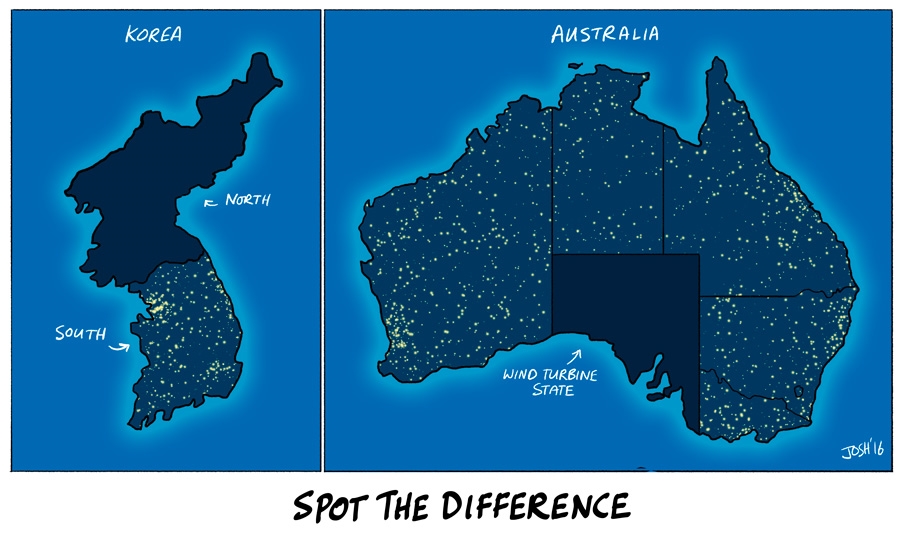
When a mass blackout thrusts your State onto the international stage, as an outrageous possibility, there just could be a little something wrong with your energy policy. Here’s the view from the USA.
Australia Has Serious Problems With Green Energy Triggering Blackouts
The Daily Caller
Andrew Follett
23 November 2016
South Australia is still struggling to figure out how to keep green energy from triggering blackouts and crashing the electric grid, according to an article published by Inverse Tuesday.
The Australian state invested heavily in solar and wind power, but those power sources’ inherent reliability issues place a massive strain on the state’s power grid, according to the article.
Australia’s Energy Council noted in early September that increasing use of solar and wind power in the state “has not only led to a series of technical challenges” but “also increased wholesale price volatility as the state rebalances its supply from dispatchable plant to…
View original post 1,457 more words
Want Blackouts? Take Liberal Helpings of Wind & Solar, Add Subsidies & Stir
27 Jun 2021 Leave a comment
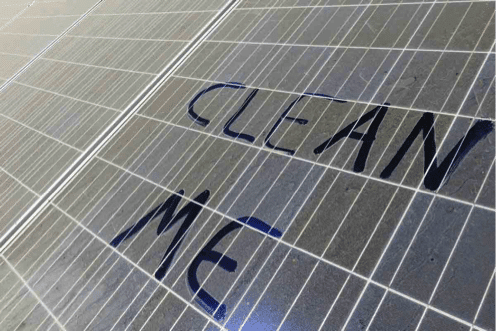
There’s nothing innately predictable about the weather, so trying to rely on it for your power needs doesn’t make a whole lot of sense.
Sure, solar panels might deliver somewhere between 4-6 hours of useful power on a sunny day. But, don’t expect much during periods of heavy rain and overcast conditions. Oh, and desert dust storms have been known to knock out solar supplies, as Californians experienced last summer.
And as any kite flyer or sailor knows too well, breezes have a mind of their own.
As Viv Forbes points out below, it might not be too much of a stretch to think that those peddling chaotically intermittent wind and solar have their very own agenda.
The Blackout Agenda
The Richardson Post
Viv Forbes
16 June 2021
Solar power fails every day from sunset to sunrise as well as during rain, hail, snow or dust storms. No matter…
View original post 325 more words
The dismantling of free-market reforms – how Ardern is taking us back to the days when state monopolies limited our choices
26 Jun 2021 Leave a comment

—————-
The Ardern government is weakening many of the pillars of the free market reforms implemented in the 1980s and 1990s, including undermining the Reserve Bank and Fiscal Responsibility Acts.
More alarming is its failure to learn that bestowing privileges on a few results in enormous costs for the many.
So says Nicholas Kerr, son of the late Business Roundtable executive director Roger Kerr.
A marketing consultant in Dallas, Texas, Nicholas Kerr delivered a speech last month to the Dallas chapter of the Bastiat Society, an organisation established by the American Institute for Economic Research as a forum for business professionals to help advance peaceful trade and human flourishing.
The speech (the full version can be read here) was headed Unleashing New Zealand’s Potential and Suppressing Washington State’s — Lessons for Texas.
Here’s an edited version: –
—————-
While the New Zealand I grew up in during…
View original post 1,689 more words
Edward Glaeser: The Urban Century – An Urban World
26 Jun 2021 Leave a comment
in applied price theory, applied welfare economics, comparative institutional analysis, development economics, economic history, economics of bureaucracy, environmental economics, health economics, industrial organisation, labour economics, labour supply, property rights, Public Choice, rentseeking, transport economics, urban economics


Recent Comments