Operation Barbarossa – Biggest Land Invasion in History – WW2 – June 22 1941
22 Jun 2021 Leave a comment
in defence economics, laws of war, war and peace Tags: World War II
No confidence vote succeeds against Swedish government
22 Jun 2021 Leave a comment

The government of Prime Minister Stefan Lofven was ousted in a no confidence vote with 181 votes against it in the 349-seat Swedish parliament, the Riksdag, on 21 June. The prime minister has a week to decide whether to go to a snap election or resign to allow the speaker of parliament to facilitate the negotiation of a new government. According to Reuters, this make Lofven “the first Swedish prime minister to be ousted by a no-confidence motion put forward by the opposition.” If there is a snap election, it would be the first since 1958.
The government is a minority government of the Social Democrats and Greens, with a policy-based agreement to allow it to govern signed with the Centre and Liberal parties. It also has had tacit support from the Left Party, but the agreement with the two center-right parties calls for the Left to have no policy…
View original post 211 more words
George Stigler 50 Years Later: Part 2 – Advancing The Theory of Economic Regulation
22 Jun 2021 Leave a comment
in applied price theory, economic history, George Stigler, history of economic thought, industrial organisation, Public Choice
Scuttling of the High Seas Fleet at Scapa Flow
22 Jun 2021 Leave a comment
in defence economics, laws of war, war and peace Tags: World War I
Why Mount Everest’s height keeps changing
22 Jun 2021 Leave a comment
in economics of media and culture
The Importance of Low Marginal Tax Rates
21 Jun 2021 Leave a comment

When studying the economic of taxation, one of the most important lessons is that there should be low marginal tax rates on work, saving, investment, and entrepreneurship.
That’s also the core message of this video from Prof. John Cochrane.
I wrote a primer on marginal tax rates back in 2018. I wanted to help people understand that the incentive to engage in additional productive behavior is impacted by how much people get to keep if they earn additional income.
So what matters isn’t the tax on income that’s already been generated.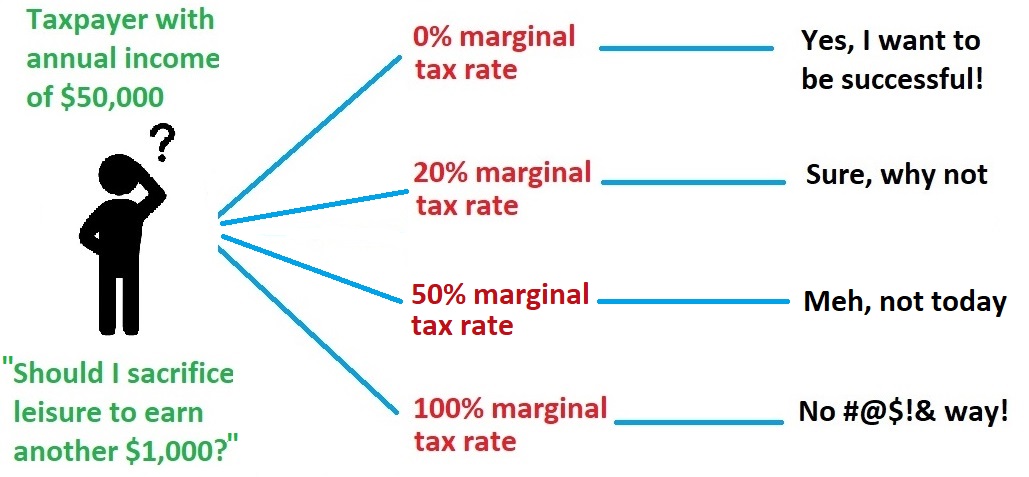 The key variable is the marginal tax on the additional increment of income. As illustrated by the accompanying visual.
I’ve shared real-life examples of how the American tax system can result in very high marginal tax rates, especially when you include the extra layers of tax on income that is saved and invested (producing extremely high effective marginal…
View original post 531 more words
It’s just an academic theory
21 Jun 2021 Leave a comment

I see there has been some ruction here in New Zealand about a high school activist group (School Strike For Climate Auckland or SSFCA) breaking itself up because of its inherent White Supremacy.
Apparently the group was “advised” about this problem by Maori and Pasifika groups also engaged in “fighting Climate Change”. I was amused that Chris Trotter covered this story with the title, Losing The “Struggle-Session” Over Climate Change:
The statement released by SSFCA was heart-breaking. To find an historical precedent for the document’s abject self-negation and unqualified acknowledgement of guilt it is necessary to go back to the “struggle sessions” of Mao Zedong’s Cultural Revolution of the late-1960s. Or, even further back, to the “confessions” tremulously delivered by the broken victims of Joseph Stalin’s show trials in the 1930s. The shaming and vilification required to reduce these idealistic young people to a state of such utter…
View original post 740 more words
Why Millennials Hate Free Speech and What to Do About It
21 Jun 2021 Leave a comment
in economics of education, liberalism, Marxist economics, politics - Australia, politics - New Zealand, politics - USA Tags: Age of Enlightenment, free speech, political correctness, regressive left


Recent Comments