The Franco Prussian War – History Matters
03 Jun 2021 Leave a comment
in defence economics, economic history, war and peace Tags: France, Germany
1967 France’s last Duel Deffere vs. Ribiere
03 Jun 2021 Leave a comment
in economic history, economics of crime, law and economics Tags: France
The United Kingdom of the Netherlands: History Matters
03 Jun 2021 Leave a comment
in defence economics, economic history, war and peace Tags: Belgium, Napoleon, Netherlands
Newly discovered African ‘climate seesaw’ drove human evolution
02 Jun 2021 Leave a comment

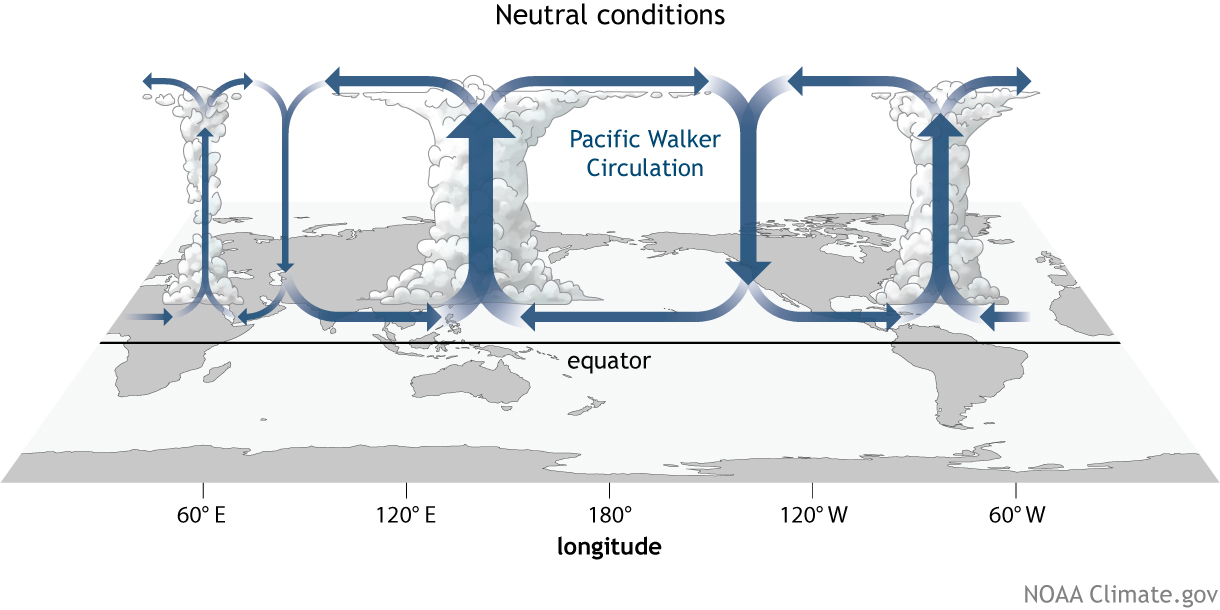 Generalized Walker Circulation (December-February) during ENSO-neutral conditions. Convection associated with rising branches of the Walker Circulation is found over the Maritime continent, northern South America, and eastern Africa. [Credit: NOAA Climate.gov — drawing by Fiona Martin] El Niño and 100,000 year glaciation/climate cycles feature prominently in this research. The Walker circulation has been described as ENSO’s atmospheric buddy.
– – –
While it is widely accepted that climate change drove the evolution of our species in Africa, the exact character of that climate change and its impacts are not well understood, says Phys.org.
Glacial-interglacial cycles strongly impact patterns of climate change in many parts of the world, and were also assumed to regulate environmental changes in Africa during the critical period of human evolution over the last ~1 million years.
The ecosystem changes driven by these glacial cycles are thought to have stimulated the evolution and dispersal of…
View original post 311 more words
Biden’s Rapacious ‘Green’ Dream: Green New Deal Devouring World’s Rare Earth Minerals
02 Jun 2021 Leave a comment


Clean’, ‘green’ wind and solar were meant to save the planet, but the obsession with the unreliables will only expedite its consumption. Every solar panel and every wind turbine are an aggregation of minerals, requiring mountains of real energy in their creation. Many of those minerals are scarce, generally referred to as “rare earths”. Thanks to the growth in the number of turbines and panels, many of those scarce minerals are likely to become rarer still.
The rent seekers that profit from the generosity of Joe Biden and his Squad can’t believe their luck. Sure, the doddering President struggles to master a complete sentence without a teleprompter (and often struggles with one). But his Squad’s desire to carpet America in a sea of solar panels and wind turbines is crystal clear; the fortunes of the wind and solar industries have never looked rosier.
As Mark Mills reports, however…
View original post 987 more words
Mark K Heatley: The Implications of the Hertfordshire County Council Case for Local Democracy
02 Jun 2021 Leave a comment


The High Court recently delivered its judgment in the case of Hertfordshire County Council v Secretary of State for Housing, Communities and Local Government, finding that remote meetings of local councils could not continue after 7 May 2021. This article looks at the decision and considers its impact for future local democracy.
In England council meetings in person are required under Schedule 12 of the Local Government Act 1972 (LGA 1972) and this interpretation had not previously been challenged, although the Department of Communities and Local government published the results of a consultation in 2019 on whether to allow video conferencing for some meetings. Ultimately, subject to safeguards, it was accepted that there would be benefits from some meetings being held virtually where this would facilitate participation but these were limited to meetings of local authorities’ joint committees and combined authorities. In summary these safeguards included requirements that:
- participants…
View original post 1,763 more words
Don’t Censor Science: A Talk with Prof. Jay Bhattacharya
02 Jun 2021 Leave a comment
in economics of education, health economics Tags: economics of pandemics
Corporate Taxes and the Laffer Curve
02 Jun 2021 Leave a comment

In a new documentary film, Race to the Bottom, I had an opportunity to pontificate briefly about corporate tax and the Laffer Curve.
At the risk of understatement, I represented a minority viewpoint in the documentary. Most of the people interviewed had a negative view of tax competition, considering it to be (as suggested by the title) a “race to the bottom.”
By contrast, I view tax competition as a way of constraining the “stationary bandit” so that we don’t wind up with “goldfish government.”
For purposes of today’s column, though, I want to focus on the narrower issue of the relationship between corporate tax rates and corporate tax revenue.
In the above video, I asserted that lower rates did not result in lower revenue. Indeed, I even made the bold statement that revenues increased.
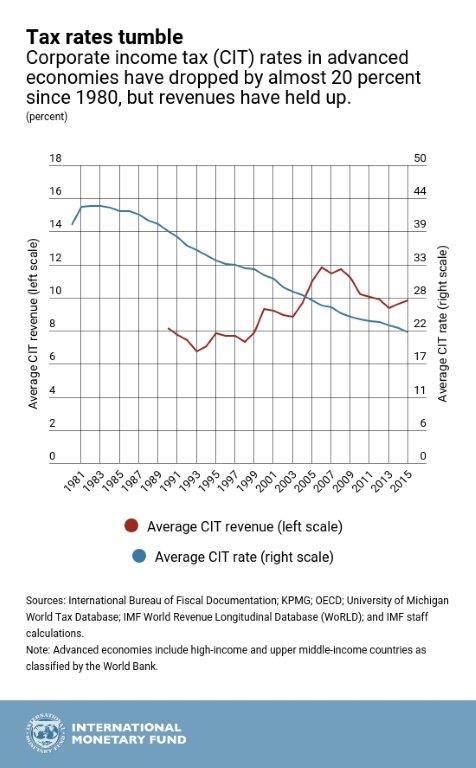 Is that correct?
Fortunately, I don’t need to do…
View original post 214 more words
LIEUTENANT COLONEL THEODORE ROOSEVELT, JR.
02 Jun 2021 Leave a comment

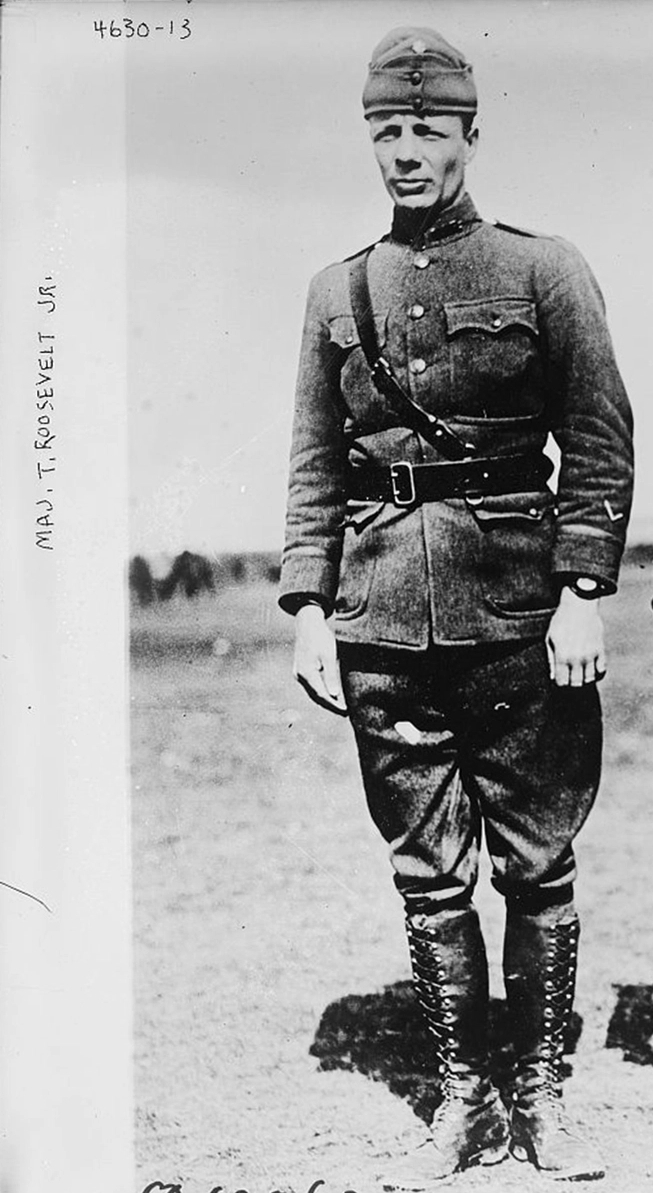
Theodore Roosevelt, Jr., or “Ted,” as his friends called him, lived up to the legacy of his father and namesake, President Theodore Roosevelt. The younger Roosevelt was a proven combat leader in both world wars, an aspiring politician, a successful businessman, an accomplished hunter and explorer, as well as governor of Puerto Rico and the Philippines. Theodore Roosevelt, Jr., like his father, received the Medal of Honor, one of only two father–son duos to be awarded America’s highest honor (the other being Arthur MacArthur and Douglas MacArthur). Roosevelt rose through the ranks during the Great War, ending it as a lieutenant colonel commanding the 26th Infantry Regiment in the 1st Division. He participated in numerous engagements in 1918, which included Cantigny, Soissons, and the Meuse–Argonne campaign. He was cited for bravery, wounded in action, the first reserve officer to command a regiment in combat, and was the spearhead of the…
View original post 3,557 more words
Four Fiscal Policy Lessons from Ireland
02 Jun 2021 Leave a comment
In the world of public finance, Ireland is best known for its 12.5 percent corporate tax rate.
That’s a very admirable policy, as will be momentarily discussed, 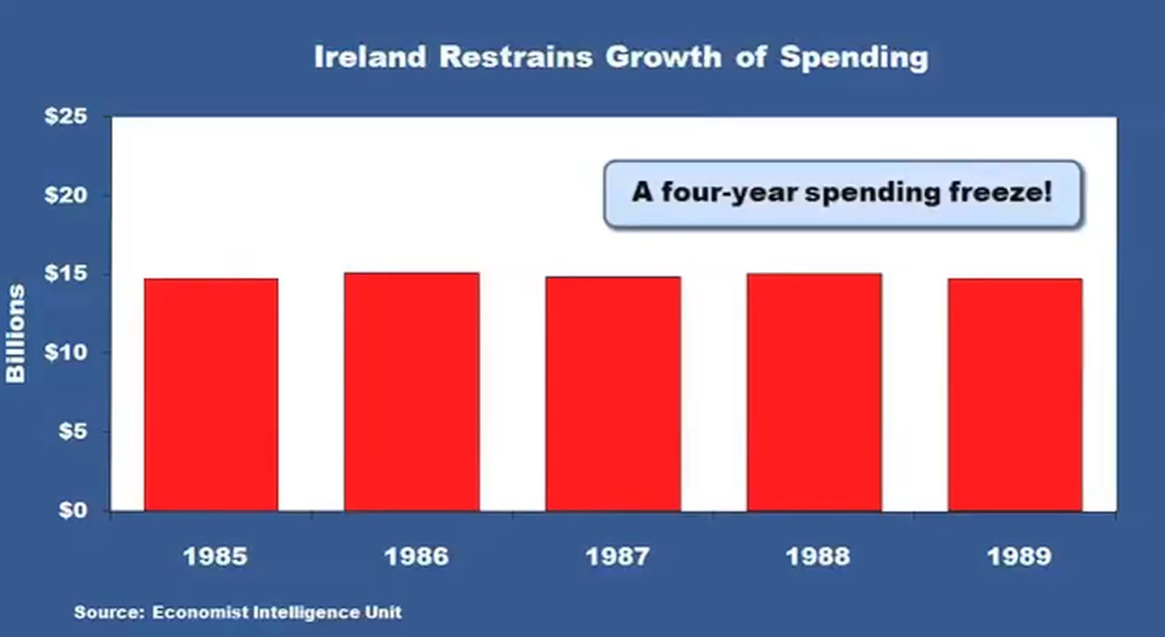 but my favorite Irish policy was the four-year spending freeze in the late 1980s.
I discussed that fiscal reform in a video about 10 years ago, and I subsequently shared data on how spending restraint reduced the overall burden of government in Ireland and also lowered red ink.
It’s a great case study showing the beneficial impact of my Golden Rule.
Spending restraint also paved the way for better tax policy, and that’s a perfect excuse to discuss Ireland’s pro-growth corporate tax system. The Wall Street Journalopined last week about that successful supply-side experiment.
Democrats want a high global minimum tax that would end national tax competition and reduce the harm from their huge tax increase on U.S. business. But…
View original post 402 more words


Recent Comments