Insatiable: Coal-Fired Power Continues its Dominance in Energy Hungry China
31 May 2021 Leave a comment


The anti-energy/anti-civilisation squad keep predicting the end of coal and coal-fired power. But in China and India the demand for the black stuff – and the cheap and reliable power it delivers – is insatiable, and rising.
Notwithstanding a global economic wind down during the Covid-19 outbreak, Chinese demand for coal is about to reach unprecedented levels, with a further 4.5% increase year-on-year expected during 2021. So much for all that cheap talk about China becoming a renewable energy superpower.
Sky News’ Chris Kenny reports on how, despite the pundit’s predictions, coal continues its dominance, as China’s energy source of choice.
Coal demand is ‘bouncing back’ from pandemic, IEA report finds
Sky News
Chris Kenny
19 May 2021
Demand for coal consumption will increase by 4.5 per cent despite green-left politicians and media arguing the phasing out of fossil fuels is necessary to achieving net-zero emissions, according to Sky News…
View original post 920 more words
Lunch and Conversation with Thomas J. Sargent
31 May 2021 Leave a comment
in budget deficits, business cycles, economic history, financial economics, fiscal policy, global financial crisis (GFC), great recession, macroeconomics, monetary economics
How is France on its Fifth Republic?
31 May 2021 Leave a comment
in International law Tags: constitutional law, France
Ralph Hawtrey Wrote the Book that Arthur Burns Should Have Read — but Didn’t
30 May 2021 Leave a comment

In my previous post I wrote about the mistakes made by Arthur Burns after Nixon appointed him Chairman of the Federal Reserve Board. Here are the critical missteps of Burns’s unfortunate tenure.
1 Upon becoming chairman in January 1970, with inflation running at over 5% despite a modest tightening by his predecessor in 1969, Burns further tightened monetary policy, causing a downturn and a recession lasting the whole of 1970. The recession was politically damaging to Nixon, leading to sizable Republican losses in the November midterm elections, and causing Nixon to panic about losing his re-election bid in 1972. In his agitation, Nixon then began badgering Burns to loosen monetary policy.
2 Yielding to Nixon’s demands for an easing of monetary policy, Burns eased monetary policy sufficiently to allow a modest recovery to get under way in 1971. But the recovery was too tepid to suit Nixon. Fearing the inflationary…
View original post 3,386 more words
Answers to Bad Anti-Free Speech Arguments
30 May 2021 Leave a comment

Aeromagazine has a superb article that deals with twelve such arguments that are commonly heard.
While the whole thing is worth your time to read I wanted to extract two in particular.
First up is the classic one about shoutingfire!in a crowded theatre;
Answer: Anyone who says “you can’t shoutfire!in a crowded theatre” is showing that they don’t know much about the principles of free speech, or free speech law—or history.
This old canard, afavourite referenceof censorship apologists, needs to be retired. It’s repeatedly and inappropriately used to justify speech limitations. People have been using this cliché as if it had some legal meaning, while First Amendment lawyers roll their eyes and point out that it is, in fact, as Alan Dershowitz puts it, “a caricature of logical argumentation.”Ken White has already penned a brilliant and thorough takedown of this misconception. Please…
View original post 703 more words
Hollywood goes to war
30 May 2021 Leave a comment
in defence economics, movies, war and peace Tags: World War II
Ayaan Hirsi Ali on modern feminism and her new book, Prey
30 May 2021 Leave a comment
in discrimination, economics of crime, law and economics, liberalism Tags: political correctness, regressive left, sex discrimination
May 29, 1630: Birth of King Charles II of England, Scotland and Ireland.
30 May 2021 Leave a comment

Charles II (May 29, 1630 – February 6, 1685) was King of Scotland from 1649 until 1651, and King of Scotland, England and Ireland from the 1660 Restoration of the monarchy until his death in 1685.
Charles II was the eldest surviving child of Charles I of England, Scotland and Ireland and Henrietta Maria de Bourbon France, daughter of King Henri IV of France and Navarre and Marie de Medici.
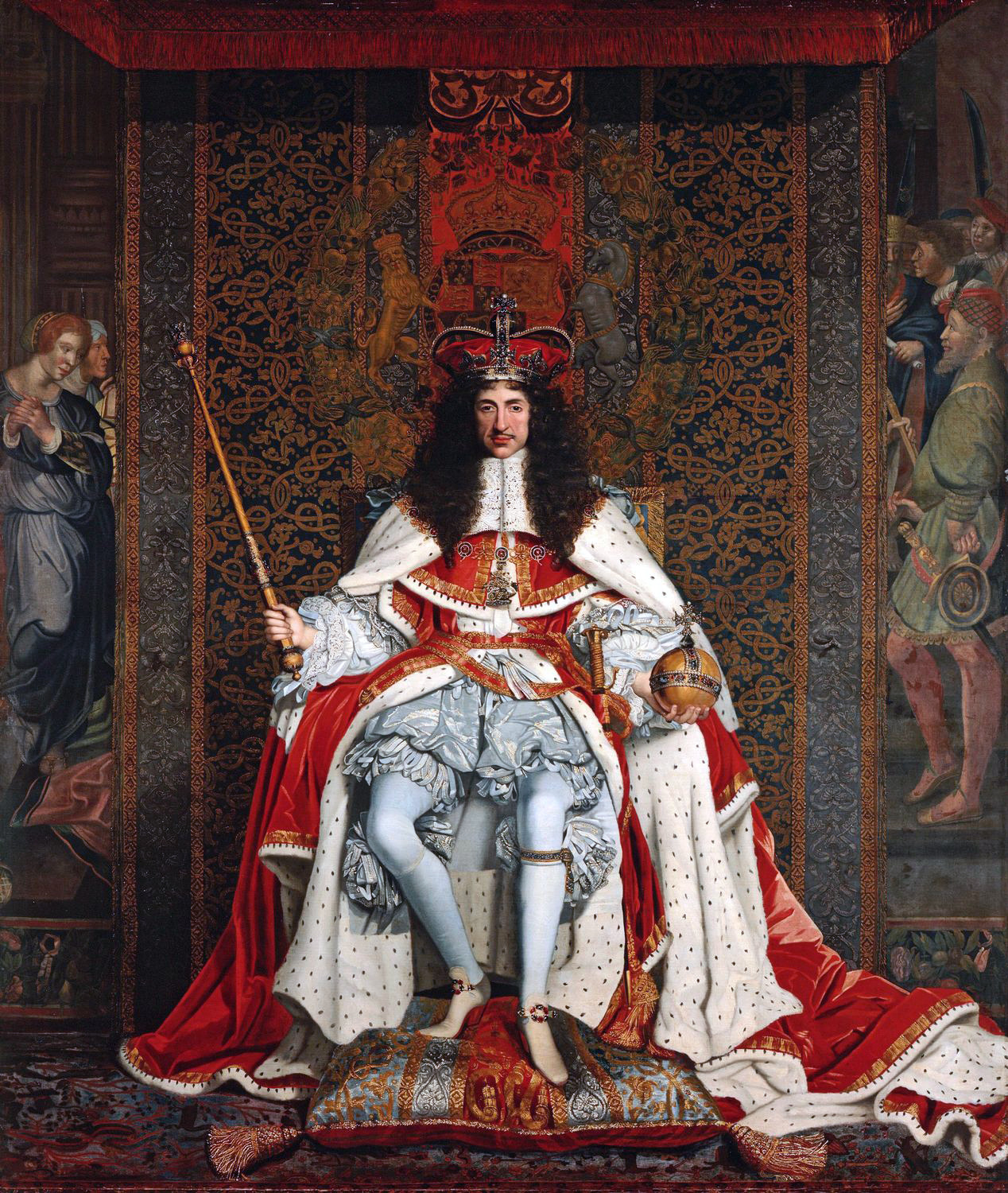 After Charles I’s execution at Whitehall on January 30, 1649, at the climax of the English Civil War, the Parliament of Scotland proclaimed Charles II king on February 5, 1649. But England entered the period known as the English Interregnum or the English Commonwealth, and the country was a de facto republic led by Oliver Cromwell.
Cromwell defeated Charles II at the Battle of Worcester on September 3, 1651, and Charles fled to mainland Europe. Cromwell became virtual dictator of…
View original post 616 more words


Recent Comments