I need a lover- John Cougar (live on Countdown, ABC TV)
05 Feb 2021 Leave a comment
in Music, television
The Angels – Mr Damage – Countdown Australia 22 July 1979
05 Feb 2021 Leave a comment
in Music, television
German Submarine Warfare in World War 1 I THE GREAT WAR Special
05 Feb 2021 Leave a comment
in defence economics, war and peace Tags: World War I
Reforming the Reserve Bank, continued
04 Feb 2021 Leave a comment

Submissions to Parliament’s Finance and Expenditure Committee on the Reserve Bank of New Zealand bill close today. This is the next stage in the ongoing overhaul of the Reserve Bank legislation, and this particular bill focuses on a new governance structure for the Bank, largely importing for monetary policy the provisions of the amending legislation passed a couple of years ago. In the process, the substantive regulatory powers that were part of the Act are being spun out, unchanged for now, into a separate piece of legislation.
There is a fair amount of sensible stuff in the bill. The single decisionmaker model, flawed and unusual for monetary policy, deeply unsuited to the regulatory functions, will finally be no more. The MPC now makes monetary policy – well at least on paper at does, perhaps it more true that MPC is the venue at which monetary policy is made – and…
View original post 1,933 more words
A Case Study of How Venezuelan Socialism Killed the Goose with the Golden Eggs
04 Feb 2021 Leave a comment

The economic disintegration of Venezuela is a powerful example how socialism fails. Even in a nation with massive oil wealth.
This video from Reason tells the tragic story.
I think long-run data is especially valuable when assessing a nation’s economic performance.
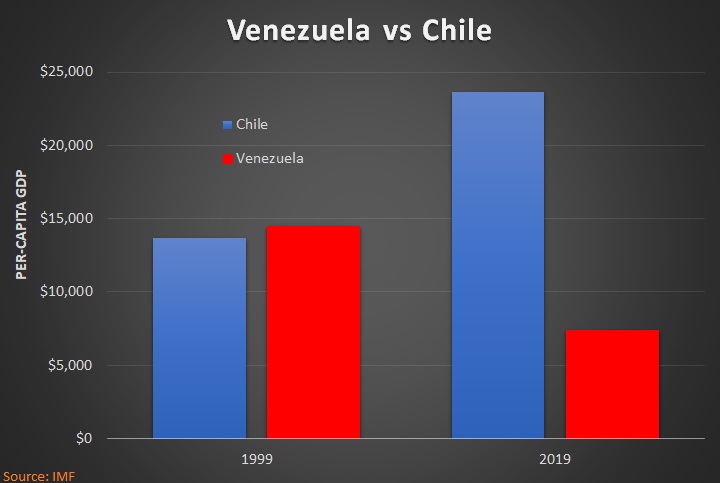 And Venezuela definitely looks terrible when looking at decades of data on per-capita economic output.
Especially when compared to a pro-market nations such as Chile.
Not that we should be surprised. This is what we find anytime capitalist-oriented counties are compared with statism-oriented countries.
And there are many other case studies.
But let’s re-focus on the problems of Venezuela. In one of her Wall Street Journal columns, Mary Anastasia O’Grady analyzes the government-caused crisis. She starts by describing what happened.
Efforts to guarantee outcomes are at odds with what it…
View original post 373 more words
France found guilty of climate inaction in ‘historic victory’
04 Feb 2021 Leave a comment


‘Hoist by their own petard’ springs to mind. French courts are now willing to hear from ‘direct victims of climate change’. How they might define climate change remains to be seen, as the insanity gets further embedded into the system.
– – –
A court in Paris has ruled that France’s government is guilty of climate inaction in a ground-breaking legal case, reports Euronews.
The decision comes after a group of NGOs, with the support of two million citizens, filed a lawsuit against the French government for failing to meet the country’s commitments to limit greenhouse gas emissions.
The legal claim was hailed as the “L’Affaire du siècle” or “the case of the century” by activists, who first started the dispute in March 2019.
View original post 160 more words
Andrew Carnegie: Robber Baron or America’s Greatest Philanthropist?
04 Feb 2021 Leave a comment
in economic history, entrepreneurship, history of economic thought, industrial organisation, survivor principle
How a 19th Century Doctor’s Tried to Get His Peers To Wash Their Hands
04 Feb 2021 Leave a comment
in health economics Tags: infant mortality
Skunk Works: The Dream Factory for War
04 Feb 2021 Leave a comment
in defence economics, war and peace Tags: Cold War, World War II
#GreenNewDeal @AdamBandt @Greens
04 Feb 2021 Leave a comment
in economics of bureaucracy, economics of media and culture, economics of regulation, industrial organisation, law and economics, Marxist economics, politics - Australia, property rights, Public Choice, survivor principle Tags: creative destruction, The fatal conceit

The Real-Bills Doctrine, the Lender of Last Resort, and the Scope of Banking
03 Feb 2021 Leave a comment

Here is another section from my work in progress on the Smithian and Humean traditions in monetary economics. The discussion starts with a comparison of the negative view David Hume took toward banks and the positive view taken by Adam Smith which was also discussed in the previous post on the price-specie-flow mechanism. This section discusses how Smith, despite viewing banks positively, also understood that banks can be a source of disturbances as well as of efficiencies, and how he addressed that problem and how his followers who shared a positive view toward banks addressed the problem. Comments and feedback are welcome and greatly appreciated.
Hume and Smith had very different views about fractional-reserve banking and its capacity to provide the public with the desired quantity of money (banknotes and deposits) and promote international adjustment. The cash created by banks consists of liabilities on themselves that they exchange for liabilities…
View original post 3,306 more words
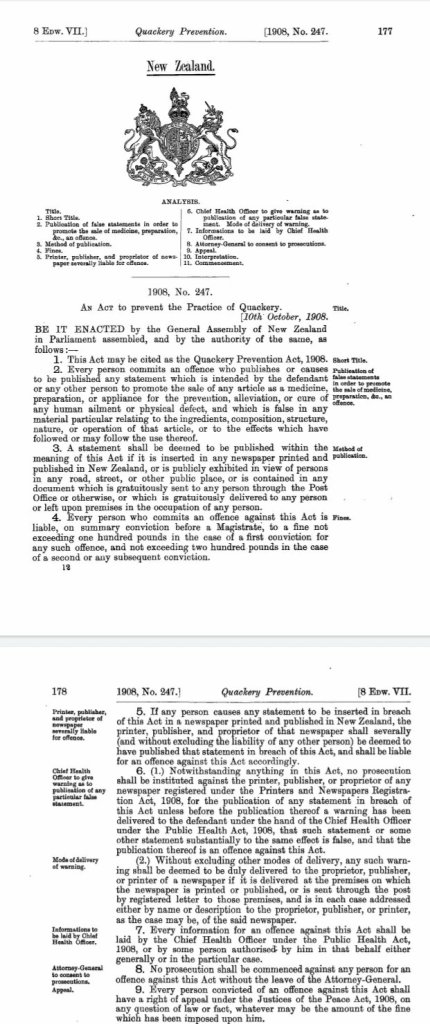
Quackery Prevention Act 1908
03 Feb 2021 Leave a comment
in economics of regulation, health economics, politics - New Zealand Tags: Drug safety
Critical race theory’s rising hegemony | Glenn Loury & John McWhorter | The Glenn Show
03 Feb 2021 Leave a comment
in discrimination, economic history, economics of education, gender, human capital, liberalism, Marxist economics, occupational choice, politics - USA, poverty and inequality Tags: political correctness, racial discrimination, regressive left
Israeli Armor Pre-1973
03 Feb 2021 Leave a comment


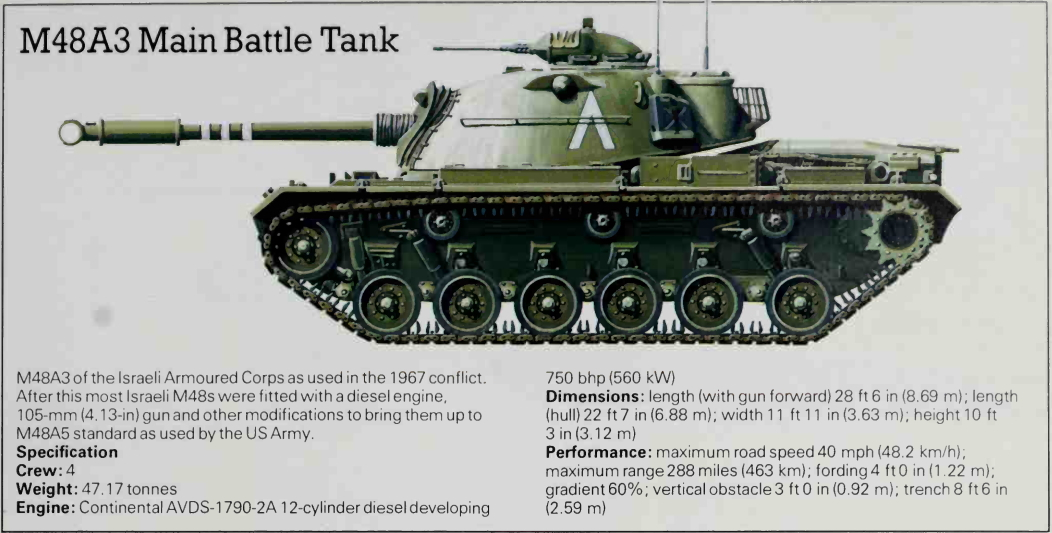

Following World War II the opposing Arab and Israeli armies were among the primary practitioners of armored warfare, largely because the terrain and conditions were so suitable. Long before the partition of Palestine, Israeli agents began the covert purchase of heavy weapons including ten old French R39 light tanks. The newly created Arab states were arming themselves with whatever surplus weapons could be procured on the black market or were abandoned in place by the colonial powers. Egypt had a mixed bag of American M4s and M22 Locust light tanks, British Crusaders and Matildas, and even 1930s vintage British Mark VI light tanks. The Syrians had French H35 and H39 tanks. The Lebanese were stuck with venerable French FTs. Tanks played little role in the 1948–49 War of Independence.
Eager to gain a foothold in the Mediterranean, the Soviet Union cultivated relations with Egypt, and supplied about 230 T-34/85 and…
View original post 1,509 more words


Recent Comments