Why hasn’t economic progress lowered work hours more? Tyler Cowen, Hayek Lecture Series
28 Oct 2020 Leave a comment
in economic growth, labour economics, labour supply, law and economics, macroeconomics, population economics, property rights Tags: The Great Enrichment
The West India Interest and the Parliamentary Defence of Slavery, 1823-33
28 Oct 2020 Leave a comment

Ahead of Tuesday’sVirtual IHRParliaments, Politics and People seminar, we hear from Dr Michael Taylor, the author of The Interest: How the British Establishment Resisted the Abolition of Slavery (2020). He will be responding to your questions about his research on the parliamentary resistance to the abolition of slavery between 5:15 p.m. and 6:30 p.m. on 3 November 2020. Details on how to join the discussion are available here or by contacting seminar@histparl.ac.uk.
This blog, which explores the parliamentary context of the abolition of slavery, is based on Michael’s full-length seminar paper, ‘The West India Interest and Colonial Slavery in Parliament, 1823-33’, which is available here.
It might be natural to think that, when Parliament abolished the British slave trade in 1807, it also abolished slavery itself. But it did not. In fact, when the Slave Trade Abolition Act came into force on New Year’s Day, 1808, there…
View original post 1,129 more words
The Prince | Machiavelli
28 Oct 2020 Leave a comment
in defence economics, economic history, economics of bureaucracy, economics of education, Public Choice
The test of science
28 Oct 2020 Leave a comment
in economics of education Tags: philosophy of science

Climate Cult Would Take Californian’s Back to The Dark Ages With All Wind & Solar Future
27 Oct 2020 Leave a comment

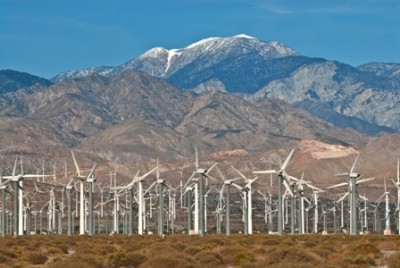
If this Summer’s power rationing and rolling blackouts weren’t enough, California’s wind and solar worshippers are determined to deliver much more of the same.
One of their hopes is to ban all household gas appliances, forcing families to use electric powered kit, instead.
The premise is that all the power needed will come courtesy of mother nature, milked from sunshine and lovingly caressed from the Golden State’s occasional breezes.
Not content with preventing Californians from using natural gas to cook and heat their homes, its climate cult is now looking to put an end to fossil-fuelled motor vehicles, as well.
Again, the cult reckon that California’s windmills and solar panels will be more than sufficient to charge up millions of all-electric vehicles, with power to spare to run everything else.
It is, of course, fantastic nonsense, as Larry Bell outlines below.
Subtracting Fossil Fuels Plus Adding Electric Cars Equals Disaster
View original post 962 more words
New study shows that campus bigotry is concentrated in only a minority of students, rebutting the “dispersed discrimination” hypothesis of “implicit bias” theory
27 Oct 2020 Leave a comment

We’ve heard often lately that colleges are afflicted with “structural racism”, and that every white person carries a degree of racism—of “implicit” bias—that is not even accessible to consciousness. These claims, at least those about the deep racism of American colleges, are never accompanied by systematic data, only by anecdotes. Are those claims true? A new paper in the Journal of Experimental Psychology: General from the University of Wisconsin at Madison (UWM, reference at bottom) suggest that they aren’t, at least on that campus.
The authors of the paper, also at UWM, tested predictions from two contrasting theories of bias on college campuses. One, the “dispersed discrimination account”, posits that bias is widespread, with most individuals holding biases against groups like women, blacks and Muslims. This is implicit in the anti-racism work of people like Robin DiAngelo, who accepts that everybody has “implicit or unconscious biases” that cannot be…
View original post 1,297 more words
Queen’s Consent and the Missing Link
27 Oct 2020 Leave a comment

Very occasionally, when political trouble draws up from the depths some of the most obscure arcana of the British constitution, you may hear about Queen’s Consent. It’s one of the most recherche little pieces of parliamentary flummery. Bills which have a direct impact on the remaining prerogative powers or the private interests of the sovereign are submitted during their passage through parliament for the sovereign’s formal consent. Without it, they will not be allowed to proceed further. It is, crucially, to be distinguished from the Royal Assent to bills, the last stage in legislative procedure and an entirely more significant process. Royal Assent offers the theoretical possibility of a royal veto on bills that have been passed by both houses, although the veto – which has not been used since 1708 – is regarded as effectively defunct. It is suggested from time to time that Queen’s Consent might be used…
View original post 2,416 more words
The Four Horsemen of the Economic Revolution
27 Oct 2020 Leave a comment
in applied price theory, budget deficits, business cycles, economic growth, Edward Prescott, fiscal policy, global financial crisis (GFC), great depression, great recession, history of economic thought, labour economics, labour supply, macroeconomics, monetary economics, Robert E. Lucas Tags: real business cycles
Anti-science @Greenpeace @Greens @NZGreens
27 Oct 2020 Leave a comment
in economics of regulation, environmental economics, fisheries economics, health economics, Marxist economics, Public Choice Tags: anti-GMOs movement, anti-intellectualism, Anti-Science left, regressive left

More gender gaps
27 Oct 2020 Leave a comment
in discrimination, economics of education, gender, health and safety, human capital, labour economics, labour supply, occupational choice, politics - USA, poverty and inequality, unemployment, welfare reform Tags: gender wage gap, political correctness, regressive left

Richard Clapton – Capricorn Dancer – Countdown Australia 1977
27 Oct 2020 Leave a comment
in Music, television
Robert E. Lucas: The Wealth of Nations in the 21st Century
27 Oct 2020 Leave a comment
in comparative institutional analysis, development economics, economic growth, economic history, economics of regulation, entrepreneurship, growth disasters, growth miracles, history of economic thought, human capital, industrial organisation, international economics, labour economics, labour supply, law and economics, macroeconomics, occupational choice, occupational regulation, poverty and inequality, property rights, Robert E. Lucas Tags: The Great Enrichment


Recent Comments