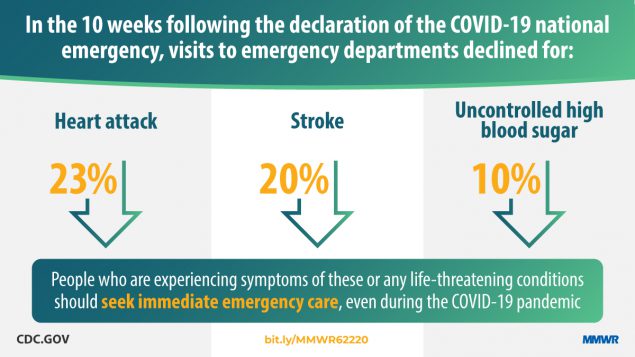
The dead are many from the #COVID19 lockdown
17 Sep 2020 Leave a comment
in health economics, politics - USA Tags: economics of pandemics, offsetting behaviour, The fatal conceit, unintended consequences
Decolonizing evolution (and Darwin) was inevitable
17 Sep 2020 Leave a comment

When I said that “Darwin was next” in the line of statue-removal, renaming, and accusations of racism, I wasn’t kidding. Darwin was an abolitionist, but he did evince some white superiority in his writings and letters, calling blacks “savages” and “barbarians” (I lecture on this). It’s only a matter of time before that bigoted paternalism, ubiquitous in 19th-century England, would bring Darwin down.
It’s starting:
Dr. Schierenbeck is a plant geneticist, taxonomist, and evolutionist at California State University, Chico.
I looked up “decolonization” on Wikipedia and found this:
Decolonization (American English) or decolonisation (British English) is the undoing of colonialism, the latter being the process whereby a nation establishes and maintains its…
View original post 418 more words
Will Darwin be canceled?
17 Sep 2020 Leave a comment
Given the scientific and political luminaries who have fallen under the axe, it’s not beyond possibility that Charles Darwin himself may undergo a “reevaluation,” with people discovering what we already knew: Darwin, like many people of the mid-19th century, had some bigoted views of whites (i.e., Brits) as a superior race. Yet Darwin never did anything but write a bit about it in The Voyage of theBeagle and The Descent of Man, and was, to boot, an ardent abolitionist along with his wife’s family, the Wedgewoods. Josiah Wedgewood, Darwin’s grandfather (and also his wife Emma’s), designed this ceramic medallion that was popular among abolitionists as early as 1787. That may be enough to save Charles but, as we know, one misstep can cancel you for keeps. And Darwin made more than one—according to today’s lights.
 “Am I not a man and a brother?”
It’s thus possible that Darwin…
View original post 1,263 more words
Tanks of the Red Army in 1941: Medium and Heavy Tanks, by the Chieftain – WW2 Special
17 Sep 2020 Leave a comment
in defence economics, war and peace Tags: World War II

My Paper Schumpeterian Enigmas Is Now Available on SSRN
16 Sep 2020 Leave a comment

I have just posted a paper I started writing in 2007 after reading Thomas McCraw’s excellent biography of Joseph Schumpeter, Prophet of Innovation. The paper, almost entirely written in 2007, lay unfinished until a few months ago, when I finally figured out how to conclude the paper. I greatly benefited from the comments and encouragement of David Laidler, R. G. Lipsey and Geoff Harcourt in its final stages.
The paper can be accessed or downloaded here.
Here is the abstract:
Drawing on McCraw’s (2007) biography, this paper assesses the character of Joseph Schumpeter. After a biographical summary of Schumpeter’s life and career as an economist, the paper considers a thread of deliberate posturing and pretense in Schumpeter’s grandiose ambitions and claims about himself. It also takes account of his ambiguous political and moral stance in both his personal, public and scholarly lives, in particular his tenure as finance minister…
View original post 178 more words
Book Review: ‘Twilight of the Gods: The War in the Western Pacific, 1944-1945’
16 Sep 2020 Leave a comment

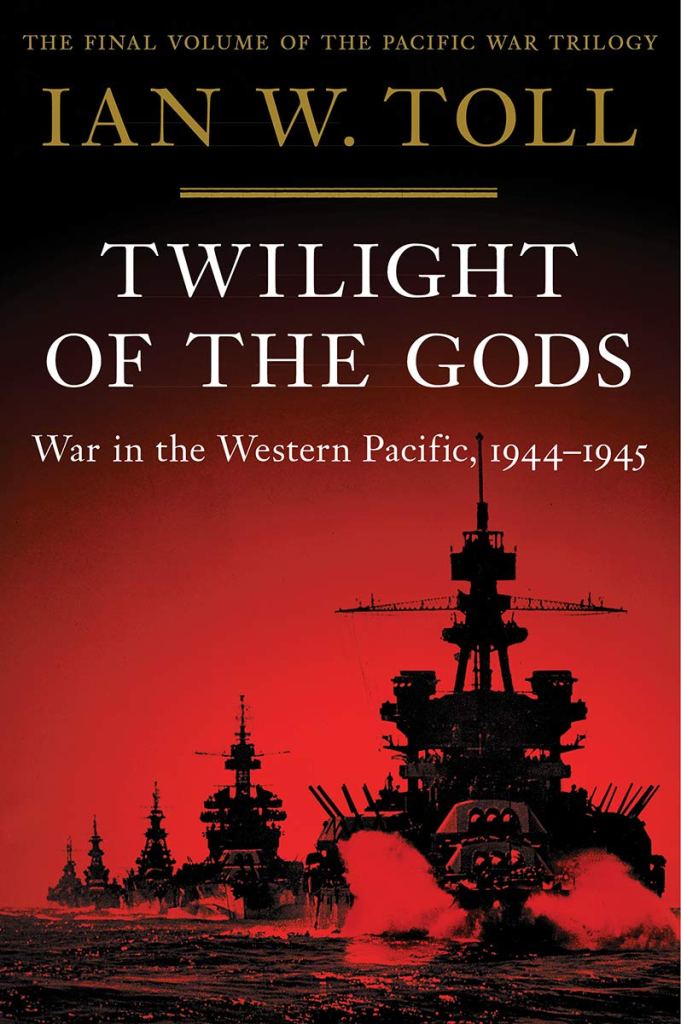
On September 1, New York-based (and wholly-owned by its employees) publisher W.W. Norton & Company published Twilight of the Gods: The War in the Western Pacific, 1944-1945, the concluding volume of Ian W, Toll’s Pacific War Trilogy, thus completing the story begun in Pacific Crucible: War at Sea in the Pacific (2011)and The Conquering Tide: War in the Pacific Islands, 1942-1944 (2015). In a narrative that covers the last year of the war in the Pacific Theater from the aftermath of the Battle of the Philippine Sea in the late summer of 1944 to the invasion of Okinawa and the dropping of two atomic bombs on Hiroshima and Nagasaki in early August of 1945, Twilight of the Gods puts the capstone on the first major history of the Pacific War since Samuel Eliot Morrison’s 16 volume history…
View original post 2,231 more words
how dangerous is it to open college campuses? evidence from enclosed communities at sea exposed to COVID, the us and sweden
16 Sep 2020 Leave a comment

How damaging would in-person college be for the college population? I think we have some evidence to help us sort through this issue. Namely, there are some relatively closed communities where people lived in close quarters and were exposed to COVID. We can estimate the damage. These communities are similar to colleges in that they housed people together. We also know, months later, how many people got sick and how many died. Specifically, we can look at ships where people were in close contact and got a lot of COVID.
Worst Case Scenario: The Diamond Princess is a cruise ship that was at sea early in the epidemic. People got sick and it wasn’t allowed to port for a while. The result? According to the wiki, 700 out of 3711 tested positive (18%) and 14 died (.3%). This is a population with many elderly passengers and, also according…
View original post 646 more words
Green apartment blocks are a hit – with mosquitos
16 Sep 2020 Leave a comment

 Chengdu green apartment block [image credit: yahoo news]
Another green dream turns out to be a disaster.
– – –
An experimental green housing project in a Chinese megacity promised prospective residents life in a “vertical forest”, with manicured gardens on every balcony, says TechXplore.
All 826 apartments were sold out by April this year, according to the project’s estate agent, but instead of a modern eco-paradise, the towers look like the set of a desolate, post-apocalyptic film.
The problem? The mosquitoes love the plants too.
Only a handful of families have moved into Chengdu’s Qiyi City Forest Garden because of an infestation, state media have reported.
The project in the southwestern city was built in 2018, with every private balcony designed to provide space for plants to grow, according to local media reports.
Without any tenants to care for them, the eight towers have been overrun by their…
View original post 32 more words
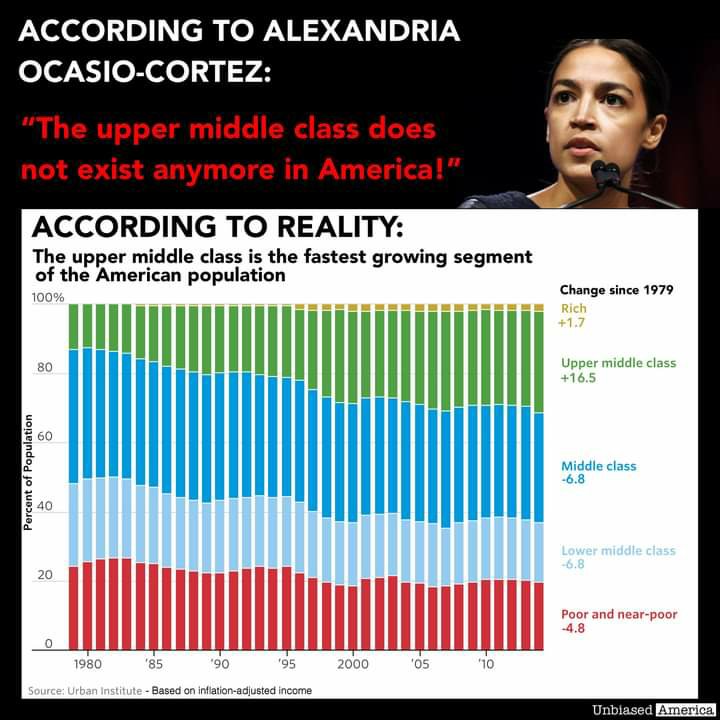
The withering away of the proletariat @AOC @BernieSanders
16 Sep 2020 Leave a comment
in economic history, economics of education, entrepreneurship, human capital, industrial organisation, labour economics, labour supply, politics - USA, poverty and inequality Tags: envy, The Great Enrichment
Oil Demand No End in Sight
16 Sep 2020 Leave a comment

 Your next car? NURPHOTO VIA GETTY IMAGES
Michael Lynch writes at Forbes Peak Oil Demand! Again? Excerpts in italics with my bolds.
Amid stubbornly low prices and lackluster demand we’re now seeing, on cue, a new round of predictions that oil demand has already or is about to peak (including even scenarios published by BP). These cannot be dismissed out of hand — as the peak oil supply arguments could, inasmuch as they were either based on bad math or represented assumptions that the industry couldn’t continue overcoming its age-old problems like depletion. (See my book The Peak Oil Scare if you want the full treatment.)
Now, the news is highlighting various predictions that the pandemic will accelerate the point at which global oil demand peaks, which is certainly much more sexy than business as usual. When groups like Greenpeace or the Sierra Club predict or advocate for peak…
View original post 785 more words
An evolutionary psychology book that shows the discipline’s value—but not the value of memes
16 Sep 2020 Leave a comment
I’ve just finished reading Steve Stewart-Williams’s recent book The Ape That Understood the Universe (Cambridge University Press, revised edition 2019). I recommend it highly as a good way to get not only an introduction to evolutionary psychology, but also to see why the discipline is worthwhile and why its detractors are often misguided. Click on the screenshot if you want to buy it from Amazon US.
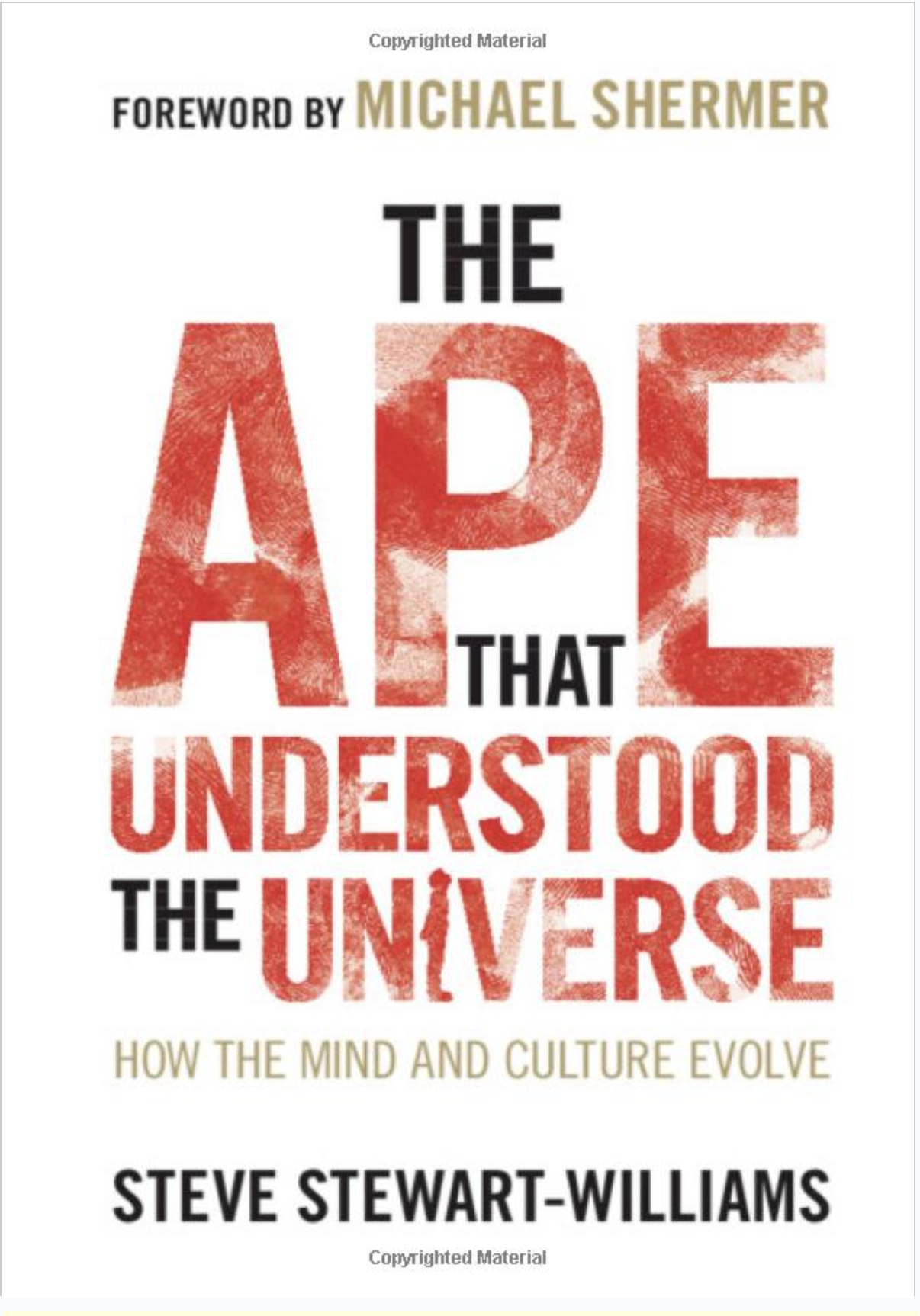
I have to hedge my encomiums a bit, because while most of the book—the first part that deals with evolutionary psychology—is excellent, the second bit, only the last 64 pages, is weaker. That’s the bit that deals with memes, the popular but, I think, misguided view that we can understand human cultural evolution by assuming it’s propelled by memes, “units of culture” first dreamed up by Dawkins in The Selfish Gene. While memetics sounds good at first glance, and has become incorporated into…
View original post 1,808 more words


Recent Comments