September 8, 1157: Birth of King Richard I “The Lionheart” of England.
09 Sep 2020 Leave a comment

Richard I (September 8, 1157– April 6, 1199) was King of England from 1189 until his death. He also ruled as Duke of Normandy, Aquitaine and Gascony, Lord of Cyprus, and Count of Poitiers, Anjou, Maine, and Nantes, and was overlord of Brittany at various times during the same period.
Richard was the third of five sons of King Henry II of England and Duchess Eleanor of Aquitaine and seemed unlikely to become king, but all his brothers except the youngest, John, predeceased their father. Richard is known as Richard Cœur de Lion (Norman French: Le quor de lion) or Richard the Lionheart because of his reputation as a great military leader and warrior. The troubador Bertran de Born also called him Richard Oc-e-Non (Occitan for Yes and No), possibly from a reputation for terseness.
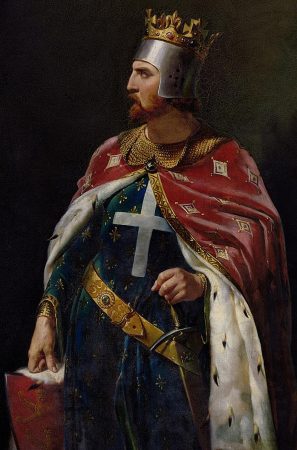
By the age of 16, Richard had taken command of his own army, putting down…
View original post 1,125 more words
TV Documentary Review: ‘The First World War’ (2003)
09 Sep 2020 Leave a comment

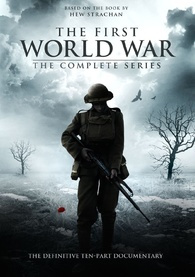
In September of 2003, Britain’s Channel 4 TV network began airing The First World War, a 10-part series based on historian Hew Strachan’s eponymous book about the cataclysmic conflict that broke out in the summer of 1914 and ended on the “11th hour, of the 11th day, of the 11th month” in 1918. Produced and narrated by Jonathan Lewis (The Boer War, Stalin), the 500-minutes-long documentary is an engrossing overview of World War I that explodes many of the clichés and myths about the conflict that shaped the 20th Century and whose repercussions echo well into the 21st.
The series’ writing credits include Strachan and various historical figures from whose memoirs and other writings much of the narrative is drawn, including Karen Blixen (Out of Africa)…
View original post 1,319 more words
Map of Europe if the Central Powers won World War I
09 Sep 2020 Leave a comment
in defence economics, war and peace Tags: maps, World War I
The Highland Clearances: Explained
09 Sep 2020 Leave a comment
in economic history, economics of crime, industrial organisation, labour economics, labour supply, law and economics, poverty and inequality, property rights Tags: British history, Scotland
Did @NZComCom freet about Netscape’s natural monopoly?
08 Sep 2020 Leave a comment
in economics of bureaucracy, entrepreneurship, industrial organisation, law and economics, politics - New Zealand, politics - USA, Public Choice, survivor principle Tags: competition law, creative destruction
Deaf People Hearing Sound for the FIRST Time
08 Sep 2020 Leave a comment
in health economics Tags: The Great Escape
In-Kind Donations to the Re-elect Trump Campaign
08 Sep 2020 Leave a comment

A quick sample of the insanity of Antifa / Burn Loot Murder, the shock troops of today’s Democrat Party in the USA.
As their VP candidate Kamala Harris said:
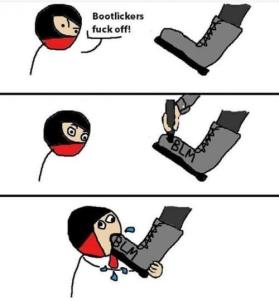
Well at least not until Joe Biden is elected President. These people are basically trying to intimidate others to agree with them using – as Biden has repeatedly said – “peaceful protests“.
- Their tactics seem to be attracting many criminals thrilled by the prospects of beating people up (“Punch A Nazi“), smashing stuff and burning shit down. (“Everycity,everytown,burnthe precincts to the ground“).
- More than a few of them seem to be mentally ill.
- Intimidation is the primary goal; having already committed violence, Antifa / BLM’s future targets can’t be sure they’ll…
View original post 493 more words
First World War Bombing of London 1915—1918 Part I
08 Sep 2020 Leave a comment

The First World War began in August 1914. Despite the German aim of a swift victory, their plans were thwarted. By the end of the year, the German army and its opponents, on both Western and Eastern Fronts, were stuck in trenches and the war seemed to have reached a stalemate. Given allied naval superiority and victories in the world outside Europe, matters looked unpromising for Germany. Therefore, in May 1915, the Germans decided to attack London from the air, in order to destroy the nerve centre of the British economy. It was thought that if the City — the financial heart of the country, replete with the Stock Exchange, the Bank of England and numerous warehouses — could be knocked out, then a victory for Germany would be all the closer. Initially, on 5 May 1915, the decision was taken to restrict bombing to the part of London east…
View original post 2,279 more words
In-Kind Donations to the Re-elect Trump Campaign
08 Sep 2020 Leave a comment
A quick sample of the insanity of Antifa / Burn Loot Murder, the shock troops of today’s Democrat Party in the USA.
As their VP candidate Kamala Harris said:
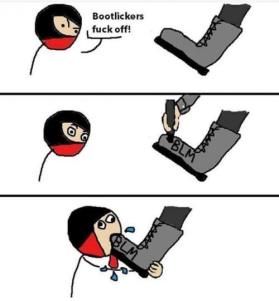
Well at least not until Joe Biden is elected President. These people are basically trying to intimidate others to agree with them using – as Biden has repeatedly said – “peaceful protests“.
- Their tactics seem to be attracting many criminals thrilled by the prospects of beating people up (“Punch A Nazi“), smashing stuff and burning shit down. (“Everycity,everytown,burnthe precincts to the ground“).
- More than a few of them seem to be mentally ill.
- Intimidation is the primary goal; having already committed violence, Antifa / BLM’s future targets can’t be sure they’ll…
View original post 493 more words


Recent Comments