For $725 million, you can buy a Texas ranch that's the size of a small nation http://t.co/PxX2l8exKy pic.twitter.com/xaLQo7bYXL
— Bloomberg Graphics (@BBGVisualData) August 14, 2015
The largest ranch in the USA with a single fence
23 Dec 2015 Leave a comment
in industrial organisation Tags: agricultural economics
Some reasons not to eat organic food
06 Dec 2015 Leave a comment
in economics of information, economics of media and culture, health economics Tags: agricultural economics, food snobs, organic farming, Twitter left
Too many hippies study biology
12 Nov 2015 Leave a comment
in applied price theory, economic history, economics of media and culture, liberalism, movies Tags: agricultural economics, back to nature, expressive boating, hippies, Left-wing hypocrisy, Leftover Left Twitter left, The Great Enrichment, The Great Escape, The Great Fact
Agricultural economics explained with an analogy to solar and wind power
04 Nov 2015 1 Comment
in applied price theory, TV shows Tags: agricultural economics
The financial performance of Landcorp since 2007
29 Sep 2015 Leave a comment
in economic history, environmental economics, industrial organisation, politics - New Zealand, resource economics, survivor principle Tags: agricultural economics, Landcorp, privatisation, state owned enterprises
Landcorp is a state-owned enterprise of the New Zealand government. Its core business is pastoral farming including dairy, sheep, beef and deer. In January 2012, Landcorp managed 137 properties carrying 1.5 million stock units on 376,156 hectares of land. Its total return to shareholders, the taxpayers, has been quite up-and-down in recent years.
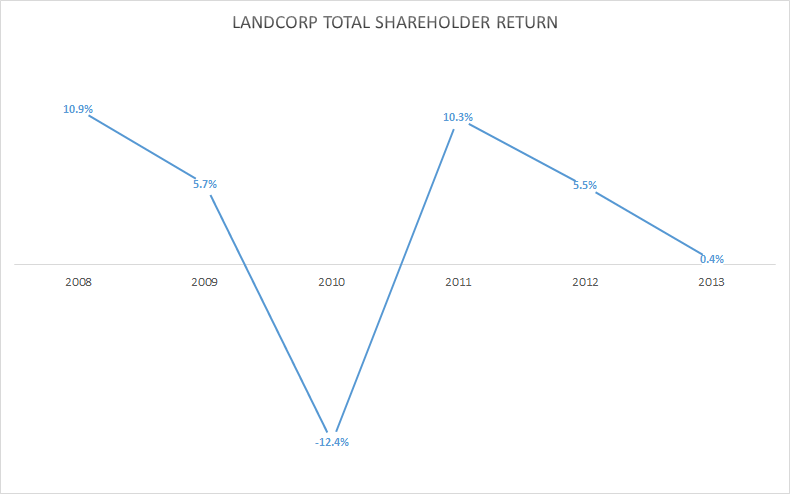
Source: The New Zealand Treasury – data released under the Official Information Act.
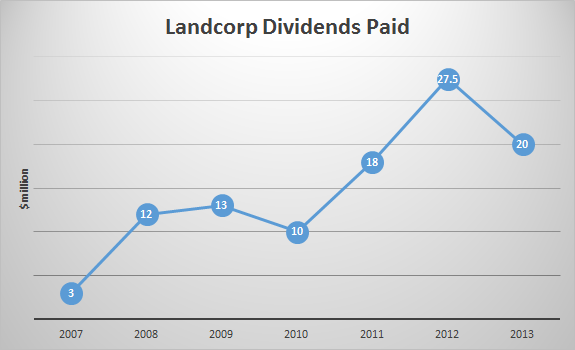
Source: The New Zealand Treasury – data released under the Official Information Act.
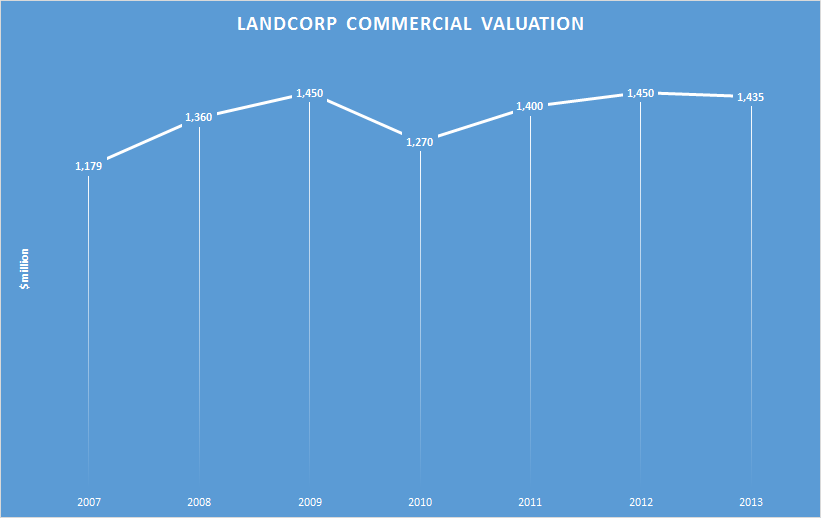
Source: The New Zealand Treasury – data released under the Official Information Act.
.
Many conservationists are against effective rhino conservation
23 Sep 2015 Leave a comment
in applied price theory, development economics, entrepreneurship, environmental economics, growth disasters, growth miracles, law and economics, property rights Tags: Africa, agricultural economics, do gooders, economics of conservation, economics of endangered species, endangered species, expressive voting, Leftover Left, Twitter left, unintended consequences
https://twitter.com/ConversationUK/status/646227223716872197/photo/1
https://twitter.com/dlAfrican/status/646215227076292608
Capturing the economic value of wildlife for the benefit of wildlife. New in PERC Reports: bit.ly/1JHerwj http://t.co/yijFIChPDo—
PERC (@PERCtweets) September 13, 2015
How private ownership and trophy hunting saved the southern white rhino: bit.ly/1HhZy55 #WorldRhinoDay http://t.co/s4PudPwrrI—
PERC (@PERCtweets) September 22, 2015
The Antiscience Left and GMOs
05 Sep 2015 Leave a comment
in health economics, politics - Australia, politics - New Zealand, politics - USA Tags: agricultural economics, antiscience left, conjecture and refutation, conspiracy theories, conspiracy theorists, creative destruction, GMOs, infotopia, risk risk trade-offs
Does fair trade help the poor?
11 Aug 2015 Leave a comment
in applied price theory, applied welfare economics, comparative institutional analysis, development economics, growth disasters, growth miracles, health and safety, human capital, industrial organisation, international economics, labour economics, survivor principle Tags: agricultural economics, expressive voting, fair trade, rational irrationality
The case for organic farming
08 Aug 2015 Leave a comment
in economics of media and culture, environmental economics, health economics, industrial organisation, survivor principle Tags: agricultural economics, cranks, green rent seeking, organic farming, quackery
Which countries devote the most land to organic #agriculture? wef.ch/1P42qpv http://t.co/q1YstjyrSu—
World Economic Forum (@wef) August 05, 2015
Call off the bee-pocalypse: U.S. honeybee colonies hit a 20-year high
07 Aug 2015 Leave a comment
in environmental economics Tags: agricultural economics, bees, green scaremongering

Call off the bee-pocalypse: U.S. honeybee colonies hit a 20-year high
24 Jul 2015 Leave a comment
in economic history, economics of media and culture, environmental economics, health economics Tags: agricultural economics, bees, doomsday prophets, environmental scare tactics, environmental scares
Is organic farming sustainable farming?
16 Jul 2015 Leave a comment
in environmental economics, environmentalism Tags: agricultural economics, food snobs, organic farming, The Great Escape, The Great Fact
How are Paul Ehrlich’s food riots going?
14 Jul 2015 Leave a comment
in economic history, environmental economics, environmentalism Tags: agricultural economics, doomsday prophets, Paul Ehrlich, The Great Escape
The world uses 68% less land to produce the same amount of food compared to 50 years ago: bit.ly/1FtkmTE http://t.co/zi4RnKnJQd—
Max Roser (@MaxCRoser) June 03, 2015
Climate change saving hundreds of thousands of lives in Africa
20 Jun 2015 Leave a comment
in environmental economics, global warming Tags: Africa, agricultural economics, climate alarmism, extreme poverty, global warming
Climate change saving hundreds of thousands of lives in Africa
thetimes.co.uk/tto/environmen…
@BarackObama hates that. http://t.co/cneiSS60wT—
Steve Goddard (@SteveSGoddard) June 02, 2015
Yield of organic crops as percentage of conventional crops
16 Jun 2015 Leave a comment
in environmental economics, environmentalism, health economics, politics - Australia, politics - New Zealand, politics - USA Tags: agricultural economics, food snobs, organic farming
Yield of organic row crops as percentage of conventional
ganaderiayagro.blogspot.com/2015/05/organi… http://t.co/pjdbNEhvSH—
C. S. Prakash (@AgBioWorld) June 01, 2015
Why organic food costs more? -relative yield vs. conventional
ganaderiayagro.blogspot.com/2015/05/organi… http://t.co/xWcQiJoZ6K—
C. S. Prakash (@AgBioWorld) June 01, 2015
 Utopia, you are standing in it!

Recent Comments