Capitalism and Millennials: The 2018 James Q. Wilson Lecture
23 Sep 2018 Leave a comment
in applied price theory, development economics, entrepreneurship Tags: anti-foreign bias, anti-market bias, pessimism bias, The Great Enrichment
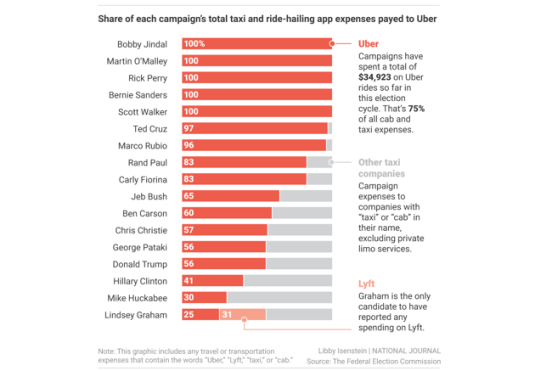
Strong #Uber critic @SenSanders uses @Uber all the time
30 Aug 2018 Leave a comment
in applied price theory, economics of regulation, politics - USA, Public Choice, rentseeking Tags: 2016 presidential election, anti-market bias, creative destruction, pessimism bias, taxi regulation
Green buying really is 90% BS
21 Aug 2018 Leave a comment
in applied price theory, economics of information, energy economics, environmental economics, global warming, health economics Tags: anti-market bias, food snobs, organic food
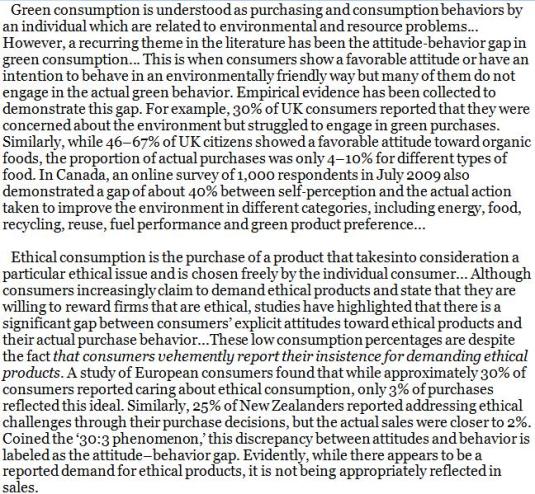
This has a disturbingly wide application
01 Feb 2018 1 Comment
in applied price theory, Public Choice Tags: anti-capitalist mentality, anti-foreign bias, anti-market bias

Arguments Against International Trade
08 Jun 2017 Leave a comment
in applied price theory, applied welfare economics, international economics Tags: anti-foreign bias, anti-market bias, free trade
Would @GetUp @SenSanders go back in Time Machine to their 1970s glory days?
27 Mar 2017 1 Comment
in applied price theory, applied welfare economics, development economics, economic history, growth miracles, politics - USA Tags: anti-market bias, Leftover Left, pessimism bias, The Great Enrichment, top 1%
18.1% of all children born on this planet in 1960 died before they had their fifth birthday ourworldindata.org/data/populatio… https://t.co/1FcIzAk88b—
Ninja Economics (@NinjaEconomics) December 28, 2015
A Graph for Pope Francis: If You Want to Help the Poor, You Should Embrace Capitalism. Exhibit A: See Chart http://t.co/yG1ixKZxrJ—
Mark J. Perry (@Mark_J_Perry) September 21, 2015
How to Sabotage Progress
03 Dec 2016 Leave a comment
in applied price theory, Austrian economics, development economics, economic history Tags: anti-market bias, The Great Fact

Profits Are Progressive
10 May 2016 Leave a comment
in applied price theory, economics of media and culture, entrepreneurship, industrial organisation, survivor principle, theory of the firm Tags: anti-market bias, entrepreneurial alertness, profit and loss, rational irrationality, superstars
What 3 skills do public policy analysts need?
27 Apr 2016 Leave a comment
in applied price theory, business cycles, economics of bureaucracy, economics of regulation, fiscal policy, macroeconomics, monetary economics Tags: anti-market bias, antiforeign bias, expressive voting, lags on monetary policy, makework bias, rational rationality, tax incidence, The fatal conceit, The pretense to knowledge
I used to argue that the quality of public policy making would double if public policy analysts remembered the first 6 weeks of microeconomics 101 but on reflection more than that is required.
Could we economists today ever show such self-restraint about our own expert recommendations? https://t.co/2UE12JuIgn—
William Easterly (@bill_easterly) November 24, 2015
I picked up my initial insight out when working as a graduate economist in the Australian Department of Finance. That was a few years ago.
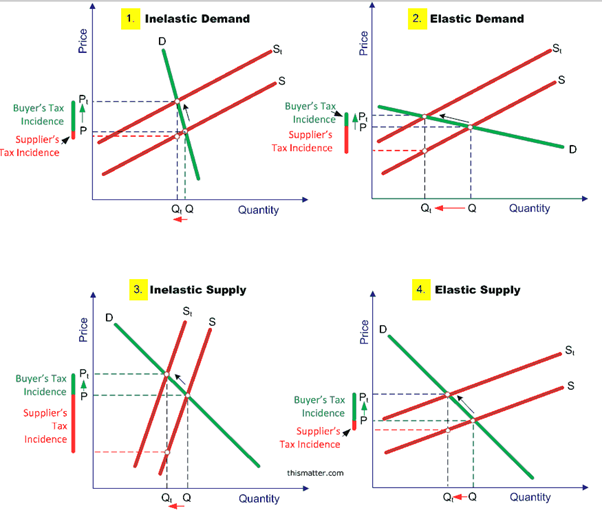
I am now concluded that policy analysts also need to know the basics of the economics of tax incidence. Who pays the tax depends on the elasticities of supply and demand rather than who writes the check to the taxman.
The number of times that I have read media and public policy analysis saying who pays the tax is the writer of the cheque to the taxman is beyond counting.
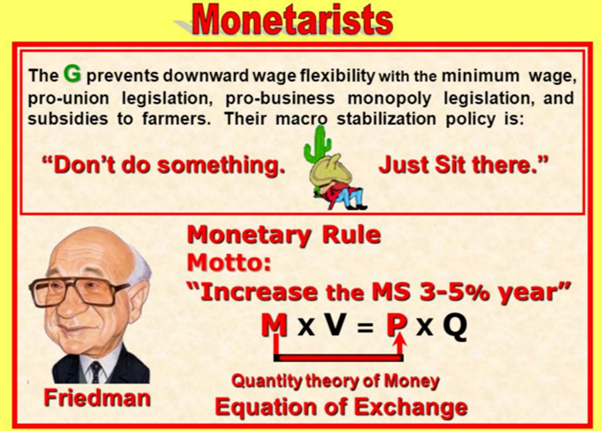
There is also what to do about unemployment and inflation. Do not just do something, sit there might be good advice on most occasions. As Tim Kehoe and Gonzalo Fernandez de Cordoba explain in the context of first do no harm:
Looking at the historical evidence, Kehoe and Prescott conclude that bad government policies are responsible for causing great depressions.
In particular, they hypothesize that, while different sorts of shocks can lead to ordinary business cycle downturns, overreaction by the government can prolong and deepen the downturn, turning it into a depression.
What role socialism in The Great Escape? @BernieSanders @JeremyCorbyn @JohnMcDonnellMP #feelthebern
26 Apr 2016 Leave a comment
in applied price theory, development economics, economic history, growth disasters, growth miracles, Public Choice, rentseeking Tags: anti-market bias, economics of socialism, rational irrationality, The Great Escape, The Great Fact
A new World Bank study shows the dramatic reductions in global poverty and inequality as a result of the spread of market institutions and freer trade.

Source: Capitalism, Global Trade, and the Reduction in Poverty and Inequality | Cato @ Liberty
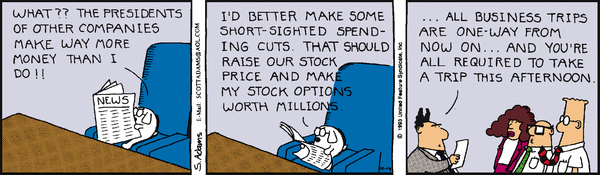
@Economicpolicy shows that top CEO pay has been a miserable rollercoaster for 15 years
25 Apr 2016 Leave a comment
#MorganFoundation errors about @nzinitiative’s Health of the State – part 2
23 Apr 2016 Leave a comment
in economics of media and culture, economics of regulation, health economics, politics - New Zealand Tags: anti-market bias, do gooders, meddlesome preferences, Morgan Foundation, nanny state, political psychology, rational rationality

 Utopia, you are standing in it!
Recent Comments