Antitrust has always been a strange regulatory enterprise. Businesses are largely free to engage in various commercial practices involving price, output, product design, distribution, research, and innovation—until they’re not. Outside the paradigmatic examples of explicit agreements among competitors to fix price and output, many business practices live in a gray zone. Whether a particular pricing…
The proposed acquisition of Warner Bros. Discovery (WBD) assets by Netflix is already being cast as a landmark antitrust “test case.” If past deals are any guide, the critiques will follow a familiar script: narrow market definitions, selective data points, and headline-friendly market-share claims designed to trigger alarm. Yet in a video ecosystem defined by…
William M. Landes and Richard A. Posner’s 1981 Harvard Law Review article “Market Power in Antitrust Cases” is a true classic. Showing the value of interdisciplinary work within the law & economics tradition, it brought real clarity to what “market power” means and how courts should assess it—cutting through vague labels like “monopoly power” and…
Online commerce has transformed how firms design their distribution systems, yet EU competition law continues to treat many online-sales restrictions as suspect by default. This tension lies at the heart of today’s vertical restraints debate. While the economic theory of vertical agreements has been largely settled for decades, the legal framework has not fully absorbed…
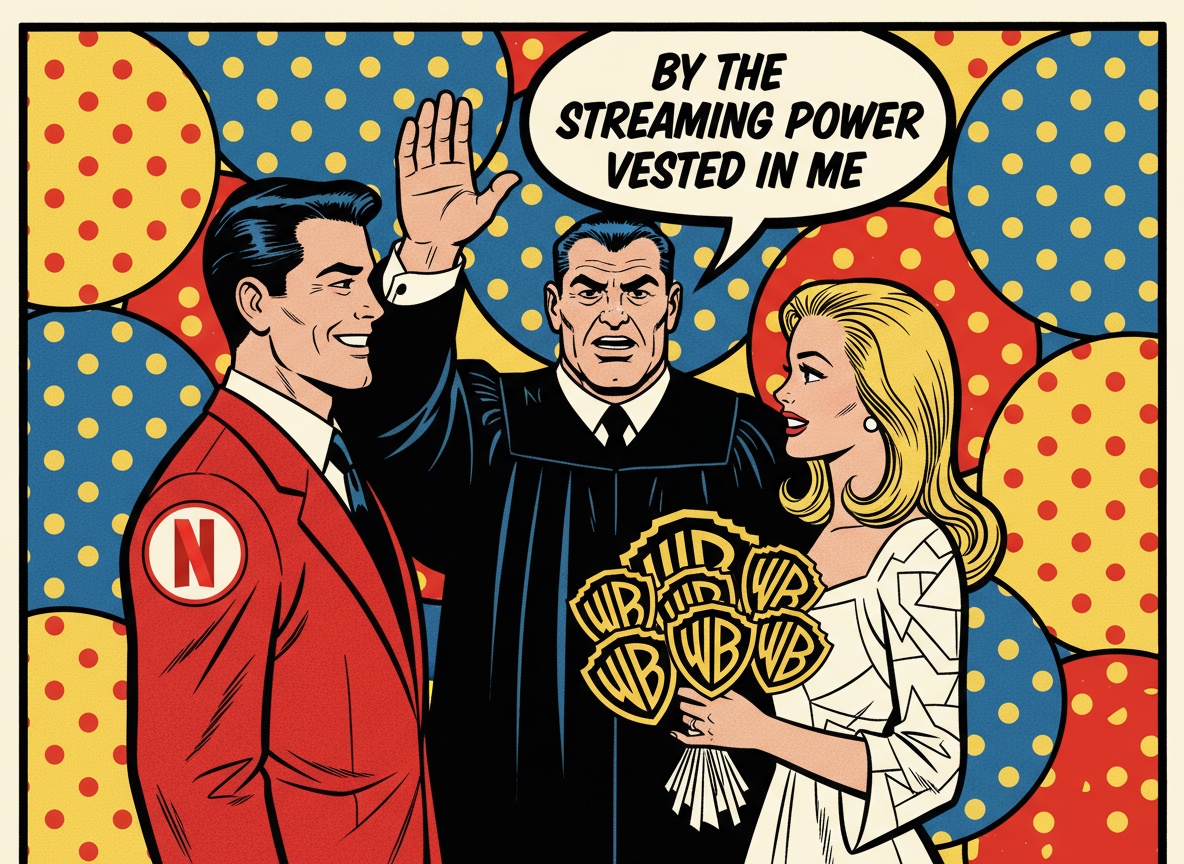
Warner Bros. Discovery (WBD) has announced that it is selling its major assets to Netflix, including Warner Bros. Pictures (home of Harry Potter), DC Studios, and HBO Max. Netflix was chosen among a group of bidders that also included Paramount and Comcast. This post explores some of the antitrust issues and hurdles that a combined…
The memorandum and order in FTC v. Meta Platforms Inc. that U.S. District Court Judge James E. Boasberg filed Nov. 18, ruling in favor of Meta, has now been followed by a Dec. 2 revised order that contained fewer redactions. The memorandum doesn’t exactly provide the law & economics analysis I would have produced, had…
This morning’s announced merger between Netflix and Warner Bros. Discovery (WBD) would create a global media company of unprecedented scale. The transaction will also almost certainly attract scrutiny from antitrust regulators—most likely the U.S. Justice Department (DOJ) Antitrust Division, rather than the Federal Trade Commission (FTC). The deal would offer a direct test of the…
Nations around the world are reassessing antitrust policy (generally called “competition policy” overseas). Governments, regulators, and industry leaders are increasingly asking whether traditional antitrust enforcement is holding back the “competitiveness” of domestic firms. The term now shows up in speeches by European commissioners, in UK government directives, in U.S. merger battles, and in Canadian legislative…
The Core Argument: Markets Beat Courts at Correcting Monopoly Frank H. Easterbrook’s 1984 Texas Law Review article “Limits of Antitrust” advances a deceptively simple thesis that fundamentally reoriented competition policy: antitrust law should recognize its own institutional limitations and design rules accordingly. The article contains two central insights. The first is that, because “antitrust is […]
Eric Crampton writes – A lot of changes are coming in competition policy. Last week, the government announced a package of reforms that, overall, set the Commerce Commission on a more activist tack. One proposed reform will align New Zealand more closely with Australia’s regime, guarding against so-called ‘killer acquisitions’.
Radio NZ reports: But the Greens’ commerce and consumer affairs spokesperson Ricardo Menéndez March told RNZ that was only “one part of the puzzle” and the government needed to explore all its options – including breaking up the supermarket duopoly. “While we support having new players in the market, Nicola Willis is banking on big […]
Richard Meade writes – In its quest to lower electricity prices for New Zealand households, the Electricity Authority may inadvertently make the situation worse. This week, the authority announced plans to require New Zealand’s “gentailers” – firms that both generate electricity and retail it to consumers – to offer the same supply terms to independent retailers as […]
I’ve spent the last couple of days at the Competition Law and Policy Institute’s annual workshop.Webb-Henderson’s Lucy Wright made a good case for a de minimus threshold for merger controls. Small mergers could have a safe harbour, or mergers in markets of insufficient NZ importance.If we need to set a monetary threshold for a market…
Conventional antitrust enforcement tries to prevent harmful mergers by blocking them but empirical evidence shows that rival stock prices often rise when a merger is blocked—suggesting that many blocked mergers would have increased competition. In other words, we may be stopping the wrong mergers. In a clever proposal, Ayres, Hemphill, and Wickelgren (2024) argue that […]
TweetI’m proud to have paired up with the Cato Institute’s Marian Tupy to pen this new piece at National Review on so-called ‘predatory pricing.’ A slice: Competition drives innovation, improves quality, and most importantly, lowers prices for consumers. Yet when foreign companies — particularly Chinese firms — successfully compete on price, accusations of “predatory pricing”…
Why Evolution is True is a blog written by Jerry Coyne, centered on evolution and biology but also dealing with diverse topics like politics, culture, and cats.
In Hume’s spirit, I will attempt to serve as an ambassador from my world of economics, and help in “finding topics of conversation fit for the entertainment of rational creatures.”









Recent Comments