Nitpicking @stevenljoyce reply 2 @TaxpayersUnion on corporate welfare @JordNZ

The best the Minister for Economic Development, Steven Joyce, could do in response to my recent report on corporate welfare was nit-picking. Joyce said my definition of corporate welfare was flawed and that spending on R&D will grow the economy. He said

“To brand things like tourism promotion and building cycle-ways as corporate welfare is, I think, creative but not accurate at all.”

Joyce also said my report was

just somebody picking out a whole bunch of government programmes that in many cases don’t involve payments to firms at all…

Those that do involve payments to firms are specifically designed to encourage the development for example of the business R&D industry. Politicians don’t choose them.

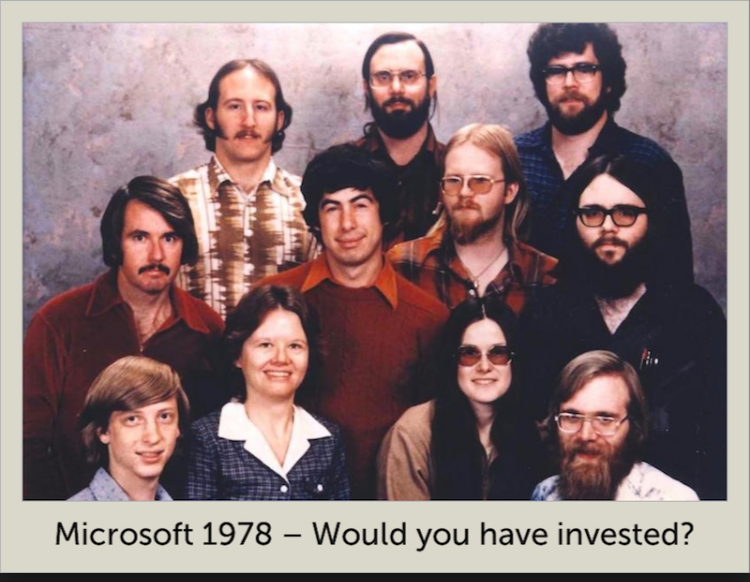
Payments in kind are business subsidies. R&D is so important to the economy that the last thing you want is its direction to be biased by funding from government. Bureaucrats have a conservative bias and do not fund oddballs and long shots. The oddballs and hippies in the picture below could only afford the photo because they won a radio competition in Arizona.
image

The R&D expenditure that was criticised in my report was commercialisation, not basic research, which was specifically praised. Which research to commercialise is for entrepreneurs.
image

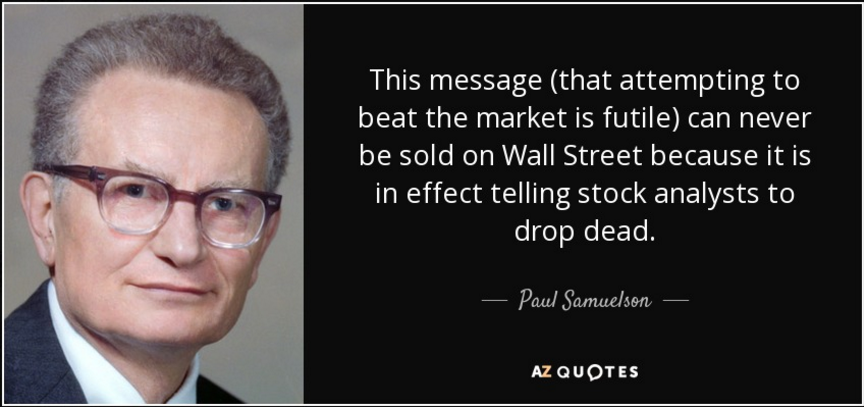
There is no reason whatsoever to think bureaucrats administering R&D subsidy budgets set by politicians are any better than private entrepreneurs at picking the next big thing.

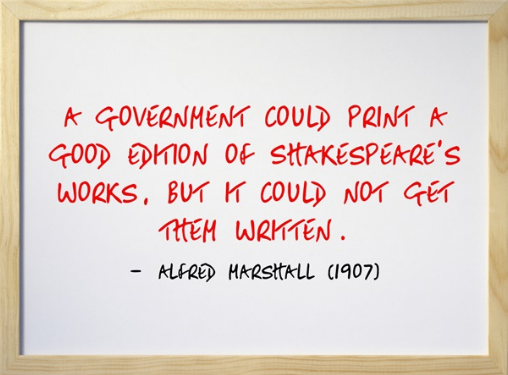
If bureaucrats were any good at picking winners, were any good at beating the market, they would go work for a hedge fund on an astronomically better salary package. The salary package of one top hedge fund manager exceeds the entire payroll budget of most New Zealand government departments including those administering R&D subsidies and other hand-outs.
image

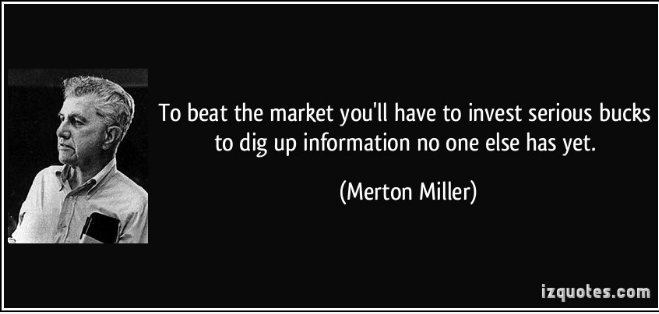
Government expenditure in vital areas such as innovation should be justified on the basis of cost-benefit ratios and a rationale for why bureaucrats have superior access to information about the entrepreneurial prospects of unproven technologies and product prototypes. 
image

Subsidies should not be defended because of their popularity and sexiness as Mr Joyce did for the film industry, tourism promotion and ultra-fast broadband

If they told New Zealanders that in their view tourism promotion should be cancelled, the film industry should close down, that their shouldn’t be any ultra-fast broadband…I don’t think people would be that enamoured with it.

On irrigation funding, Mr. Joyce cited a report by NZIER that found irrigation contributes $2.2 billion to the economy. Irrigation is a private good which can funded by pricing it properly including the recovery of capital costs. There is no case for a subsidy.
image

Public goods have spillovers, private goods such as water and irrigation do not. Users can fund the irrigation themselves buying as little or as much water as they are willing to pay out for out their own pockets. The NZIER report noted that it was not about the case for public funding:

… we are not able to quantify the environmental or social impacts if irrigation had never occurred. We also do not attempt to investigate the relative merits of public versus private sector funding of the schemes.
image

Will there ever be self-drive cars?

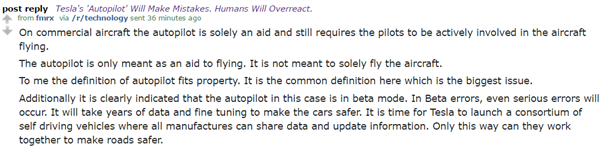
An astute commentator on the technology Sub-Reddit pointed out that commercial aircraft fly on autopilot but active involvement of pilots is expected. No one ever contemplates the contrary.

image

The autopilot on a plane has a far less challenging environment than a self driving. Planes do not have to navigate passed other planes within a fraction a second of collision, along with pedestrians and bicyclists.

Planes do not have the follow hyper-accurate maps and turn and swerve almost continuously to avoid a collision as distinct from turbulence or an error that is quickly corrected by pilot before any danger is encountered.

As far as self drive cars will go, I think they will be confined to driver assist functions  with a driver always having to have his hands on the wheel.

A peculiarity of self drive cars is the brand name of Googleand Tesla are so strong that they have been able to hold off the usual Luddite reaction to new technologies.

Robots Are Really Bad At Folding Towels

Source: Robots Are Really Bad At Folding Towels : Planet Money : NPR.

The 8 types of creative destruction

Image

Tyler Cowen on Joseph Schumpeter

Creative destruction in personal computing platforms

High US drug prices as a good shot public good ‏@RobinHoodTax

Much is made of the fact that drug prices are lower in Canada and Western Europe as compared to the USA. Indeed, day trips are made across the Canadian border to buy cheaper drugs as compared to the local pharmacy pricin in a US city.

Instead of what is always the relevant public policy question. What would happen in the USA if attempts were made to seriously reduce the price of drugs. The answer is obvious, the incentive to create new drugs would be severely diminished. There are no free lunches in public policy.

Bringing in new drug to the market is a seriously expensive business these days. That is before you consider the commercial risk of inventing a drug that isn’t much better than its competitors.

Of course, you can always be leapfrogged by another drug company brining on a better drug not long after you have brought yours to market. None of this is getting any cheaper.

Innovation by specific drug company is a form of public good production known as best shot  public goods. Under a best-shot rule, the socially available amount is the maximum of the individual quantities. There is is a single prize of overwhelming social importance, such as a major drug breakthrough, with any individual’s effort having a chance of securing the prize.

The amount to be produced of a best shot public good depends on the best contribution rather than  the usual situation of any contribution is interchangeable. Another example is a large number of people shooting at an incoming missile. The best shot counts, all the others don’t matter.

High drug prices in the USA could be the price of the weakest shot or weakest link public good. Weakest shot public good is where the socially available amount is the minimum of the quantities individually provided. One example a weakest link public goods are military alliances where the success of the alliance depends upon everyone contributing

In the weakest shot or weakest link theory of public good production, the free riding countries of Europe will bring the whole show down by not making their contribution to drug research by buying at good prices from the US pharmaceutical companies.

Perhaps a better way to look at drug innovation is a good shot public good. Someone has to make a reasonable contribution; that has to be the USA because it is such a large market. Without access to good prices in the USA, there wouldn’t be enough of an incentive for drug innovation.

Military alliances such as NATO and the Warsaw Pact probably are examples of good shot public goods. They depend on a number of large countries making their contribution but I always leaned towards the crucial best shot contribution of the USA and former USSR .

In the case of the start of World War I, Triple Entente against Germany was a weaker shot public good. Its defensive wall depended on the strength of the weakest country defending i.e. the unfortified Belgian border (in both wars). The Tripartite Alliance was a best shot public good depending on the strength of Germany’s attack for ultimate success or failure.

The IBM personal computer sold for $4,385 in 1981

@economicpolicy leans against the gales of creative destruction

image

Image

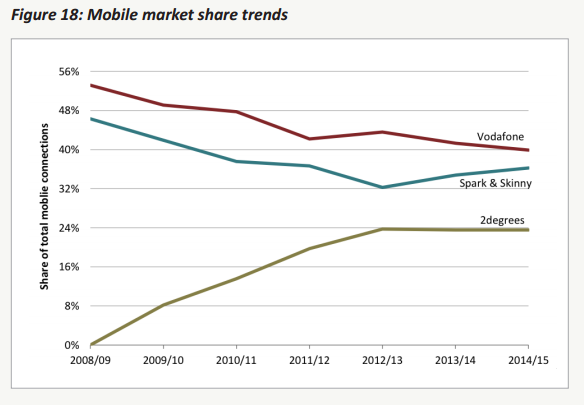
Who said mobile phone networks were not contestable?

image

Source: New Zealand Commerce Commission.

1st cellphone with internet capabilities in 1996

image

Image

The first portable-cellular PC from 1989

image

Image

Peak newspaper jobs

Image

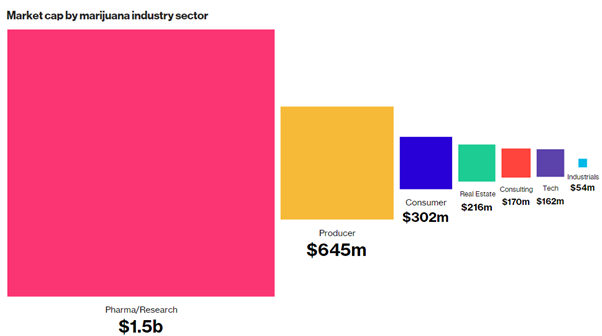
Share market capitalisation by marijuana industry sector

image

Source: For These 55 Marijuana Companies, Every Day is 4/20.

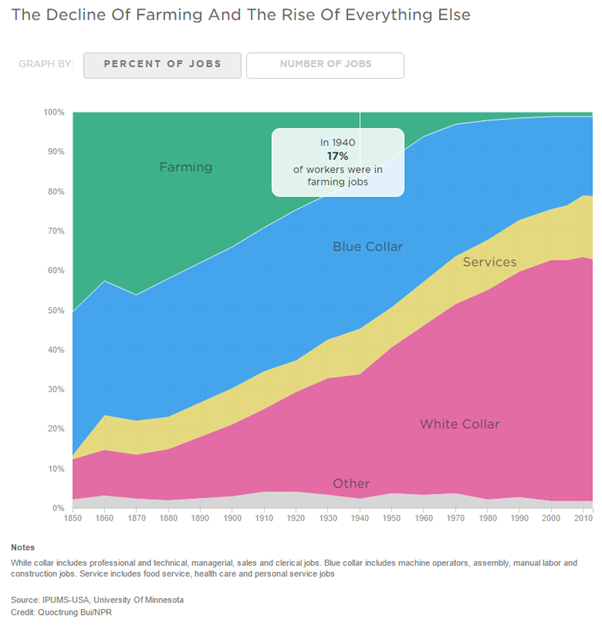
Where did all the farmers go when the tractors came from their jobs?

image

Source: How Machines Destroy (And Create!) Jobs, In 4 Graphs : Planet Money : NPR.

Previous Older Entries Next Newer Entries

Bassett, Brash & Hide

Celebrating humanity's flourishing through the spread of capitalism and the rule of law

Truth on the Market

Scholarly commentary on law, economics, and more

The Undercover Historian

Beatrice Cherrier's blog

Matua Kahurangi

Celebrating humanity's flourishing through the spread of capitalism and the rule of law

Temple of Sociology

Celebrating humanity's flourishing through the spread of capitalism and the rule of law

Velvet Glove, Iron Fist

Celebrating humanity's flourishing through the spread of capitalism and the rule of law

Why Evolution Is True

Why Evolution is True is a blog written by Jerry Coyne, centered on evolution and biology but also dealing with diverse topics like politics, culture, and cats.

Down to Earth Kiwi

Celebrating humanity's flourishing through the spread of capitalism and the rule of law

NoTricksZone

Celebrating humanity's flourishing through the spread of capitalism and the rule of law

Homepaddock

A rural perspective with a blue tint by Ele Ludemann

Kiwiblog

DPF's Kiwiblog - Fomenting Happy Mischief since 2003

The Dangerous Economist

Celebrating humanity's flourishing through the spread of capitalism and the rule of law

Watts Up With That?

The world's most viewed site on global warming and climate change

The Logical Place

Tim Harding's writings on rationality, informal logic and skepticism

Doc's Books

A window into Doc Freiberger's library

The Risk-Monger

Let's examine hard decisions!

Uneasy Money

Commentary on monetary policy in the spirit of R. G. Hawtrey

Barrie Saunders

Thoughts on public policy and the media

Liberty Scott

Celebrating humanity's flourishing through the spread of capitalism and the rule of law

Point of Order

Politics and the economy

James Bowden's Blog

A blog (primarily) on Canadian and Commonwealth political history and institutions

Science Matters

Reading between the lines, and underneath the hype.

Peter Winsley

Economics, and such stuff as dreams are made on

A Venerable Puzzle

"The British constitution has always been puzzling, and always will be." --Queen Elizabeth II

The Antiplanner

Celebrating humanity's flourishing through the spread of capitalism and the rule of law

Bet On It

Celebrating humanity's flourishing through the spread of capitalism and the rule of law

History of Sorts

WORLD WAR II, MUSIC, HISTORY, HOLOCAUST

Roger Pielke Jr.

Undisciplined scholar, recovering academic

Offsetting Behaviour

Celebrating humanity's flourishing through the spread of capitalism and the rule of law

JONATHAN TURLEY

Res ipsa loquitur - The thing itself speaks

Conversable Economist

Celebrating humanity's flourishing through the spread of capitalism and the rule of law

The Victorian Commons

Researching the House of Commons, 1832-1868

The History of Parliament

Articles and research from the History of Parliament Trust

Books & Boots

Reflections on books and art

Legal History Miscellany

Posts on the History of Law, Crime, and Justice

Sex, Drugs and Economics

Celebrating humanity's flourishing through the spread of capitalism and the rule of law

European Royal History

Exploring the Monarchs of Europe

Tallbloke's Talkshop

Cutting edge science you can dice with

Marginal REVOLUTION

Small Steps Toward A Much Better World

NOT A LOT OF PEOPLE KNOW THAT

“We do not believe any group of men adequate enough or wise enough to operate without scrutiny or without criticism. We know that the only way to avoid error is to detect it, that the only way to detect it is to be free to inquire. We know that in secrecy error undetected will flourish and subvert”. - J Robert Oppenheimer.

STOP THESE THINGS

The truth about the great wind power fraud - we're not here to debate the wind industry, we're here to destroy it.

Lindsay Mitchell

Celebrating humanity's flourishing through the spread of capitalism and the rule of law

Alt-M

Celebrating humanity's flourishing through the spread of capitalism and the rule of law

croaking cassandra

Economics, public policy, monetary policy, financial regulation, with a New Zealand perspective

The Grumpy Economist

Celebrating humanity's flourishing through the spread of capitalism and the rule of law

International Liberty

Restraining Government in America and Around the World