

There are now more mobile phones than people
26 Nov 2015 1 Comment
in applied welfare economics, development economics, economics of media and culture, entrepreneurship, growth miracles, industrial organisation Tags: cell phones, creative destruction, international technology diffusion, living standards, mobile phones, technology diffusion
An Orgy of Innovation
25 Nov 2015 Leave a comment
in applied price theory, economic history, entrepreneurship Tags: capitalism and freedom, creative destruction, entrepreneurial alertness, innovation, The Great Enrichment
Uber is creative destruction on steroids
23 Nov 2015 Leave a comment
in economics of regulation, entrepreneurship, industrial organisation, survivor principle Tags: creative destruction, entrepreneurial alertness, taxi regulation, Uber
The robot revolution is overrated
22 Nov 2015 Leave a comment
in applied price theory, economic history, industrial organisation, international economics, labour supply Tags: automation, creative destruction, entrepreneurial alertness, industrial revolution, mechanisation, robots, technological unemployment
The rise of the service economy
19 Nov 2015 Leave a comment
in economic history, industrial organisation, survivor principle Tags: creative destruction, manufacturing, service economy
What are movie tickets as expensive as in 1920?
19 Nov 2015 Leave a comment
in economic history, economics of media and culture Tags: creative destruction, Hollywood economics
What does @Walmart do wrong but @APPLEOFFIClAL does right?
16 Nov 2015 Leave a comment
in applied price theory, applied welfare economics, entrepreneurship, industrial organisation, politics - USA Tags: Apple, creative destruction, entrepreneurial alertness, Left-wing hypocrisy, Leftover Left, superstar wages, superstars, top 1%, Twitter left, Walmart
Creative destruction in British manufacturing employment
13 Nov 2015 Leave a comment
in applied price theory, applied welfare economics, economic history, industrial organisation, labour economics, labour supply, survivor principle Tags: British economy, British history, creative destruction, endogenous growth theory, labour reallocation, technological unemployment
@dsmitheconomics @thesundaytimes In mid-60s, about a third of workers were employed in manufacturing. Now 8%! http://t.co/ipmr7XvIme—
Andrew Sentance (@asentance) July 12, 2015
Do the European welfare states free ride off American entrepreneurship and innovation?
12 Nov 2015 1 Comment
in applied price theory, applied welfare economics, comparative institutional analysis, constitutional political economy, economic history, economics of regulation, entrepreneurship, industrial organisation, politics - USA, public economics, survivor principle, taxation, technological progress Tags: creative destruction, Daron Acemoglu, Denmark, entrepreneurial alertness, Eurosclerosis, international technology diffusion, taxation and entrepreneurship, taxation and innovation, taxation and investment, taxation and labour supply, technology followers, welfare state
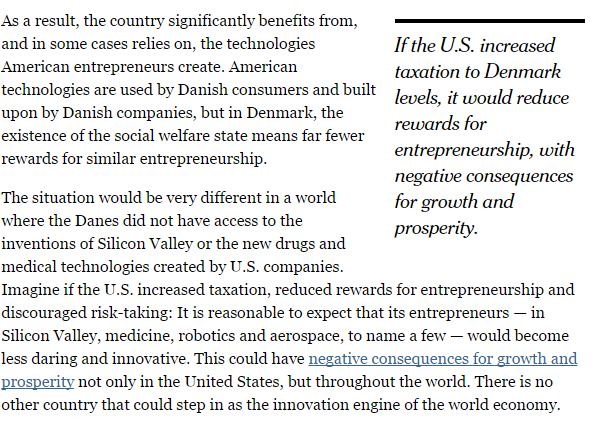
Source: Daron Acemoglu A Scandinavian U.S. Would Be a Problem for the Global Economy – NYTimes.com.
With tech from 1960, you’d be more than twice as likely to die in a car wreck
12 Nov 2015 Leave a comment
in transport economics Tags: creative destruction, road safety
More than half of start-ups fail within the first five years
10 Nov 2015 Leave a comment
in economic history, entrepreneurship, industrial organisation, managerial economics, organisational economics Tags: creative destruction, entrepreneurial alertness


Recent Comments