Teen e-cigarette consumption has surpassed conventional smoking in 2014 #vaping via @CDCgov
statista.com/chart/3417/eci… http://t.co/RnZz1nbj5X—
Statista (@StatistaCharts) April 22, 2015
The crusade to ban e-cigarette had the predictable effect among teens
12 May 2015 Leave a comment
in environmental economics, health economics Tags: do gooders, economics of smoking, meddlesome preferences, nanny state, offsetting behaviour, The fatal conceit, The pretence to knowledge, unintended consequences
No mention of healthier is wealthier, richer is safer
02 May 2015 Leave a comment
in development economics, environmental economics, global warming, growth disasters, growth miracles Tags: climate alarmism, do gooders, global warming, World Bank
5 ways to reduce the drivers of climate change: 1) Put a price on carbon: wrld.bg/LBatf http://t.co/JZRHZliCSm—
World Bank (@WorldBank) April 17, 2015
Why is the rapid closing of the gender wage gap in New Zealand not celebrated more?
27 Apr 2015 1 Comment
in discrimination, gender, human capital, labour economics, labour supply, occupational choice, politics - New Zealand Tags: activists, do gooders, gender wage gap, Left-wing hypocrisy, Leftover Left
With the rapid closure in the raw female male wage gap in New Zealand over the last 15 or so years, the lack of celebration of this achievement among equal pay activists is puzzling.
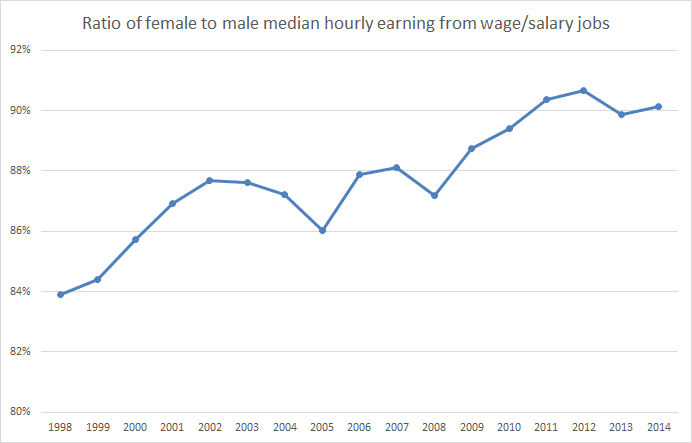
Source: Statistics New Zealand, New Zealand Social indicators, Median hourly earnings.
The economic and educational psychology case against making Te reo Māori compulsory in NZ schools
23 Apr 2015 1 Comment
in discrimination, economics of education, human capital, labour economics, politics - USA, poverty and inequality Tags: do gooders, economics of languages, Maori economic development, network economics, Te reo Māori
The Race Relations Commissioner Dame Susan Davoy has called for Te Reo Māori to be compulsory in New Zealand schools. She said being bilingual would be “a real added advantage” to young Kiwis and more people knowing Te reo Māori would help race relations.
Learning another language is not a priority for the Pākehā children or Māori mokupuna when you consider the poor literacy rates among Māori, Pasifika and Pākehā. The priority for children in an English speaking country is to master English. Too many children leave school with inadequate reading and writing skills.
Figure 1: Prose literacy by ethnicity, 2011
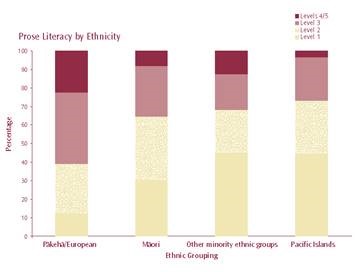
Source: Literacy skills of young adult New Zealanders | Education Counts.
Lower levels of literacy and numerously are much higher among Māori and Pasifika children. Pākehā consistently having a larger proportion in the higher levels of prose literacy.
Figure 2: Prose literacy rates by ethnicity, 1996 and 2006
Source: Indicator 9: Literacy rates — Office of the Auditor-General New Zealand.
60%of Pākehā are above the minimum level of competence to meet the prose literacy requirements of a knowledge society. This contrasts with the majority of Māori and Pasifika who are below the minimum level of competence.
Furthermore, requiring children who do not have an aptitude for language or school in general to learn a language will reinforce in those who are not doing well that they are not very smart. This will give them more reasons to hate school and leave as soon as possible and never go back.
The key to helping children who do not have an aptitude to succeed greatly at school is to find the subjects where they do do well so they can get a good start to life. If students are not good at academic subjects, requiring them to do more academic studies such as study language is fool-hardy.
Taking resources, and more importantly, students learning time away from basic literacy skills will do little for a Māori economic development and race relations. This is because this taking resources and student learning time away from literacy and basic education will slow the closing of income gaps between Māori and others.
Language is a network good. It pays to join the largest network so you can communicate and do business with more people. The wage premium for immigrants learning English in English-speaking’s countries is about 15%.

Learning Te reo Māori will not help children in their other subjects. The psychology of the transfer of learning was founded 100 years ago to explore the hypothesis that learning Latin gave the student muscle to learn other subjects, both other languages and generally learn faster.
Educational psychologists found that Latin does not help much in studying other languages and other subjects. No significant differences were found in deductive and inductive reasoning or text comprehension among students with 4 years of Latin, 2 years of Latin or no Latin at all.
The mass kidnappings of environmental activists has extended to Europe
06 Apr 2015 Leave a comment
in environmental economics, environmentalism Tags: activists, capitalism and freedom, do gooders, green hypocrisy
Europe is getting greener.
Here is the comparison between today and 1900. http://t.co/GFMXD6Bd6c—
Max Roser (@MaxCRoser) March 15, 2015
There is no other explanation for why they are not dancing in the streets to celebrate the greening of Europe under capitalism and freedom.
What if McDonald’s workers were paid $15 per hour
06 Apr 2015 Leave a comment
in industrial organisation, labour economics, labour supply, minimum wage, occupational choice, survivor principle Tags: activists, compensating differentials, do gooders, Leftover Left, living wage
More evidence of mass kidnappings of activists
01 Apr 2015 Leave a comment
in development economics, entrepreneurship, growth disasters, growth miracles, liberalism Tags: Africa, anticapitalist mentality, capitalism and freedom, do gooders, entrepreneurial alertness, foreign direct investment, Left-wing hypocrisy, ODA
Why aren’t overseas development activists dancing in the streets to celebrate this turnaround in the economic climate of Africa through capitalism and the freedom to invest. The only possible explanation is mass kidnappings.
Still more evidence of mass kidnappings of environmental activists
25 Mar 2015 Leave a comment
in energy economics, environmental economics, environmentalism, global warming Tags: activists, Big Wind, bootleggers and baptists, do gooders, green hypocrisy, green rent seeking, trade-offs, world heritage areas
Security cameras in prison showers and the case for private prisons
06 Mar 2015 Leave a comment
in economics of crime, entrepreneurship, law and economics, organisational economics, politics - New Zealand, politics - USA Tags: do gooders, law and order, prisons
I was listening to a radio show the other day on the introduction of close circuit television into New Zealand prisons that were to be monitored by both male and female guards. This is regarded as an indignity by some because these new close circuit cameras would be in showers and toilets.
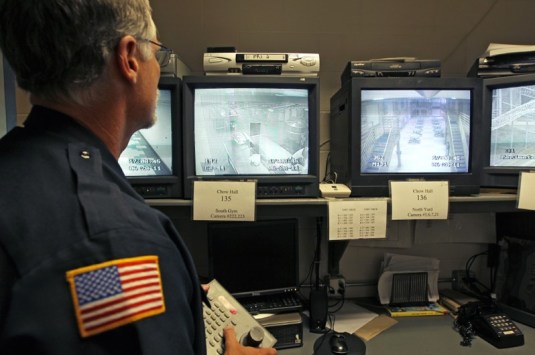
The initial commentators on the radio programme immediately said they had watched plenty of TV programs where people were shanked in the showers.
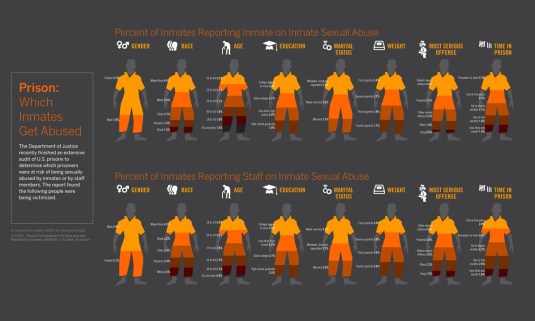
The close circuit television was for the safety of prisoners. Close circuit cameras in all parts of prisons made prisons a safer place and that was that. It was the price of safety, especially for prisoners vulnerable to intimidation and sexual assault.
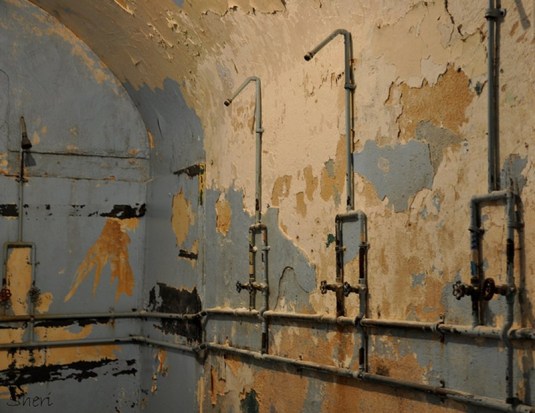
Greg Newbold, a New Zealand criminologist and an ex-prisoner in itself, then came on air to criticise the introduction of close circuit televisions in showers and other intimate areas such as toilets as an indignity on prisoners. Prisoners have a right to intimate privacy in his view. He said only 12 prisoners had been murdered in the New Zealand prisons since 1979.
Only 12 murders is 12 murders too many. Every one of those murders would have been subject of outrage about the failure of the prison administration from the bleeding hearts brigade.
The most interesting thing that Greg Newbold said on the radio was about how these close circuit television systems first emerged in prisons, initially in the USA.
Close circuit television systems will put throughout prisons initially in private prisons to avoid being sued for wrongful death and injury. The private prisons introduced this rather obvious security measure to reduce liability in the civil courts.
Public prisons are supposedly a safer place for prisoners to be if you listen to the bleeding hearts brigade and the Left over Left. Pubic prisons but never got around introducing what seems to me to be a rather basic security measure in confined areas of prisons. Close circuit television systems would protect both inmates and guards.
The different incentives facing public and hybrid prisons, in this case, exposure to litigation, is an illustration of the superior efficiency of private prisons.

Private prisons did something because it affects the bottom line. One way to reduce liability for deaths and injuries is prison security measures that reduce the number of deaths and injuries in prisons.
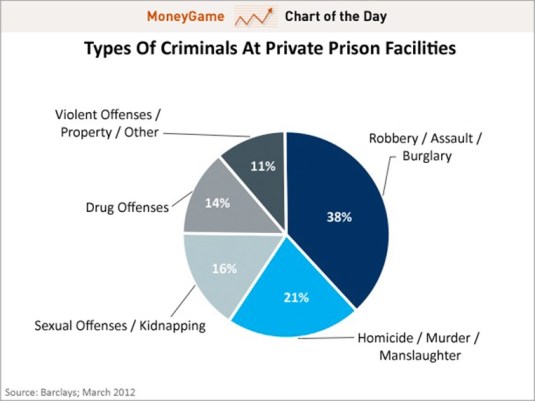
More importantly, private prisons have unforgiving critics in the form of the bleeding hearts brigade and Left over Left. No one on the Left will defend or protect a prison that is private from closure out of a knee-jerk defence of the public sector, and in particular, public-sector unions.
Oddly enough the only prison that the Left over Left want to close in New Zealand is the highest performing prison, Mt Eden, which happens to be privately run.
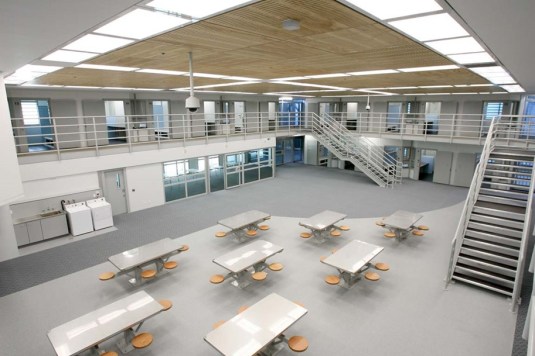
The main problem with private prisons is contracting over quality where it is difficult to define quality and measure performance against quality standards specified in a contract as Andrew Shleifer explains:
…critics of privatization often argue that private contractors would cut quality in the process of cutting costs because contracts do not adequately guard against this possibility
Privatisation for many government services is simply an extension of the make-or-buy decision. Every firm faces a make-or-buy decision – should the firm buy a production input from outside suppliers or should it make what it needs itself with existing or additional internal resources?
As any industry grows, there is more room for more specialised producers to supply to firms of all sizes at a lower cost than in-house production (Stigler 1951, 1987; Levy 1984). As an example, all with the largest firms intermittently hire legal, accounting and many other professional skills from specialists.
By contracting-out to these more specialised and niche suppliers, firms can enjoy all available economies of scale in production unless its needs are unique or the firm has some special competency in producing the input in-house (Lindsay and Maloney 1996; Shughart 1997; Roberts 2004). Firms in most industries capture all available economies of scale at relatively small sizes after which they have a long region of production where their marginal cost of further increases in production are constant (Stigler 1958; Lucas 1978; Barzel and Kochin 1992; Shughart 1997).
Put simply, an entrepreneur makes what he or she cannot buy at the quality preferred through contracting in market:
The case for in-house provision is generally stronger when non-contractible cost reductions have large deleterious effects on quality, when quality innovations are unimportant, and when corruption in government procurement is a severe problem. In contrast, the case for privatization is stronger when quality reducing cost reductions can be controlled through contract or competition, when quality innovations are important, and when patronage and powerful unions are a severe problem inside the government.
The way in which the market process dealt with chiselling on quality where quality reducing cost reductions where costly to control through contract or competition was the emergence of non-profit institutions. The competitive edge of these non-profit institutions was they had fewer incentives to dilute hard to measure qualities of the product transacted.

Any additional profits from this dilution of quality were not distributed to the owners because the non-profit organisation was either run by a charity or was owned mutually by the customers. The proceeds from cutting corners on quality could not be paid out to the owners in dividends because there were none.
Examples of non-profits competing successfully in the market are obvious, such as life insurance. Until recent decades, most life insurance companies were mutually owned by the policyholders. Life insurance companies were mutually owned as an assurance that no one could run off with the money by paying high dividends to the owners before policyholders died many years after they have paid their premiums.
Most private universities are run as non-profit institutions even when they are set up by private developers with profits in mind. The private university itself is owned by a charity with esteemed persons on the board to assure quality and probity. The active involvement of alumni is encouraged as a further guard of the future quality of the University from which they graduated. The private developers make their profit on the surrounding land as the university grows and prospers. Land grant universities in the USA may have operated this way.
Other examples of the emergence of non-profit institutions to assure quality in a competitive market are private schools, private hospitals, and private day care centres where concerns about the private provision of a quality service arise, with or without justification. Andrew Shleifer again:
…entrepreneurial not-for-profit firms can be more efficient than either the government or the for-profit private suppliers precisely … where soft incentives are desirable, and competitive and reputational mechanisms do not soften the incentives of private suppliers [to dilute quality].
Of course, any proper analysis must compare like with like and compare the dismal record of public prisons date in terms of prisoner and prison guard safety and preventing escapes with any scandals in the private prison systems. Few do that.


Competing visions of success – left and right
06 Feb 2015 Leave a comment
in applied welfare economics, entrepreneurship, human capital, labour economics, occupational choice, politics - New Zealand, politics - USA Tags: activists, distributive justice, do gooders, expressive voting, Leftover Left, poverty and inequality, rational ignorance, rational irrationality, top 1%
 Utopia, you are standing in it!
Recent Comments