Electric Eric Lives on in a classic Tasmanian tourist ad
14 Apr 2016 Leave a comment
in economics, economics of media and culture Tags: economics of advertising, Tasmania
Creative destruction in car radios
06 Dec 2015 Leave a comment
in economics of media and culture, entrepreneurship, transport economics Tags: creative destruction, economics of advertising, entrepreneurial alertness, good old days
Why propaganda?
21 Nov 2015 Leave a comment
in constitutional political economy, economics of media and culture, income redistribution, Marxist economics, Public Choice, rentseeking Tags: economics of advertising, expressive voting, rational ignorance, rational irrationality
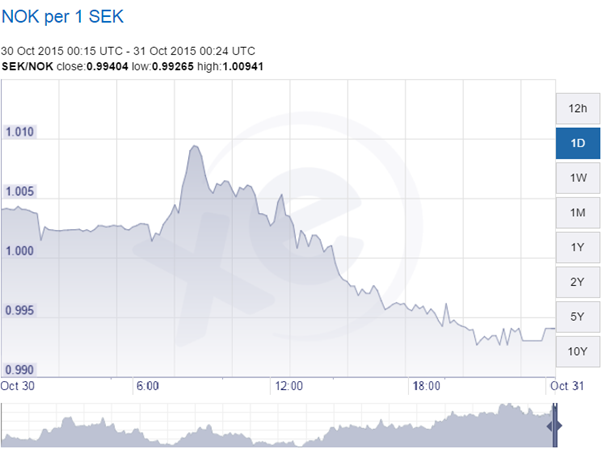
The Big Mac index illustrated
31 Oct 2015 Leave a comment
in economics of media and culture, international economics Tags: economics of advertising, Norway, purchasing power parity, Sweden, The Big Mac index
@nzlabour @NZGreens There just isn’t no missing million out there hanging out for that hard-left clarion call @rsalmond
22 Aug 2015 1 Comment
in applied price theory, constitutional political economy, economics of information, politics - New Zealand, Public Choice Tags: British Labour Party, British politics, economics of advertising, Eric Crampton, expressive voting, false consciousness, Leftover Left, median voter theorem, New Zealand Greens, New Zealand Labour Party, rational ignorance, rational rationality
Rob Salmond has written a great blog this week on the ideological spectrum of New Zealand voters based on the New Zealand Election Study.

In the course of his blog he drove a tremendously big stake through the heart of the old left fantasy that if Labour or Greens goes left, a large block of voters not voting for them now or not voting at all (the missing million voters) will shake lose its false consciousness and follow you:
But “pulling the centre back towards the left” is massively, massively hard.
You win those people over by being relevant to them as they are, not by telling them they’re worldview needs a rethink. It is just basic psychology. Tell people they were right all along; they like you. Tell people they were wrong all along; they don’t.
And if you win a majority of centrists, you win. The New Zealand Election Study series records six MMP elections in New Zealand – the three where Labour did best among centrists were the three Labour won.
That’s another message from the academic study I quoted above – in Germany, Sweden, and the UK, the elections where the left did best among centrists were the elections where they took power. As their popularity among centrists declined, so did their seat share.
What is more disturbing for the old left fantasy of the missing million is voting for the Labour Party or Greens is correlated with ignorance rather than knowledge.
Furthermore, the more people know about economics, the less likely they are to vote for the left as Eric Crampton explains:
When they get to the polls, the ignorant are significantly more likely to support the Labour Party (4% increase in predicted probability for a standard deviation increase in ignorance) and significantly less likely to support the Green party (1% decrease in predicted probability) and United Future (0.5% decrease in predicted probability).
Understanding economics strongly predicted supporting National in 2005, which comes as little surprise: the National Party leader was former Governor of the Reserve Bank of New Zealand. A standard deviation increase in our “economic thinking” index correlates with a 5.7% increased probability of voting National, a 1.5% decreased probability of voting NZ First, and a slight decrease in the probability of voting United Future and Maori.
To make matters worse, Crampton found that joining political organisations does little to cure ignorance of politics or otherwise lead to a political awakening. Sometimes active political affiliation reduces ignorance, other times such organisational membership intensifies ignorance.
via Salmond on the centre | Kiwiblog and StephenFranks.co.nz » Blog Archive » Why the left wants everyone to vote.
Cost control at Google in two charts
12 Aug 2015 Leave a comment
in economics of media and culture, entrepreneurship, industrial organisation, survivor principle Tags: competition as a discovery procedure, creative destruction, economics of advertising, entrepreneurial alertness, Google, innovation, legacy media, market selection, The meaning of competition
Google's core business explained in two charts buff.ly/1UBysMC http://t.co/V6uRrPVKMk—
Business Insider (@businessinsider) August 12, 2015
Weight control ads in days gone by
04 Jul 2015 Leave a comment
Men wouldn't look at me when I was skinny. Surprising #vintage ad – things change. http://t.co/wbZOML4XX4—
This is stunning! (@thisisstunning) May 12, 2015
Creative destruction in legacy media revenues
16 Jun 2015 Leave a comment
in economics of media and culture, entrepreneurship, industrial organisation, survivor principle Tags: creative destruction, economics of advertising, entrepreneurial alertness, legacy media, market selection
The media needs a new formula for paying for news gathering, says @bradwarthen: brook.gs/1JlfWUT http://t.co/QDGti24x1f—
Brookings (@BrookingsInst) May 15, 2015
Vintage McDonald’s Advertisement
10 Jun 2015 Leave a comment
in economic history, entrepreneurship Tags: economics of advertising, entrepreneurial alertness, McDonald's
Vintage McDonald’s Advertisements in the 1960s http://t.co/XnKaW8Burn—
History Pics (@HistoryPixs) February 24, 2014
Creative destruction in advertising revenue
04 May 2015 Leave a comment
in economics of information, economics of media and culture, environmental economics, industrial organisation, survivor principle Tags: creative destruction, economics of advertising, entrepreneurial alertness, Google, legacy media, markets selection, The meaning of competition
Kids Prefer Cheese: Ad for Angus
14 Jan 2015 Leave a comment
in economics of information, economics of media and culture Tags: economics of advertising

A Revealing Cartoon |Ideas
30 Nov 2014 Leave a comment
in economics of information, economics of media and culture, environmental economics, global warming Tags: climate alarmism, economics of advertising, global warming

But it apparently does not occur to them that, for someone not persuaded of their policies, the same argument applies to them, that, from the standpoint of the people they want to convince, the cartoon is a reason to be more skeptical of their views, not less.
via Ideas.
 Utopia, you are standing in it!
Recent Comments