The Fifteen Dollar Minimum Wage is NONSENSE – YouTube
01 May 2016 Leave a comment
in applied price theory, applied welfare economics, labour economics, minimum wage Tags: expressive voting, living wage
The Fifteen Dollar Minimum Wage is NONSENSE
When countries *do* tax carbon, it’s usually $15/ton or less @GreenCatherine @RusselNorman @Greenpeacenz
30 Apr 2016 Leave a comment
in energy economics, environmental economics, global warming Tags: carbon price, carbon tax, carbon trading, expressive voting
The renewable energy curse – does corruption turn clean energy into dirty? @GarethMP
30 Apr 2016 Leave a comment
in comparative institutional analysis, constitutional political economy, energy economics, environmental economics, global warming, Public Choice, rentseeking Tags: European Union, expressive voting, green rent seeking, Italy, renewable energy, solar power, wind power
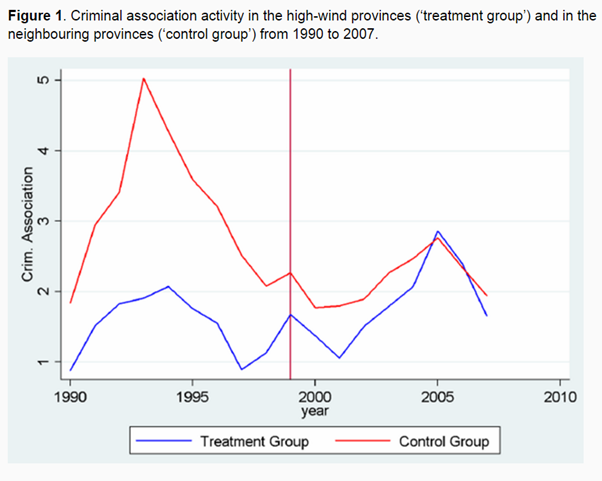
Massimo Tavoni and Caterina Gennaioli published a nice paper showing that corruption and violence was higher in the high wind provinces of Italy after the installation of wind generators. They built on earlier work about countries with abundant renewable resources and weak institutions. The main question in their paper
… is whether an increase in the expected returns of investments in wind energy, following the introduction of the new policy regime based on a green certificate system, has driven economic agents, namely bureaucrats and entrepreneurs, to engage more in rent seeking activities.
As they studied Italy, there is no surprise about the answer which was yes. High winds ensure high returns of the wind farm investment, but whether this translates into more bribery depends on institutional quality. There was more corruption, and so especially in high-wind provinces of Italy.
Source: Green policy and corruption | VOX, CEPR’s Policy Portal.
The construction of an average wind park is associated with an increase of criminal association activity of 6%. Italy will have more corruption than elsewhere in the old European Union.
The wider problem is renewable energy is a celebrity technology. In the context of expressive politics, so many cheer for solar and wind power that standards drop in terms of who qualifies for subsidies and who should lose support when their investments do not turn out as promised.
https://twitter.com/CountCarbon/status/715136022414299138
Wind power is not new, it is intermittent, is unsuitable for modern work, and is land constrained but it is still subsidised. Green rent seeking is a real risk even in countries with the best political institutions.
Oops, I overestimated the cost of doing nothing about global warming
28 Apr 2016 Leave a comment
in applied price theory, applied welfare economics, environmental economics, global warming, Public Choice Tags: carbon pricing, carbon tax, climate alarmism, cost benefit analysis, expressive voting, mitigation and adaptation, rational irrationality
Source: Global Warming, Cost-Benefit Analysis, and The End of Doom, Bryan Caplan | EconLog | Library of Economics and Liberty from Ron Bailey (2016) The End of Doom: Environmental Renewal in the Twenty-first Century.
Submission to Porirua City Council on proposed #livingwage
28 Apr 2016 Leave a comment
in labour economics, managerial economics, minimum wage, organisational economics, personnel economics Tags: expressive voting, living wage, local government, rational irrationality, The fatal conceit
A living wage at a local council will act as a hiring standard that stops low paid workers from being shortlisted for vacancies in the 129 council jobs affected by the proposed living wage increase.

The Council must hire on merit so only those who currently earn about $19 in other jobs will be shortlisted. That is the law. The Council must hire the best available applicant. The minimum wage workers who currently fill these minimum wage jobs simply could not cannot be lawfully shortlisted.
It is explicit in the living wage literature that a living wage improves the quality of applicants for future vacancies.
When a living wage job is advertised, more qualified applicants will apply. This will crowd-out the existing workers had who shortlisted for these Council jobs. They will have to apply for other minimum wage jobs but pay rates to fund council jobs they can never win.
There is no way around this because of the duty of the Council to hire on merit.
All future vacancies covered by the living wage increase will be filled by workers who are currently better paid than the existing applicants who won those jobs in the past.
Any employer who unilaterally introduces a living wage is simply raising their hiring standards saying they will not hire applicants who do not currently earn the equivalent of the living wage in their previous job.
A living wage will exclude low paid worker from council jobs in the future. I have attached a more detailed analysis of the economics of a living wage as proposed by the Wellington City Council.
Does it Feel Good or Does it Do Good?
27 Apr 2016 Leave a comment
in applied price theory, economics of media and culture, labour economics, minimum wage Tags: expressive voting, rational irrationality
What 3 skills do public policy analysts need?
27 Apr 2016 Leave a comment
in applied price theory, business cycles, economics of bureaucracy, economics of regulation, fiscal policy, macroeconomics, monetary economics Tags: anti-market bias, antiforeign bias, expressive voting, lags on monetary policy, makework bias, rational rationality, tax incidence, The fatal conceit, The pretense to knowledge
I used to argue that the quality of public policy making would double if public policy analysts remembered the first 6 weeks of microeconomics 101 but on reflection more than that is required.
Could we economists today ever show such self-restraint about our own expert recommendations? https://t.co/2UE12JuIgn—
William Easterly (@bill_easterly) November 24, 2015
I picked up my initial insight out when working as a graduate economist in the Australian Department of Finance. That was a few years ago.
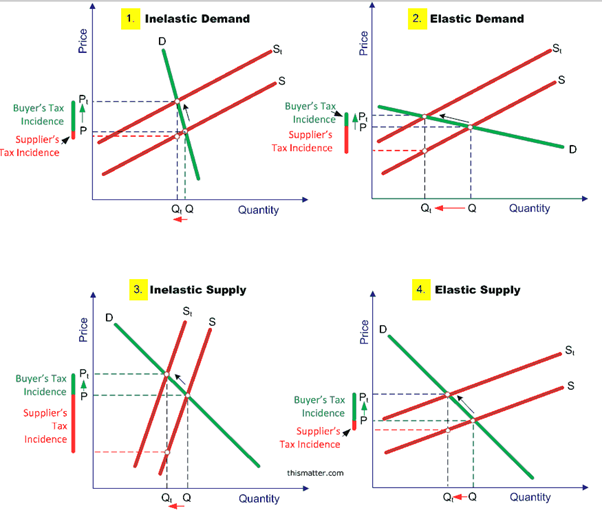
I am now concluded that policy analysts also need to know the basics of the economics of tax incidence. Who pays the tax depends on the elasticities of supply and demand rather than who writes the check to the taxman.
The number of times that I have read media and public policy analysis saying who pays the tax is the writer of the cheque to the taxman is beyond counting.
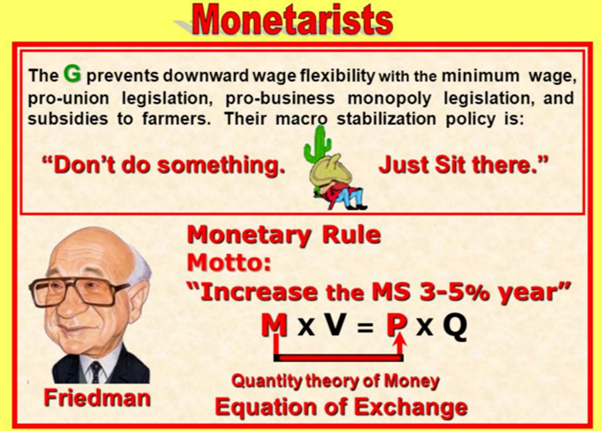
There is also what to do about unemployment and inflation. Do not just do something, sit there might be good advice on most occasions. As Tim Kehoe and Gonzalo Fernandez de Cordoba explain in the context of first do no harm:
Looking at the historical evidence, Kehoe and Prescott conclude that bad government policies are responsible for causing great depressions.
In particular, they hypothesize that, while different sorts of shocks can lead to ordinary business cycle downturns, overreaction by the government can prolong and deepen the downturn, turning it into a depression.
E-cigarettes as a way of reducing obesity?
23 Apr 2016 Leave a comment
in economics of regulation, health economics Tags: E-cigarettes, economics of obesity, economics of smoking, expressive voting, meddlesome preferences, nanny state, rational irrationality
One of the many interesting things that Maori Party MP Marama Fox said at a panel discussion for the launch of the New Zealand Initiative’s Health of the State report was that the Maori women she knew who smoked did so out of stress relief.
It is also well known that there is a weight gain after stopping smoking. If people cannot smoke because of higher taxes but still need to have an outlet for their stress, they look elsewhere and seek comfort in food.

Source: Weight Gain After Quitting Smoking – Quit Smoking Community.
This is before you consider the general pleasure seeking aspect of smoking. Some people find smoking pleasurable; I find it disgusting.
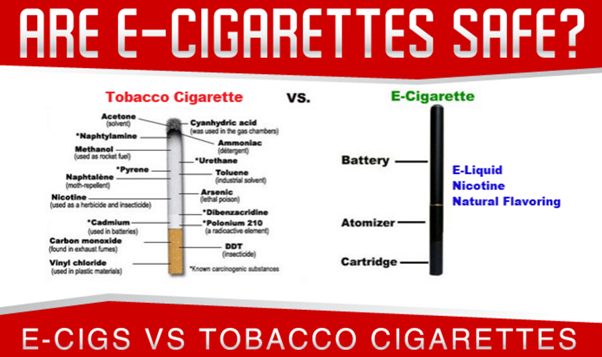
This suggests to me that the restrictions on E-cigarettes are the worst of both worlds. If people are going to smoke, you may as well let them have access to a technology that is safer.

Instead, the do-gooders prefer to put an extra bullet in the chamber as smokers play Russian roulette.
Why environmentalists are adverse to real solutions #earthday
22 Apr 2016 Leave a comment
in applied price theory, applied welfare economics, comparative institutional analysis, constitutional political economy, economics of media and culture, economics of regulation, energy economics, entrepreneurship, environmental economics, environmentalism, global warming, politics - USA Tags: anti-market bias, Earth Day, expressive voting, rational ignorance, rational rationality

Source: Quotation of the day for Earth Day on the ‘science of economics versus the religion of environmentalism’ … – AEI | Carpe Diem Blog » AEIdeas from Steven E. Landsburg’s book “The Armchair Economist: Economics and Everyday Life,” in his chapter titled “Why I Am Not an Environmentalist: The Science of Economics versus the Religion of Ecology“.
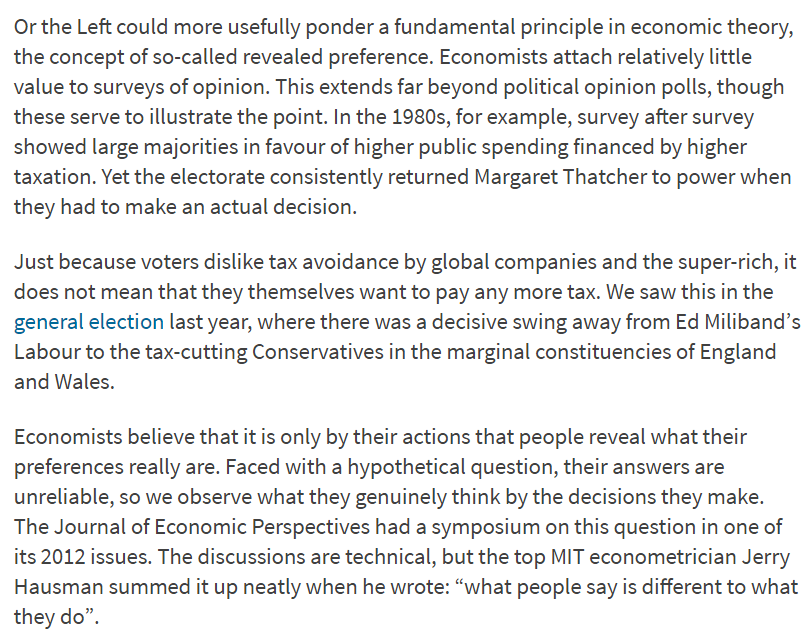
Forget avoidance outrage: public’s real attitude to tax is revealed by their actions @JordNZ
21 Apr 2016 Leave a comment
in applied price theory, constitutional political economy, economic history, economics of media and culture, politics - Australia, politics - New Zealand, politics - USA, Public Choice, public economics Tags: British economy, British politics, expressive voting, growth of government, rational irrationality, revealed preference, size of government, voter demographics
Left-wing Biases, Too, May Block Progress on Climate Change @GarethMP @JulieAnneGenter
20 Apr 2016 Leave a comment
in applied price theory, applied welfare economics, economics of media and culture, energy economics, environmental economics, global warming, Public Choice Tags: antimarket bias, carbon emissions, climate alarmists, expressive voting, greenhouse gases, nuclear power, rational irrationality

Source: Liberal Biases, Too, May Block Progress on Climate Change – The New York Times.

Source: Mr. Sanders’s war on clean energy – The Washington Post.
4 Lessons for Morgan Foundation on How to Sell the #UBI @JordNZ
13 Apr 2016 Leave a comment
in applied welfare economics, labour economics, labour supply, politics - New Zealand, welfare reform Tags: expressive voting, rational irrationality, universal basic income
![clip_image002[4]](https://utopiayouarestandinginit.com/wp-content/uploads/2016/04/clip_image0024.gif "clip_image002[4]")
Source: Morgan Foundation (12 April 2016) Four Lessons for Labour on How to Sell the UBI.
I will contract out to Geoff Simmons of the Morgan Foundation my reply to the claim yesterday by the Morgan Foundation’s Susan Guthrie that there are no negatives from a Universal Basic income. Simmons said:
With an unconditional basic income, most beneficiaries would be no better off than they are now (in fact sole parents would almost certainly receive a lower benefit).
Single parents are $150 a week worse off and retirees are $50 worse off per week if their current income support were replaced by a Universal Basic Income of $11,000 per adult.
Both were entitled to much more under the current welfare benefit system and New Zealand Superannuation respectively. Unemployment, sickness and invalid beneficiaries are about 5% better off under a Universal Basic Income.
Labour’s background paper described a Universal Basic Income of $11,000 as not enough. Guthrie is even franker yesterday about how inadequate a Universal Basic Income is for the poor:
A basic income policy would provide everyone aged 18 and over with an unconditional, tax free survival-level of income each and every year.
I will contract out to Gareth Morgan (2011) why a Universal Basic Income that provides a “survival-level of income” is not good enough:
Rather than decreeing a minimum wage and discovering the consequences for jobs and top-up payments, let’s agree on what is a minimum income every adult should have in order to live a dignified life and then see what flows from that.
We begin by specifying the income level below which we are not prepared to see anyone having to live.
A survival-level of income and a minimum income on which every adult can live a dignified life are not the same thing.
Gareth Morgan’s universal basic income of $11,000 for adults makes most better off except those for whom the modern welfare state was established to protect.
Most of the evidence against the Universal Basic Income comes from examining the numbers put forward by its proponents such as the Morgan Foundation and its excellent online tool. Brian Easton (2015) put it well when he said:
Many advocates put the UMI forward without doing the sums.
Those who do, find that the required tax rates are horrendous or the minimum income is so low that it is not a viable means of eliminating poverty. Among the latter are New Zealanders Douglas, Gareth Morgan and Keith Rankin.
How to tell if you are a modern progressive – a two-part test by Scott Sumner
13 Apr 2016 Leave a comment
in international economics, labour economics, minimum wage, politics - New Zealand, politics - USA Tags: antiforeign bias, antimarket bias, expressive voting, Leftover Left, living wage, makework bias, rational irrationality

@garethmorgannz’s @grantrobertson1’s #UBI is worse than I thought @JordNZ
03 Apr 2016 Leave a comment
in applied welfare economics, labour economics, labour supply, politics - New Zealand, poverty and inequality, welfare reform Tags: expressive voting, New Zealand Labour Party, rational irrationality, universal basic income
The Universal Basic Income of $11,000 per adult proposed by the Morgan Foundation and floated as a idea to consider by the New Zealand Labour Party leaves the poor way below even that the stingy as the poverty line switch is that 50% relative poverty line. Little wonder that the Labour Party said that increasing the Universal Basic Income to avoid leaving current beneficiaries worth off would lead to a very high tax rate.

Source: A Universal Basic Income may be a good idea – but we will still need social security that works.
 Utopia, you are standing in it!
Recent Comments