08 Jul 2015
by Jim Rose
in applied welfare economics, economic history, labour economics, politics - New Zealand, poverty and inequality, technological progress
Tags: child poverty, family poverty, Leftover Left, Max Rashbrooke, The Great Enrichment, top 1%
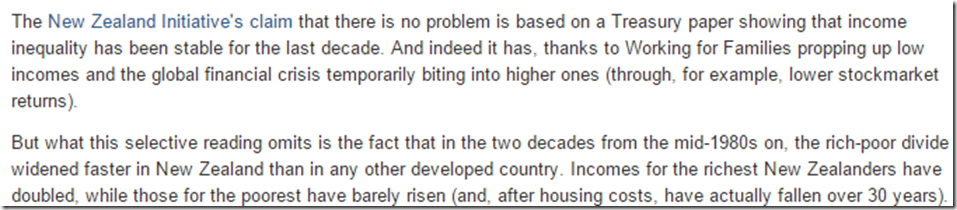
Max Rashbrooke has been at it again in the paper today.

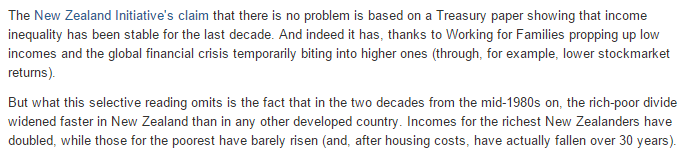
Don’t these graphs show that everyone is richer in New Zealand than 30 years ago and there has been not much change in either child poverty or inequality for coming on for 20 years? The fall in child poverty started before the introduction of Working for Families.
Technological progress in the form of new goods and product upgrades are poorly captured in measures of living standards over time as is increases in life expectancies.
HT: Suffer the little children – Inequality and child poverty – Closer TogetherCloser Together.
22 Jun 2015
by Jim Rose
in labour economics, politics - Australia, politics - New Zealand, politics - USA, population economics, poverty and inequality, welfare reform
Tags: Australia, British economy, Canada, child poverty, economics of the family, family poverty, Ireland, single mothers, single parents
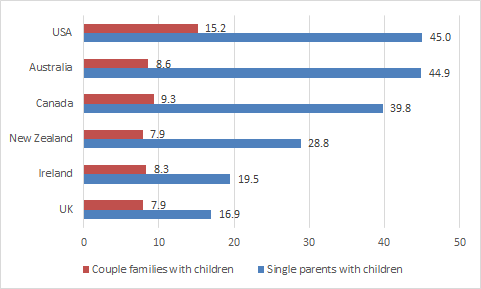
Figure 1: Child poverty rates by family type, Anglo-Saxon countries, 2010
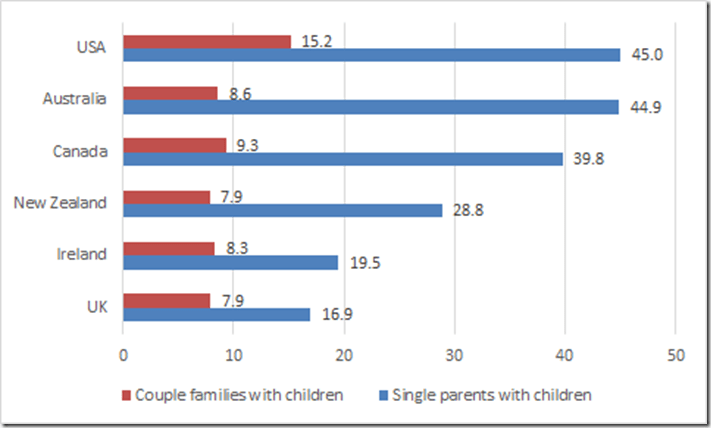
Source: OECD Family Database; Poverty thresholds are set at 50% of the median income of the entire population.
21 Jun 2015
by Jim Rose
in economics of love and marriage, labour economics, labour supply, law and economics, politics - Australia, politics - New Zealand, politics - USA, population economics, poverty and inequality, welfare reform
Tags: Australia, British economy, Canada, child poverty, economics of families, family poverty, Ireland, labour force participation, single parents
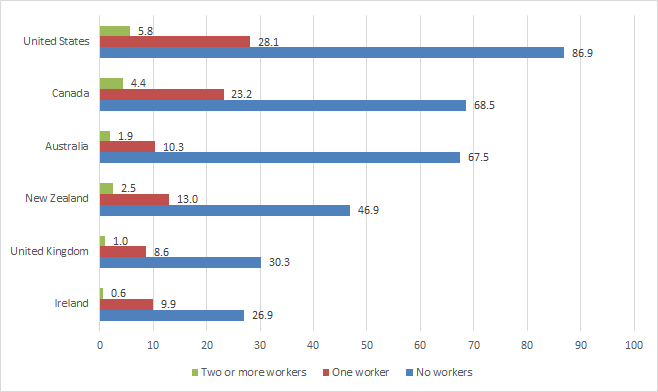
Figure 1: child poverty rates in couple families by employment status, Anglo-Saxon countries, 2010
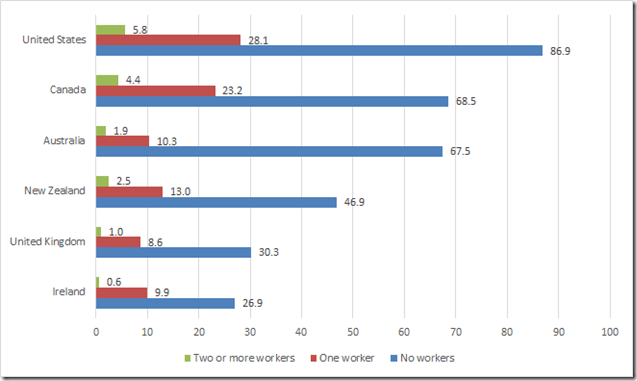
Source: OECD Family Database; Poverty thresholds are set at 50% of the median income of the entire population.
20 Jun 2015
by Jim Rose
in labour economics, politics - Australia, politics - New Zealand, politics - USA, poverty and inequality, welfare reform
Tags: Australia, British economy, Canada, child poverty, economics of the family, family poverty, female labour force participation rates, Ireland, maternal labour supply, single mothers, single parents
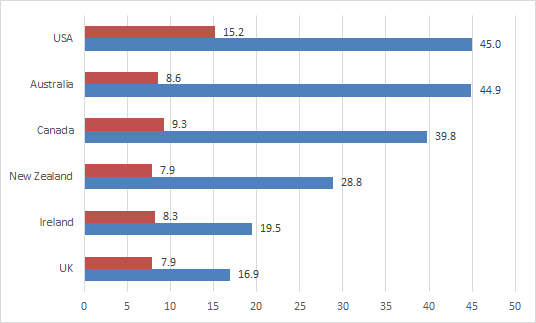
Figure 1: Child poverty rate by employment status of single parent, Anglo-Saxon countries, 2010
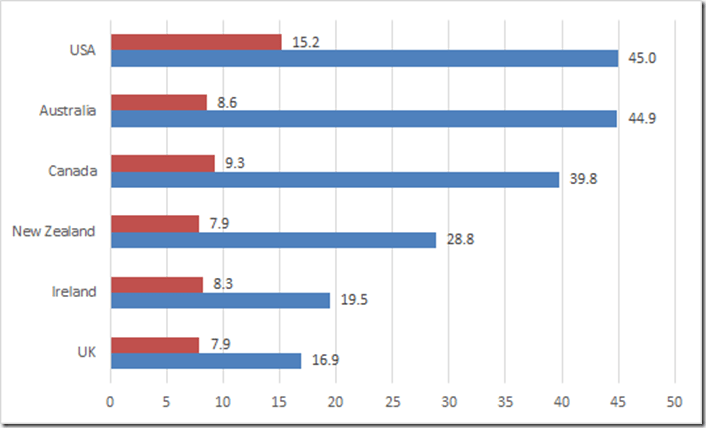
Source: OECD Family Database; Poverty thresholds are set at 50% of the median income of the entire population.
09 Jun 2015
by Jim Rose
in energy economics, politics - New Zealand
Tags: child poverty, consumer price index, CPI inflation, energy prices, family poverty, fuel poverty, power prices
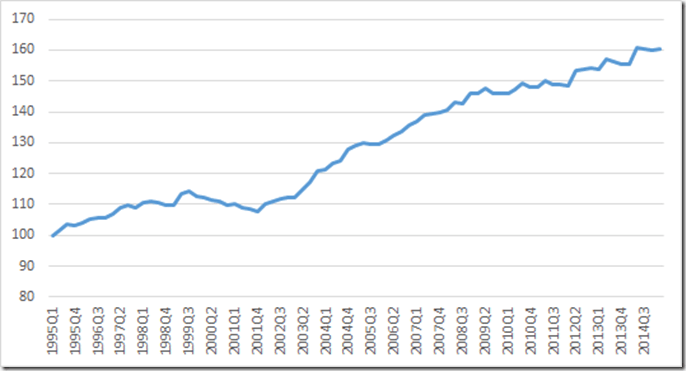
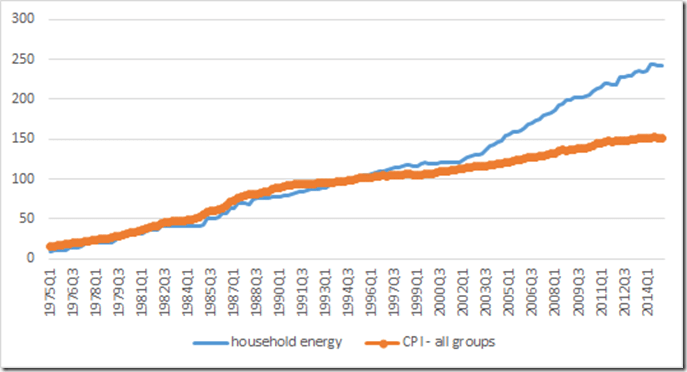
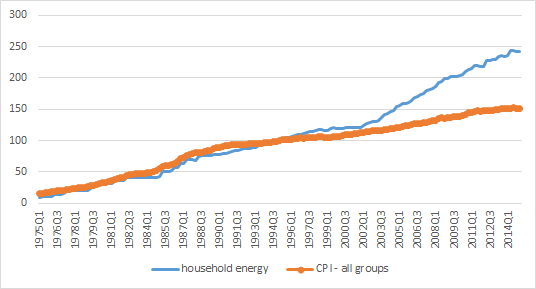
Energy prices seem to have been roaring ahead of consumer prices since the first quarter of 2001. Maybe that is a major contributor to fuel poverty in New Zealand and material deprivation among more poor households in the winter. What gives?
Figure 1: ratio of household energy price index to consumer price index – all groups, March quarter 1995 – March quarter 2015, base = 1995
Source: Statistics New Zealand Infoshare.
Figure 2: Household energy price index and consumer price index – all groups, March quarter 1975 – March quarter 2015, base = 1995
Source: Statistics New Zealand Infoshare.
25 May 2015
by Jim Rose
in discrimination, economics of love and marriage, gender, human capital, labour economics, labour supply, occupational choice, poverty and inequality, welfare reform
Tags: assortative mating, child poverty, economics of family, family poverty, marriage and divorce, single parents, social mobility, welfare reform
18 May 2015
by Jim Rose
in economics of education, gender, human capital, labour economics, labour supply, occupational choice, poverty and inequality, welfare reform
Tags: child poverty, economics of marriage, family poverty, female labour force participation, labour force participation, male labour force participation, marriage and divorce, single parents, welfare reform
Previous Older Entries Next Newer Entries




Recent Comments