Roy A. Childs, Jr., on Ronald Reagan’s Foreign Policy
07 Apr 2020 Leave a comment
in defence economics, politics - USA, war and peace Tags: foreign policy
When @JeremyCorbyn talks more sense on #Syrianbombing than @NZGreens
07 Apr 2017 Leave a comment
in defence economics, politics - New Zealand, politics - USA, war and peace Tags: anti-war movement, British politics, foreign policy, Leftover Left, Middle-East politics, New Zealand Greens, pacifism, serious civil war, Twitter left
Is America an imperialist, white-supremacist, capitalist patriarchy? | FACTUAL FEMINIST
21 Jan 2017 2 Comments
in defence economics, development economics, discrimination, gender, labour economics Tags: feminism, foreign policy, gender wage gap, imperialism, racial discrimination, racism
#YesPrimeMinister approach of @jamespeshaw 2 fighting #ISIS
23 Jun 2016 Leave a comment
in defence economics, economics, politics - USA, war and peace Tags: foreign policy, Iraq, ISIS, New Zealand Greens, Syrian Civil War, war on terror
The Greens this week has decided to offer every support short of real help to those being massacred and brutalised by ISIS
“The NZDF deployment to Iraq does not make us safer, but puts New Zealand troops at risk and makes New Zealanders unnecessary targets of ISIL.
“We condemn the horrific violence of ISIL. New Zealand should be using its leverage as a member of the UN Security Council to curb ISIL’s access to funding and arms, not keeping our troops in danger for another year and a half,” said Mr Shaw.
This is straight out of the Yes Prime Minister episode on how the Foreign & Commonwealth Office explains how it helps foreign nations in trouble from invasion and tyranny. A 4 stage plan on how to do nothing.
In his recent speech before the House of Commons on further assistance to those fighting ISIS since Syria, Labour Party foreign office spokesman Hilary Benn described this as walking to the other side of the road.
Partisans divides on foreign threats in the USA
12 Feb 2016 Leave a comment
in defence economics, economics of media and culture, environmental economics, global warming, politics - USA Tags: 2016 presidential election, climate alarmism, foreign policy, global warming, voter demographics
Hypocritical Greens betray NZ sovereignty to US court decision but oppose investor state dispute settlement on sovereignty grounds
10 May 2015 Leave a comment
in defence economics, economics of crime, international economic law, international economics, International law, law and economics, politics - New Zealand, politics - USA Tags: foreign policy, free trade agreements, green hypocrisy, green party, investor state disputes settlement, national security, preferential trading agreements, war against terror
The Greens are happy to betray New Zealand’s sovereignty to a US court where New Zealand’s side of the story was not heard, New Zealand was not a litigant, New Zealand was not named in the proceedings and New Zealand had not agreed to waive its sovereign immunity under US law.
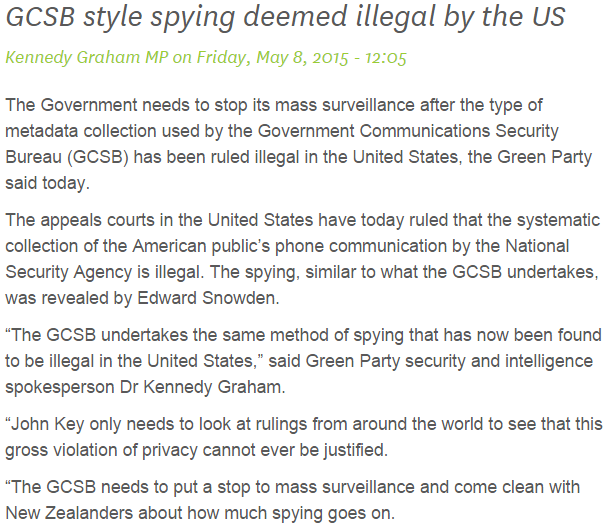
The Greens on the other hand are hysterical about the prospect of New Zealand voluntarily submitting to investor state disputes settlement through an international treaty. International treaties normally are about trading in sovereignty: you give up some form of sovereignty return for something you value more.
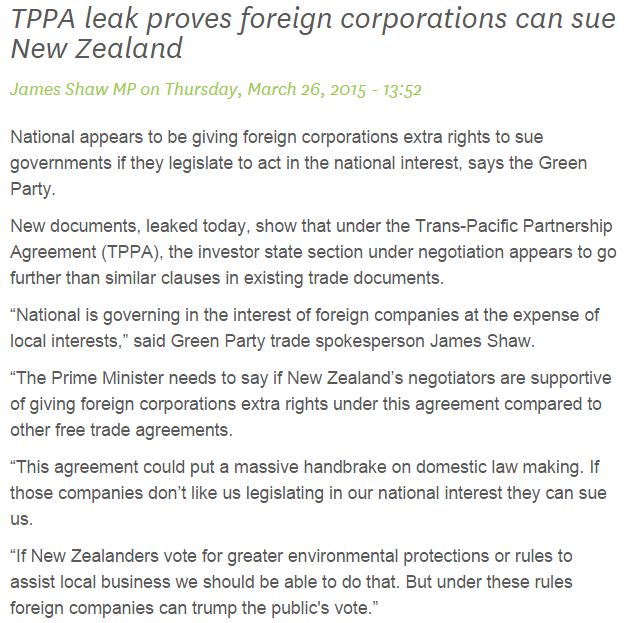
It is thoroughly hypocritical of the Greens to argue the New Zealand should bow down to a foreign court when that court rules in a way that it favours its ideological agenda but refuse to support the principle of international arbitration in circumstances where that may advance New Zealand’s national interests.
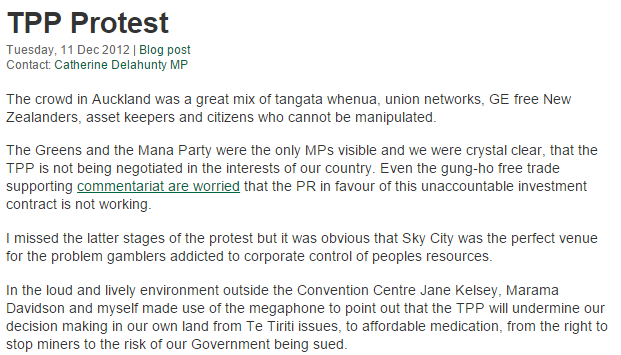
At a minimum, New Zealand itself chose to give up its sovereignty if it agrees to investor state dispute settlement in a trade agreement. The decision was not imposed by a foreign court where it was not heard nor was a party.


Of particular concern to the Greens is international arbitration could "trump the public’s vote vote". New Zealand has repeatedly elected parties that support the alliance with America, and support a robust security and intelligence policy, including electronic surveillance as part of the war on terror.
The last week of the 2014 general election campaign was dominated by the Government Security Communications Bureau and its cooperation with the National Security Agency and the extent to which New Zealand security services engaged in electronic surveillance in New Zealand and abroad.
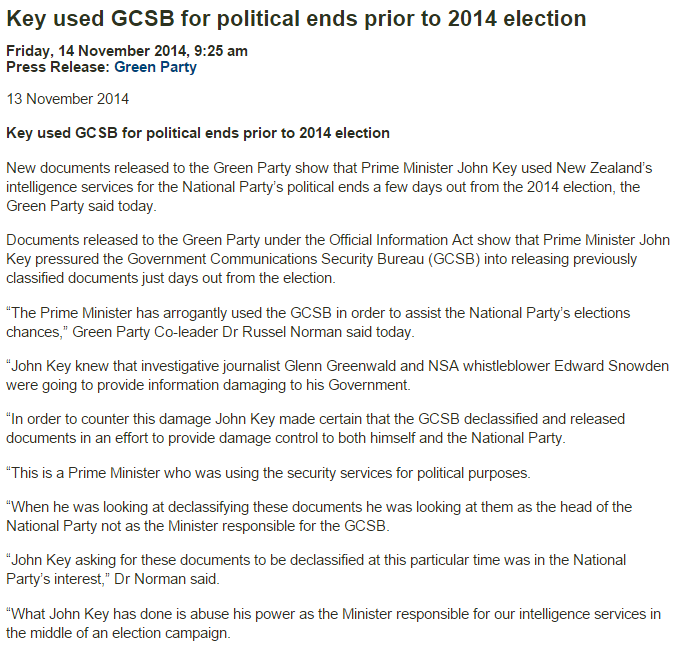
The Greens want to subvert that democratic decision that has been repeated over many New Zealand elections about national security and foreign relations to defer to an American court when New Zealand didn’t even appear as a party.

The US Court of appeal was deciding an issue of statutory interpretation of the Patriot Act. There was no constitutional issues at hand.
The Patriot Act expires in a month unless it is extended. Congress has ample opportunity to amend the renewed law to overturn the appeal court’s decision for the future operation of its security and intelligence laws.
The Greens want a Court of Appeal interpretation of the American Patriot Act to extend to New Zealand without a vote of the New Zealand people or the parliament having any say on whether to give up New Zealand’s sovereignty or waive sovereign immunity in American courts.
.


 Utopia, you are standing in it!
Recent Comments