Why women lose the dating game with Bettina Arndt
01 Dec 2018 Leave a comment
in economics of love and marriage Tags: dating market, marriage and divorce
Andrew Cherlin on marriage, cohabitation, and societal trends in family formation
12 Sep 2018 Leave a comment
in discrimination, economics of love and marriage, gender, human capital, labour economics, law and economics Tags: dating market, marriage and divorce
Divorce Lawyers Give Relationship Advice
25 Aug 2018 Leave a comment
in economics of love and marriage, law and economics Tags: marriage and divorce
My take: couples with joint bank accounts don’t understand why other couples have separate accounts. Couples with joint bank accounts don’t understand why they would need a prenuptial agreement. Couples with separate accounts don’t understand why a couple wouldn’t have a pre-nup.
Looking for love in Iran | Unreported World
05 Aug 2018 Leave a comment
in applied price theory, development economics, economics of love and marriage, growth disasters, law and economics Tags: dating market, marriage and divorce
Russell Crowe’s Divorce Auction (2018)
11 Apr 2018 Leave a comment
in economics of love and marriage, law and economics, movies Tags: marriage and divorce
Sociologists are unhappy when women are happy
06 Jan 2018 Leave a comment
in economics of love and marriage, poverty and inequality Tags: gender gap, marriage and divorce, sociology
The History of Marriage
10 Oct 2017 Leave a comment
in economic history, economics of love and marriage, law and economics Tags: marriage and divorce
How To Not Be Poor
01 Jul 2017 Leave a comment
in applied price theory, labour economics, poverty and inequality Tags: child poverty, economics of fertility, family poverty, marriage and divorce
A gendered division of labour and household effort
30 Apr 2017 Leave a comment
in discrimination, economics of love and marriage, gender, labour economics, labour supply Tags: gender gap, gender wage gap, household production, housework, leisure time, marriage and divorce
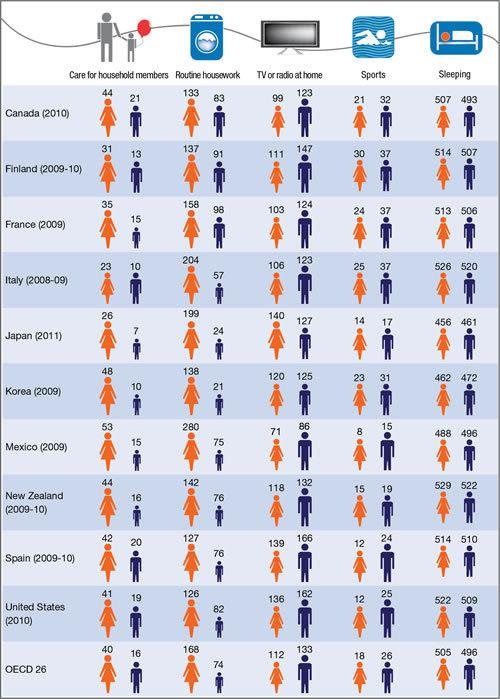
A major factor driving the gendered division of labour and household effort is technology. Tiny differences in comparative advantage such as in child rearing immediately after birth can lead to large differences in specialisation in the market work and in market-related human capital and home production related work and household human capital (Becker 1985, 1993).
These specialisations are reinforced by learning by doing where large differences in market and household human capital emerge despite tiny differences at the outset (Becker 1985, 1993). This gendered division of labour and household effort is hard to change because large payments must be made to influence choices about care giving by highly specialised people with large but different accumulations of market and household human capital.
From a luck egalitarian perspective, many of the differences in earnings and occupations flow accidents of birth in deciding gender and who parents might be. Social inequalities that flow from brute bad luck call for interventions to put them right, if they work.
Many laws already make up for brute bad luck such as job protections while on maternity leave, and government funded parental leave pay and child care subsidies. Employers can do little to redress these accidents of birth nor do they have sufficient resources to put them right. For this reason, for example, parental leave pay is usually taxpayer funded rather than employer funded.
…
Passive Aggressive Relationship Techniques – Ultra Spiritual Life episode 57
27 Apr 2017 Leave a comment
in economics of love and marriage, economics of media and culture Tags: dating market, marriage and divorce
The traditional drivers of occupational segregation
23 Apr 2017 Leave a comment
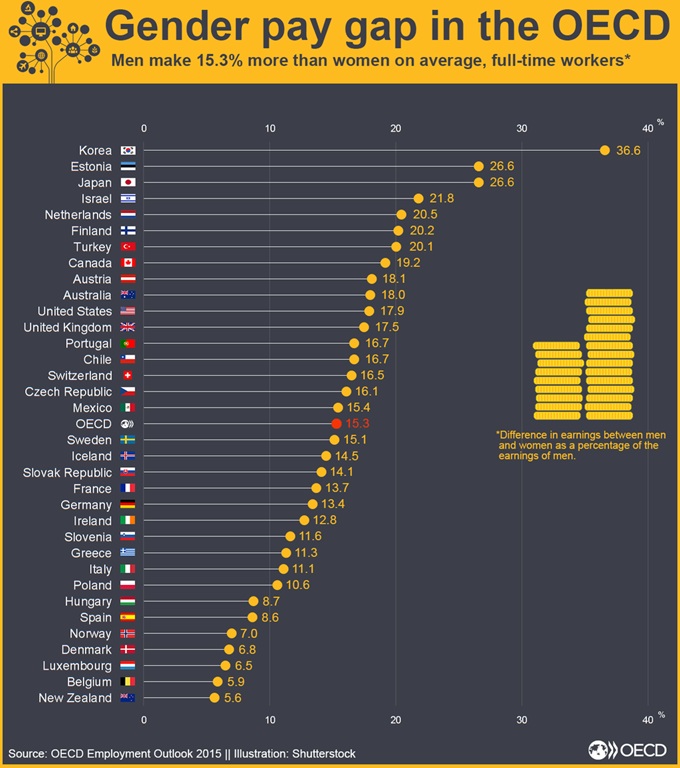
in discrimination, gender, human capital, labour economics, labour supply, occupational choice Tags: economics of fertility, female labour force participation, female labour supply, gender wage gap, marriage and divorce, occupational segregation
The main drivers of female occupational choice are supply-side (Chiswick 2006, 2007). This self-selection of females into occupations with more durable human capital, and into more general educations and more mobile training that allows women to change jobs more often and move in and out of the workforce at less cost to earning power and skills sets.
Chiswick (2006) and Becker (1985, 1993) then suggest that these supply side choices about education and careers are made against a background of a gendered division of labour and effort in the home, and in particular, in housework and the raising of children. These choices in turn reflect how individual preferences and social roles are formed and evolve in society.
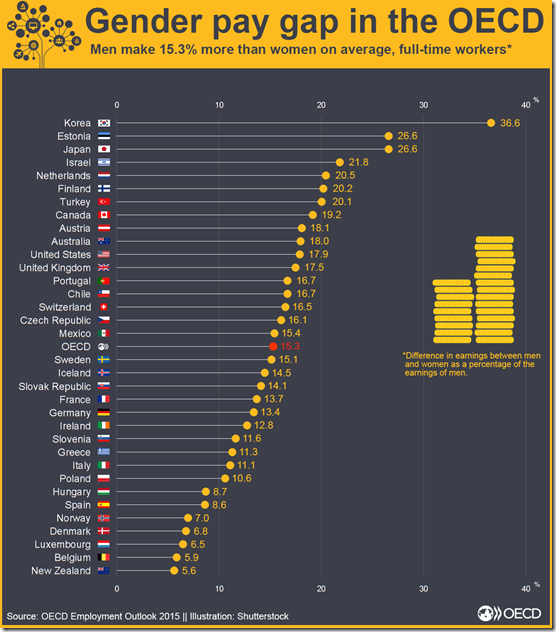
These adaptations of women to the operation of the labour market, in turn, reflect a gendered division of labour and household effort in raising families and the accidents of birth as to who has these roles (Chiswick 2006, 2007; Becker 1981, 1985, 1993).
The market is operating fairly well in terms of rewarding what skills and talents people bring to it in light of a gendered division of labour and household effort and the accidents of birth. The issue is one of distributive justice about how these skills and family commitments are allocated and should be allocated outside the market between men and women when raising children. As in related areas such as racial and ethnic wage and employment gaps, these gaps are driven by differences in the skills and talents that people acquired prior to entering the labour market. …
The dark underbelly of the signalling value of engagement rings
19 Apr 2017 Leave a comment
in discrimination, economics of love and marriage, gender, human capital, labour economics, labour supply, occupational choice, television Tags: asymmetric marriage premium, comparable worth, dating markets, gender, marriage and divorce, Seinfeld, signalling
Generation Unbound – The drift into parenthood without marriage
26 Jun 2016 Leave a comment
in economics of love and marriage, gender Tags: economics of fertility, marriage and divorce, single parents
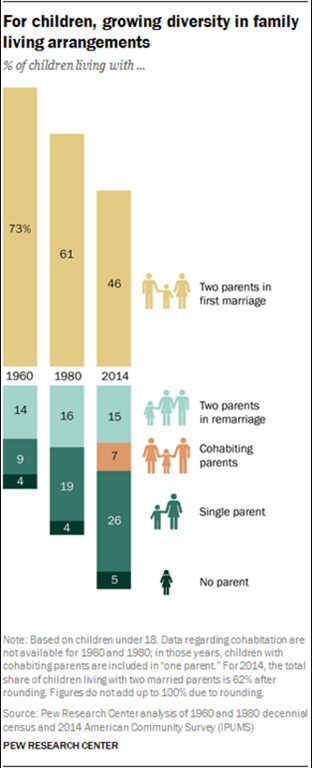
Over half of all births to young adults in the United States now occur outside of marriage, and many are unplanned. The result is increased poverty and inequality for children. The left argues for more social support for unmarried parents; the right argues for a return to traditional marriage. In Generation Unbound, Isabel V. Sawhill offers a third approach: change “drifters” into “planners.”

Recent Comments