At least 20% of New Zealand workers are subject to occupational regulation

There are at least 98 regulated occupations in New Zealand covering about 20% of the workforce. In 2011, this amounts to 440,371 workers. The skills that are regulated range across all skill sets and many occupations:

  • 49% of regulation is in the form of a licence;
  • 18% of regulated work is in the form of licensing of tasks;
  • 31% of regulated workers require a certificate; and
  • 4% of regulated workers require registration.

There are 32 different governing Acts that regulated occupations in New Zealand with 55% of the workers subject to occupational regulation are employed in just five occupations:

  • 98,000 teachers;
  • 48,500 nurses;
  • 42,730 bar managers;
  • 32,733 chartered accountants; and
  • 22,749 electricians.

The Health Practitioners Competency Assurance Act 2003 regulates 22 occupations and a total of 89,807 workers. The next best is the 10 occupations regulated by the Health and Safety in Employment Act 2002 which regulates an unknown number of occupations. The Civil Aviation Act 1990 regulates eight occupations and 19,095 workers, the Building Act 2004 regulates seven occupations and 21,101 workers and the Maritime Transport Act 1994 regulates six occupations and 20,500 workers. 12 of the regulated occupations are regulated under laws passed since 2007.

The purpose of occupational regulation is to protect buyers from quacks and lemons – to overcome asymmetric information about the quality of the provider of the service.

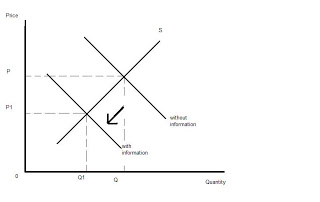
Adverse selection occurs when  the seller knows more than the buyer about the true quality of the product or service on offer. This can make it difficult for the two people to do business together. Buyers cannot tell the good from the bad products on offer so many they do not buy to all and withdraw from the market.
Goods and services divide into inspection, experience and credence goods.

  • Inspection goods are goods or services was quality can be determined before purchase price inspecting them;
  • Experience goods are goods whose quality is determined after  purchase in the course of consuming them; and
  • Credence goods are goods  whose quality may never be known for sure  as to whether the good or service actually worked – was that car repair or medical procedure really necessary?

The problem of adverse selection over experience and credence goods present many potentially profitable but as yet unconsummated wealth-creating transactions because of the uncertainty about quality and reliability.

Buyers are reluctant to buy if they are unsure of quality, but if such assurances can be given in a credible manner, a significant increase in demand is possible.

Any entrepreneur who finds ways of providing credible assurances of the quality of this service or work stands to profit handsomely. Brand names and warranties are examples of market generated institutions that overcome these information gaps through screening and signalling.
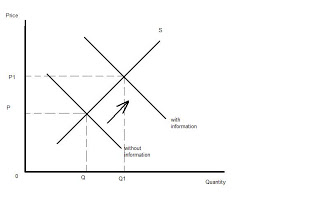
Screening is the less informed party’s effort, usually the buyer, to learn the information that the more informed party has. Successful screens have the characteristic that it is unprofitable for bad types of sellers to mimic the behaviour of good types.

Signalling is an informed party’s effort, usually the seller, to communicate information to the less informed party.

The main issue with quacks in the labour market is whether there are a large cost of less than average quality service, and is there a sub-market who will buy less than average quality products in the presence of competing sellers competing on the basis of quality assurance. This demand for assurance creates opportunities for entrepreneurs to profit by providing assurance.

David Friedman wrote a paper about contract enforcement in cyberspace where the buyer and seller is in different countries so conventional mechanisms such as the courts are futile in cases where the quality of the good is not as promised or there is a failure to deliver at all:

Public enforcement of contracts between parties in different countries is more costly and uncertain than public enforcement within a single jurisdiction.

Furthermore, in a world where geographical lines are invisible, parties to publicly enforced contracts will frequently not know what law those contracts are likely to fall under. Hence public enforcement, while still possible for future online contracts, will be less workable than for the realspace contracts of the past.

A second and perhaps more serious problem may arise in the future as a result of technological developments that already exist and are now going into common use. These technologies, of which the most fundamental is public key encryption, make possible an online world where many people do business anonymously, with reputations attached to their cyberspace, not their realspace, identities

Online auction and sales sites address adverse selection with authentication and escrow services, insurance, and on-line reputations through the rating of sellers by buyers.

E-commerce is flourishing despite been supposedly plagued by adverse selection and weak contract enforcement against overseas venders.

In the labour market, screening and signalling take the form of probationary periods,  promotion ladders, promotion tournaments, incentive pay and the back loading of pay in the form of pension investing and other prizes and bonds for good performance over a long period.

In the case of the labour force, there are good arguments that a major reason for investments in education is as a to signal quality, reliability, diligence as well as investment in a credential that is of no value the case of misconduct or incompetence. Lower quality workers will find it very difficult if not impossible to fake quality and reliability in this way – through investing in higher education.

In the case of teacher registration, for example, does a teacher registration system screen out any more low quality candidates for recruitment than do proper reference checks and a police check for a criminal record.

Mostly disciplinary investigations and deregistrations under the auspices of occupational regulation is for gross misconduct  and criminal convictions rather than just shading of quality.

Much of personnel  and organisational economics is about the screening and sorting of applicants, recruits and workers by quality and the assurance of performance.

Alert entrepreneurs have every incentive to find more profitable ways to manage the quality of their workforce and sort their recruitment pools.

Baron and Kreps (1999) developed the recruitment taxonomy made up of stars, guardians and foot-soldiers.

Stars hold jobs with limited downside risk but high performance is very good for the firm – the costs of hiring errors for stars such as an R&D worker are small: mostly their salary. Foot-soldiers are employees with narrow ranges of good and bad possible outcomes.

Guardians have jobs where bad performance can be a calamity but good job performance is only slightly better than an average performance.

Airline pilots and safety, compliance, finance and controller jobs are all examples of guardian jobs where risk is all downside. Bad performance of these jobs can  bring the company down. Dual control is common in guardian jobs.

The employer’s focus when recruiting and supervising guardians is low job performance and not associating rewards and promotions with risky behaviours. Employers will closely screen applicants for guardian jobs, impose long apprenticeships and may limit recruiting to port-of-entry jobs.

The private sector has ample experience in handling risk in recruitment for guardian jobs. Firms and entrepreneurs are subject to a hard budget constraints that apply immediately if they hire quacks and duds.

Blackboard economics says that governments may be able to improve on market performance but as Coase warned that actually implement regulatory changes in real life is another matter:

The policy under consideration is one which is implemented on the blackboard.

All the information needed is assumed to be available and the teacher plays all the parts. He fixes prices, imposes taxes, and distributes subsidies (on the blackboard) to promote the general welfare.

But there is no counterpart to the teacher within the real economic system

Occupational regulation  comes with the real risk of the regulation turning into an anti-competitive barrier to entry as Milton Friedman (1962) warned:

The most obvious social cost is that any one of these measures, whether it be registration, certification, or licensure, almost inevitably becomes a tool in the hands of a special producer group to obtain a monopoly position at the expense of the rest of the public.

There is no way to avoid this result. One can devise one or another set of procedural controls designed to avert this outcome, but none is likely to overcome the problem that arises out of the greater concentration of producer than of consumer interest.

The people who are most concerned with any such arrangement, who will press most for its enforcement and be most concerned with its administration, will be the people in the particular occupation or trade involved.

They will inevitably press for the extension of registration to certification and of certification to licensure. Once licensure is attained, the people who might develop an interest in undermining the regulations are kept from exerting their influence. They don’t get a license, must therefore go into other occupations, and will lose interest.

The result is invariably control over entry by members of the occupation itself and hence the establishment of a monopoly position.

Friedman’s PhD was published in 1945 as Income from Independent Professional Practice. With co-author Simon Kuznets, he argued that licensing procedures limited entry into the medical profession allowing doctors to charge higher fees than if competition were more open.

Data Source: Martin Jenkins 2012, Review of Occupational Regulation, released by the Ministry of Business, Innovation and Employment under the Official Information Act.

Healthier, living longer but many more workers on disability benefits

Graph: Newly Disabled Workers, By Diagnoses

In the past three decades, the number of people who are on disability benefit has skyrocketed.

There is no compelling evidence that the incidence of disabling health conditions among the working age population is rising. Autor (2006) found that disability rolls in the USA expanded because:

  1. congressional reforms to disability screening in 1984 that enabled workers with low mortality disorders such as back pain, arthritis and mental illness to more readily qualify for benefits;
  2. a rise in the after-tax income replacement rate, which strengthened the incentives for lower-skilled workers to seek benefits; (3) and
  3. a rapid increase in female labour force participation that expanded the pool of insured workers.

Autor found that the aging of the baby boom generation has contributed little to the growth of disability benefit numbers to date.

Total_Disabled_Workers_Planet_Money.gif

David Autor and Mark Duggan (2003) found that low-skills and a poor education is predictor of disability: in the USA in 2004, nearly one in five male high school dropouts between ages 55 and 64 were in the disability program; that was more than double that of high school graduates of the same age and more than five times higher than the 3.7 % of college graduates of that age who collect disability. Unemployment is another driver of disability.

The proportion of working-age people receiving a Sickness Benefit, an Invalid’s Benefit or Accident Compensation weekly compensation  in New Zealand rose from around 1% in the 1970s to 5% in June 2002.

Figure 1 The Number of People Receiving Benefit as a Primary Recipient, All Age Groups, 1975–2005

The Number of People Receiving Benefit as a Primary Recipient, All Age Groups, 1975–2005

Source: DSW Annual Reports or Statistical Information Reports and MSD SWIFFT data from Dwyer and McLeod (2006).

Most other OECD countries also experienced a rise in the proportion of the working-age population claiming incapacity benefits over this period. By the late 1990s and early 2000s, it was common for around 4–6.5% of the working-age population to receive such benefits. Some European countries have up to 10% of their working age population on disability or sickness benefit!

When the UK undertook reassessments of those on its disability and sickness benefit, fewer than one in 10 people assessed for the new sickness benefit has been deemed too ill to carry out any work.

More than a third of the 1.3million people who applied for Employment and Support Allowance were found to be fully capable of working; a similar proportion abandoned their claims while they were still being processed. Moral hazard seems to be the main explanation of the rise in disability roles.

Before 15 July 1980, a victim of a workplace accident in the state of Kentucky received a payment proportional to his or her wage with an upper limit of $131 per week. On 15 July 1980, the limit was raised to $217 per week. This increase made a considerable difference to the best-paid workers: their periods of convalescence grew 20% longer (Cahuc and Zylberberg 2006).

Equality, incentives and progress

alt

Image

The Social Possibilities of Economic Chivalry (1907)

Alfred Marshall.jpg

A Government could print a good edition of Shakespeare’s works, but it could not get them written…

I am not urging that municipalities should avoid all such undertakings without exception. For, indeed, when a large use of rights of way, especially in public streets, is necessary, it is doubtless generally best to retain the ownership, if not also the management, of the inevitable monopoly in public hands.

I am only urging that every new extension of Governmental work in branches of production which need ceaseless creation and initiative is to be regarded as prima facie anti-social, because it retards the growth of that knowledge and those ideas which are incomparably the most important form of collective wealth.

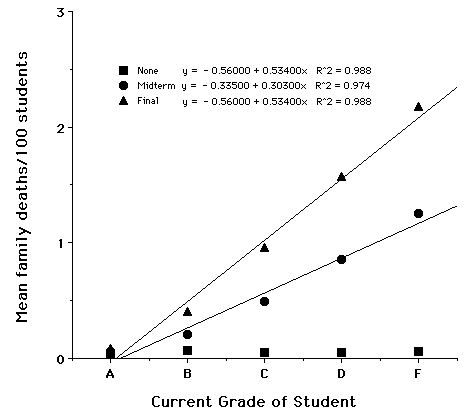
The Dead Grandmother/Exam Syndrome

Grandmothers are far more likely to die suddenly just before the student takes an exam, than at any other time of year.

Poor grades among their grandchildren is especially dangerous to their golden years

via The Dead Grandmother/Exam Syndrome – Neatorama.

Sargent, Prescott, Taylor and Kydland on the Global Financial Crisis and the Great Recession

Many of the key issues about what modern macroeconomics has to say on global financial crises are discussed in a 2010 interview with Thomas Sargent where he says that two polar models of bank crises and what government lender-of-last-resort and deposit insurance do to arrest or promote them were used to understand the GFC. They are polar models because:

  • in the Diamond-Dybvig and Bryant model of banking runs, deposit insurance and other bailouts are purely a good thing stopping panic-induced bank runs from ever starting; and

  • In the Kareken and Wallace model, deposit insurance by governments and the lender-of-last-resort function of a central bank are purely a bad thing because moral hazard encourages risk taking unless there is regulation or there is proper surveillance and accurate risk-based pricing of the deposit insurance.

In the Diamond-Dybvig and Bryant model, if there is government-supplied deposit insurance, people do not initiate bank runs because they trust their deposits to be safe. There is no cost to the government for offering the deposit insurance because there are no bank runs! A major free lunch.

Tom Sargent considers that the Bryant-Diamond-Dybvig model has been very influential, in general, and among policy makers in 2008, in particular.

Governments saw Bryant-Diamond-Dybvig bank runs everywhere. The logic of this model persuaded many governments that if they could arrest the actual or potential runs by convincing creditors that their loans were insured, that could be done at little or no eventual cost to taxpayers.

In 2008, the Australian and New Zealand governments announced emergency bank deposit insurance guarantees. In Bryant-Diamond-Dybvig style bank panics, these guarantees ward off the bank run and thus should cost nothing fiscally because the deposit insurance is not called upon. These guarantees and lender of last resort function were seen as key stabilising measures. These guarantees were called upon in NZ to the tune of $2 billion.

  • The Diamond-Dybvig and Bryant model makes you sensitive to runs and optimistic about the ability of deposit insurance to cure them.
  • The Kareken and Wallace model’s prediction is that if a government sets up deposit insurance and doesn’t regulate bank portfolios to prevent them from taking too much risk, the government is setting the stage for a financial crisis.
  • The Kareken-Wallace model makes you very cautious about lender-of-last-resort facilities and very sensitive to the risk-taking activities of banks.

Kareken and Wallace called for much higher capital reserves for banks and more regulation to avoid future crises. This is not a new idea. Sam Peltzman in the mid-1960s found that U.S. banks in the 1930s halved their capital ratios after the introduction of federal deposit insurance. FDR was initially opposed to deposit insurance because it would encourage greater risk taking by banks.

Sargent also said that it is just wrong to say that the GFC caught modern macroeconomists by surprise: Allen and Gale’s 2007 book Understanding Financial Crises compiles many of the dynamic models of the causes of financial crises and government policies that can arrest or ignite them.

Front Cover

Stern and Feldman’s Too Big to Fail uses insights from the formal economic literature to warn in 2004 about the time bomb for a financial crisis set by current banking regulations and government promises.

In Great Depressions of the Twentieth Century (2007) written by a team of 24 economists, Kehoe and Prescott and others concluded that bad government policies are responsible for causing depressions. In particular, while different sorts of shocks can lead to ordinary business cycle downturns, it is overreactions by governments that can prolong and deepen the downturn, turning it into a depression. Depressions and great recessions, such as currently the case in the USA, are caused by crisis management policies that turn garden-variety recessions into something much worse. Crisis management policies distort the incentives to hire and invest and reduce competition and efficiency.

As an example, one in three unemployed in the EU are Spanish mainly because of Spanish employment protection laws.

Cahuc et al. 2012 estimated that Spanish unemployment would be 45% lower if Spain adopted the less strict French laws! About ten years ago, under French employment law, the contestants on the French version of Survivor sued successfully for wrongful dismissal by the Tribal Council! French workers cannot be laid off just to improve business profits. They can be laid off to avoid bankruptcy.

John Taylor argues that we should consider macroeconomic performance since the 1960:

  • There was a move toward more discretionary policies in the 1960s and 1970s;
  • A move to more rules-based policies in the 1980s and 1990s; and
  • Back again toward discretion in recent years.

These policy swings are correlated with economic performance—unemployment, inflation, economic and financial stability, the frequency and depths of recessions, the length and strength of recoveries. Less predictable, more interventionist, and more fine-tuning type macroeconomic policies have caused, deepened and prolonged the current recession.

Finn Kydland considers fiscal policy to be at the heart of current problems. Instead of restructuring and investing more prudently, Western countries faced with budget shortfalls will seek to increase taxes:

  • The U.S. economy isn’t recovering from the Great Recession of 2008-2009 with the anticipated strength.
  • A widespread conjecture is that this weakness can be traced to perceptions of an imminent switch to a regime of higher taxes.
  • The fiscal sentiment hypothesis can account for a significant fraction of the decline in investment and labor supply in the aftermath of the Great Recession, relative to their pre-recession trends.
  • The perceived higher taxes must fall almost exclusively on capital income. People must suspect that the tax structure that will be implemented to address large fiscal imbalances will be far from optimal.

Those who disagree with the policy-based explanation for the depth and length of the Great Recession must explain why the US and EU economies have not recovered after the worst of the global financial crisis passed in November 2008?! The case that there were intervening government policies that prolonged and deepened each national recession is strong.

Why are there so few workers’ co-ops?

If workers’ cooperatives are so efficient, why are there so few cooperatives? Workers’ cooperatives should be able to slowly undercut other firms on price because they do not have to pay a profit to the capitalists.

Building societies, credit unions and some life insurance companies were mutually owned by their customers for a long time, but recently fell out of favour because of a growing lack of competitiveness and under-capitalisation.

Cooperatives are not economically viable because of intrinsic difficulties of entrepreneurship and management. And most workers prefer to work in firms for a wage rather than wait for the co-op to start up and hopefully break even before they get their first pay cheque. That could be a slow train coming.

The kibbutzim are Israeli agricultural communities initially organized on socialist lines, mostly between the 1910s and 1950s. The kibbutz is an example of voluntary socialism. The founders of kibbutzim were socialist idealists wanting to create a new human being.

Robert Nozick pointed out that few people actually join a kibbutz. Six per cent is the maximum proportion of any population who would voluntarily choose to live in these socialist communities. More recently, 2.6% of the Israeli population live on a kibbutz.

Originally, most kibbutzim followed strict socialist policies forbidding private property; they also required near-total equality of income regardless of differences in productivity, and in some cases, even abandoned the specialisation of labour. Kibbutzim are communities whose aim is equal sharing.

Kibbutzim were expected to fail because of moral hazard and adverse selection. Other organisations subject to adverse selection and moral hazard are professional partnerships, co-operatives, and labour-managed firms because they are all based on revenue sharing.

Kibbutzim have persisted for most of the twentieth century and are one of the largest communal movements in history. About 40% are still run on communist principles. Why is this so?

The kibbutz movement was founded by individuals who can be regarded as ex-ante homogeneous in their ability and potential income, and who came to a new land full of uncertainties. They were young unattached individuals who share a comparatively long period of social, ideological, and vocational training.

An even more durable example of voluntary collectivist living is Catholic monasteries and convents, but notice that these too were founded on a realization that close family ties are inimical to communal order.

Kibbutz founders wanted insurance, but their founders realised that members who would turn out to have high abilities might leave the Kibbutz.

  • The founders of the kibbutzim decided to abolish all private property and to own all wealth commonly, which served as a lock-in device.
  • Like monasteries and convents, kibbutzim deter members from fleeing through this communal ownership of property. You leave with the shirt on your back!

Kibbutzim also put prospective members through lengthy trial periods to make sure they are made of the right stuff. Those raised on a kibbutz tend to have learned kibbutz-specific skills, such as agronomy, which also makes exit to the outside world even more difficult.

Kibbutzim are similar to law firms, medical and business partnerships that pool income for risk sharing purposes.

Mutual monitoring and peer pressure replace direct monetary incentives in mitigating moral hazard in a kibbutz (and in monasteries and convents) in the same way as in professional partnerships, cooperatives, and labour-managed firms with pooled assets and the option of exit.

The trade-off between insurance and adverse selection determines the level of equality within a kibbutz and its size, as with any other professional partnership:

  • Kibbutz vary in size from less than a hundred to over a thousand, but most have between 400 and 600 members, with an average of 441 members.
  • Kibbutz size is limited by the savings on income insurance no longer offsetting the costs of moral hazard and other transaction costs as the Coasian firm grows in size.

Ran Abramitzky writes with great insight on the economics of the kibbutzim. He is writing a book The Mystery of the Kibbutz: How Socialism Succeeded. He found that high-ability individuals are more likely to leave a kibbutz. The brain drain would be worse if kibbutzim didn’t make it so costly to exit. Is this a familiar theme of socialism?

Many hybrid organisations exist in the market, ranging from joint ventures and agricultural seller and supermarket buyer co-ops to labour-owned firms such as in most of the professions.

But rarely do we find real life existing cooperatives with all workers and only workers having equal ownership rights. As Jon Elster noted, there are often non-working owners, non-owning workers and unequal distribution of shares in real life workers’ co-ops. All other types of co-ops and professional partnership share this feature.

Next Newer Entries

Bassett, Brash & Hide

Celebrating humanity's flourishing through the spread of capitalism and the rule of law

Truth on the Market

Scholarly commentary on law, economics, and more

The Undercover Historian

Beatrice Cherrier's blog

Matua Kahurangi

Celebrating humanity's flourishing through the spread of capitalism and the rule of law

Temple of Sociology

Celebrating humanity's flourishing through the spread of capitalism and the rule of law

Velvet Glove, Iron Fist

Celebrating humanity's flourishing through the spread of capitalism and the rule of law

Why Evolution Is True

Why Evolution is True is a blog written by Jerry Coyne, centered on evolution and biology but also dealing with diverse topics like politics, culture, and cats.

Down to Earth Kiwi

Celebrating humanity's flourishing through the spread of capitalism and the rule of law

NoTricksZone

Celebrating humanity's flourishing through the spread of capitalism and the rule of law

Homepaddock

A rural perspective with a blue tint by Ele Ludemann

Kiwiblog

DPF's Kiwiblog - Fomenting Happy Mischief since 2003

The Dangerous Economist

Celebrating humanity's flourishing through the spread of capitalism and the rule of law

Watts Up With That?

The world's most viewed site on global warming and climate change

The Logical Place

Tim Harding's writings on rationality, informal logic and skepticism

Doc's Books

A window into Doc Freiberger's library

The Risk-Monger

Let's examine hard decisions!

Uneasy Money

Commentary on monetary policy in the spirit of R. G. Hawtrey

Barrie Saunders

Thoughts on public policy and the media

Liberty Scott

Celebrating humanity's flourishing through the spread of capitalism and the rule of law

Point of Order

Politics and the economy

James Bowden's Blog

A blog (primarily) on Canadian and Commonwealth political history and institutions

Science Matters

Reading between the lines, and underneath the hype.

Peter Winsley

Economics, and such stuff as dreams are made on

A Venerable Puzzle

"The British constitution has always been puzzling, and always will be." --Queen Elizabeth II

The Antiplanner

Celebrating humanity's flourishing through the spread of capitalism and the rule of law

Bet On It

Celebrating humanity's flourishing through the spread of capitalism and the rule of law

History of Sorts

WORLD WAR II, MUSIC, HISTORY, HOLOCAUST

Roger Pielke Jr.

Undisciplined scholar, recovering academic

Offsetting Behaviour

Celebrating humanity's flourishing through the spread of capitalism and the rule of law

JONATHAN TURLEY

Res ipsa loquitur - The thing itself speaks

Conversable Economist

Celebrating humanity's flourishing through the spread of capitalism and the rule of law

The Victorian Commons

Researching the House of Commons, 1832-1868

The History of Parliament

Articles and research from the History of Parliament Trust

Books & Boots

Reflections on books and art

Legal History Miscellany

Posts on the History of Law, Crime, and Justice

Sex, Drugs and Economics

Celebrating humanity's flourishing through the spread of capitalism and the rule of law

European Royal History

Exploring the Monarchs of Europe

Tallbloke's Talkshop

Cutting edge science you can dice with

Marginal REVOLUTION

Small Steps Toward A Much Better World

NOT A LOT OF PEOPLE KNOW THAT

“We do not believe any group of men adequate enough or wise enough to operate without scrutiny or without criticism. We know that the only way to avoid error is to detect it, that the only way to detect it is to be free to inquire. We know that in secrecy error undetected will flourish and subvert”. - J Robert Oppenheimer.

STOP THESE THINGS

The truth about the great wind power fraud - we're not here to debate the wind industry, we're here to destroy it.

Lindsay Mitchell

Celebrating humanity's flourishing through the spread of capitalism and the rule of law

Alt-M

Celebrating humanity's flourishing through the spread of capitalism and the rule of law

croaking cassandra

Economics, public policy, monetary policy, financial regulation, with a New Zealand perspective

The Grumpy Economist

Celebrating humanity's flourishing through the spread of capitalism and the rule of law

International Liberty

Restraining Government in America and Around the World