Rent control and housing quality
18 Jul 2015 Leave a comment
in economics of regulation, politics - USA, urban economics Tags: expressive voting, offsetting behaviour, rational ignorance, rational irrationality, rent control, The fatal conceit, The pretence to knowledge, unintended consequences
Do Residential Energy Efficiency Investments Deliver?
15 Jul 2015 Leave a comment
in energy economics, environmental economics, environmentalism, global warming Tags: climate alarmists, energy conservation, expressive voting, nanny state, offsetting behaviour, The fatal conceit, The pretence to knowledge, tokenism
The researchers found that the upfront cost of efficiency upgrades of a large randomized controlled trial of 30,000 homes in Michigan came to about $5,000 per house, on average. But their central estimate of the energy savings only amounted to about $2,400 per household, on average, over the lifetime of the upgrades.
After the upgrades, homes used 10 to 20 percent less energy for electricity and heating. But, that was only about 39 percent of the savings that engineering modelers had predicted ahead of time. The program simply wasn’t as effective at saving energy as everyone thought.
/cdn0.vox-cdn.com/uploads/chorus_asset/file/3817414/Screen_Shot_2015-06-23_at_3.40.36_PM.0.png)
It usually begins with the RMA – fewer warm, dry homes as an unintended consequence of regulatory restrictions on land supply
10 Jul 2015 1 Comment
in applied welfare economics, economics of regulation, industrial organisation, labour economics, law and economics, politics - New Zealand, poverty and inequality, property rights, survivor principle, urban economics Tags: consumer products standards, do gooders, economics of regulation, nanny state, offsetting behaviour, rent control, The fatal conceit, The pretence to knowledge, urban economics
The Government admits that its proposed insulation and smoke alarm standards for rental properties could push up rents by more than $3 a week. Under legislation to be introduced in October, social housing would have to be retrofitted with ceiling and underfloor insulation by next July, and all other rental homes by July 2019.

An important driver of lower quality housing in New Zealand is the restrictions on land supply. The costs of those restrictions, land makes up 60% of the cost of new houses rather than 40%. Land prices have doubled and tripled in a number of cities. As the Ministry of Business, Innovation and Employment has said:
The median price of sections has increased from $94,000 in 2003 to over $190,000 today (compared with $NZ 100,000 per section in the US), ranging from Southland ($82,000) to Auckland ($308,000)…
Section costs in Auckland account for around 60% of the cost of a new dwelling, compared with 40% in the rest of New Zealand.
The RMA is the Resource Management Act and was passed just before New Zealand housing prices started to rise rapidly.

Source: Dallas Fed; Housing prices deflated by personal consumption expenditure (PCE) deflator.
Higher land prices for new houses spill into the prices of existing houses, which are now much more expensive than they need to be but for the RMA inspired land supply restrictions in Auckland and elsewhere in New Zealand.

One way in which homeowners and landlords can keep costs down when buying a house either for their own use or as an investment property is not to invest in insulation and smoke alarms. Deposits are less, mortgages are less and rents are less. It all adds up.
$3 is not much for some but it is enough that some parents cannot find $3 or so per week to feed their children breakfast. Joe Trinder, the Mana News editor blogged about the great expense of feeding the kids for ordinary families.

Put simply, you cannot argue that a few dollars is a lot of money to people on low incomes but ignore the consequences for their welfare of a $3 per week increase in their rents.
If tenants were willing to pay for insulation, landlords would provide well-insulated rental properties to service that demand. Walter Block wrote an excellent defence of slumlords in his 1971 book Defending the Undefendable:
The owner of ghetto housing differs little from any other purveyor of low-cost merchandise. In fact, he is no different from any purveyor of any kind of merchandise. They all charge as much as they can.
First consider the purveyors of cheap, inferior, and second-hand merchandise as a class. One thing above all else stands out about merchandise they buy and sell: it is cheaply built, inferior in quality, or second-hand.
A rational person would not expect high quality, exquisite workmanship, or superior new merchandise at bargain rate prices; he would not feel outraged and cheated if bargain rate merchandise proved to have only bargain rate qualities.
Our expectations from margarine are not those of butter. We are satisfied with lesser qualities from a used car than from a new car.
However, when it comes to housing, especially in the urban setting, people expect, even insist upon, quality housing at bargain prices.
Richard Posner discussed housing habitability laws in his Economic Analysis of the Law. The subsection was titled wealth distribution through liability rules. Posner concluded that habitability laws will lead to abandonment of rental property by landlords and increased rents for poor tenants.
https://twitter.com/childpovertynz/status/618985237628858368
What do-gooder would want to know that a warranty of habitability for rental housing will lead to scarcer, more expensive housing for the poor! Surprisingly few interventions in the housing market work to the advantage of the poor.
Certainly, there will be less rental housing of a habitability standard below that demanded by do-gooders in the new New Zealand legislation. In the Encyclopaedia of Law and Economics entry on renting, Werner Hirsch said:
It would be a mistake, however, to look upon a decline in substandard rental housing as an unmitigated gain.
In fact, in the absence of substandard housing, options for indigent tenants are reduced. Some tenants are likely to end up in over-crowded standard units, or even homeless.
The straightforward way to increase the quality of housing in New Zealand without increasing poverty is to increase the supply of land.
As land prices fall, both homebuyers and tenants will be able to pay for better quality fixtures and fittings because less of their limited income is paying for buying or renting the land.


HL Mencken on the Harmful Digital Communication Bill
26 Jun 2015 Leave a comment
in applied price theory, applied welfare economics, comparative institutional analysis, constitutional political economy, economics of crime, economics of media and culture, economics of regulation, law and economics, liberalism, politics - New Zealand, Public Choice Tags: chilling effect, disorderly conduct, free speech, infotopia, Internet trolls, meddlesome preferences, nanny state, offsetting behaviour, The fatal conceit, The pretence to knowledge, unintended consequences
Banning Bottled Water: the Unintended Consequences.
26 Jun 2015 Leave a comment
in applied price theory, economics of regulation, health economics, politics - USA Tags: meddlesome preferences, nanny state, offsetting behaviour, The fatal conceit, The pretence to knowledge, unintended consequences
Starting in 2012, the University of Vermont began a process of requiring that all campus locations selling beverages provided 30% “healthy” beverages, and then that all locations phases out all sales of bottled water.
There were two hope: 1) reduced use of bottles, when bottled water was no longer available, and 2) that healthier beverages would be consumed.

The orange line that drops to zero shows bottled water being phased out. The rising line at the top shows the rise in sugar-sweetened beverages. The red line in the middle that rises sharply shows the rise in sugar-free beverages.
via CONVERSABLE ECONOMIST: Banning Bottled Water: Unintended Consequences.
Gun-free zones an easy target for killers | John Lott
19 Jun 2015 1 Comment
in applied price theory, economics of crime, economics of regulation, law and economics, politics - USA Tags: game theory, gun control, John Lott, mass public shootings, offsetting behaviour, read killers, The fatal conceit, The pretence to knowledge, unintended consequences

The ridiculous non-candidate charade in presidential primary elections
15 Jun 2015 Leave a comment
in economics of media and culture, economics of regulation, politics - USA, Public Choice Tags: 2016 presidential election, campaign finance regulation, offsetting behaviour, The fatal conceit, The pretence to knowledge, unintended consequences
![image_thumb[1]](https://utopiayouarestandinginit.com/wp-content/uploads/2015/06/image_thumb110.png "image_thumb[1]")
The NYT must be slipping with "When Family-Friendly Policies Backfire”
27 May 2015 2 Comments
in discrimination, economics of regulation, gender, labour economics, occupational choice Tags: gender wage gap, maternity leave, offsetting behaviour, The fatal conceit, The pretence to knowledge, unintended consequences
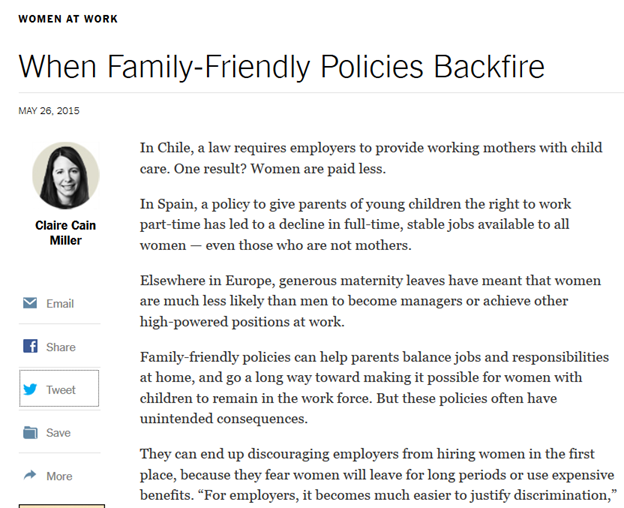
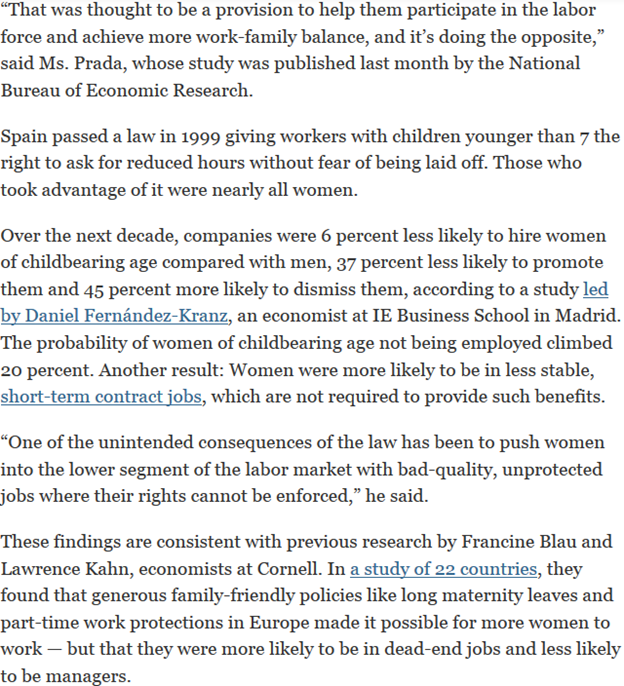
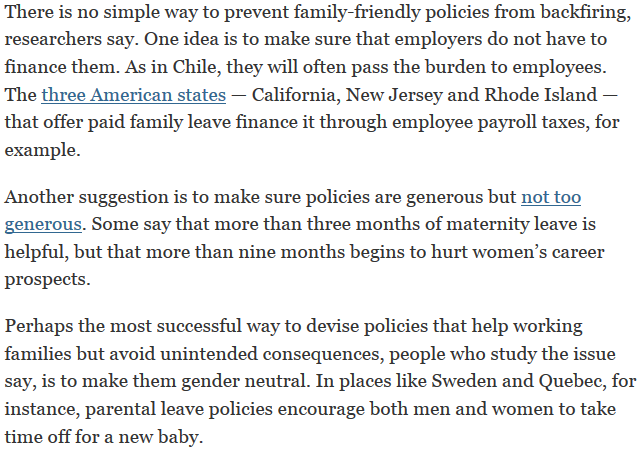
The best part of the article is its frank admission about how bare the cupboard is in dealing with the impact of generous maternity leave on the gender gap. Maternity leave should not be too generous, should not be paid by employers but by taxpayers, and should extend to both men and women.
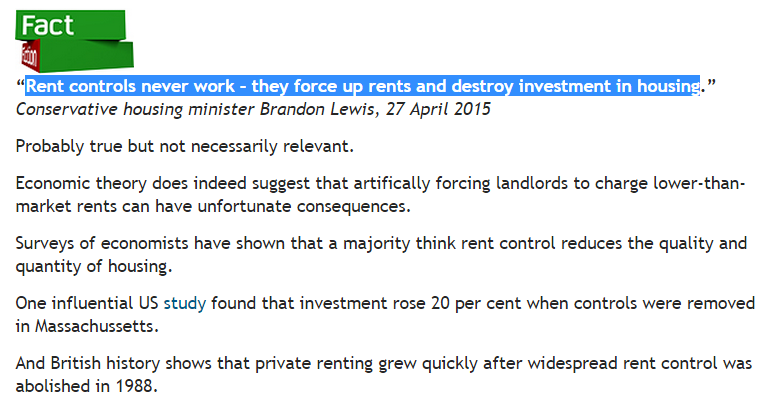
Rent controls never work – they force up rents and destroy investment in housing
24 May 2015 Leave a comment
in economics of regulation, politics - Australia, politics - New Zealand, politics - USA, urban economics Tags: British general election, expressive voting, offsetting behaviour, rational irrationality, rent controls, The fatal conceit, UK politics, unintended consequences
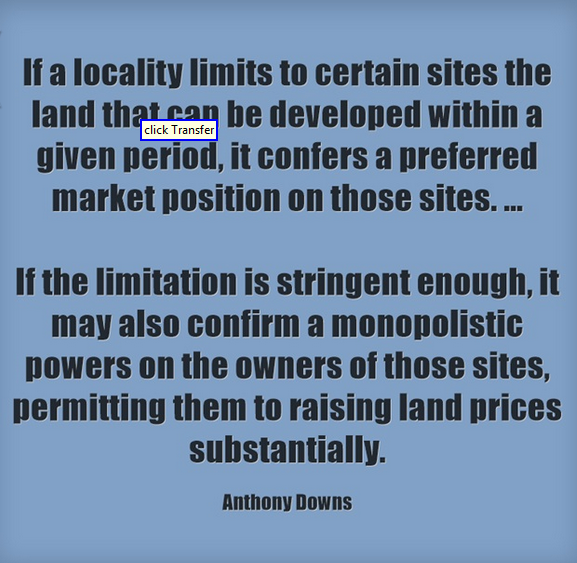
The principle of competitive land supply – Anthony Downs
16 May 2015 Leave a comment
in applied price theory, applied welfare economics, economics of regulation, urban economics Tags: Anthony Downs, green rent seeking, housing affordability, land supply, land use regulation, NIMBYs, offsetting behaviour, RMA, unintended consequences
Offsetting behaviour: smoking and obesity
16 May 2015 Leave a comment
in economics of regulation, health economics Tags: economics of obesity, economics of smoking, offsetting behaviour, The fatal conceit, unintended consequences
US life-expectancy finding: Rise in obesity has nearly offset the decline in smoking nber.org/aginghealth/20… http://t.co/VJ2zvvSisv—
Derek Thompson (@DKThomp) May 15, 2015
Urban planners are confident souls
15 May 2015 Leave a comment
in development economics, economics of regulation, environmental economics, growth miracles, politics - Australia, politics - New Zealand, politics - USA, urban economics Tags: green rent seeking, housing affordability The fatal conceit, land use regulation, offsetting behaviour, RMA, The pretence to knowledge, unintended consequences, urban planning, zoning

The crusade to ban e-cigarette had the predictable effect among teens
12 May 2015 Leave a comment
in environmental economics, health economics Tags: do gooders, economics of smoking, meddlesome preferences, nanny state, offsetting behaviour, The fatal conceit, The pretence to knowledge, unintended consequences
Teen e-cigarette consumption has surpassed conventional smoking in 2014 #vaping via @CDCgov
statista.com/chart/3417/eci… http://t.co/RnZz1nbj5X—
Statista (@StatistaCharts) April 22, 2015
 Utopia, you are standing in it!
Recent Comments