Would a referendum on euthanasia pass in New Zealand?

A New Zealand First MP along with his populist leader have proposed that the morally tricky question of euthanasia be addressed in New Zealand by a referendum rather than by a vote on a private member’s bill in Parliament.

Although about 80% of the public support euthanasia when asked about it in principle, when the 120 members in New Zealand Parliament elected by proportional representation are asked to vote on it in practice with procedures for safeguards, be last time this was tried in 2003 the Bill failed by three votes. The reason why it failed to pass was a substantial number of MPs who voted against the bill was reservations about abuse.

A badly drafted bill may offer insufficient assurances to some MPs about preventing abuse and ensuring people who are depressed are not offered options that are not in their best interests.

Others have moral or religious objections. The religious objections were summarised by Blackstone, in his Commentaries on the Laws of England, where he wrote that suicide was also a spiritual offence:

…in evading the prerogative of the Almighty, and rushing into his immediate presence uncalled for

If a referendum was to fail, that would make our morally timid MPs even more timid about ever passing a bill on euthanasia.

There is a considerable risk that a referendum on euthanasia will fail because people don’t know exactly what they are voting for. Because of that they will listen to those  who opposed euthanasia who will point to the risk of abuse. A referendum strengthens the hands of those that oppose euthanasia. They can play to the lack of detail on what exactly is to be approved.

Many people have very strong views on exactly when and when not euthanasia is permissible because of their views about the sanctity of life and the risk of abuse. The recent High Court judgement on an unsuccessful application  are an exception to the criminal law on assisted suicide said that:

The sanctity of human life principle underpins the criminal law relating to culpable homicide. It was said by Blackstone to be the first rule of English law.

When making an exception to the first rule of law, people want to know exactly what they are voting for and exactly what safeguards apply the proposed exceptions. A Referendum does not offer that indispensable option. Writing on a Bill on end of life choice is legally and morally tricky.

Many Bills have failed such as recently in the Scottish Parliament and in 2003 in the New Zealand Parliament because they were badly drafted and were considered by many  to offer insufficient protection of the vulnerable against abuse and melancholy.

Even when courts rule favourably on the matter, such as in Canada with its recent Supreme Court decision under its Bill of Rights, that court suspended its judgement upholding the right to euthanasia for 12 month so that the Canadian Parliament could work out the ever so vital details by passing a Bill. As the Supreme Court of United Kingdom recently ruled:

… unless the court can be satisfied that any exception to the subsection can be operated in such a way as to generate an acceptably small risk that assistance will be afforded to those vulnerable to pressure to seek to commit suicide, it cannot conclude that the absolute prohibition in the subsection is disproportionate to its legitimate aim.

That is the essence of reservations about end of life choice. Blackstone’s ratio applies to standards of proof in criminal proceedings: it is better that 10 guilty go free than one innocent suffer.

Those with reservations about end of life choice have the same concerns that motivated Blackstone’s ratio. Their reservations are focused on few cases of abuse not justifying the benefits of going gently into that good night by making exceptions from an absolute prohibition under the criminal law against assisted suicide for the terminally ill despite they being of sound mind and independent judgement.

Habeaus Corpus Act passed in England today 1679

Image

The changing meaning of equality before the law

On the New Deal and the rule of law

Sharia law, arbitration law and family law

https://www.facebook.com/738620372859560/photos/a.739055862816011.1073741828.738620372859560/803567753031488/?type=1

Sharia law is part of a general issue of private arbitration in religious courts. There are rabbinical courts doing private arbitration among Orthodox Jews in the UK. There is a famous paper about extra-legal enforcement of contracts among Orthodox Jews in the diamond trade.

Success in the industry requires enforcing executory agreements that are beyond the reach of public courts, and Jewish diamond merchants enforce such contracts with a reputation mechanism supported by a distinctive set of industry, family, and community institutions. An industry arbitration system publicizes promises that are not kept. Intergenerational legacies induce merchants to deal honestly through their very last transaction, so that their children may inherit valuable livelihoods. And ultraorthodox Jews, for whom participation in their communities is paramount, provide important value-added services to the industry without posing the threat of theft and flight.

The British law society copped a lot of flak for issuing practice notes explaining how to write wills that were compliant with Islamic family law.

In any case, any will is always subject to laws about providing for the family and for dependent children and can be overridden on those grounds, no matter how they are written.

Peter Sellers left each of his adult children £750 because he wanted to disinherit them. Under the case law at that time, if you left your children nothing, the courts somehow persuaded themselves that you had forgotten to provide for them so they amended the will. By Sellers leaving them this small sum of money, he made it clear that he wanted the limit how much he gave his children.

In the UK, rulings handed down by the Muslim Arbitration Tribunal can be legally binding. This is because the Arbitration Act 1996 allows almost any body to act as a dispute resolution service if both parties agreed to be bound by its decision.

There is a bill before the House of Lords amending the Arbitration Act to ensure that the evidence of men and women are weighed equally and penalties to apply to any body purporting to have the powers of a court of law.

The UK parliament also passed a Forced Marriages Act a few years ago. This law included penalties for people who threaten self-harm if someone didn’t go through with an arranged marriage.

Where does democracy figure in the cycle of development thinking?

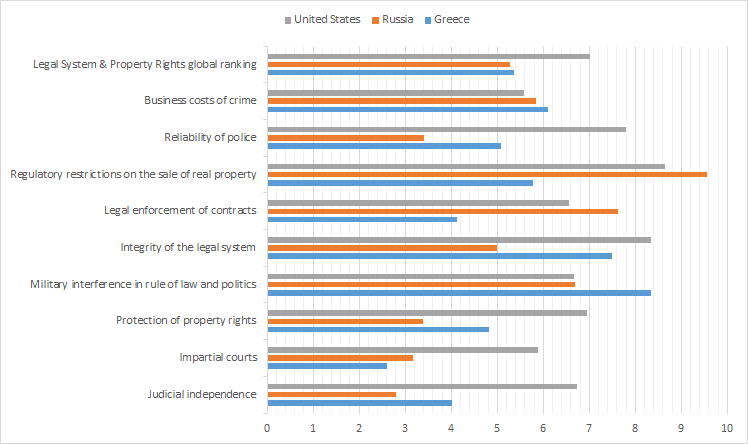
The ease of enforcing contractual rights in Europe

Is this the beginning of the rule of law in China? The right to say no to local bureaucrats?

https://twitter.com/classicepics/status/580291482894073857

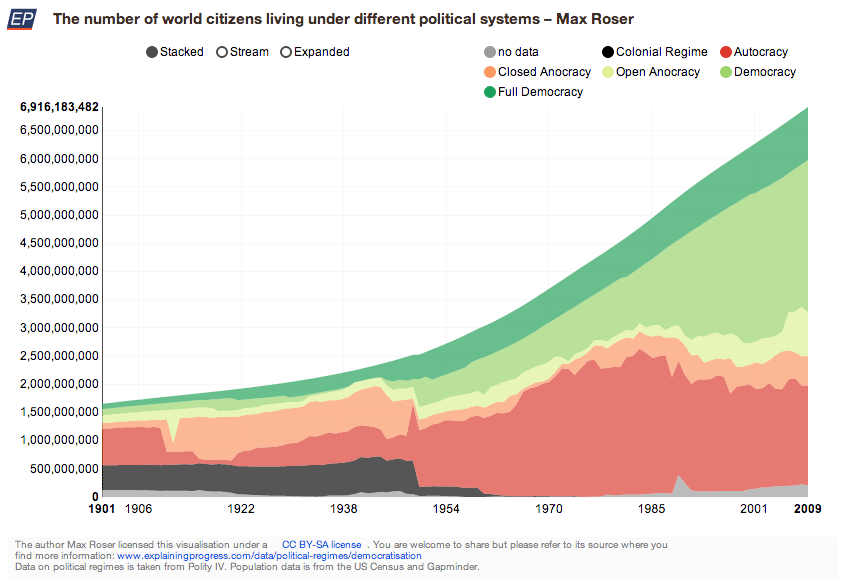
The spread of democracy

explainingprogress_the-number-of-world-citizens-living-under-different-political-systems-roser

Image

Sir Edward Coke defends English liberty

Image

Richard Epstein’s elevator pitch for simple rules for a complex society

Image

Roger D. Congleton on how democracy emerged gradually and peacefully

Image

William Blackstone’s maximum

All presumptive evidence of felony should be admitted cautiously; for the law holds, that it is better that ten guilty persons escape, than that one innocent suffer.  - William Blackstone

Image

Adam Smith on social justice and just desert

Image

Deirdre McCloskey makes the case for laissez faire and the rule of law

Image

Previous Older Entries Next Newer Entries

Bassett, Brash & Hide

Celebrating humanity's flourishing through the spread of capitalism and the rule of law

Truth on the Market

Scholarly commentary on law, economics, and more

The Undercover Historian

Beatrice Cherrier's blog

Matua Kahurangi

Celebrating humanity's flourishing through the spread of capitalism and the rule of law

Temple of Sociology

Celebrating humanity's flourishing through the spread of capitalism and the rule of law

Velvet Glove, Iron Fist

Celebrating humanity's flourishing through the spread of capitalism and the rule of law

Why Evolution Is True

Why Evolution is True is a blog written by Jerry Coyne, centered on evolution and biology but also dealing with diverse topics like politics, culture, and cats.

Down to Earth Kiwi

Celebrating humanity's flourishing through the spread of capitalism and the rule of law

NoTricksZone

Celebrating humanity's flourishing through the spread of capitalism and the rule of law

Homepaddock

A rural perspective with a blue tint by Ele Ludemann

Kiwiblog

DPF's Kiwiblog - Fomenting Happy Mischief since 2003

The Dangerous Economist

Celebrating humanity's flourishing through the spread of capitalism and the rule of law

Watts Up With That?

The world's most viewed site on global warming and climate change

The Logical Place

Tim Harding's writings on rationality, informal logic and skepticism

Doc's Books

A window into Doc Freiberger's library

The Risk-Monger

Let's examine hard decisions!

Uneasy Money

Commentary on monetary policy in the spirit of R. G. Hawtrey

Barrie Saunders

Thoughts on public policy and the media

Liberty Scott

Celebrating humanity's flourishing through the spread of capitalism and the rule of law

Point of Order

Politics and the economy

James Bowden's Blog

A blog (primarily) on Canadian and Commonwealth political history and institutions

Science Matters

Reading between the lines, and underneath the hype.

Peter Winsley

Economics, and such stuff as dreams are made on

A Venerable Puzzle

"The British constitution has always been puzzling, and always will be." --Queen Elizabeth II

The Antiplanner

Celebrating humanity's flourishing through the spread of capitalism and the rule of law

Bet On It

Celebrating humanity's flourishing through the spread of capitalism and the rule of law

History of Sorts

WORLD WAR II, MUSIC, HISTORY, HOLOCAUST

Roger Pielke Jr.

Undisciplined scholar, recovering academic

Offsetting Behaviour

Celebrating humanity's flourishing through the spread of capitalism and the rule of law

JONATHAN TURLEY

Res ipsa loquitur - The thing itself speaks

Conversable Economist

Celebrating humanity's flourishing through the spread of capitalism and the rule of law

The Victorian Commons

Researching the House of Commons, 1832-1868

The History of Parliament

Articles and research from the History of Parliament Trust

Books & Boots

Reflections on books and art

Legal History Miscellany

Posts on the History of Law, Crime, and Justice

Sex, Drugs and Economics

Celebrating humanity's flourishing through the spread of capitalism and the rule of law

European Royal History

Exploring the Monarchs of Europe

Tallbloke's Talkshop

Cutting edge science you can dice with

Marginal REVOLUTION

Small Steps Toward A Much Better World

NOT A LOT OF PEOPLE KNOW THAT

“We do not believe any group of men adequate enough or wise enough to operate without scrutiny or without criticism. We know that the only way to avoid error is to detect it, that the only way to detect it is to be free to inquire. We know that in secrecy error undetected will flourish and subvert”. - J Robert Oppenheimer.

STOP THESE THINGS

The truth about the great wind power fraud - we're not here to debate the wind industry, we're here to destroy it.

Lindsay Mitchell

Celebrating humanity's flourishing through the spread of capitalism and the rule of law

Alt-M

Celebrating humanity's flourishing through the spread of capitalism and the rule of law

croaking cassandra

Economics, public policy, monetary policy, financial regulation, with a New Zealand perspective

The Grumpy Economist

Celebrating humanity's flourishing through the spread of capitalism and the rule of law

International Liberty

Restraining Government in America and Around the World