We study the macroeconomic effects of tariff policy using U.S. historical data from 1840–2024. We construct a narrative series of plausibly exogenous tariff changes – based on major legislative actions, multilateral negotiations, and temporary surcharges – and use it as an instrument to identify a structural tariff shock. Tariff increases are contractionary: imports fall sharply,…
The Macroeconomic Effects of Tariffs
The Macroeconomic Effects of Tariffs
02 Mar 2026 Leave a comment
in applied price theory, econometerics, economic history, history of economic thought, international economics Tags: free trade, tariffs
The economic impacts of the 2008 NZ-China Free Trade Agreement
06 Feb 2026 1 Comment
in applied price theory, econometerics, industrial organisation, international economics, politics - New Zealand Tags: China, free trade, free trade agreements, tariffs

New Zealand was the first Western developed country to sign a free trade agreement with China, and it came into force in 2008. At the time, the New Zealand government estimated an increase in exports to China of between NZ$225 million and NZ$350 million (between US$180 million and US$280 million), and Ministry of Foreign Affairs…
The economic impacts of the 2008 NZ-China Free Trade Agreement
Tariffs and Inflation: Where Are We?
05 Feb 2026 Leave a comment
in applied price theory, econometerics, international economics, politics - USA Tags: free trade, tariffs

One of the predictions made by economists when President Trump announce the start of his freewheeling tariff policies in April 2025 was that the costs of the tariffs would ultimately be passed through to consumers, leading to overall higher inflation. Well, President Trump has been tossing out tariff threats, keeping some and withdrawing others. However,…
Tariffs and Inflation: Where Are We?
The Macroeconomic Effects of Tariffs: Evidence From U.S. Historical Data
31 Dec 2025 Leave a comment
in applied price theory, econometerics, economic history, international economics Tags: free trade, tariffs
We study the macroeconomic effects of tariff policy using U.S. historical data from 1840–2024. We construct a narrative series of plausibly exogenous tariff changes based on major legislative actions, multilateral negotiations, and temporary surcharges– and use it as an instrument to identify a structural tariff shock. Tariff increases are consistently contractionary: imports fall sharply, exports…
The Macroeconomic Effects of Tariffs: Evidence From U.S. Historical Data
Stop Slaying the Strawman Case Against Tariffs
19 Dec 2025 1 Comment
in applied price theory, applied welfare economics, international economics, politics - USA Tags: free trade, tariffs
TweetHere’s a letter to a new correspondent. Mr. W__: Because I read the Wall Street Journal avidly, I was familiar, before you sent it, with its report titled “Why Everyone Got Trump’s Tariffs Wrong.” Nevertheless, thanks for your email in which you suggest that this report should prompt me to humbly reassess what you call…
Stop Slaying the Strawman Case Against Tariffs
Lessons from Brexit
19 Dec 2025 Leave a comment
in applied price theory, applied welfare economics, comparative institutional analysis, constitutional political economy, economic growth, international economic law, international economics, macroeconomics Tags: British politics, economics of customs unions, free trade, tariffs
How we connect economically with the world is critical. Brian Easton writes – The British Labour Government is struggling. Partly it is because they were badly prepared in opposition: the Conservative Government was making such a charlie of itself that Labour expected that it would do better and gave little thought as to how it […]
Lessons from Brexit
Quotation of the Day…
19 Nov 2025 Leave a comment
in applied price theory, history of economic thought, income redistribution, industrial organisation, international economics, Milton Friedman, politics - USA, Public Choice, rentseeking Tags: free trade, tariffs

Tweet… is from page 158 of Milton Friedman’s 1953 paper “The Case for Flexible Exchange Rates,” as this paper is reprinted in Friedman’s 1953 collection, Essays in Positive Economics: In brief, it [free trade] is desirable in its own right as one of the basic freedoms we cherish; it promotes the efficient use of resources…
Quotation of the Day…
H1-B visa fees and the academic job market
28 Sep 2025 1 Comment
in applied price theory, economics of education, international economic law, international economics, politics - USA, Public Choice, rentseeking Tags: free trade, tariffs
Assume the courts do not strike this down (perhaps they will?). Will foreigners still be hired at the entry level with an extra 100k surcharge? I would think not,as university budgets are tight these days. I presume there is some way to turn them down legally, without courting discrimination lawsuits? What if you ask them […]
H1-B visa fees and the academic job market
Vernon Smith on Donald Trump’s Protectionism
11 Sep 2025 Leave a comment
in applied price theory, development economics, economic history, economics of bureaucracy, history of economic thought, income redistribution, international economics, politics - USA, Public Choice, rentseeking Tags: free trade, tariffs
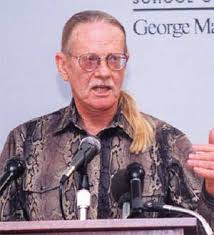
TweetMy emeritus Nobel-laureate colleague, Vernon Smith, sent the following email to me in response to this post. I share Vernon’s note with his kind permission. Don, Trump, like all businesspersons turned political, wants government favors, that is Mercantilism which is as bad today as when Adam Smith railed against such cozy relationships. Same for labor…
Vernon Smith on Donald Trump’s Protectionism
More On Alleged Chinese Dumping
24 Aug 2025 Leave a comment
in applied price theory, development economics, economic history, entrepreneurship, growth miracles, history of economic thought, industrial organisation, international economics, politics - USA, Public Choice, rentseeking Tags: free trade, tariffs
TweetHere’s a second note to a commenter at my Facebook page. Mr. Schlomach: Commenting on my Facebook page, you allege that China ‘dumps’ goods in the U.S. and, in doing so, “has used our love of cheap stuff to suck our country of strategically critical technology/industry.” By suggesting that your fellow Americans buy stuff simply…
More On Alleged Chinese Dumping
Expanding the Milei Miracle: Trade Liberalization
25 Jul 2025 Leave a comment
in development economics, growth disasters, growth miracles, international economics, liberalism, libertarianism Tags: Argentina, tariffs

Part I of this series celebrated Javier Milei’s amazing success, Part II pointed out that labor market liberalization is still a big challenge, while Part III noted that the tax system still needs to be fixed. This final video in the series explains the need for free trade. As noted in the video, Milei inherited […]
Expanding the Milei Miracle: Trade Liberalization
Some Links
13 May 2025 Leave a comment
in applied price theory, econometerics, industrial organisation, international economics, survivor principle Tags: free trade, tariffs
TweetNicholas Bloom, Kyle Handley, André Kurmann, and Philip A. Luck revisit the “China Shock.” Two slices: Our research investigates the extent to which the opposing trends in manufacturing and services job growth are related. Our findings reveal that local labor markets more exposed to Chinese import competition experienced larger manufacturing job losses. But these losses…
Some Links
Tabarrok on the Movie Tariff
07 May 2025 1 Comment
in applied price theory, international economics, movies, politics - USA, Public Choice, rentseeking Tags: 2024 presidential election, free trade, tariffs
The Hollywood Reporter has a good piece on Trump’s proposed movie tariffs: Even if such a tariff were legal — and there is some debate about whether Trump has the authority to impose such levies — industry experts are baffled as to how, in practice, a “movie tariff” would work. “What exactly does he want […]
Tabarrok on the Movie Tariff
The best tariff threat is one you do not have to use
06 May 2025 1 Comment
in applied price theory, international economics, politics - USA Tags: 2024 presidential election, free trade, game theory, tariffs
Following up on an earlier post, Reciprocal tariffs as a tit-for-tat strategy in a repeated prisoners’ dilemma From NY Times:Trump imposed, quickly withdrew and then threatened to bring back huge tariffs on dozens of countries. Immediately, they began calling and asking what they could do to stop him. “More than 100 countries have already come to…
The best tariff threat is one you do not have to use
Can Trump’s Tariff Offensive Deliver New American Jobs?
28 Apr 2025 Leave a comment
in applied price theory, entrepreneurship, industrial organisation, international economics, politics - USA Tags: 2024 presidential election, free trade, tariffs
By Lauren Weber of The WSJ. Excerpts:”Most economists and other experts are skeptical that job creation will happen on a large scale because planning and building new factories is an incredibly complex and lengthy process. Businesses will be reluctant to do that unless they’re sure the investment is worth it over the long term. A fairly…
Can Trump’s Tariff Offensive Deliver New American Jobs?
 Utopia, you are standing in it!
Recent Comments