From the Journal of Public Economics Twitter feed: What happened when Spain brought back the Wealth Tax in 2011? Using variation in exposure, this paper finds: – No drop in savings, but drop in taxable wealth—mainly via legal avoidance – Asset shifting caused most revenue loss – Estimated revenue loss was 2.75x initial 2011 rev. […]
What happened when Spain brought back the wealth tax?
What happened when Spain brought back the wealth tax?
13 Jun 2025 1 Comment
in applied price theory, Public Choice, public economics Tags: Spain, taxation and entrepreneurship, taxation and investment, taxation and savings
The Economic Consequences of Ever-Growing Government in Finland
10 May 2025 1 Comment
in applied price theory, economic growth, entrepreneurship, human capital, labour economics, labour supply, macroeconomics, Public Choice Tags: Finland, taxation and entrepreneurship, taxation and investment, taxation and labour supply

I’m currently in Finland for meetings with various people and I learned that the country’s bloated public sector and expensive welfare state are imposing a very heavy cost on the economy. How heavy of a cost? According to IMF data, there’s been no growth in per-capita GDP over the past 18 years. Why is Finland […]
The Economic Consequences of Ever-Growing Government in Finland
Goldilocks and the Laffer Curve
09 Feb 2025 Leave a comment
in applied price theory, budget deficits, economic growth, entrepreneurship, fiscal policy, labour economics, labour supply, macroeconomics, politics - USA, public economics Tags: taxation and entrepreneurship, taxation and investment, taxation and labour supply

Other than Art Laffer, I think of myself as the world’s biggest advocate of the Laffer Curve. I’ve literally written hundreds of columns explaining and promoting the concept. My goal is to help people understand that there is not a linear relationship between tax rates and tax revenue. Why is this the case? Because when […]
Goldilocks and the Laffer Curve
Can President Trump break the International Corporate Tax Cartel?
01 Feb 2025 Leave a comment
in entrepreneurship, financial economics, fiscal policy, industrial organisation, International law, macroeconomics, politics - USA, Public Choice, public economics Tags: taxation and entrepreneurship, taxation and investment
From the Economist: The international tax system has long suffered from two related problems: firms go to great lengths to book profits in low-tax jurisdictions, and governments thus have strong incentives to compete with each other in cutting levies so as to attract investment [only a dirigiste would consider this a problem]. Hoping to forestall…
Can President Trump break the International Corporate Tax Cartel?
Scandinavian Governments Are Greedy, not Socialist
27 Dec 2024 Leave a comment
in applied price theory, economic growth, entrepreneurship, fiscal policy, human capital, income redistribution, labour economics, labour supply, liberalism, macroeconomics, Marxist economics, politics - USA, poverty and inequality, Public Choice, public economics Tags: Denmark, Norway, social insurance, Sweden, taxation and entrepreneurship, taxation and investment, taxation and labour supply
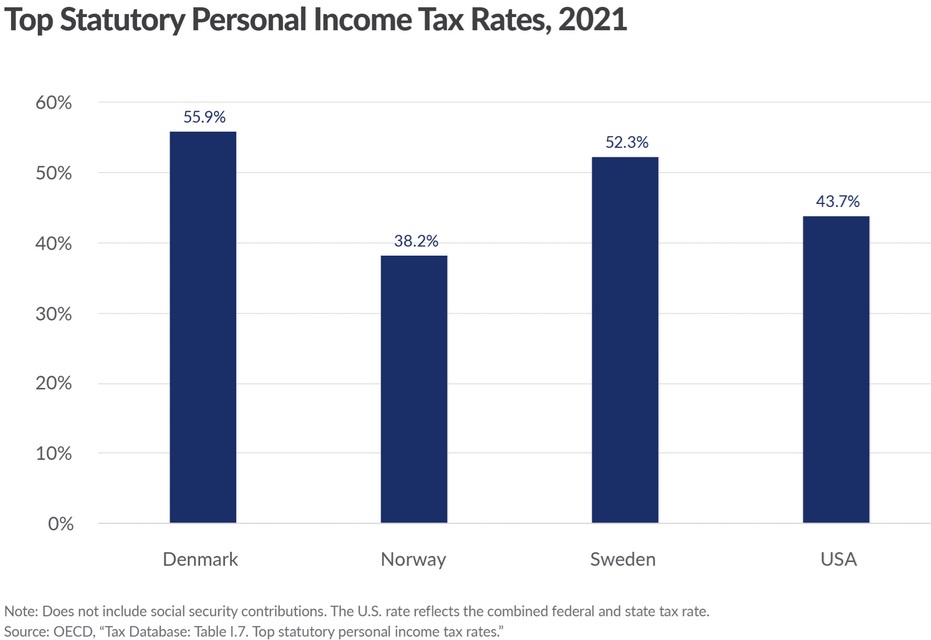
Scandinavian nations are not socialist, at least if we’re using the technical definition (government ownership, central planning, and price controls). But those countries do have big welfare states. And that means stifling tax burdens. And those harsh taxes don’t just apply to rich taxpayers. Lower-income and middle-class people also get pillaged. I’ve already explained that punitive value-added […]
Scandinavian Governments Are Greedy, not Socialist
Bye and Bye: Washington State Moves To Toward a “Wealth Tax” As the Wealthy Move to Leave the State
26 Dec 2024 Leave a comment
in applied price theory, entrepreneurship, financial economics, fiscal policy, income redistribution, macroeconomics, Marxist economics, politics - USA, Public Choice, public economics Tags: regressive left, taxation and entrepreneurship, taxation and investment, taxation and savings, wealth tax

Washington State’s unofficial state motto has long been “Al-ki” which means either “bye and bye” or “by and by” in Chinook. The former meaning now seems official as Gov. Jay Inslee pushed for a “wealth tax.” Wealthy citizens are already saying bye to the state in anticipation of what one Democratic billionaire recently called a […]
Bye and Bye: Washington State Moves To Toward a “Wealth Tax” As the Wealthy Move to Leave the State
The Consequences of Limiting the Tax Deductibility of R&D
03 Dec 2024 Leave a comment
in applied price theory, econometerics, entrepreneurship, fiscal policy, macroeconomics, Public Choice, public economics Tags: taxation and entrepreneurship, taxation and investment
We study the tax payment and innovation consequences of limiting the tax deductibility of research and development (“R&D”) expenditures. Beginning in 2022, U.S. companies are required to capitalize and amortize R&D rather than immediately deduct these expenditures. We utilize variation in U.S. firms’ fiscal year ends to test the effects of the R&D tax change […]
The Consequences of Limiting the Tax Deductibility of R&D
Biden-Harris policies and their consequences were no surprise to those paying attention
30 Oct 2024 Leave a comment
in applied price theory, applied welfare economics, budget deficits, business cycles, econometerics, economic growth, economic history, economics of bureaucracy, economics of regulation, energy economics, entrepreneurship, environmental economics, financial economics, fiscal policy, global warming, health economics, income redistribution, industrial organisation, law and economics, macroeconomics, monetary economics, politics - USA, property rights, Public Choice, public economics, rentseeking Tags: 2024 presidential election, drug lags, taxation and entrepreneurship, taxation and investment
Milton Friedman used to advise researchers to focus on large policy changes rather than attempting to separate a small change’s signal from the noise. In this sense, the “ambitious” policy agenda of the Biden-Harris administration was expected to be a gift to the research community. Accepting this gift, since 2020 I have been making forecasts…
Biden-Harris policies and their consequences were no surprise to those paying attention
Debunking Hate-and-Envy Tax Policy
27 Sep 2024 Leave a comment
in applied price theory, economic growth, economic history, entrepreneurship, financial economics, fiscal policy, health and safety, income redistribution, labour economics, labour supply, law and economics, macroeconomics, occupational choice, politics - USA, poverty and inequality, property rights, Public Choice, public economics Tags: envy, regressive left, taxation and entrepreneurship, taxation and investment
On tax policy, our friends on the left are motivated by envy and hatred. As shown in this Stossel video, Robert Reich is a sad example of this mindset. John Stossel understates his argument. It’s not that Reich is wrong. He’s wildly wrong. There are four points in the video that deserve attention. It is […]
Debunking Hate-and-Envy Tax Policy
Tax-Motivated International Migration
18 Sep 2024 Leave a comment
in applied price theory, entrepreneurship, labour economics, labour supply, poverty and inequality, public economics Tags: taxation and entrepreneurship, taxation and investment, taxation and labour supply
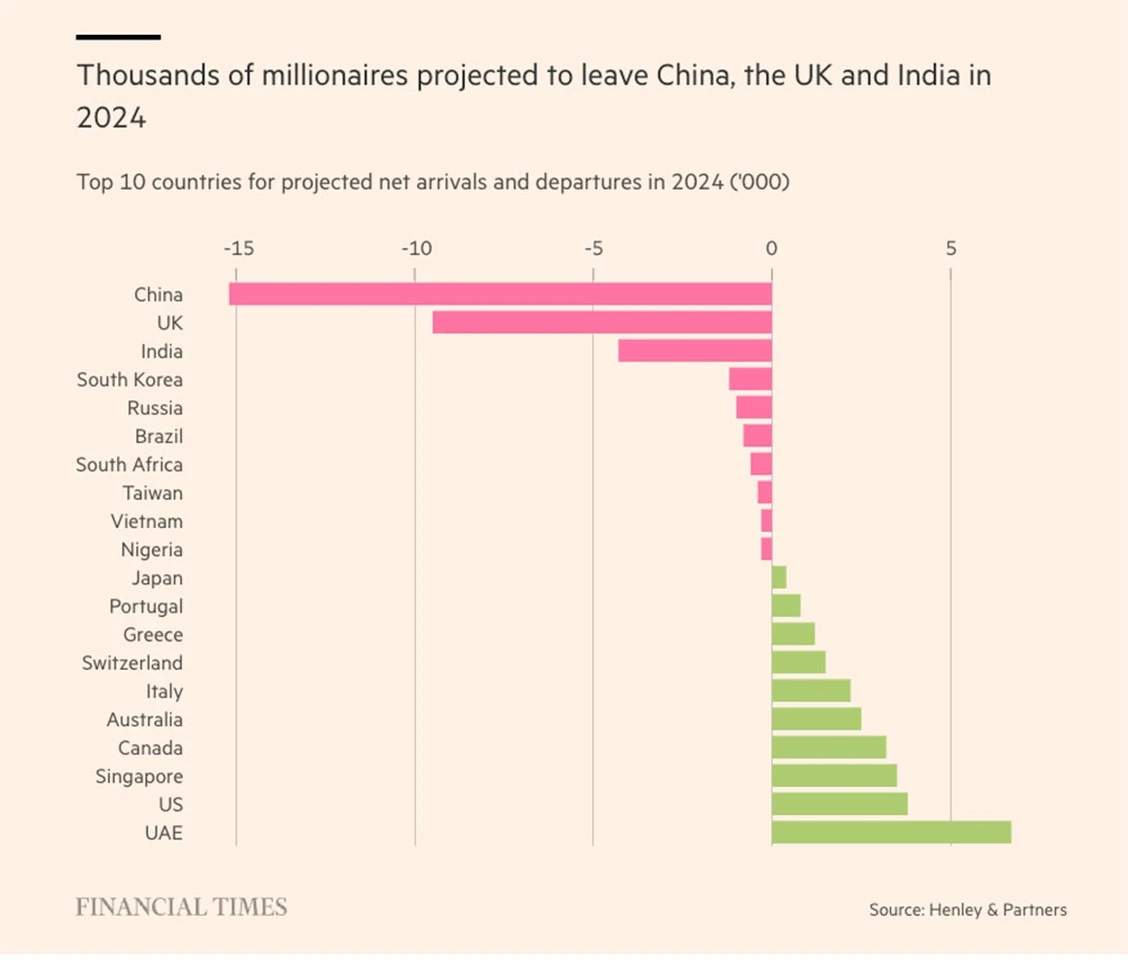
I wrote a few days ago about how Americans are moving from high-tax states to lower-tax states (mostly to states with no income taxes or flat taxes). Today, let’s look at international tax migration. I’ve addressed this issue before, but generally in the context of individual countries that are attracting or repelling entrepreneurs, investors, business […]
Tax-Motivated International Migration
The Economic Consequences of the French Wealth Tax
17 Sep 2024 Leave a comment
in applied price theory, econometerics, economic history, entrepreneurship, fiscal policy, human capital, income redistribution, labour economics, labour supply, macroeconomics, occupational choice, poverty and inequality, Public Choice, public economics Tags: taxation and entrepreneurship, taxation and investment, taxation and labour supply
By Eric Pichet, here is the abstract: Despite attempts to ‘unwind’ the Impôt de Solidarité sur la Fortune (‘Solidarity Wealth Tax,’ the French wealth tax) during the last legislature (2002-2007), ISF yields had soared by 2006, jumping from €2.5 billion in 2002 to €3.6 billion. Analysis of the economic consequences of this ISF wealth tax […]
The Economic Consequences of the French Wealth Tax
The Santa Claus Election
15 Sep 2024 Leave a comment
in applied price theory, comparative institutional analysis, economic growth, economics of education, entrepreneurship, fiscal policy, health and safety, income redistribution, industrial organisation, labour economics, labour supply, macroeconomics, politics - USA, Public Choice, public economics, unions Tags: 2024 presidential election, taxation and entrepreneurship, taxation and investment, taxation and labour supply

For libertarians, this is a very depressing election (a feeling we tend to have every four years, so a familiar experience). What basically happens is that two politicians try to bribe us with our own money. This year, we have Kamala Harris, who was even worse than Bernie Sanders in the big-spender contest. And we […]
The Santa Claus Election
Kamala’s Proposed Increase in the Corporate Tax Rate: The Good News and Bad News
21 Aug 2024 Leave a comment
in applied price theory, entrepreneurship, Public Choice, public economics Tags: taxation and entrepreneurship, taxation and investment
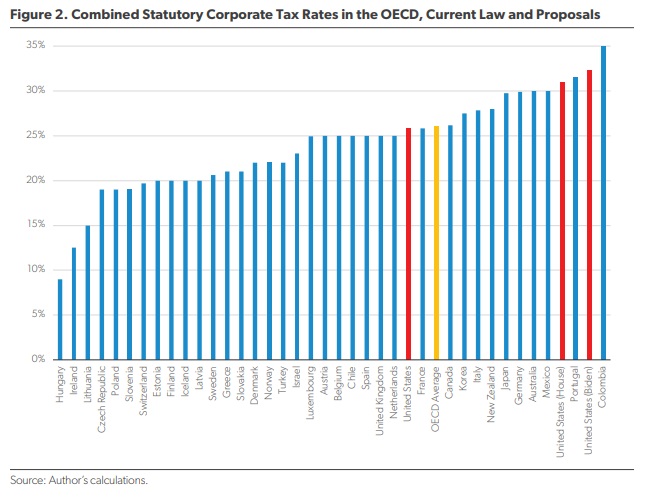
As part of her tax-and-spend agenda, Kamala Harris says she wants to increase the federal corporate tax rate from 21 percent to 28 percent. While it doesn’t seem possible, there is a tiny sliver of good news in her proposal. I’m happy that she isn’t proposing to push the rate to 35 percent, which is […]
Kamala’s Proposed Increase in the Corporate Tax Rate: The Good News and Bad News
Minnesota’s Failed Class-Warfare Tax Policy
11 Aug 2024 Leave a comment
in applied price theory, applied welfare economics, economic growth, fiscal policy, labour economics, labour supply, macroeconomics, Public Choice, public economics Tags: taxation and entrepreneurship, taxation and investment, taxation and labour supply
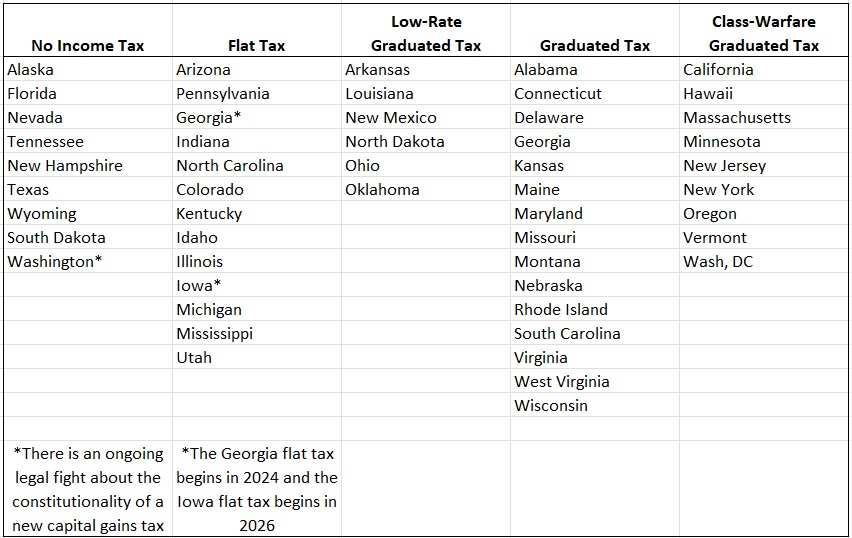
Writing about Mitt Romney’s selection of Paul Ryan in 2012, I opined that, “…it probably means nothing. I don’t think there’s been an election in my lifetime that was impacted by the second person on a presidential ticket.” I feel the same way about Tim Walz, who is Kamala Harris’ pick for Vice President. But […]
Minnesota’s Failed Class-Warfare Tax Policy
Current state of knowledge on the Trump tax cuts
25 Jul 2024 Leave a comment
in applied price theory, econometerics, economic history, fiscal policy, macroeconomics, politics - USA, public economics Tags: taxation and entrepreneurship, taxation and investment
That is the topic of my latest Bloomberg column. Here is one summary excerpt: One result: Total tangible corporate investment went up by about 11%. That has been a welcome shot in the arm for an economy that was by some measures suffering from an investment drought. The strong state of the Biden economy may, in…
Current state of knowledge on the Trump tax cuts
 Utopia, you are standing in it!
Recent Comments