By almost any metric, belief in climate change is on the rise among GOP Voters pic.twitter.com/pPyt5Cn7Kt
— Adrian Gray (@adrian_gray) November 30, 2015
Are Republican voters becoming climate alarmists?
03 Dec 2015 Leave a comment
in energy economics, environmental economics, global warming, politics - USA Tags: climate alarmism, expressive voting, rational ignorance, rational rationality, voter demographics
Share of world poverty has halved in last 20 years
29 Nov 2015 1 Comment
in development economics, economic history, growth disasters, growth miracles Tags: capitalism and freedom, expressive voting, extreme poverty The Great Fact, global poverty, rational ignorance, rational rationality, voter demographics
https://twitter.com/MaxCRoser/status/630066216158261248/photo/1
Since 1820 the world's population increased 7x while extreme poverty fell from 94% to 14%. buff.ly/1hgHIrb http://t.co/0dx4GE4Uqc—
Jeremiah Dillon (@jeremiahdillon) August 07, 2015
Partisan advantage by date of birth
29 Nov 2015 Leave a comment
in politics - USA Tags: voter demographics
One in five support a military coup to stop Boris Johnson becoming prime minister
16 Nov 2015 Leave a comment
in constitutional political economy, Public Choice Tags: British politics, expressive voting, military coups, rational ignorance, rational rationality, voter demographics
Why are so many Silicon Valley start-up founders libertarian Democrats?
03 Nov 2015 Leave a comment
in economics of media and culture, entrepreneurship, income redistribution, industrial organisation, politics - USA, Public Choice, rentseeking, survivor principle Tags: creative destruction, entrepreneurial alertness, expressive voting, rational ignorance, Silicon Valley, start-ups, voter demographics
Malcolm Turnbull sure is popular
27 Oct 2015 Leave a comment
in politics - New Zealand, Public Choice Tags: Australia, expressive voting, opinion polls, rational ignorance, rational irrationality, voter demographics
https://twitter.com/Mark_Graph/status/658769666748346368/photo/1
All the bookies I follow now giving the Coalition >80% #auspol bit.ly/1GwJgc4 https://t.co/2y3iPBnnnn—
Mark the Graph (@Mark_Graph) October 23, 2015
The bye-bye Biden effect on the Democratic presidential hopefuls
23 Oct 2015 Leave a comment
The bye-bye Biden effect on the Democratic presidential hopefuls econ.st/1ZZW958 https://t.co/1y7c3rjWAo—
The Economist (@ECONdailycharts) October 22, 2015
@SeumasMilne could @jeremycorbyn win?
23 Oct 2015 Leave a comment
in constitutional political economy, Joseph Schumpeter, Public Choice Tags: British Labour Party, British politics, expressive voting, Leftover Left, rational ignorance, rational irrationality, Twitter left, voter demographics
Catch-Up Service: the popularity and unpopularity of Jeremy Corbyn's policies @IndyVoices independent.co.uk/voices/comment… http://t.co/9c9gmHzKFg—
John Rentoul (@JohnRentoul) October 16, 2015
While standard British Labour Party populist policies resonate with the electorate, all the policies that Jeremy Corbyn brings as a socialist, peacenik and renegade Liberal are deeply unpopular and will be used against him as wedge issues by the Tories.
The popularity of individual policies in the Labour Party manifesto didn’t do them any good at the 2015 general election.
Public don't think Corbyn will succeed – y-g.co/1MspFMb http://t.co/4jjHbfsktC—
(@YouGov) September 17, 2015
What matters to the voters at the last British general election was that brand Labour was down on the nose. It was not a credible alternative government.
Peter Kellner: Measuring the gap between Corbyn’s supporters and Labour’s target voters – y-g.co/1izSpph http://t.co/f1NaNL4xgt—
(@YouGov) September 25, 2015
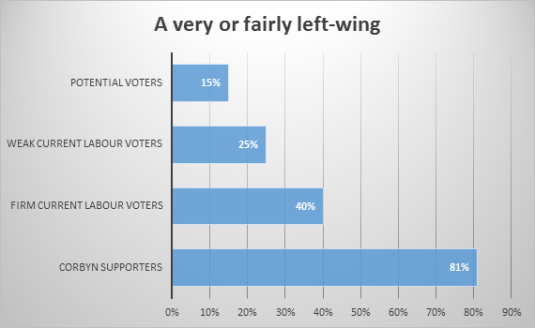
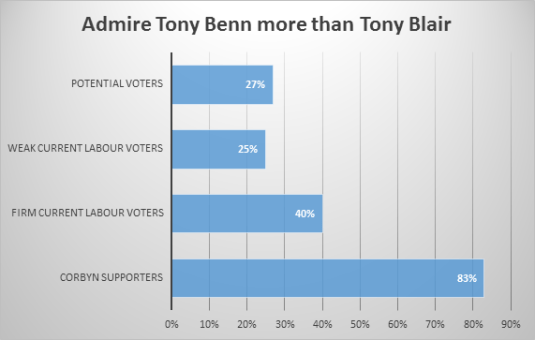
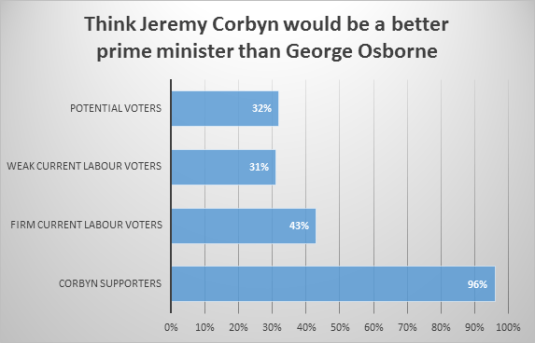
Jeremy Corbyn makes that gap into a chasm because of the vast difference between what his supporters on the left of the Labour Party want and what the voters who must be persuaded to switch their vote for Labour to win in 2020 want as government policies.
Jeremy Corbyn 'twice as left-wing' as Ed Miliband – y-g.co/1LLWUsG http://t.co/no9euWcM2X—
(@YouGov) September 29, 2015
Jeremy Corbyn is much further to the left than Ed Miliband, who lost the election in 2015 rather badly because he was too far to the left for the taste of the British electorate.
Fascinating. Yawning chasm between why Labour members think they lost and why voters think they did. From @thetimes http://t.co/MvhZYI2CTr—
Joe Watts (@JoeWatts_) July 23, 2015
Ed Miliband was rejected in the 2015 British election because he was not a fiscal conservative nor a credible economic manager. The anti-austerity message loses votes.
The heaviest suicide note in history http://t.co/1xDQlnnWU7—
Phil Rodgers (@PhilRodgers) May 03, 2015
There is a yawning chasm between the reasons why the left of the Labour Party thinks their party lost the 2015 British general election and why Labour voters thought they lost the election.
Peter Mandelson in the New York Times on why Labour lost: nytimes.com/2015/05/20/opi… http://t.co/pzbIXOmwpX—
Alex Wickham (@WikiGuido) May 19, 2015
The anti-austerity message was one of the reasons why Labour lost in the eyes of its own voters and would-be voters in the centre of politics
Peter Kellner on Jeremy Corbyn as Britain’s least popular new opposition leader – y-g.co/1LdnNoP http://t.co/Ygyo8gV1uZ—
(@YouGov) October 05, 2015
The deep unpopularity of Jeremy Corbyn cannot be understated as a barrier to British Labour winning the next election.
That deep unpopularity of Jeremy Corbyn sacrifices the one winning advantage that British Labour has under Jeremy Corbyn. That advantage is governments tend to lose elections rather than oppositions win them.
Schumpeter disputed the widely held view that democracy was a process by which the electorate identified the common good, and a particular party was then elected by the voters because it was the most suited to carrying out this agreed common good:
- The people’s ignorance and superficiality meant that they were manipulated by politicians who set the agenda.
- Although periodic votes legitimise governments and keep them accountable, their policy programmes are very much seen as their own and not that of the people, and the participatory role for individuals is limited.
Schumpeter’s theory of democratic participation is voters have the ability to replace political leaders through periodic elections.
Citizens do have sufficient knowledge and sophistication to vote out leaders who are performing poorly or contrary to their wishes. The power of the electorate to turn elected officials out of office at the next election gives elected officials an incentive to adopt policies that do not outrage public opinion and administer the policies with some minimum honesty and competence.
Denis Healey's speech to Labour conference after 1959 defeat. http://t.co/BTdbfJj147—
Stephen Bush (@stephenkb) October 03, 2015
Power rotates in the Schumpeterian sense. Governments were voted out when they disappointed voters with the replacement not necessarily having very different policies.
Here is the Commons motion slamming Corbyn as a threat when the IRA bomber row broke in 1987: sunnation.co.uk/jeremy-corbyn-… http://t.co/KiOEUkqi9a—
Harry Cole (@MrHarryCole) September 19, 2015
The challenge for British Labour is Corbyn cannot win unless he projects minimal competence and stops having policies on defence, foreign affairs and terrorism that outrage public opinion.
Jeremy Corbyn has plenty of outrageous opinions and is yet to show even the most basic competence in running the office of opposition leader, working 24/7 as opposition leader, and showing some ability to win support from members of the Parliamentary Labour Party. If Jeremy Corbyn cannot win votes of his own MPs, what chance do he have with the British people whose interests he claims to champion.

A 20 year period of polling Hillary Clinton
12 Oct 2015 Leave a comment
in politics - USA Tags: 2016 presidential election, voter demographics
A 20 year period of polling Hillary Clinton washingtonpost.com/blogs/plum-lin… http://t.co/1LGSKCXNiG—
Political Line (@PoliticalLine) September 02, 2015
#TPA more popular among democrats
09 Oct 2015 Leave a comment
in income redistribution, international economics, politics - New Zealand, politics - USA, Public Choice, public economics, rentseeking Tags: TPA, voter demographics
Peak Trump?
02 Oct 2015 Leave a comment
Donald Trump's drop in the polls related to a drop in media coverage. (cc @TheFix). washingtonpost.com/blogs/monkey-c… http://t.co/5uQMyJ1Lhj—
The Monkey Cage (@monkeycageblog) September 29, 2015
Trigger warning for American political junkies: latest US presidential polling
25 Sep 2015 Leave a comment
in politics - USA, Public Choice Tags: 2016 presidential election, expressive voting, opinion polls, rational ignorance, rational rationality, voter demographics
Here's @pollsterpolls avg since 6/1, w/ less smoothing. 2-pt drop for Trump. Not yet clear whether there's a trend. http://t.co/vrwXNC6hlo—
The Monkey Cage (@monkeycageblog) September 24, 2015
Here's some actual evidence on whether voter anger is helping "outsider" candidates. washingtonpost.com/blogs/monkey-c… http://t.co/RaragjjStV—
The Monkey Cage (@monkeycageblog) September 16, 2015
Ben Carson's decline and then surge in the polls tracks media attention. washingtonpost.com/blogs/monkey-c… http://t.co/mrddJMMAc0—
The Monkey Cage (@monkeycageblog) September 03, 2015
Another key graph: news coverage of Trump hasn't really become more negative. For more: washingtonpost.com/blogs/monkey-c… http://t.co/p8KpVcUlGd—
The Monkey Cage (@monkeycageblog) August 28, 2015
Here's a new graph of Trump's poll numbers and share of news coverage. For more see: washingtonpost.com/blogs/monkey-c… http://t.co/sdJCQCs5O5—
The Monkey Cage (@monkeycageblog) August 28, 2015
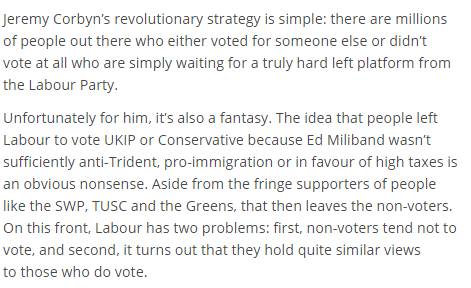
More reasons to let @jeremycorbyn be Corbyn – non-voters believe much the same things as voters
24 Sep 2015 1 Comment
in constitutional political economy, income redistribution, Marxist economics, Public Choice Tags: British politics, expressive voting, rational ignorance, rational irrationality, Twitter left, voter demographics
It is vital to permanent Tory rule that Jeremy Corbyn stay staunch to the principles and electoral strategy on which he was elected by Labour Party members and supporters to be their leader and alternative Prime Minister.
Source: The huge shock coming down the track for the Corbynites | Conservative Home
Source: New polling data shows the challenge facing Jeremy Corbyn
Source: New polling data shows the challenge facing Jeremy Corbyn
Source: New polling data shows the challenge facing Jeremy Corbyn
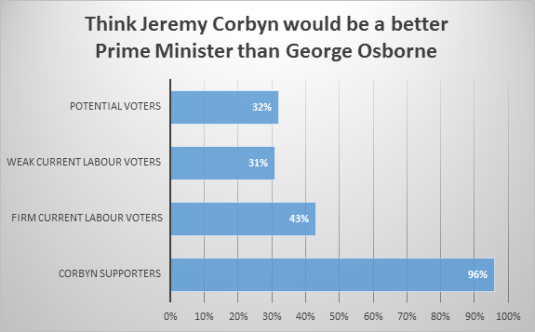
Source: New polling data shows the challenge facing Jeremy Corbyn
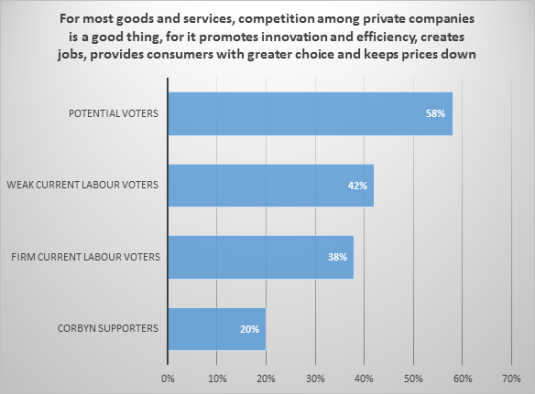
Source: New polling data shows the challenge facing Jeremy Corbyn
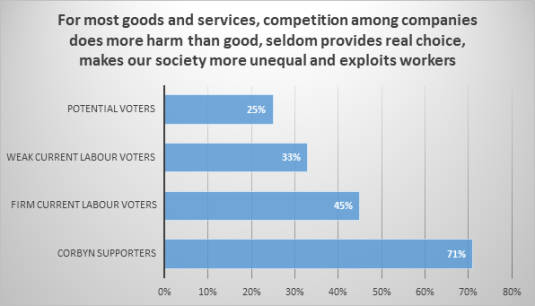
Source: New polling data shows the challenge facing Jeremy Corbyn
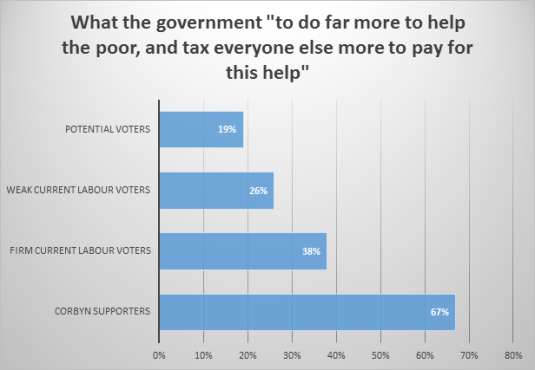
Source: New polling data shows the challenge facing Jeremy Corbyn
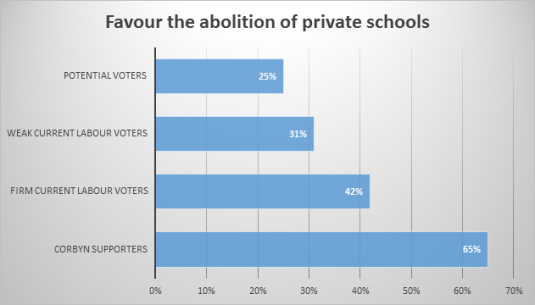
Source: New polling data shows the challenge facing Jeremy Corbyn
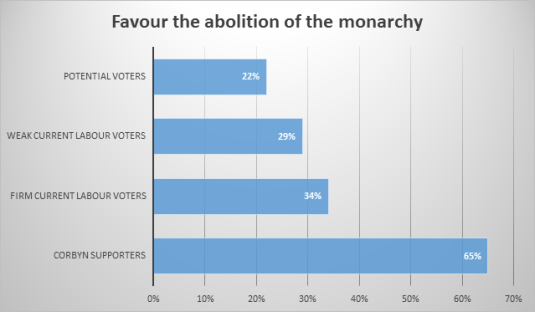
Source: New polling data shows the challenge facing Jeremy Corbyn
Peter Kellner: Measuring the gap between Corbyn’s supporters and Labour’s target voters – y-g.co/1izSpph http://t.co/f1NaNL4xgt—
(@YouGov) September 25, 2015
 Utopia, you are standing in it!
Recent Comments