Jonathan Rosen writes: Thirty-seven years ago, Ayatollah Ruhollah Khomeini, Supreme Leader and founder of the Islamic Republic of Iran, sentenced Salman Rushdieto death on Valentine’s Day for writing a novel. It is hard to write that sentence without feeling it is a parody of the opening line of Franz Kafka’s The Trial: “Someone must have slandered Josef K.,…
The Rushdie fatwa
The Rushdie fatwa
30 Mar 2026 Leave a comment
in defence economics, economics of crime, economics of education, economics of religion, law and economics, liberalism Tags: free speech
Javier Milei Week, Part VII: What Is the Left Saying?
30 Mar 2026 Leave a comment
in applied price theory, development economics, economic growth, growth disasters, liberalism, libertarianism, macroeconomics, Marxist economics Tags: Argentina

Before the 2023 presidential election in Argentina, 108 left-leaning economists released a letter warning that Javier Milei’s “economic proposals…are fraught with risks that make them potentially very harmful for the Argentine economy.” Voters ignored those warnings and elected Milei. And the 108 lefty economists – including class-warfare ideologues such as Thomas Piketty and Gabriel Zucman – wound up with […]
Javier Milei Week, Part VII: What Is the Left Saying?
Indigenous “ways of knowing” invade Canadian science classes
29 Mar 2026 Leave a comment
in economics of education, liberalism, Marxist economics Tags: Age of Enlightenment, Canada, political correctness, racial discrimination, regressive left

I’ve spent a lot of time pushed many electrons going after the fallacy in New Zealand that indigenous “ways of knowing”—in this case from the Māori—are just as valid as so-called “Western ways of knowing,” which is what Kiwi progressives call “science”. You can see my pieces here, but there are many. This sacralization of…
Indigenous “ways of knowing” invade Canadian science classes
Believe women – except Jewish ones
29 Mar 2026 Leave a comment
in defence economics, discrimination, economics of crime, gender, law and economics, laws of war, politics - Australia, war and peace Tags: Gaza Strip, Israel, Middle-East politics, regressive left, war against terror
Grace Tame was the 2021 Australian of the Year for her work as an advocate of survivors of sexual abuse. Sadly, but not surprisingly, she is only an advocate for rape and sexual abuse victims if they are not Jewish. News.com.au reports: Child safety campaigner Grace Tame has come under fire for suggesting rapes and…
Believe women – except Jewish ones
Shocking News: 3 Million Years CO2 Not Driving Temperatures
29 Mar 2026 Leave a comment
in economics of climate change, environmental economics, environmentalism

Chris Morrison reported at Daily Sceptic Shock New Evidence Showing No Link Between CO2 and Temperature Over Last Three Million Years Stumps Net Zero Activists. Excerpt in italics with my bolds and added images. The assumed level three million years ago of CO2 was around 400 ppm, a convenient mark that has been used to explain […]
Shocking News: 3 Million Years CO2 Not Driving Temperatures
BlackRock CEO Abandons Climate Delusion for Investor Needs
28 Mar 2026 Leave a comment
in economics of climate change, economics of regulation, energy economics, environmental economics, environmentalism, financial economics, global warming Tags: active investing
After years of climate-driven experimentation – forced by deluded or dishonest politicians and business titans – the failures became too many and too consequential to be ignored. Little wonder that Larry Fink has turned his ear away from the rhetoric of alarm and toward client demands for strategic guidance.
BlackRock CEO Abandons Climate Delusion for Investor Needs
International Olympic Committee Imposes Biological Test on Athletes
28 Mar 2026 Leave a comment
in discrimination, gender, sports economics
In the Paris Olympics, media and pundits piled on any commentators expressing opposition to transgender athletes playing in women’s sports.…
International Olympic Committee Imposes Biological Test on Athletes
Bet On It Book Club: For a New Liberty, Chapter 7
28 Mar 2026 Leave a comment
in applied price theory, economics of bureaucracy, economics of education, human capital, labour economics, libertarianism, Murray Rothbard, Public Choice Tags: signaling
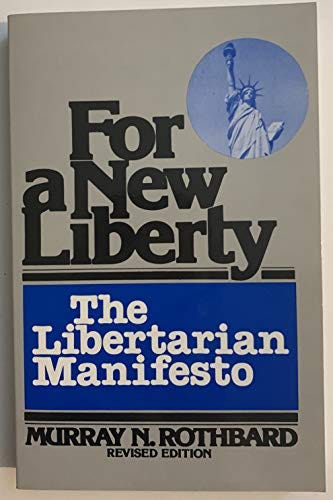
SummaryIn this chapter, Rothbard makes the case for the abolition of public schooling. While he somewhat surprisingly views Friedman’s voucher system as “a great improvement over the present system in permitting a wider range of parental choice and enabling the abolition of the public school system,” Rothbard will settle for nothing less than the separation…
Bet On It Book Club: For a New Liberty, Chapter 7
Javier Milei Week, Part VI: Continuing Challenges
28 Mar 2026 Leave a comment
in development economics, economic growth, economic history, growth disasters, macroeconomics Tags: Argentina

I began this series by reviewing the terrible shape of the Argentinian economy when Javier Milei took over at the end of 2023. I then wrote four columns (here, here, here, and here) on the steps that Milei has taken to restore prosperity. The good news is that his reforms have produced very good results. […]
Javier Milei Week, Part VI: Continuing Challenges
Joseph Goebbels-An Evil little man
28 Mar 2026 Leave a comment
in defence economics, economics of media and culture, war and peace Tags: Nazi Germany, World War II

Before joining the Nazi Party (NSDAP), Joseph Goebbels (1897–1945) held a doctorate in German literature but struggled to establish himself as a writer and was unemployed. His exceptional rhetorical skills enabled him to rise rapidly within the party, where he became a key figure in disseminating National Socialist, anti-republican, and antisemitic propaganda. Adolf Hitler rewarded […]
Joseph Goebbels-An Evil little man
Labour’s fuel crisis policy is silence
27 Mar 2026 Leave a comment
in defence economics, energy economics, politics - New Zealand, transport economics, war and peace Tags: Iran
The Herald reports: Labour leader Chris Hipkins isn’t providing an alternative plan of action to help struggling New Zealanders facing pain at the pump and the threat of rising prices elsewhere. Asked repeatedly what alternatives Labour could suggest, Hipkins said the onus to present ideas was on the current Government. He gave some principles, such…
Labour’s fuel crisis policy is silence
Taking comfort from the 1970s
27 Mar 2026 Leave a comment
in defence economics, economics of regulation, energy economics, politics - New Zealand, war and peace Tags: Iran
When a story recently emerged about the government getting advice on carless days under the Petroleum Demand Restraint Act, older New Zealanders will have felt a warm flush of nostalgia. The 1979 restrictions brought coloured windscreen stickers announcing the weekday car owners had promised not to drive. Thursday proved the most popular choice. A thriving black market followed. Forty-three percent of vehicles secured exemptions.
Taking comfort from the 1970s
Wealth Is Not a Fixed Pie
27 Mar 2026 Leave a comment
in applied price theory, behavioural economics, comparative institutional analysis, constitutional political economy, development economics, growth disasters, growth miracles

One of the most destructive myths in economics is the zero-sum fallacy. Back in 2018, I shared a cartoon that sought to debunk the notion that one person getting richer meant another person had to be poorer. But I wasn’t satisfied with the cartoon, so I offered a modified version. But I still didn’t think […]
Wealth Is Not a Fixed Pie
Javier Milei Week, Part V: Fixing Argentina’s Monetary Crisis
27 Mar 2026 Leave a comment
in applied price theory, Austrian economics, budget deficits, business cycles, development economics, growth disasters, macroeconomics, monetary economics Tags: Argentina

I’ve been participating in a conference in Argentina this week on “Understanding Argentina’s Transformations Under Milei.” Part I reviewed the horrible economic conditions that plagued Argentina when Javier Milei took office. Part II looked at Milei’s spending restraint and some of the subsequent improvements in fiscal outcomes. Part III examined Milei’s remarkable progress with regards to […]
Javier Milei Week, Part V: Fixing Argentina’s Monetary Crisis
Frederick Forsyth reviews
26 Mar 2026 Leave a comment
in defence economics, economics of education
Frederick Forsyth (1938 to 2025) was an English novelist and journalist. He’s best known for the string of meticulously researched popular thrillers he wrote in a 30-year career between the early 70s and the early Noughties. He wrote 14 novels in total, none of them as good as the debut, his first and best novel […]
Frederick Forsyth reviews
 Utopia, you are standing in it!
Recent Comments