Celebrating humanity's flourishing through the spread of capitalism and the rule of law
21 Feb 2016 Leave a comment
in Adam Smith, history of economic thought, liberalism Tags: Age of Enlightenment, Scottish Enlightenment
07 Jan 2016 2 Comments
in Adam Smith, applied welfare economics, politics - New Zealand, poverty and inequality, Rawls and Nozick Tags: child poverty, family poverty, star trek
Jamie Whyte today wrote an excellent op-ed on the meaninglessness of current measures of poverty. His point was that defining poverty as 60% of the median income means the poor will always be with us. This relative definition of poverty misleads us as to the level of hardship and deprivation in society as Jamie Whyte says today:
There is no poverty in New Zealand. Misery, depravity, hopelessness, yes; but no poverty.
The poorest in New Zealand are the unemployed. They receive free medical care, free education for their children and enough cash to pay for basic food, clothing and (subsidised) housing. Most have televisions, refrigerators and ovens. Many even own cars. That isn’t poverty.
I agree that this definition of poverty in relative income terms is misleading and reflects a political agenda. When I was young, the poor were thin, now they are fat.
Poverty rates have not changed despite a greater abundance of food. Indeed, child poverty rates have increased since I was young despite this relative opulence of food.
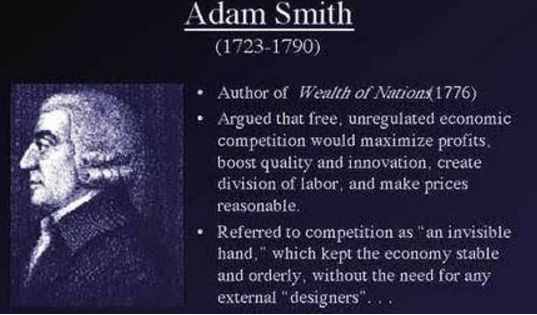
Over the Christmas break I read Simon Chapple and Jonathan Boston’s Child Poverty in New Zealand. They included a discussion of what was poverty drawing on the relative concept of poverty of Adam Smith. Smith spoke about wrote about the differences in poverty between countries and across time:
A linen shirt … is, strictly speaking, not a necessary of life. The Greeks and Romans lived, I suppose, very comfortably though they had no linen.
But in the present times, through the greater part of Europe, a creditable day-labourer would be ashamed to appear in public without a linen shirt, the want of which would be supposed to denote that disgraceful degree of poverty which, it is presumed, nobody can well fall into without extreme bad conduct.
In any society, a certain level of material well-being is necessary to not be in poverty. Smith also talked about how poverty lines differ between countries starting with the discussion about shoes:
The poorest creditable person of either sex would be ashamed to appear in publick without them. In Scotland, custom has rendered them a necessary of life to the lowest order of men; but not to the same order of women, who may, without any discredit, walk about bare-footed. In France, they are necessaries neither necessaries neither to men nor to women; the lowest rank of both sexes appear there publickly, without any discredit, sometimes in wooden shoes, and sometimes bare-footed.
Under necessaries, I comprehend, not only those things which nature, but those things which the established rules of decency have rendered necessary to the lowest rank of people.
All other things I shall call luxuries; without meaning by this appellation, to throw the smallest degree of reproach upon the temperate use of them. Beer and ale, for example, in Great Britain, and wine, even in the wine countries, I call luxuries. A man of any rank may, without any reproach, abstain totally from tasting such liquors. Nature does not render them necessary for the support of life; and custom nowhere renders it indecent to live without them.
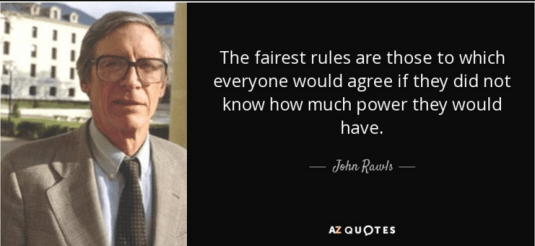
Much of the Wealth of Nations was about the natural progress of opulence under a capitalist system. There is nothing wrong with inequality as John Rawls has explained.

The fact that citizens have different talents can be used to make everyone better off. In a society governed by the difference principle, those better endowed with talents are welcome to use their gifts to make themselves better off, so long as they also contribute to the good of those less well endowed.

With his emphasis on fair distribution of income, Rawls’ initial appeal was to the Left, but left-wing thinkers started to dislike his acceptance of capitalism and tolerance of large discrepancies in income.
Will the poor always be with us? I once had an argument with a colleague at work about whether there was poverty on the Starship Enterprise.
Star Trek was supposed to be a society that had abolished money and a post-scarcity economy because everything was available through a replicator. To quote Captain Picard:
A lot has changed in three hundred years. People are no longer obsessed with the accumulation of ‘things’. We have eliminated hunger, want, the need for possessions.
The economics of the future is somewhat different. You see, money doesn’t exist in the 24th century… The acquisition of wealth is no longer the driving force in our lives. We work to better ourselves and the rest of Humanity.
The Ferengi and their 285 rules of acquisition were a satire on capitalism. The Ferengi was originally meant to replace the Klingons as the Federation’s arch-rival but they were too comical.
Gene Roddenberry’s love story with socialism was a class-ridden society. In Star Trek, higher ranked officers had larger cabins, and most of all they always beamed back from the planet.
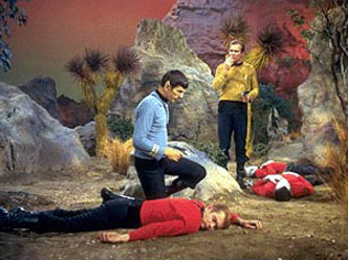
An old mate reminded me years ago that anyone who beamed down with Captain Kirk dressed in those red security officer tops were expendables. They were lucky to last 60 seconds in most episodes I watched.
Death and accommodation were class based on Star Trek but it was a supremely opulent society for everyone. That is the point to remember.
Standards are living are much better today than before for everyone despite inequalities that are quite acceptable under the difference principle of John Rawls.
Current definitions of poverty do not take into account the natural progress of opulence. In the 1970s, US Department of Energy started collecting its Household Energy Consumption Survey. This survey is one of the few accurate measures of growing affluence among the poor in America.
Not only does this survey ask about household appliances, it asked about on income. The survey is conducted every 4 years or so since the 1970s. Because of that, it is able to track the diffusion of appliances to households of varying incomes across America.
Yesterday’s luxuries at today’s necessities in poor households with a rapid diffusion of everything from air-conditioners to digital appliances. Many poor households in the USA have more space than middle-class households in Western Europe. Food is also much cheaper in the USA than in Europe.
https://twitter.com/VisualEcon/status/644080191841640448
This growing affluence of poorer Americans is despite higher measured family poverty in America according to the relative poverty measure based on the median income. That makes no sense.
02 Jan 2016 Leave a comment
in Adam Smith, applied price theory, applied welfare economics, entrepreneurship, history of economic thought, industrial organisation, survivor principle Tags: competition as a discovery procedure, creative destruction, entrepreneurial alertness, market selection, The meaning of competition
19 Nov 2015 Leave a comment
in Adam Smith, economics of education Tags: wealth of nations
08 Aug 2015 Leave a comment
in Adam Smith, applied price theory, comparative institutional analysis, economic history, economics of regulation, entrepreneurship, industrial organisation Tags: creative destruction, entrepreneurial alertness, offsetting behaviour, The meaning of competition
06 Jun 2015 Leave a comment
in Adam Smith Tags: classical economics, wealth of nations
Celebrating humanity's flourishing through the spread of capitalism and the rule of law
Celebrating humanity's flourishing through the spread of capitalism and the rule of law
Celebrating humanity's flourishing through the spread of capitalism and the rule of law
Celebrating humanity's flourishing through the spread of capitalism and the rule of law
Celebrating humanity's flourishing through the spread of capitalism and the rule of law
Celebrating humanity's flourishing through the spread of capitalism and the rule of law
Celebrating humanity's flourishing through the spread of capitalism and the rule of law
Celebrating humanity's flourishing through the spread of capitalism and the rule of law
Celebrating humanity's flourishing through the spread of capitalism and the rule of law
Celebrating humanity's flourishing through the spread of capitalism and the rule of law
Celebrating humanity's flourishing through the spread of capitalism and the rule of law
Celebrating humanity's flourishing through the spread of capitalism and the rule of law
A History of the Alt-Right
Econ Prof at George Mason University, Economic Historian, Québécois
Celebrating humanity's flourishing through the spread of capitalism and the rule of law
Scholarly commentary on law, economics, and more
Beatrice Cherrier's blog
Celebrating humanity's flourishing through the spread of capitalism and the rule of law
Celebrating humanity's flourishing through the spread of capitalism and the rule of law
Celebrating humanity's flourishing through the spread of capitalism and the rule of law
Why Evolution is True is a blog written by Jerry Coyne, centered on evolution and biology but also dealing with diverse topics like politics, culture, and cats.
Celebrating humanity's flourishing through the spread of capitalism and the rule of law
A rural perspective with a blue tint by Ele Ludemann
DPF's Kiwiblog - Fomenting Happy Mischief since 2003
Celebrating humanity's flourishing through the spread of capitalism and the rule of law
The world's most viewed site on global warming and climate change
Tim Harding's writings on rationality, informal logic and skepticism
A window into Doc Freiberger's library
Let's examine hard decisions!
Commentary on monetary policy in the spirit of R. G. Hawtrey
Thoughts on public policy and the media
Celebrating humanity's flourishing through the spread of capitalism and the rule of law
Politics and the economy
A blog (primarily) on Canadian and Commonwealth political history and institutions
Reading between the lines, and underneath the hype.
Economics, and such stuff as dreams are made on
"The British constitution has always been puzzling, and always will be." --Queen Elizabeth II
Celebrating humanity's flourishing through the spread of capitalism and the rule of law
Celebrating humanity's flourishing through the spread of capitalism and the rule of law
WORLD WAR II, MUSIC, HISTORY, HOLOCAUST
Undisciplined scholar, recovering academic
Celebrating humanity's flourishing through the spread of capitalism and the rule of law
Res ipsa loquitur - The thing itself speaks
In Hume’s spirit, I will attempt to serve as an ambassador from my world of economics, and help in “finding topics of conversation fit for the entertainment of rational creatures.”
Researching the House of Commons, 1832-1868
Reflections on books and art




Recent Comments