I have excerpts from posts or articles by three different economists. The answer seems to be no. Two are older and one is very recent by Harvard prof Jason Furman, who was once the chair of the Council of Economic Advisors under Obama. Then two older sources. One is from Tyler Cowen (2023), professor at…
Is there something about manufacturing that requires special policies to help it that other industries don’t get?
Is there something about manufacturing that requires special policies to help it that other industries don’t get?
07 Apr 2026 Leave a comment
in applied price theory, entrepreneurship, industrial organisation, politics - USA, survivor principle
The CA Minimum Wage Increase: Summing Up
06 Apr 2026 1 Comment
in applied price theory, econometerics, economics of regulation, income redistribution, labour economics, labour supply, politics - USA, Public Choice, unemployment
Two recent joint-papers Did California’s Fast Food Minimum Wage Reduce Employment? by Clemens, Edwards and Meer and The Effects of California’s $20 Fast Food Minimum Wage on Prices by Clemens, Edwards, Meer and Nguyen give what I think is a plausible and consistent account of California’s $20 fast food minimum wage. California’s $20 fast food…
The CA Minimum Wage Increase: Summing Up
Does working from home raise lifetime fertility?
06 Apr 2026 Leave a comment
in applied price theory, economics of love and marriage, labour economics, labour supply, population economics Tags: economics of fertility, economics of pandemics
See Work from Home and Fertility by Steven J. Davis, Cevat Giray Aksoy, Jose Maria Barrero, Nicholas Bloom, Katelyn Cranney, Mathias Dolls & Pablo Zarate. Abstract”We investigate how fertility relates to work from home (WFH) in the post-pandemic era, drawing on original data from our Global Survey of Working Arrangements and U.S. Survey of Working Arrangements…
Does working from home raise lifetime fertility?
Quotation of the Day…
05 Apr 2026 Leave a comment
in applied price theory, economics of regulation, labour economics, labour supply, law and economics, Richard Epstein

Tweet… is from page 162 of Richard Epstein’s magnificent 1995 volume, Simple Rules for a Complex World: The entire regulatory process [of wrongful dismissal of workers] shows the constant preoccupation with the direct effects of decisions on named persons, without regard to the vastly greater indirect effects on other persons similarly situated. The effort to…
Quotation of the Day…
Bet On It Book Club: For a New Liberty, Chapter 8
04 Apr 2026 Leave a comment
in applied price theory, Austrian economics, economic history, history of economic thought, labour economics, labour supply, Murray Rothbard, welfare reform
SummaryThis chapter, on “Welfare and the Welfare State,” argues that the welfare state gives the poor perverse incentives. A superficial reader might say, “However original this was in 1973 when it was first written, it’s now old hat. Clinton made the same arguments for welfare reform.” However, on closer examination, Rothbard’s analysis remains distinctive both…
Bet On It Book Club: For a New Liberty, Chapter 8
*The Marginal Revolution: Rise and Decline, and the Pending AI Revolution*
03 Apr 2026 Leave a comment
in applied price theory, history of economic thought
I am offering a new piece of work — I do not quite call it a book — online and free. It has four chapters, is about 40,000 words, is fully written by me (not a word from the AIs), and it is attached to an AI with a dual page display, in this case…
*The Marginal Revolution: Rise and Decline, and the Pending AI Revolution*
Is financial economics still economics?
01 Apr 2026 Leave a comment
in applied price theory, econometerics, entrepreneurship, financial economics
That all sounded wonderful, and that core model and its offshoots dominated financial research for decades. The problem, however, was that it wasn’t true, or at least it wasn’t nearly as true as we had thought and hoped. When financial economists refined the models with more complete specifications, it turned out Beta didn’t predict stock…
Is financial economics still economics?
Bending the Curve of Health Care Costs (At Last?)
01 Apr 2026 Leave a comment
in applied price theory, econometerics, health economics Tags: health insurance

Health care spending had been a rising share of US GDP for decades, but since about 2010, the rate of increase seemed to level out. David M. Cutler and Lev Klarnet address “Has the United States bent the health care cost curve?” (Brookings Papers on Economic Activity, Spring 2026, readable overview of paper at link, including a…
Bending the Curve of Health Care Costs (At Last?)
Professional Hagglers (creative destruction and how the economy just keeps creating new types of occupations & professions)
31 Mar 2026 Leave a comment
in applied price theory, entrepreneurship, labour economics, occupational choice, transport economics
See He Earns $1,000 a Job—and He’s a Car Dealer’s Worst Nightmare: With car prices soaring, one man deploys dealer speak to talk down the sticker price on behalf of buyers by Imani Moise of The WSJ.What if you don’t like haggling over the price of a car? Would you hire someone to do the haggling…
Professional Hagglers (creative destruction and how the economy just keeps creating new types of occupations & professions)
Claudia Goldin and the WNBA
30 Mar 2026 Leave a comment
in applied price theory, discrimination, gender, human capital, labour economics, labour supply, managerial economics, occupational choice, organisational economics, personnel economics, sports economics Tags: gender wage gap
After Claudia Goldin became the first woman to win a solo Nobel in economics in 2023, she received hundreds of invitations and requests. She accepted just three. One of them was advising the WNBA players union as the women prepared to negotiate a new labor deal with the league. When Goldin replied via email to Terri Carmichael Jackson,…
Claudia Goldin and the WNBA
Javier Milei Week, Part VII: What Is the Left Saying?
30 Mar 2026 Leave a comment
in applied price theory, development economics, economic growth, growth disasters, liberalism, libertarianism, macroeconomics, Marxist economics Tags: Argentina

Before the 2023 presidential election in Argentina, 108 left-leaning economists released a letter warning that Javier Milei’s “economic proposals…are fraught with risks that make them potentially very harmful for the Argentine economy.” Voters ignored those warnings and elected Milei. And the 108 lefty economists – including class-warfare ideologues such as Thomas Piketty and Gabriel Zucman – wound up with […]
Javier Milei Week, Part VII: What Is the Left Saying?
Bet On It Book Club: For a New Liberty, Chapter 7
28 Mar 2026 Leave a comment
in applied price theory, economics of bureaucracy, economics of education, human capital, labour economics, libertarianism, Murray Rothbard, Public Choice Tags: signaling
SummaryIn this chapter, Rothbard makes the case for the abolition of public schooling. While he somewhat surprisingly views Friedman’s voucher system as “a great improvement over the present system in permitting a wider range of parental choice and enabling the abolition of the public school system,” Rothbard will settle for nothing less than the separation…
Bet On It Book Club: For a New Liberty, Chapter 7
Wealth Is Not a Fixed Pie
27 Mar 2026 1 Comment
in applied price theory, behavioural economics, comparative institutional analysis, constitutional political economy, development economics, growth disasters, growth miracles

One of the most destructive myths in economics is the zero-sum fallacy. Back in 2018, I shared a cartoon that sought to debunk the notion that one person getting richer meant another person had to be poorer. But I wasn’t satisfied with the cartoon, so I offered a modified version. But I still didn’t think […]
Wealth Is Not a Fixed Pie
Javier Milei Week, Part V: Fixing Argentina’s Monetary Crisis
27 Mar 2026 Leave a comment
in applied price theory, Austrian economics, budget deficits, business cycles, development economics, growth disasters, macroeconomics, monetary economics Tags: Argentina

I’ve been participating in a conference in Argentina this week on “Understanding Argentina’s Transformations Under Milei.” Part I reviewed the horrible economic conditions that plagued Argentina when Javier Milei took office. Part II looked at Milei’s spending restraint and some of the subsequent improvements in fiscal outcomes. Part III examined Milei’s remarkable progress with regards to […]
Javier Milei Week, Part V: Fixing Argentina’s Monetary Crisis
Defining Socialism
26 Mar 2026 1 Comment
in applied price theory, comparative institutional analysis, development economics, economic history, economics of regulation, history of economic thought, liberalism, Marxist economics
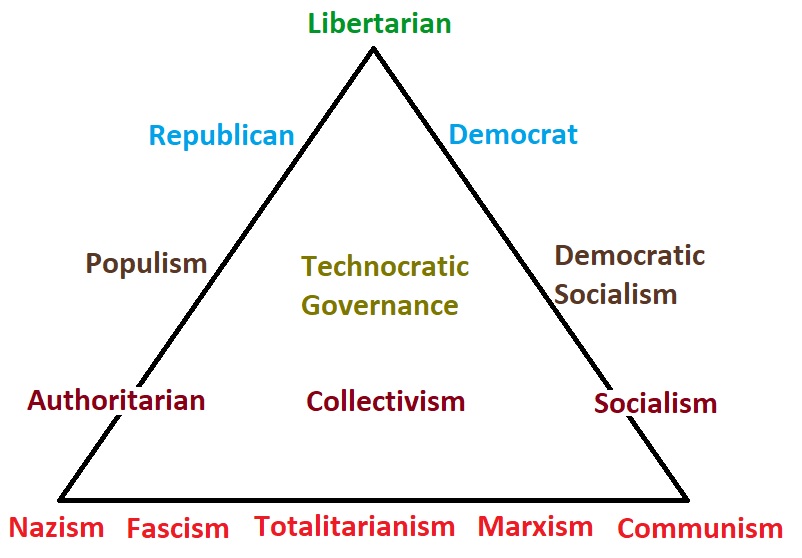
I’ve written a four-part series (here, here, here, and here) explaining why socialism is a bad idea, but let’s use today’s column to define this evil ideology. As I mentioned in the video, genuine socialism is based on three very specific concepts. Government ownership of the means of production Central planning to determine the allocation […]
Defining Socialism
 Utopia, you are standing in it!
Recent Comments