WSJ: Europe is Losing Europeans live longer, have more leisure time and less income inequality, and often live in stunning cities and towns built over the centuries. But increasingly, Americans enjoy a higher standard of living. They have over 50% more living space on average per person. More than four in five Americans have air…
Why is Europe Falling Behind?
Why is Europe Falling Behind?
23 Aug 2025 Leave a comment
in applied price theory, economic growth, labour economics, labour supply, macroeconomics Tags: European Union
For a de minimus threshold for mergers
16 Aug 2025 1 Comment
in applied price theory, economics of bureaucracy, industrial organisation, law and economics, politics - New Zealand, Public Choice Tags: competition law, merger law enforcement
I’ve spent the last couple of days at the Competition Law and Policy Institute’s annual workshop.Webb-Henderson’s Lucy Wright made a good case for a de minimus threshold for merger controls. Small mergers could have a safe harbour, or mergers in markets of insufficient NZ importance.If we need to set a monetary threshold for a market…
For a de minimus threshold for mergers
FERC Must Seize the Supreme Court’s Energy Opportunity
15 Aug 2025 1 Comment
in applied price theory, comparative institutional analysis, economics of bureaucracy, economics of regulation, energy economics, environmental economics, environmentalism, law and economics, politics - USA, property rights, Public Choice, rentseeking Tags: nuisance suits
The Court has provided the legal framework. FERC must provide the will to use it.
FERC Must Seize the Supreme Court’s Energy Opportunity
Is anyone worth a billion dollars?
12 Aug 2025 1 Comment
in applied price theory, entrepreneurship, industrial organisation Tags: superstar wages
That is the topic of my latest Free Press column. Excerpt: …in recent years they [Meta] have moved into AI in a big way. Over that same time period, the valuation of the company has risen from about $236 billion in November 2022 to almost $2 trillion at the end of this July. The reasons for […]
Is anyone worth a billion dollars?
Some Links
11 Aug 2025 1 Comment
in applied price theory, economic history, history of economic thought, international economics, politics - USA Tags: tarrifs
TweetFareed Zakaria, writing in the Washington Post, eloquently corrects many of the fallacies believed by MAGA-types (and also by many – most? – progressives’) about the American economy. Two slices: The Organization for Economic Cooperation and Development’s measure of median disposable household income in America was higher than in all but one advanced industrial economy…
Some Links
Chlöe Swarbrick’s homelessness hyperbole
11 Aug 2025 Leave a comment
in applied price theory, economic history, economics of regulation, human capital, labour economics, law and economics, liberalism, Marxist economics, politics - New Zealand, poverty and inequality, property rights, Public Choice, rentseeking, transport economics, urban economics Tags: family poverty, homelessness, regressive left
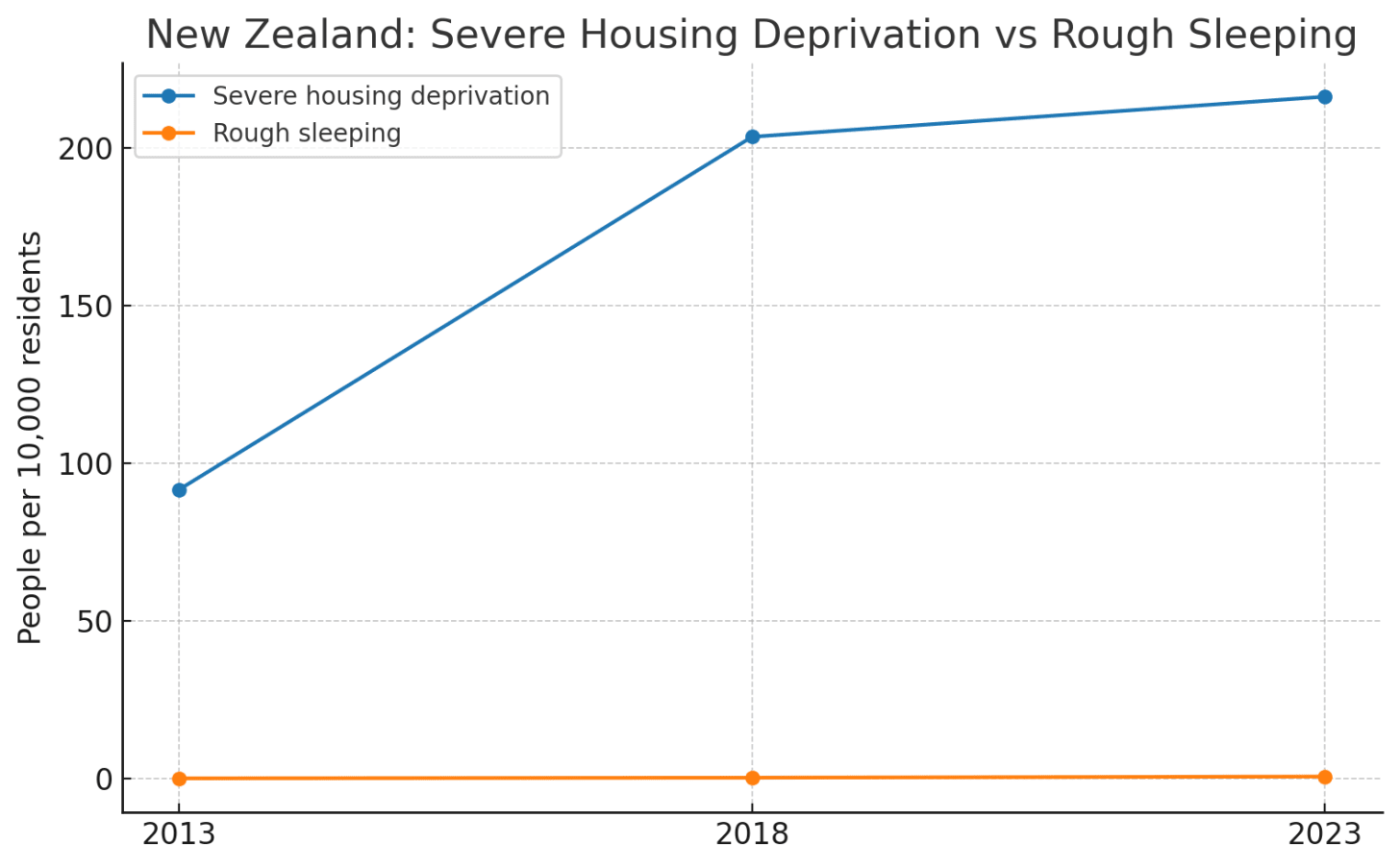
Ani O’Brien writes – Chlöe Swarbrick wants you to believe the Government is intentionally increasing homelessness. She told RNZ’s Mata with Mihingarangi Forbes: “The only conclusion that I can really come to is that this Government has intentionally increased homelessness…” It’s the kind of soundbite that plays well on social media. Outrage travels faster than nuance, and a […]
Chlöe Swarbrick’s homelessness hyperbole
Diocletian, the Roman Empire, and Forever Failing Price Controls
08 Aug 2025 1 Comment
in applied price theory, economic history, economics of regulation, history of economic thought Tags: price controls, Roman empire
By Tarnell Brown. At EconLog.”The Roman Empire was in trouble. During the fifty-plus years known as the Crisis of the Third Century (235-284 AD), the throne of Rome changed some 26 times, with the Roman Army engaging in a steady diet of crowning and removing claimants to the throne. These autocrats, known as “barracks emperors,”…
Diocletian, the Roman Empire, and Forever Failing Price Controls
Did the Minnesota housing reform lower housing costs?
07 Aug 2025 1 Comment
in applied price theory, law and economics, politics - USA, property rights, Public Choice, rentseeking, urban economics Tags: housing affordability, land supply, zoning
Yes: In December 2018, Minneapolis became the first U.S. city to eliminate single-family zoning through the Minneapolis 2040 Plan, a landmark reform with a central focus on improving housing affordability. This paper estimates the effect of the Minneapolis 2040 Plan on home values and rental prices. Using a synthetic control approach we find that the […]
Did the Minnesota housing reform lower housing costs?
Why the tariffs are bad
05 Aug 2025 1 Comment
in applied price theory, international economics, politics - USA Tags: tarrifs
I am delighted to see this excellent analysis in the NYT: Mr. Tedeschi said that future leaders in Washington, whether Republican or Democrat, may be hesitant to roll back the tariffs if that would mean a further addition to the federal debt load, which is already raising alarms on Wall Street. And replacing the tariff […]
Why the tariffs are bad
Why the accommodation supplement does little to help low-income tenants
04 Aug 2025 1 Comment
in labour economics, Public Choice, welfare reform, applied price theory, income redistribution

In an article in The Conversation earlier this year, Edward Yiu and William Cheung (both University of Auckland) discuss New Zealand’s accommodation supplement for low-income renters:New Zealand’s unaffordable housing market has left many low and middle-income families reliant on the accommodation supplement to cover rent and mortgage payments.But our new research has found the scheme,…
Why the accommodation supplement does little to help low-income tenants
The Tragedy of India’s Government-Job Prep Towns
04 Aug 2025 Leave a comment
in applied price theory, development economics, economics of bureaucracy, economics of regulation, growth disasters, growth miracles, labour economics, labour supply, occupational choice, Public Choice Tags: India
In Massive Rent-Seeking in India’s Government Job Examination System I argued that the high value of government jobs has distorted India’s entire labor market and educational system. India’s most educated young people—precisely those it needs in the workforce—are devoting years of their life cramming for government exams instead of working productively. These exams cultivate no […]
The Tragedy of India’s Government-Job Prep Towns
The Laffer Curve Triumphs Again: Class Warfare in the United Kingdom Backfires
02 Aug 2025 Leave a comment
in applied price theory, fiscal policy, labour economics, macroeconomics, public economics Tags: taxation and investment

The Laffer Curve provides incredibly important insights about tax policy. Most important, it informs us that you don’t measure the revenue impact of tax policy changes merely by looking at what is happening to tax rates. You also have to consider whether changes in tax rates will alter incentives to earn and report income. Or, […]
The Laffer Curve Triumphs Again: Class Warfare in the United Kingdom Backfires
Mamdani’s unworkable proposal for NYC-owned grocery stores
31 Jul 2025 1 Comment
in applied price theory, comparative institutional analysis, constitutional political economy, economics of regulation, income redistribution, law and economics, Marxist economics, politics - USA, property rights, Public Choice, rentseeking, transport economics, urban economics Tags: economics of socialism, regressive left, rent control, useful idiots

Democrat Zohran Mamdani is likely to be the next mayor of NYC, as he proffered a number of campaign promises that delighted progressives young and old. (This is besides his pro-Palestinian stand on the Gaza war, which is irrelevant to his actions as NYC mayor but still delighted the benighted.) Here are a few of […]
Mamdani’s unworkable proposal for NYC-owned grocery stores
CA min wage goes up ==> CA employment declines
29 Jul 2025 Leave a comment
in applied price theory, income redistribution, labour economics, labour supply, minimum wage, politics - USA, Public Choice, rentseeking, unemployment Tags: California
The classic book, Economics in One Lesson reduces all of economics to a similar lesson:The art of economics consists in looking not merely at the immediate but at the longer effects of any act or policy; it consists in tracing the consequences of that policy not merely for one group but for all groups.The lesson of Chapter…
CA min wage goes up ==> CA employment declines
Horseshoe Theory: Trump and the Progressive Left
26 Jul 2025 Leave a comment
in applied price theory, economics of regulation, history of economic thought, income redistribution, international economics, International law, labour economics, labour supply, Marxist economics, politics - USA, Public Choice, rentseeking Tags: 2024 presidential election, regressive left, tarrifs
Many of Trump’s signature policies overlap with those of the American progressive left—e.g. tariffs, economic nationalism, immigration restrictions, deep distrust of elite institutions, and an eagerness to use the power of the state. Trump governs less like Reagan, more like Perón. As Ryan Bourne notes, this ideological convergence has led many on the progressive left […]
Horseshoe Theory: Trump and the Progressive Left
 Utopia, you are standing in it!
Recent Comments