
The Reserve Bank Monetary Policy Committee works to a “Remit” set down for them from time to time by the Minister of Finance (the current one is here). It is a different (and better) system than the previous approach of Policy Targets Agreements between the Governor and the Minister, and in particular makes it clear (as is appropriate in our system of government) that the (elected) Minister and government set the targets for monetary policy, while the MPC is the accountable (at least on paper) body responsible for setting monetary policy to deliver the government’s goal.
Under the Reserve Bank Act the law now reads
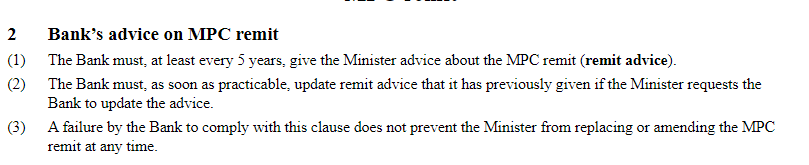
And several weeks ago the Bank kicked off the first stage in a consultative process designed to inform the advice they will eventually provide to the Minister of Finance. If you want to have a say, submissions close next Friday (15th).
Consultation with the…
View original post 1,568 more words








 The websites of the Scottish Parliament, the BBC, and others, including the Historical Association, refer to the state created on May 1, 1707 as the United Kingdom of Great Britain. Both the Acts and the Treaty describe the country as “One Kingdom” and a “United Kingdom”, leading some publications to treat the state as the “United Kingdom”. The term United Kingdom was sometimes used during the 18th century to describe the state.

 Constitutional bombshells do not come along very often, most change is incremental and piecemeal – or at least that was the conventional wisdom that prevailed on the UK constitution for many decades. More recently, it appears that scarcely a month passes without suggestions, discussions, proposals, or enactments of far-reaching constitutional reforms – whether through government consultations, changes to the ministerial code, the



Recent Comments