Calls for Boris Johnson to pause Net Zero policies after Auditor General warns costs risk spiralling out of control
21 Jun 2022 Leave a comment
Wind Power’s Woeful Performance Causing Blackouts & Mass Load Shedding
21 Jun 2022 Leave a comment

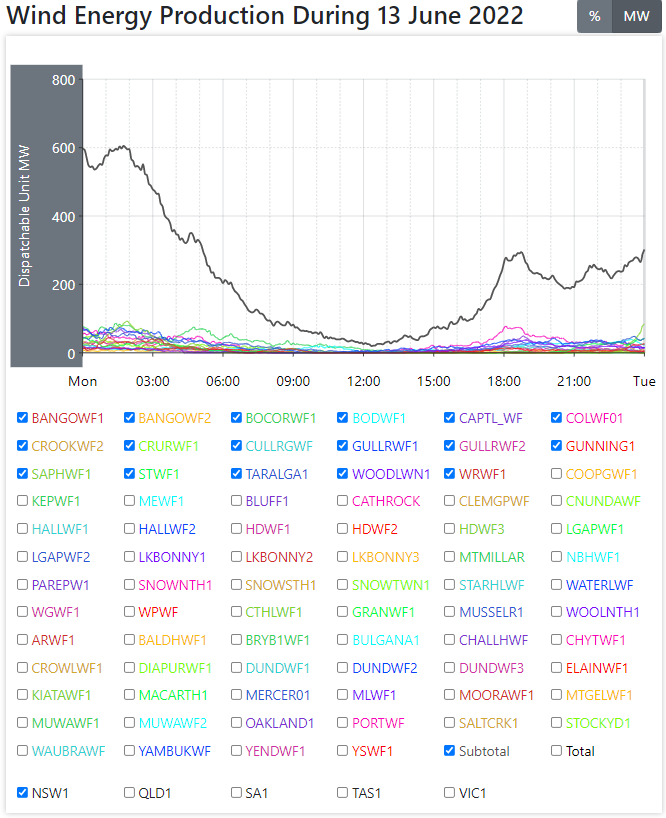
Wind and solar acolytes fail to mention that the ‘inevitable transition’ includes hours spent sitting freezing or boiling in the dark.
Power rationing by postcode is the new normal in Australia, as grid managers attempt to deal with the chaotic delivery of wind and solar. Former energy users are being encouraged not to use energy in order to prevent the grid from a total ‘system black’. And when encouragement fails, the grid manager simply cuts their access to power for hours on end.
New South Wales has a Liberal government hellbent on killing off their reliable coal-fired power plants in order to make way for more wind turbines and solar panels – on their current (woeful) performance, Matt Kean and his band of rent-seeking mates should be careful what they wish for.
Set out above – courtesy of Aneroid Energy – is the output from all of the whirling wonders…
View original post 938 more words
Solon Solomon: The Northern Ireland Protocol Bill: A comparative perspective on the parliamentary role in the amendment of major international agreements
21 Jun 2022 Leave a comment

 The discussion about the Northern Ireland Protocol Bill is not new. Back in 2020, in the Internal Market Bill, the UK Government brought forth its volition to unilaterally amend the conditions of its Brexit agreement with the EU and several pieces were written then on the issue. In the last few days, the UK Government has returned to the issue which had in the meantime been frozen, by issuing though this time also a legal statement meant to embalm this initiative to the wider compliance of the UK with international law. Albeit the statement’s reference to the doctrine of necessity in international law is not convincing, the issuing per se of such statement, must be heralded as good news. In 2020, when the UK announced that it was ready to revise the Northern Ireland Protocol, the Secretary of State for Northern Ireland stated that the Bill would indeed break international…
View original post 1,432 more words
Gavin Anderson et al: The Independence Referendum, Legality and the Contested Constitution: Widening the Debate
21 Jun 2022 Leave a comment

Two weeks ago, the UK Government published its consultation document on Scotland’s Constitutional Future, in which it stated its view that the Scottish Parliament has no power to enact legislation authorising a referendum on the question whether Scotland should become independent from the United Kingdom. Last week, the Scottish Government published its own consultation paper, Your Scotland, Your Referendum, claiming that the Scottish Parliament can validly authorise the asking of at least some questions about independence, although the document is ambiguous as to whether the Scottish Government believes that it has power to ask its preferred referendum question, namely ‘Do you agree that Scotland should become an independent country?’.
The legality or otherwise of an independence referendum is, from one perspective, a narrow point: a matter merely of process, which could be authoritatively resolved by an express grant of power from either the UK Government (under s.30 of the…
View original post 2,149 more words
All his boasted pomp and show
21 Jun 2022 Leave a comment

The Reserve Bank Governor appears to have been communing with his tree gods again, and last week released a speech he’d delivered online to an overseas audience headed “Why we embraced Te Ao Maori”. It isn’t clear quite how many people were in the audience for this commercial event run by the Central Banking (private business) publications group, but I’m guessing not many. The stream Orr spoke in featured just him, a panel discussion on how “digital finance can drive women’s inclusion”, and a presentation on “how can central banks put climate change at the core of the governance agenda”. While it was called the “governance stream”, a better label might be the woke feel-good stream, far removed from the purposes for which legislatures set up central banks.
In many ways, the smaller the overseas audience the better, and I guess his main target audience was probably domestic anyway…
View original post 3,511 more words
France 2022: Assessing the honeymoon election and towards a model of the impact of election timing on the president’s party’s seats
21 Jun 2022 Leave a comment

Was the French 2022 honeymoon election one that defies the usual impact of such election timing? Not to offer a spoiler, but the answer is yes and no.
Back around the time of the presidential runoff, I restated what I often say about elections for assembly held shortly after a presidential election: they are not an opportunity for the voters to “check” the president they have just chosen; presidential and semi-presidential systems just do not work that way. Well, usually. It seems hard to escape the notion that voters did just that–by holding Emmanuel Macron’s allies in Ensemble to less than a majority of seats, and by delivering bigger than expected seat totals to the Mélenchon-led united left (Nupes) and even to Le Pen’s National Rally (RN).
There will not be cohabitation, which was what I really meant in the French context when saying that honeymoon elections were not an…
View original post 1,890 more words
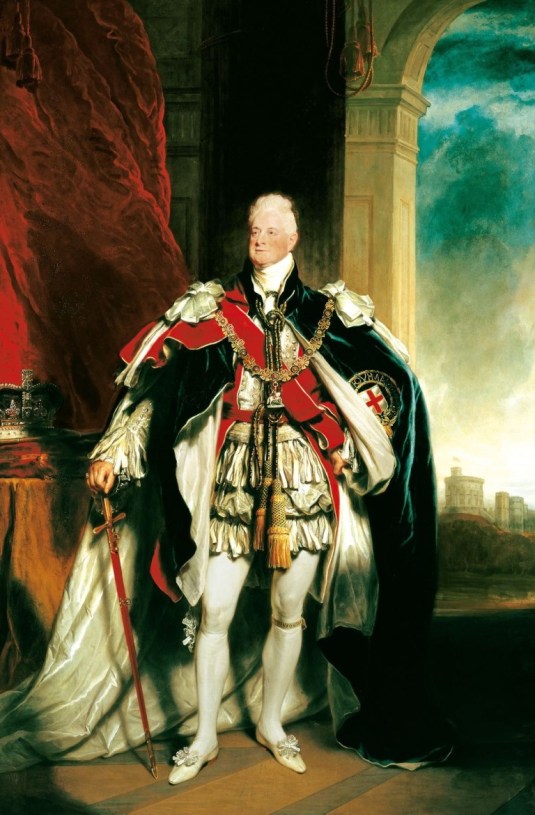
June 20, 1837: Death of King William IV of the United Kingdom and the accession of his niece as Queen Victoria.
20 Jun 2022 Leave a comment

William IV (William Henry; August 21, 1765 – June 20, 1837) was King of the United Kingdom of Great Britain and Ireland and King of Hanover from June 26, 1830 until his death in 1837. William was the third son of King George III and his wife Duchess Charlotte of Mecklenburg-Strelitz. William succeeded his elder brother King George IV, becoming the last king and penultimate monarch of Britain’s House of Hanover.
William served in the Royal Navy in his youth, spending time in North America and the Caribbean, and was later nicknamed the “Sailor King”. In 1789, he was created Duke of Clarence and St Andrews. In 1827, he was appointed as Britain’s first Lord High Admiral since 1709.
 In the Drawing Room at Kew Palace on July 11, 1818, William married Princess Adelaide of Saxe-Meiningen, the daughter of Georg I, Duke of Saxe-Meiningen, and Luise-Eleonore of Hohenlohe-Langenburg. William apparently…
View original post 620 more words
Energy Realities
20 Jun 2022 Leave a comment

There have been some terrific graphs published recently that tell us much more about both the global energy situation and efforts to reduce AGW than any number of lengthy articles.
All these graphs but one are historical, showing how energy use has changed over time since the start of the Industrial Revolution.
First, some history of our reliance on different types of energy over the last two hundred years. Note that coal usage peaked around one hundred years ago and oil in the 1970’s. But note also how important they remain.
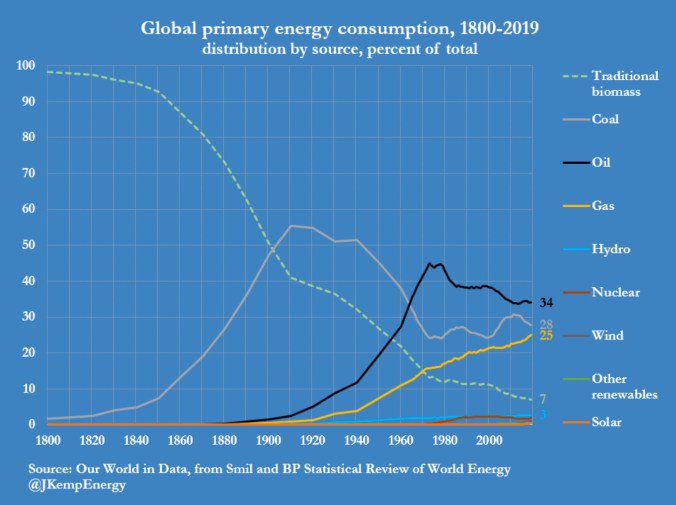
The reason for those changes can be seen in the next graph, which effectively demonstrates the energy content of the different types. It’s interesting to see that Biomass is churning out slightly more energy than ever, but as energy demands have risen it and other renewable energy sources have simply been left behind. Those fuels with higher energy density…
View original post 364 more words
PM says there’s not much to learn from by-elections – but Tauranga voters weren’t signalling an end to Labour’s slide in popularity
20 Jun 2022 Leave a comment

The Tauranga by-election confirmed Labour’s slide in popularity, with its candidate, the newly promoted Cabinet minister Jan Tinetti, winning only 25% of the vote, 14% less than in 2020.
But Prime Minister Jacinda Ardern didn’t see it that way. She said Tinetti received one of the better results the party has recorded in Tauranga in a number of decades.
In somewhat convoluted English, she further said:
“I think actually for by-elections, it’s very hard to read into them as someone who’s run in a by-election myself because it’s just simply not the same as in general elections, you don’t often have every party represented, so I’m not quick to read into individual outcomes.”
Tinetti came in with a very similar proportion of the vote to the support Labour received in Tauranga when it became the government in 2017, Ardern said.
But it was difficult to extrapolate too many lessons from…
View original post 778 more words
Power Price Shock: Australia’s Renewables Disaster Proves Wind & Solar Ain’t Cheap
20 Jun 2022 Leave a comment

In a weather-dependent energy world, those lucky enough to get power when they need it are being forced to pay a king’s ransom for it.
Having championed the use of tens of $billions in subsidies to destroy the coal-fired generators that gave Australia its reliable and affordable power supply, Australia’s new Federal Labor government is staring down an angry proletariat, suffering from random power rationing and rocketing power bills.
Labor’s Anthony Albanese campaigned on a promise to slash power bills the moment he entered office. However, in the 6 weeks since he took the reins, wholesale power prices have hit record levels and, accordingly, retail power prices will continue on their relentless, upward surge.
STT has been predicting this very outcome for over a decade.
The hard-green left that occupies Labor’s frontbench reckons that the secret to slashing power prices is even more of the same: expanding further the already…
View original post 1,168 more words
Energy Charades
20 Jun 2022 Leave a comment
A previous post, Energy Realities, showed in clear, graphical detail, the status of energy production and consumption, both globally and for two key nations; the USA and China.
In this post I’ll link to a number of detailed reports, all published recently, that provide more context to the graphs presented in that previous post.
But first there are a number of points about the current energy situation that can be taken from those graphs and their data:
- As of 2019, almost thirty years after the Kyoto Treaty was signed, the world still overwhelmingly relies on fossil fuels for its energy needs, from electricity production to transport, to the tune of 87%.
- Renewable energy forms a small percentage of global energy, and the majority of that is traditional biomass and hydro.
- Nuclear power forms an even smaller fraction.
- In the USA, fossil fuel dominance is at 80%, even as coal…
View original post 1,523 more words
The Horrid Consequences of Rent Control
20 Jun 2022 Leave a comment

As John Stossel discusses in this new video, few economic policies are as insanely foolish as rent control.
As you saw in the video, supporters of rent control tend to be the cranks and crazies, such as Bernie Sanders and Alexandria Ocasio-Cortez.
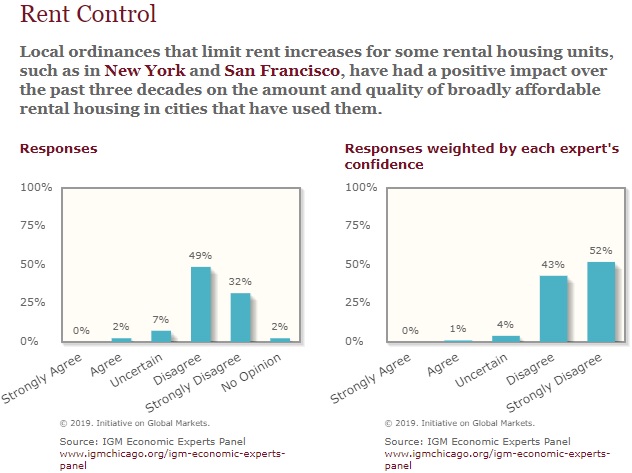 The vast majority of economists, by contrast, recognize that such policies undermine incentives to provide and maintain rental housing.
Who is going to invest in a new apartment complex, after all, if politicians impose laws that ensure it will be a money-losing project?
The video highlights what has recently happened in Minnesota.
I wrote about that mistake last year. Christian Britschgi of Reason also looked at what happened. Here are some excerpts from his column.
Another housing development in St. Paul, Minnesota, is on hold… The reason? St. Paul’s newly-passed rent control ordinance, which Alatus’ principals say is making their once-eager investors
skittish about doing…
View original post 289 more words
Lessons for National from the Australian Power Crisis
20 Jun 2022 Leave a comment
There are three key points to take away from the recent power debacle in Australia.
First, take a look atthis graphof indexed electricity prices in Aussie from 1955 to 2017. After decades of steady reduction the rise in price has been steep and unrelenting since the start of the age of unreliable power in the mid-2000’s.
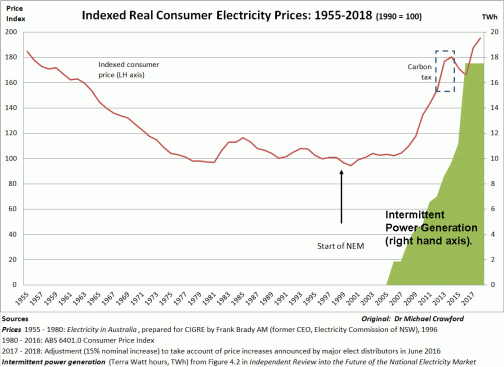
Remember this every time some Green tells you that Wind and Solar are cheaper than traditional base load, utility-scale power sources; “cost” is about more than just the Capex of the equipment. It’s about the cost of power shortages, limited growth, potential grid collapses, shorter plant lifetimes (25 years), and the cost of maintaining reliable backup power sources.
Second, note that the Liberal-National’s have been in government duringmuch of this time, including the last nine years just ended. So when Labor and the Left hold them responsible for much…
View original post 153 more words
Socialism vs. Capitalism: A Debate
20 Jun 2022 Leave a comment
in applied price theory, applied welfare economics, Austrian economics, comparative institutional analysis, constitutional political economy, development economics, economic growth, economic history, economics of bureaucracy, economics of education, economics of regulation, growth disasters, growth miracles, history of economic thought, human capital, income redistribution, industrial organisation, labour economics, labour supply, law and economics, liberalism, libertarianism, Marxist economics, poverty and inequality, property rights, Public Choice, survivor principle Tags: The Great Enrichment


Recent Comments