My Presidential Choice

Dan Mitchell's avatarInternational Liberty

I periodically get asked who should be in the White House.

Since I’m a policy wonk rather than a political pundit, I generally sidestep the question.

Though it probably isn’t too hard to figure out my preference if you peruse what I’ve written about previous presidents.

I’m a huge fan of both Ronald Reagan and Calvin Coolidge, for instance.

But I’m definitely not partisan. I’ve also said nice things about John F. Kennedy and even Bill Clinton.

And to further demonstrate my independence, it’s time for me to endorse another Democrat.

Yes, you read correctly. The person I want in the White House is….(drum roll, please)…the 22nd and 24th President of the United States, Grover Cleveland.

He’s mostly famous for being the only President to serve non-consecutive terms (he won in 1884, lost in 1888, and won again in 1892). And perhaps also for marrying a 21-year woman…

View original post 1,087 more words

Smart meters are a symbol of the elite drive to nudge Britain into submission

The Excellent Fiscal Policy of Warren Harding

Dan Mitchell's avatarInternational Liberty

I’ve repeatedlyheaped praise on Ronald Reagan.

I’ve also lauded Calvin Coolidge on severaloccasions.

And I even once extolled the virtues of Grover Cleveland.

Today, we’re going to celebrate the fiscal achievements of Warren Harding.

Most notably, as illustrated by this chart based on OMB data, he presided over a period of remarkable spending discipline.

Harding also launched very big – and very effective – reductions in tax rates.

And his agenda of less government and lower tax rates helped bring about a quick end to a massive economic downturn (unlike the big-government policies of Hoover and Roosevelt, which deepened and lengthened the Great Depression).

In an article for National Review last year, Kyle Smith praised President Harding’s economic stewardship.

In a moment of national crisis, Warren G. Harding restored the economic health of the United States. …America in 1921 was in a state of…

View original post 430 more words

Forecasting and policy mistakes

Michael Reddell's avatarcroaking cassandra

Yesterday’s post was a bit discursive. Sometimes writing things down helps me sort out what I think, and sometimes that takes space.

Today, a few more numbers to support the story.

I’m going to focus on what the experts in the macroeconomic agencies (Treasury and Reserve Bank) were thinking in late 2020, and contrast that with the most recent published forecasts. The implicit model of inflation that underpins this is that even if the full effects of monetary policy probably take 6-8 quarters to appear in (core) inflation, a year’s lead time is plenty enough to have begun to make inroads.

Forecasts – and fiscal numbers – in mid 2020 were, inevitably all over the place. But by November 2020 (the Bank published its MPS in November, and the Treasury will have finalised the HYEFU numbers in November) things had settled down again, and the projections and forecasts were able…

View original post 892 more words

Climate change: Top companies exaggerating their progress – study

Roxana Vanessa's avatarStigmatis

Environmentalists often accuse corporations of misleading consumers with greenwashing


Many of the world’s biggest companies are failing to meet their own targets on tackling climate change, according to a study of 25 corporations.

They also routinely exaggerate or misreport their progress, the New Climate Institute report says.

Google, Amazon, Ikea, Apple and Nestle are among those failing to change quickly enough, the study alleges.

Corporations are under pressure to cut their environmental impact as more consumers want green products.

Some of the companies told BBC News they disagreed with some of the methods used in the report and said they were committed to taking action to curb climate change.

The firms analysed account for 5% of global greenhouse-gas emissions, the report says – which means although they have a huge carbon footprint, they have enormous potential to lead in the effort to limit climate change.

“The rapid acceleration of corporate…

View original post 751 more words

Inflation

Michael Reddell's avatarcroaking cassandra

The National Party, in particular, has been seeking to make the rate of inflation a key line of attack on the government. Headline annual CPI inflation was 5.9 per cent in the most recent release, and National has been running a line that government spending is to blame. It is never clear how much they think it is to blame – or even in what sense – but it must be to a considerable extent, assuming (as I do) that they are addressing the issue honestly.

I’ve seen quite a bit of talk that government spending (core Crown expenses) is estimated to have risen by 68 per cent from the June 2017 year (last full year of the previous government) to the June 2022 year – numbers from the HYEFU published last December. That is quite a lot: in the previous five years, this measure of spending rose by only…

View original post 2,103 more words

NotZero: just 3% of air passengers use voluntary tuppence for ten miles miles carbon offset scheme.

tallbloke's avatarTallbloke's Talkshop

We’re told that the majority of people in the UK are very concerned about global warming and climate change. But only 3% are so concerned that they are willing to pay even a trifling sum to offset their air miles. The Sunday Times carried a story about this and told us:

The airline offers all customers who are about to buy a ticket the chance to “fully offset your CO2 emissions for this flight” by paying a fee. The 730km journey from Dublin to Paris can be offset for €1.20, while a 486km journey from Dublin to London, one of the world’s busiest air routes, can be offset for 78c. Ryanair said: “The 3 per cent of customers that chose to go greener in 2019 has yet to substantially increase, with the impact of the pandemic on air travel potentially playing a part. To date, these customers have contributed €3.5…

View original post 301 more words

Donnchadh Greene and Gabriel Tan: Statutory Interpretation and Citizenship: D4 v SSHD and PRCBC v SSHD

UKCLA's avatarUK Constitutional Law Association

This piece considers two recent decisions – one by the Court of Appeal (“CA”): D4 v Secretary of State for the Home Department [2022] EWCA Civ 33, and the other by the Supreme Court (“SC”): R (The Project for the Registration of Children as British Citizens) v Secretary of State for the Home Department [2022] UKSC 3 (“PRCBC”). At a general level, the cases raised similar issues: both involved challenges to delegation legislation on grounds that they were ultra vires; both related to citizenship – D4 about its deprivation, PRCBC about its conferral. This piece seeks to draw some threads from the two cases about statutory interpretation and the common law in the context of citizenship.

D4 v Secretary of State for the Home Department [2022] EWCA Civ 33

D4 was deprived of her citizenship pursuant to an order made under s.40 British Nationality Act 1981…

View original post 2,209 more words

The Grocott Bill and the future of hereditary peers in the House of Lords

The Constitution Unit's avatarThe Constitution Unit Blog

Today the House of Lords will announce the election of a new hereditary peer. Lord (Bruce) Grocott has once again put a bill before parliament to abolish the by-elections by which departing hereditary peers are replaced, following the removal of their automatic right to a seat in parliament in 1999. As David Beamish explains, the bill is unlikely to succeed despite having a great deal of support both inside and outside of the Lords. 

Following the Labour government’s reform of the House of Lords in 1999, 90 elected hereditary peers (as well as two office-holders, the Earl Marshal and Lord Great Chamberlain) remained part of the House of Lords, with – pending the promised second stage of reform – a system of by-elections to replace any who subsequently departed. The second stage did not happen and the by-elections remain as one of the strangest quirks of the UK constitution…

View original post 1,738 more words

Image

The Least Important Economic News of 2021

Dan Mitchell's avatarInternational Liberty

Three years ago, I unveiled this video to help explain that trade deficits are nothing to worry about.

The most important thing to understand from the video is that the flip side of a trade deficit is a capital surplus.

To be more specific, foreigners earn dollars by selling products to Americans. They then use those dollars to buy goods and services from American producers, or they use those dollars to invest money in the American economy.

And when foreigners choose to invest their dollars, that necessarily is accompanied by a trade deficit.

At the risk of understatement, it’s not bad that foreigners want to invest in the United States.

Why am I discussing this topic today?

Because we have final data on trade flows for 2021. Here are some excerpts from a report by Ana Swanson for the New York Times.

The U.S. trade deficit in goods soared…

View original post 450 more words

Religious Discrimination Bill passes lower house along with SDA amendment

neilfoster's avatarLaw and Religion Australia

This morning Australia woke up to the news that at an all-night sitting which concluded around 5 am, the House of Representatives has passed the Religious Discrimination Bill 2022. (The link there will take you to official Parliamentary site for the Bill; as I write the updated version given a third reading has not been published but should be later in the day.) The government amendments which I noted in a previous post were apparently all accepted.

There was an amendment moved by the Opposition which came very close to being accepted, but which in the end did not pass. (It can be seen here in the Opposition amendments document.) It would have introduced a prohibition on “religious vilification”. I do not think Australia needs more such laws; in the time available now let me link a paper I produced a few years ago on the dangers of limiting…

View original post 656 more words

Challenging Climate Podcast

rogerpielkejr's avatarRoger Pielke Jr.

Roger Pielke Jr. is a political scientist who writes on a diverse range of policy and governance issues related to science, technology, environment, innovation and sports. He is most famous (or infamous?) for his work on climate change. We cover his Iron Law of climate policy, his views on the problems with business-as-usual climate scenarios, and the challenges of attributing extreme weather. We also touch on the extent of his relationships with climate change skeptics and the efforts to discredit him, including the congressional investigation into his funding.

Roger is a Professor at the Department of Environmental Studies at the University of Colorado in Boulder. He is the author ofThe Climate Fix: What Scientists…

View original post 135 more words

The Key to Avoiding Future Climate Disasters? Adapting

House Science Committee Testimony

rogerpielkejr's avatarRoger Pielke Jr.

I testified before the House Science Committee on 29 March 2017. In my testimony I asked members of Congress to call a bipartisan truce in attacking scientists whose work they find inconvenient. I also emphasized the importance of scientific assessments such as the IPCC.

You can see the whole hearing above and read my testimony from the link below.

Statement by Roger Pielke Jr. before the House Committee on Science, Space, and Technology US House of Representatives, Hearing on Climate Science: Assumptions, Policy Implications, and the Scientific Method, 29 March (PDF).

View original post

Part-Time Power: Subsidised Solar World’s Most Expensive Virtue Signalling Exercise

stopthesethings's avatarSTOP THESE THINGS

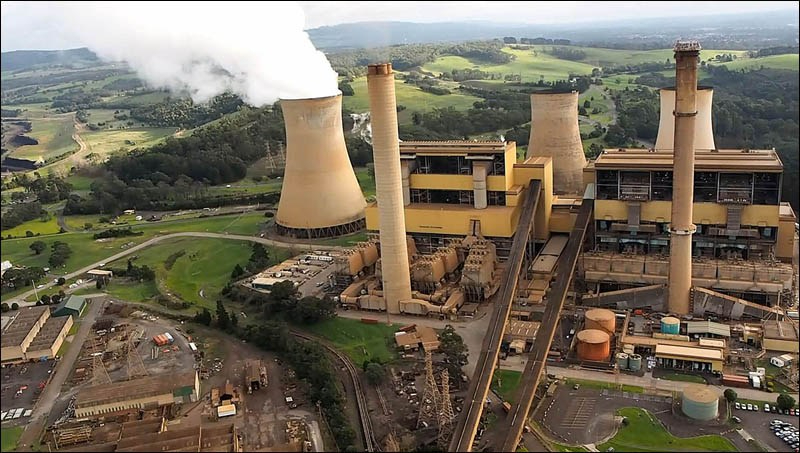
There is a place for solar power, but it ain’t connected to a power grid. Delivering power for no more than seven hours a day (ordinarily between five and six hours, at best, and less in winter) means sticking solar panels on homes connected to conventional power grids makes no sense at all.

As the sun sets, each and every one of those homes draws the power its occupants need from the very same grid that their solar panels have been destabilising throughout the day.

On the other hand, for “off grid” households – remote from the grid – a system involving solar panels, feeding excess generation to lead acid batteries, with a diesel generator for backup, is both practical and economic. Where electricity independence is a necessity in the only option, solar make sense. Think sheep and cattle stations hundreds of kilometres from the nearest SWER line.

Portable solar…

View original post 954 more words

Previous Older Entries Next Newer Entries

Bassett, Brash & Hide

Celebrating humanity's flourishing through the spread of capitalism and the rule of law

Truth on the Market

Scholarly commentary on law, economics, and more

The Undercover Historian

Beatrice Cherrier's blog

Matua Kahurangi

Celebrating humanity's flourishing through the spread of capitalism and the rule of law

Temple of Sociology

Celebrating humanity's flourishing through the spread of capitalism and the rule of law

Velvet Glove, Iron Fist

Celebrating humanity's flourishing through the spread of capitalism and the rule of law

Why Evolution Is True

Why Evolution is True is a blog written by Jerry Coyne, centered on evolution and biology but also dealing with diverse topics like politics, culture, and cats.

Down to Earth Kiwi

Celebrating humanity's flourishing through the spread of capitalism and the rule of law

NoTricksZone

Celebrating humanity's flourishing through the spread of capitalism and the rule of law

Homepaddock

A rural perspective with a blue tint by Ele Ludemann

Kiwiblog

DPF's Kiwiblog - Fomenting Happy Mischief since 2003

The Dangerous Economist

Celebrating humanity's flourishing through the spread of capitalism and the rule of law

Watts Up With That?

The world's most viewed site on global warming and climate change

The Logical Place

Tim Harding's writings on rationality, informal logic and skepticism

Doc's Books

A window into Doc Freiberger's library

The Risk-Monger

Let's examine hard decisions!

Uneasy Money

Commentary on monetary policy in the spirit of R. G. Hawtrey

Barrie Saunders

Thoughts on public policy and the media

Liberty Scott

Celebrating humanity's flourishing through the spread of capitalism and the rule of law

Point of Order

Politics and the economy

James Bowden's Blog

A blog (primarily) on Canadian and Commonwealth political history and institutions

Science Matters

Reading between the lines, and underneath the hype.

Peter Winsley

Economics, and such stuff as dreams are made on

A Venerable Puzzle

"The British constitution has always been puzzling, and always will be." --Queen Elizabeth II

The Antiplanner

Celebrating humanity's flourishing through the spread of capitalism and the rule of law

Bet On It

Celebrating humanity's flourishing through the spread of capitalism and the rule of law

History of Sorts

WORLD WAR II, MUSIC, HISTORY, HOLOCAUST

Roger Pielke Jr.

Undisciplined scholar, recovering academic

Offsetting Behaviour

Celebrating humanity's flourishing through the spread of capitalism and the rule of law

JONATHAN TURLEY

Res ipsa loquitur - The thing itself speaks

Conversable Economist

In Hume’s spirit, I will attempt to serve as an ambassador from my world of economics, and help in “finding topics of conversation fit for the entertainment of rational creatures.”

The Victorian Commons

Researching the House of Commons, 1832-1868

The History of Parliament

Articles and research from the History of Parliament Trust

Books & Boots

Reflections on books and art

Legal History Miscellany

Posts on the History of Law, Crime, and Justice

Sex, Drugs and Economics

Celebrating humanity's flourishing through the spread of capitalism and the rule of law

European Royal History

Exploring the Monarchs of Europe

Tallbloke's Talkshop

Cutting edge science you can dice with

Marginal REVOLUTION

Small Steps Toward A Much Better World

NOT A LOT OF PEOPLE KNOW THAT

“We do not believe any group of men adequate enough or wise enough to operate without scrutiny or without criticism. We know that the only way to avoid error is to detect it, that the only way to detect it is to be free to inquire. We know that in secrecy error undetected will flourish and subvert”. - J Robert Oppenheimer.

STOP THESE THINGS

The truth about the great wind power fraud - we're not here to debate the wind industry, we're here to destroy it.

Lindsay Mitchell

Celebrating humanity's flourishing through the spread of capitalism and the rule of law

Alt-M

Celebrating humanity's flourishing through the spread of capitalism and the rule of law

croaking cassandra

Economics, public policy, monetary policy, financial regulation, with a New Zealand perspective

The Grumpy Economist

Celebrating humanity's flourishing through the spread of capitalism and the rule of law

International Liberty

Restraining Government in America and Around the World