Several German cities halt use of e-buses following series of unresolved cases of fire
25 Oct 2021 Leave a comment
Great ‘Green’ Job Hoax: Only China Profits From Making Wind Turbines & Solar Panels
24 Oct 2021 Leave a comment

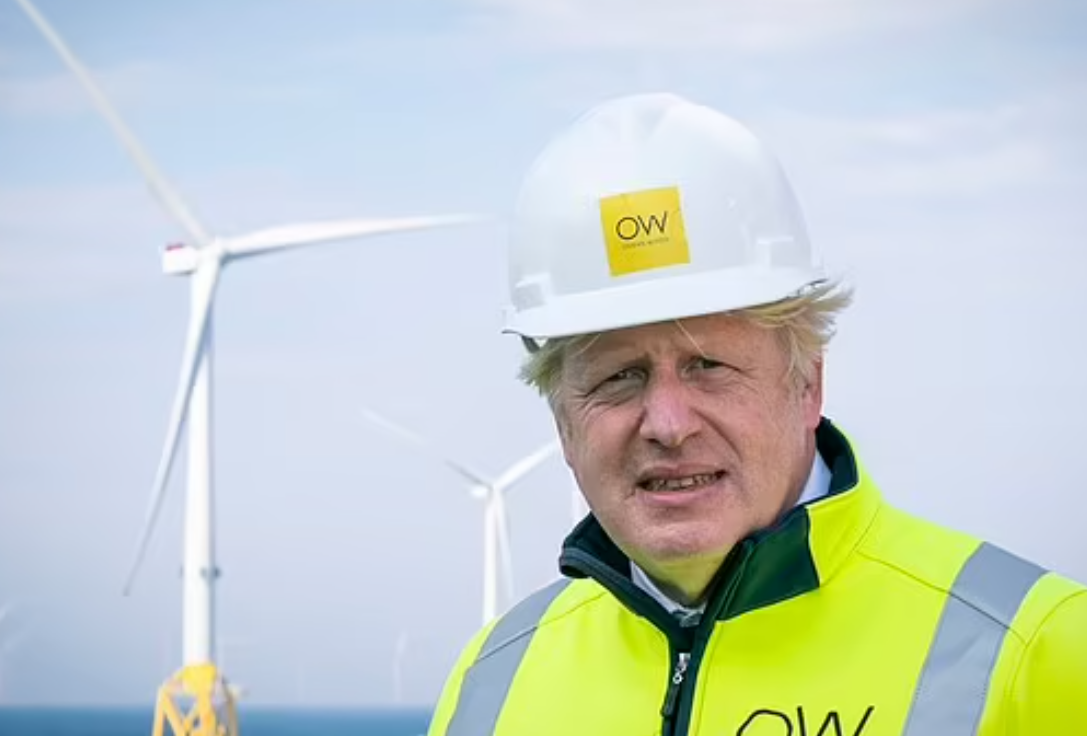
The promise of thousands of jobs building wind turbines and solar panels is a renewable energy mantra; there are – but only in China.
China itself is building nuclear power plants and hundreds more coal-fired power plants, as if its economic livelihood depends on it.
Meanwhile, in those Western countries foolish enough to attempt to run on sunshine and breezes, those few jobs that did materialise are fast disappearing.
The article by David Rose below should be essential reading for Australians, where the corporate crony capitalist class is pushing a net-zero carbon dioxide gas emissions target, based on the ludicrous claim that hundreds of thousands of new jobs will be generated.
Net-zero carbon dioxide gas emissions targets are all about increasing and extending subsidies to costly and unreliable wind and solar, with further subsidies to pipe dream projects such as ‘green’ hydrogen and mythical mega-batteries. Rent-seekers already in on…
View original post 2,477 more words
Cosmetic Surgery and the Economics of Healthcare
24 Oct 2021 Leave a comment

The healthcare sector is a tragic example of Mitchell’s Law in action, with politicians expanding the role of government in response to problems (rising prices and inefficiency) caused by previous expansions of government.
The solution is free markets, and Hannah Cox points the way in this short video.
Ms. Cox is definitely correct to use cosmetic surgery as an example of how free markets work.
I’ve previously cited great research from Mark Perry 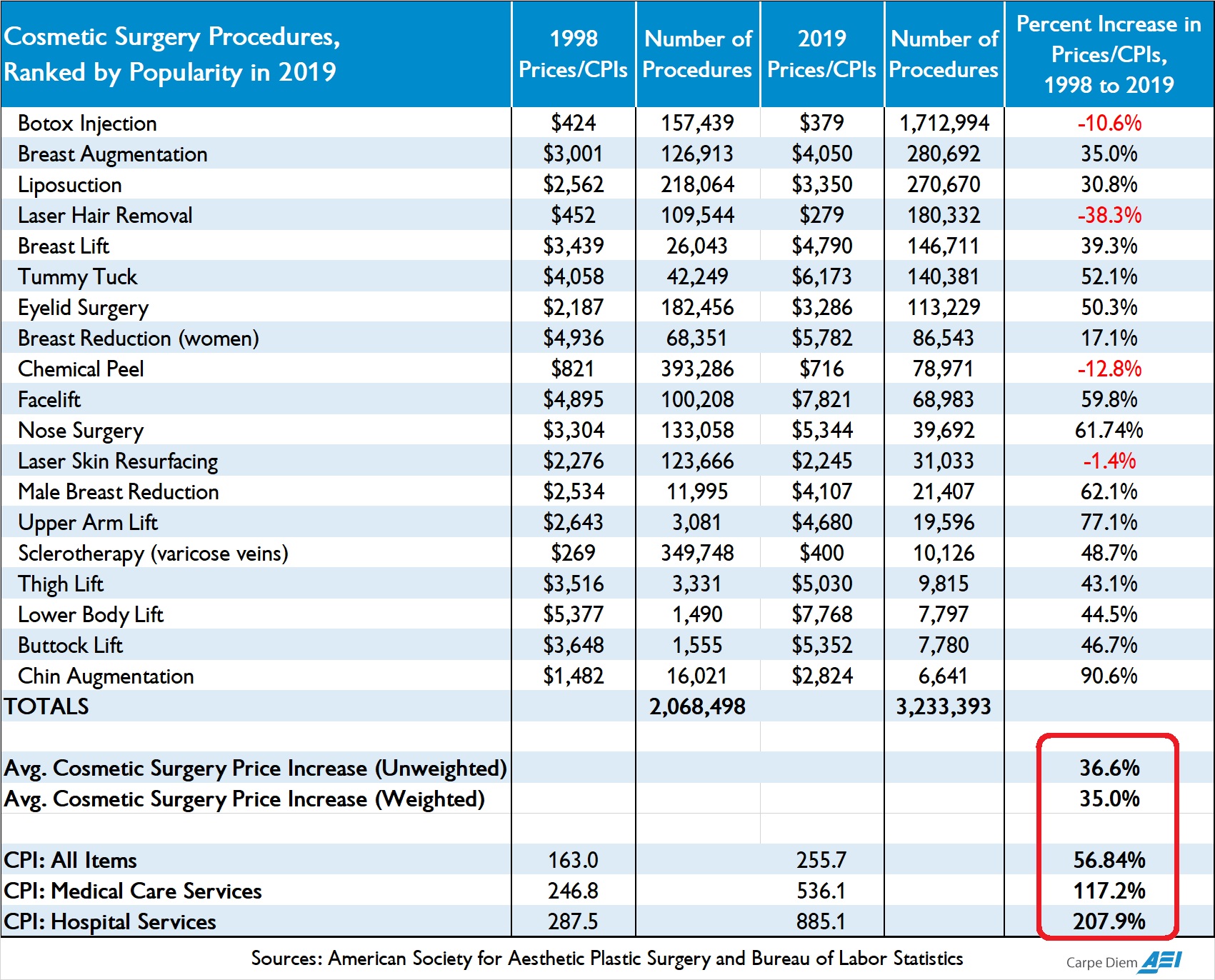 showing how prices for various procedures have risen by less than the overall consumer price index.
And far less than prices for the parts of the health care system where government plays a big role (in the table, see the section outlined in red).
The bottom line is that we get lower costs and greater efficiency when buyers and sellers directly interact without lots of interference from government.
Ms. Cox also wrote about this…
View original post 293 more words
DAVID FRIEDMAN – Anarchy Online: A World of Strong Privacy
24 Oct 2021 Leave a comment
in applied price theory, applied welfare economics, comparative institutional analysis, constitutional political economy, David Friedman, economics of crime, economics of regulation, international economics, law and economics, property rights
Peter J. Boettke: The Struggle for a Better World || The Human Progress Podcast Ep. 3
24 Oct 2021 Leave a comment
in applied price theory, Austrian economics, comparative institutional analysis
The draft New Zealand history curriculum – a major rewrite is needed please….
24 Oct 2021 Leave a comment

It’s great that we will soon have a history curriculum. It needs to offer rich knowledge to all New Zealand school students, regardless of their socio-economic status, ethnicity or religion. As Elizabeth Rata and Briar Lipson would argue, rich disciplinary knowledge that all students possess is needed for equity, civil society and democracy.
The curriculum should also foster both the spirit and method of critical inquiry. It should challenge students to ask what motivated people in different historical contexts, what were they thinking, what did they need to take account of, and how did they expect others to behave.
The curriculum should make students aware of what the rest of the world has gifted us, and what we ourselves have created. It should encourage students to treasure their whakapapa of the mind, regardless of where their bloodline whakapapa came from. It should be centripetal in drawing people together, and not…
View original post 1,404 more words
New Competitiveness Rankings: Biden Wants to Copy the Wrong Nations
23 Oct 2021 Leave a comment
One of the my favorite publications from the Tax Foundation is the annual International Tax Competitiveness Index (here’s what I wrote in 2020 and 2019).
The 2021 Index, authored by Daniel Bunn and Elke Asen, has now been released, and you can see that Estonia has the most sensible policy.
Other Baltic nations also are highly ranked, as are Switzerland and New Zealand.
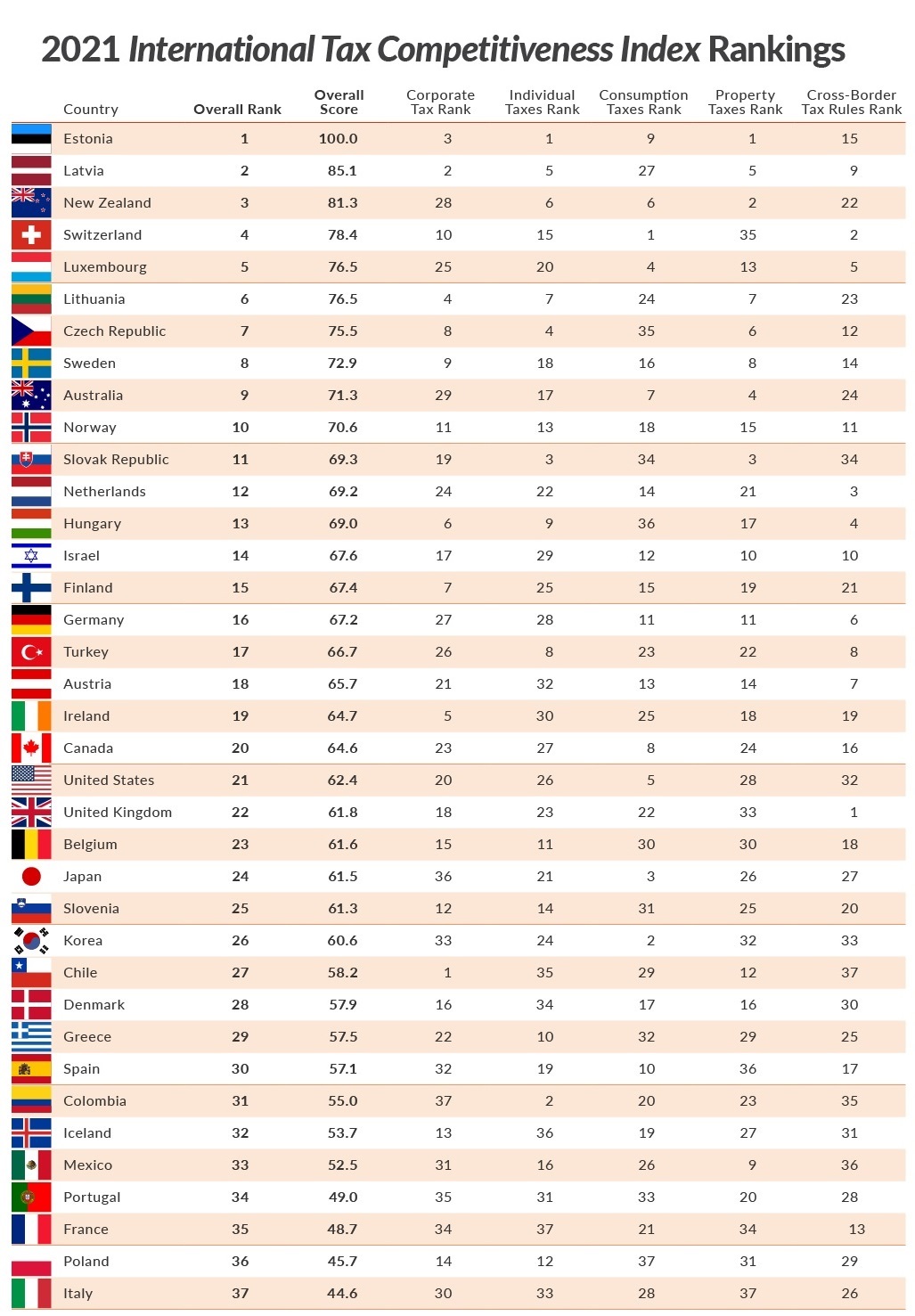
It’s probably no surprise to see nations such as France and Italy score so poorly, but Poland is a bit of a surprise.
Since most readers are from the United States, let’s specifically look at America’s rankings.
The U.S. does very will on consumption taxes (ranked #5), largely because we haven’t made the mistake of adding a value-added tax to our system.
By contrast, the U.S. is near the bottom (ranked #32) with regard to cross-border tax rules, though at least America…
View original post 249 more words
Glasgow’s ‘Green’ Agenda: Killing Meaningful Jobs & Depriving Poor of Meaningful Power
23 Oct 2021 Leave a comment

Anyone still thinking that ‘climate action’ is about saving the environment, hasn’t been paying attention: it’s a euphemism for massive and endless subsidies for wind and solar power generation and a meal ticket for billionaires already heavily invested in the greatest economic and environmental fraud of all time.
The upcoming climate cult gabfest in Glasgow does not involve any country serious about economic development and lasting prosperity. China and India and Russia will be no shows. These are countries that understand the benefit of reliable and affordable energy and the essential part it plays in national security and economic prosperity.
Australia is a country that generates a little over 1% of the world’s man-made carbon dioxide gas emissions, eradication of which can make absolutely no discernible difference to the weather, anywhere (if such relationship even exists – remember when it used to be called “global warming”, and then it wasn’t?)
View original post 1,577 more words
Pumped hydro more expensive than batteries: apples-to-apples
23 Oct 2021 Leave a comment

A lot of effort in the article in SolarQuotes (that is the subject of the series that starts here) went into avoiding a direct, apples-to-apples comparison between hydro and batteries. That made me wonder what the result of such a comparison would be.
Let’s just jump in. This is what we are working with:
| Snowy Hydro 2.0 | Hornsdale battery | Victorian Big Battery | |
|---|---|---|---|
| Capacity (MW) | 2,000 | 100 | 300 |
| Storage (MWh) | 40,000+ | 129 | 450 |
| Price (million AU$) | 10,000 | 89 | 180 |
View original post 591 more words
The Macroeconomic Consequences of Infrastructure Investment
22 Oct 2021 Leave a comment
in applied price theory, budget deficits, business cycles, econometerics, economic growth, fiscal policy, labour economics, labour supply, macroeconomics, monetary economics, unemployment Tags: multiplier
Lecture 1: Empirical overview of macro development
22 Oct 2021 Leave a comment
in applied price theory, applied welfare economics, comparative institutional analysis, development economics, econometerics, economic growth, economic history, Edward Prescott, growth disasters, growth miracles, history of economic thought, industrial organisation, labour economics, labour supply, law and economics, macroeconomics, property rights, Robert E. Lucas


Recent Comments