Highly speculative, but I found this of interest: This article explores the hypothesis that modern East Asian populations inherited and maintained extensive psychosocial adaptations to arctic environments from ancestral Ancient Northern East Asian populations, which inhabited arctic and subarctic Northeast Eurasia around the Last Glacial Maximum period of the Late Pleistocene, prior to back migrating southwards into East Asia in […]
Arctic Instincts? The Late Pleistocene Arctic Origins of East Asian Psychology
Arctic Instincts? The Late Pleistocene Arctic Origins of East Asian Psychology
17 Mar 2025 Leave a comment
in applied price theory, behavioural economics, economic history Tags: cognitive psychology, evolutionary biology, evolutionary psychology
Why tit-for-tat tariffs may not work against Trump
16 Mar 2025 Leave a comment
in applied price theory, industrial organisation, international economics, International law, politics - USA, Public Choice, rentseeking Tags: 2024 presidential election, game theory, tariffs

Last week, my ECONS101 class covered game theory. At the end of the final lecture, after we had been covering repeated games and tit-for-tat strategies, a really perceptive student asked me about Trump’s tariffs. A lot of the rhetoric about tariffs has been posed in terms of tit-for-tat (see here and here, for example). The…
Why tit-for-tat tariffs may not work against Trump
Institutional ownership of single-family housing
16 Mar 2025 Leave a comment
in applied price theory, applied welfare economics, econometerics, urban economics Tags: housing affordability
In the last decade, large financial institutions in the United States have purchased hundreds of thousands of homes and converted them to rentals. This paper studies the welfare consequences of institutional ownership of single-family housing. We build an equilibrium model of the housing market with two sectors: rental and homeownership. The model captures two key…
Institutional ownership of single-family housing
*Progressive Myths*: The Kling Club Convo
14 Mar 2025 Leave a comment
in applied price theory, comparative institutional analysis, constitutional political economy, economic history, entrepreneurship, history of economic thought, income redistribution, industrial organisation, labour economics, law and economics, liberalism, Marxist economics, politics - USA, property rights, Public Choice, rentseeking Tags: The Great Enrichment
Long ago, I co-blogged for EconLog with Arnold Kling. Now he’s running a book club for Liberty Fund. Last month, Arnold invited me and philosopher Rachel Ferguson to discuss Mike Huemer’s new Progressive Myths. Enjoy!
*Progressive Myths*: The Kling Club Convo
Boettke on the Socialist Calculation Debate
14 Mar 2025 Leave a comment
in applied price theory, Austrian economics, comparative institutional analysis, constitutional political economy, economics of information, entrepreneurship, history of economic thought, industrial organisation, law and economics, property rights Tags: economics of planning
An excellent EconTalk episode with Pete Boettke on the socialist calculation debate. I like Boettke on the three Ps. The three Ps–property, prices, and profits and loss. Property incentivizes us. Prices guide us. Profits lure us to new changes and losses discipline us. Today, “incentives matter” is often considered the first lesson of economics. But […]
Boettke on the Socialist Calculation Debate
Hawks, doves, Israel and Iran
13 Mar 2025 Leave a comment
in applied price theory, defence economics, economics of information, economics of media and culture, Public Choice, war and peace Tags: game theory, Iran, Israel, Middle-East politics, war against terror

In The Conversation last October, Andrew Thomas (Deakin University) discussed the recent (at that time) military flare-up between Iran and Israel, likening it to a ‘game of chicken’:Israel’s strike on military targets in Iran over the weekend is becoming a more routine occurrence in the decades-long rivalry between the two states…There is a reason why…
Hawks, doves, Israel and Iran
Did you know the Magna Carta was against tariffs?
13 Mar 2025 Leave a comment
in applied price theory, economic history, history of economic thought, industrial organisation, international economics Tags: 2024 presidential election, constitutional law, tariffs
One clause of the Magna Carta says: All merchants shall have safe and secure exit from England, and entry to England, with the right to tarry there and to move about as well by land as by water, for buying and selling by the ancient and right customs, quit from all evil tolls So tariffs […]
Did you know the Magna Carta was against tariffs?
Trump Doubles Down on Protectionist Failure
12 Mar 2025 1 Comment
in applied price theory, industrial organisation, international economics, politics - USA, survivor principle Tags: 2024 presidential election, tarrifs
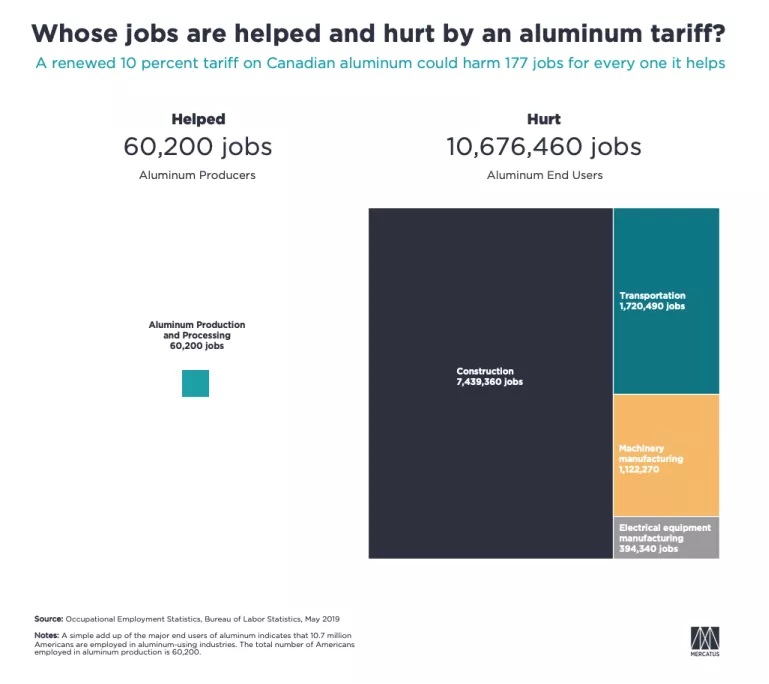
I shared a “Trade 101 for Trumpies” presentation last month in hopes of educating people about the foolishness of protectionism. Perhaps it should have been a remedial class because the president has just announced another increase in taxes on steel and aluminum from Canada. This is insanely bad economic policy for the simple reason that […]
Trump Doubles Down on Protectionist Failure
Is your master’s degree worthless?
11 Mar 2025 Leave a comment
in applied price theory, econometerics, economics of education, human capital, labour economics, labour supply
Economist: In America returns are especially large in computer science and in engineering. They are slightly smaller in other science subjects, in part because an undergraduate degree in these already bumps up salaries by quite a lot. Teachers who bag graduate degrees in education tend to earn more, even if wages for the profession as…
Is your master’s degree worthless?
Working paper: Why nationalize the production of public goods?
09 Mar 2025 Leave a comment
in applied price theory, comparative institutional analysis, constitutional political economy, economic history, economics of bureaucracy, entrepreneurship, health economics, history of economic thought, Public Choice, public economics, rentseeking
I have a new working paper out. It proposes a price theory-based explanation of why states nationalize the production of “public goods” (i.e., non-excludable and non-rivalrous). This is different than existing explanations as the theory ignores whether private provision is efficient or superior to public provision. I call it the “redistributive engine” theory whereby the […]
Working paper: Why nationalize the production of public goods?
Bernanke on inflation targeting
09 Mar 2025 Leave a comment
in applied price theory, budget deficits, business cycles, economic growth, economic history, financial economics, fiscal policy, history of economic thought, inflation targeting, labour economics, macroeconomics, monetary economics, politics - New Zealand, unemployment Tags: monetary policy

Former chairman of the Federal Reserve Board of Governors (and FOMC), Ben Bernanke, was yesterday the first of two keynote speakers at the Reserve Bank’s conference to mark 35 years of inflation targeting, which first became a formalised thing here in New Zealand. He indicated that he’d be speaking about inflation targeting in general and […]
Bernanke on inflation targeting
Max Rashbrooke has been kidnapped again to be replaced by a neoliberal doppelganger
08 Mar 2025 Leave a comment
in applied price theory, comparative institutional analysis, economics of bureaucracy, industrial organisation, managerial economics, market efficiency, organisational economics, politics - New Zealand, Public Choice, public economics Tags: privatisation

How Much Do Tariffs Raise Prices?
08 Mar 2025 Leave a comment
in applied price theory, economic history, history of economic thought, industrial organisation, international economics, politics - USA Tags: 2024 presidential election, free trade, tariffs
We break down how much of a tariff is ‘passed through’ to customersBy Jason Douglas, Anthony DeBarros and Danny Dougherty of The WSJ. Excerpts:”For example, a 10% tariff on shoes from China would raise their sticker price 4% or so, but on wine or olive oil from Italy, almost 10%.Why the difference? Tariffs aren’t the…
How Much Do Tariffs Raise Prices?
The Licensing Racket
08 Mar 2025 Leave a comment
in applied price theory, economics of bureaucracy, entrepreneurship, human capital, income redistribution, industrial organisation, labour economics, labour supply, law and economics, occupational choice, occupational regulation, property rights, Public Choice, rentseeking
I review a very good new book on occupational licensing, The Licensing Racket by Rebecca Haw Allensworth in the WSJ. Most people will concede that licensing for hair braiders and interior decorators is excessive while licensing for doctors, nurses and lawyers is essential. Hair braiders pose little to no threat to public safety, but subpar […]
The Licensing Racket


Recent Comments