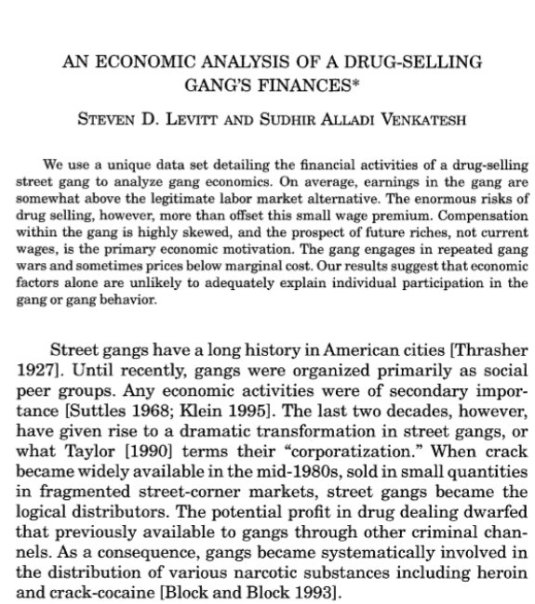
Gang members motivated by small chance of future riches, not immediate gain @sst_nz @JustSpeakNZ @NZJusticeIdeas @actionstation
24 Nov 2019 Leave a comment
in applied price theory, econometerics, economics of crime, human capital, industrial organisation, labour economics, labour supply, law and economics, Marxist economics, minimum wage, occupational choice, politics - USA, poverty and inequality, Public Choice, unemployment Tags: crime and punishment, criminal deterrence, law and order
Renewable Wreckage: Texas Town’s Push for 100% Wind & Solar Sends Prices Into Orbit
23 Nov 2019 Leave a comment

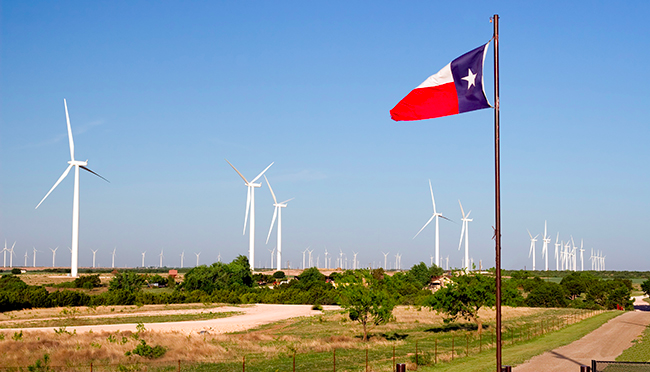
The wind may be free and the sun, when it’s shining, doesn’t cost a penny. But wind and solar literally cost the earth. Put aside the wholesale slaughter of birds, bugs and bats; the destruction of idyllic landscapes and once bustling communities, with residents driven out of their homes by incessant turbine generated low-frequency noise and infrasound.
Then, there’s the inevitable surge in power prices that follows any pursuit of chaotically delivered wind and solar. It’s a night-follows-day kind of thing. Just ask a South Australian, Dane or German.
And you might also direct your enquiry to the people of Georgetown, Texas, where power prices jumped by a fifth overnight.
A town in Texas went “100% renewables” and prices jumped 20%
Jo Nova Blog
Jo Nova
6 November 2019
Georgetown Texas did the Fake Renewables Show and Dance — the one where they “buy” 100% renewables but are connected 24/7…
View original post 428 more words
Canada’s banking system and its resilience
23 Nov 2019 Leave a comment

Canada has a long history of financial/banking stability compared to most other nations.
In this recent speech, Carolina Wilkins, DG at Bank of Canada points how the system will remain stable despite the worst possible adverse shocks:
Canadian banks are part of a global banking system that is more solid than it was a decade ago. Globally active banks are holding over US$2 trillion more capital than they were at the beginning of 2011, when the phase-in of the post-crisis reforms began. This translates to a 7-percentage point increase in their Tier 1 capital ratio.11 The leverage limits and new liquidity regulations also make these banks more resilient.12
Canada has implemented new measures to further strengthen our banking system. For example, Canada’s prudential regulator, the Office of the Superintendent of Financial Institutions (OSFI), increased the required amount of capital that Canada’s big banks have to hold to…
View original post 208 more words
This date in History: November 22, 1975. Juan Carlos becomes the King of Spain.
23 Nov 2019 Leave a comment

Juan Carlos I (Juan Carlos Alfonso Víctor María de Borbón y Borbón-Dos Sicilias, born January 5, 1938) is a member of the Spanish royal family who reigned as King of Spain from November 1975 until his abdication in June 2014.

Juan Carlos was born to Infante Juan, Count of Barcelona, and Princess María de las Mercedes of Bourbon-Two Sicilies in Rome, Italy, where his grandfather King Alfonso XIII of Spain and other members of the Spanish royal family lived in exile following the proclamation of the Second Spanish Republic in 1931. He was baptized as Juan Carlos Alfonso Víctor María de Borbón y Borbón-Dos Sicilias. He was given the name Juan Carlos after his father and maternal grandfather, Prince Carlos of Bourbon-Two Sicilies.
Generalísimo Francisco Franco, the Spanish head of state who initiated the civil war by means of a coup d’état against the constitutional republic in 1936, took over…
View original post 750 more words
Kelly’s Climate Clarity
23 Nov 2019 Leave a comment
mega-volcano in Iceland that takes out European airspace for six months would eclipse the climate concerns in short order.


Michael Kelly was the inaugural Prince Philip Professor of Technology at the University of Cambridge. His interest in the topic of this lecture was roused during 2006–9 when he was a part time Chief Scientific Adviser to the Department for Communities and Local Government. On his return full-time to Cambridge he was asked by his engineering colleagues to lead the teaching of final-year and graduate engineers on present and future energy systems, which he did until he retired in 2016. Michael Kelly recently spoke on the topic Energy Utopias and Engineering Reality. The text of his remarks is published by GWPF. This post provides a synopsis consisting of excerpts in italics with associated images and my bolds.
Overview
Just so that there can be no doubt whatsoever, the real-world data shows me that the climate is changing, as indeed it has always changed. It would appear by correlation that mankind’s…
View original post 2,407 more words
Teaching/examining economics
23 Nov 2019 Leave a comment

The NCEA level 2 economics exam took place yesterday afternoon. I’d been helping my son with his revision and preparation, in the course of which he’d shown me various exams papers from recent years, and some guidance they’d been given on how to answer some of those (past) questions: what might get Achieved, what Merit, and what Excellence.
I wasn’t exactly reassured by what I saw.
As one example, consider this question from last year’s paper 91222 “Analyse inflation using economic concepts and models”.
The first questions were introduced with this statement
The Quantity Theory of Money states that the quantity of money circulating in the economy is equal to the monetary value of the goods and services available in the economy.
The quantity theory of money starts from the identity – for thus it is – MV=PT, where
M = some measure of the money supply,
P = some…
View original post 2,504 more words
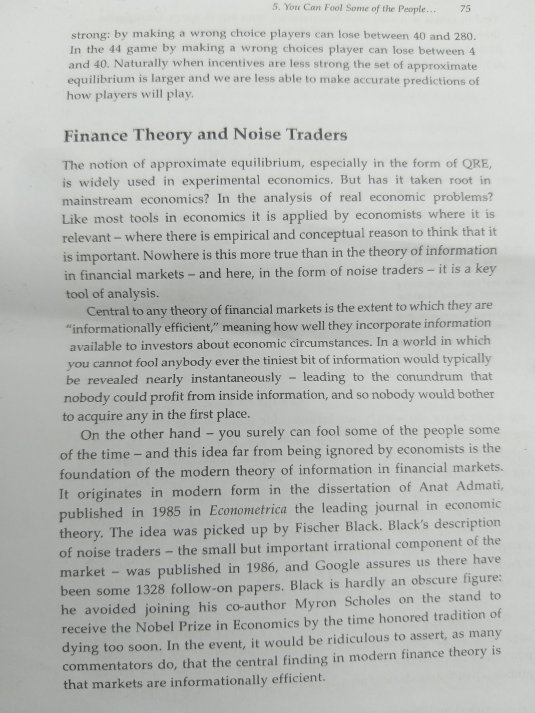
David Levine on efficient inefficiency in the efficient markets hypothesis
23 Nov 2019 Leave a comment
Financial Times corrects editorial alleging ’40 year US policy’ calling settlements “illegal”
22 Nov 2019 Leave a comment

Whilst this blog takes no position on the legality of Israeli communities across the green line, we do take a strident stand on holding British media outlets accountable to the accuracy clause of the UK Editors’ Code of Practice. So, over the past several days, we’ve pushed back against multiple outlets – including the Guardian, Independent, Economist, Telegraph and Financial Times – that have misrepresented longstanding US policy on settlements in the context of reports on the new US decision that they’re not illegal.
As we noted in a recent post, these outlets have erred in claiming that the new US position breaks with “four decades” of US policy, which, they assert, deemed Jewish communities in the West Bank “illegal”.
This is not true, as between the late 1970s and 2016, there was not one President or Secretary of State who labeled the settlements “illegal”. …
View original post 221 more words
Discrimination in Hiring Based on Potential and Realized Fertility: Evidence from a Large-Scale Field Experiment
22 Nov 2019 Leave a comment

| By: | Sascha O. Becker; Ana Fernandes; Doris Weichselbaumer |
| Abstract: | Due to conventional gender norms, women are more likely to be in charge of childcare than men. From an employer’s perspective, in their fertile age they are also at “risk” of pregnancy. Both factors potentially affect hiring practices of firms. We conduct a large-scale correspondence test in Germany, Switzerland, and Austria, sending out approx. 9,000 job applications, varying job candidate’s personal characteristics such as marital status and age of children. We find evidence that, for part-time jobs, married women with older kids, who likely finished their childbearing cycle and have more projectable childcare chores than women with very young kids, are at a significant advantage vis-à-vis other groups of women. At the same time, married, but childless applicants, who have a higher likelihood to become pregnant, are at a disadvantage compared to single, but childless applicants to part-time jobs… |
View original post 40 more words
Eugenics and Social Biology at LSE Library: An Introduction
22 Nov 2019 Leave a comment

Guest post by Indy Bhullar and Debbie Challis
There is much more research to be made in these areas, particularly the relationship of eugenics to demography and LSE’s role in training for colonial administration. This is just an outline of some of the material in LSE’s Library Collection and Archives. A good starting point to read more is the blog post by Shikha Dilawri.
The Webbs
In 1883 Galton published Inquiries into Human Faculty, a
collection of experiments, correspondence and data on inheritance, human
ability and psychological tests. It was in this book that Galton created the
word ‘eugenics’ to describe the science and idea of breeding human ‘stock’ to
give ‘the more suitable races or strains of blood a better chance of prevailing
speedily over the less suitable’ in a footnote. ‘Eugenics’ came from the Greek
words ‘genus’, translated as race or kin, and ‘eu’, meaning good…
View original post 2,063 more words
Champ and Freeman on banks inflating the economy
22 Nov 2019 Leave a comment
in applied price theory, business cycles, economics of information, financial economics, macroeconomics, monetary economics Tags: fractional reserve banking

November 21, 1916: Death of Emperor Franz Joseph of Austria-Hungary.
22 Nov 2019 Leave a comment
Rather poor security in 1914 given the history of successful assassinations.
Franz Joseph I (August 18, 1830 – November 21, 1916) was Emperor of Austria, King of Hungary, King of Bohemia, and monarch of many other states of the Austro-Hungarian Empire, from December 2, 1848 to his death. From May 1, 1850 to August 24, 1866 he was also President of the German Confederation, the successor state to the Holy Roman Empire. He was the longest-reigning Emperor of Austria and King of Hungary, as well as the third-longest-reigning monarch of any country in European history, after Louis XIV of France and Johann II of Liechtenstein.

Franz Joseph was born in the Schönbrunn Palace in Vienna (on the 65th anniversary of the death his great-great grandfather Holy Roman Emperor Franz I of Lorraine) as the eldest son of Archduke Franz Karl (the younger son of Holy Roman Emperor Franz II), and his wife Princess Sophie of Bavaria. Because his uncle, reigning from 1835…
View original post 687 more words
Supreme Court weighs lawsuit pitting climate scientist against skeptics
22 Nov 2019 Leave a comment

By John Kruzel – 11/21/19 – The Hill
The Supreme Court on Friday will consider whether to take up a prominent climatologist’s defamation suit against a venerated conservative magazine, in a case that pits climate scientists against the free speech rights of global warming skeptics.
The dispute between scientist Michael Mann and the National Review has drawn attention from lawmakers, interest groups, academics and media, as the court weighs adding a potentially blockbuster First Amendment showdown to an already politically charged docket.
Scientists hail Mann’s lawsuit as a necessary defense against efforts to erode public confidence in the scientific consensus that climate change is an urgent threat, while free speech advocates have rallied around the iconic conservative publication.
The case has made for strange bedfellows, with the National Review receiving backing from the Center for Investigative Reporting, which has produced award-winning coverage of climate change; Senate Majority Leader Mitch McConnell
View original post 13 more words
.@_AAAP_ @RMarchNZ @_chloeswarbrick @GarethMP
21 Nov 2019 Leave a comment
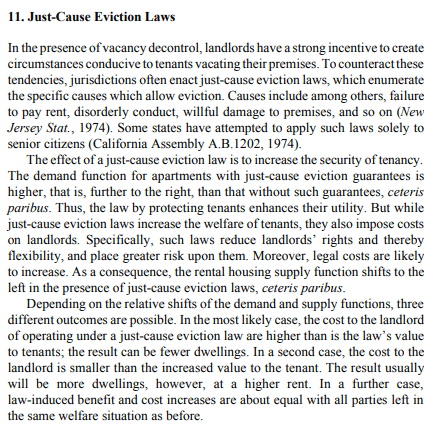
in applied price theory, comparative institutional analysis, economics of information, economics of regulation, politics - New Zealand, Public Choice, urban economics



Recent Comments