This date in History. Death of King John of England, Lord of Ireland and Duke of Aquitaine: October 19, 1216.
20 Oct 2019 Leave a comment
I cannot possibly cover the entirety of King John’s reign in this one post, therefore I will cover more personal issues along with issues regarding the succession.
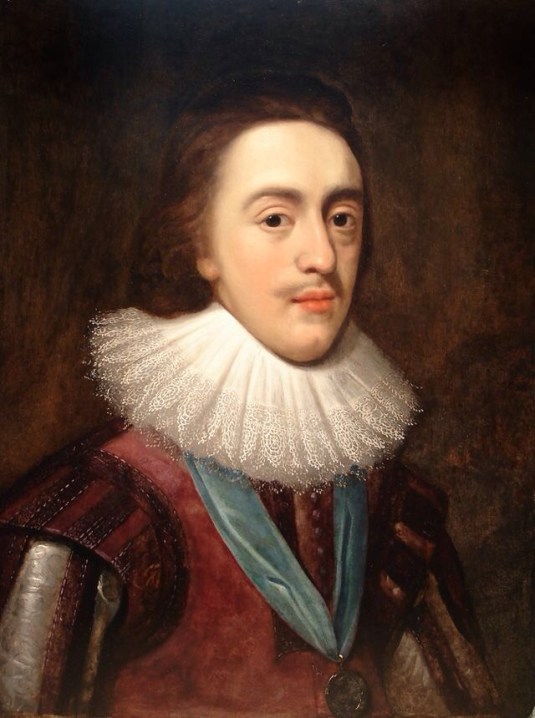
John (December 24, 1166 – October 19, 1216) was King of England from 1199 until his death in 1216. He lost the Duchy of Normandy and most of his other French lands to King Philippe II of France, resulting in the collapse of the Angevin Empire and contributing to the subsequent growth in power of the French Capetian dynasty during the 13th century. The baronial revolt at the end of John’s reign led to the sealing of Magna Carta, a document sometimes considered an early step in the evolution of the constitution of the United Kingdom.
King Henry II of England and Duchess Eleanor of Aquitaine had five sons: William IX, Count of Poitiers, who died before John’s birth; Henry the Young King; Richard…
View original post 2,199 more words
On the ethics of the randomisters
20 Oct 2019 Leave a comment
in applied price theory, applied welfare economics, development economics, econometerics, economics of bureaucracy, economics of education, health economics, Public Choice Tags: The fatal conceit
Would a “Wealth Tax” Help Combat Inequality? A Debate with Saez, Summers, and Mankiw
20 Oct 2019 Leave a comment
in applied price theory, applied welfare economics, comparative institutional analysis, economics of education, entrepreneurship, financial economics, human capital, income redistribution, industrial organisation, labour economics, labour supply, Marxist economics, occupational choice, politics - USA, poverty and inequality, Public Choice, public economics, rentseeking, survivor principle Tags: envy, superstar wages, superstars, taxation and entrepreneurship, taxation and investment, taxation and labour supply, top 1%, wealth taxes
Greenpeace’s Sea of Red
20 Oct 2019 Leave a comment
We are experiencing a new age of protest, a different type of activist and an intriguing role for media. The issues are evolving and the speed of the activist outreach (via fear and outrage) is accelerating. As the game changes, what will happen to the old generation of game changers?
Greenpeace had always been the game changer but over the decades it has run its business like an empire. In the halcyon days of the 1990s and 2000s, the global NGO could afford to take on governments, buy ships and bully companies. But Greenpeace could not adapt to the shift to social media tribal communities. As the activist game changed, Greenpeace had grown too fat while much more nimble activist upstarts and social media gurus were eating their lunch. It seems now the old lady of environmental NGOs is starting to starve to death.
I looked at the last five…
View original post 1,479 more words
Colossus: The Rise and Fall of the American Empire by Niall Ferguson (2004)
19 Oct 2019 Leave a comment
The United States invaded Afghanistan in October 2001 as a result of the 9/11 attacks. It invaded Iraq in March 2003 in response to the alleged threat of Saddam Hussein’s weapons of mass destruction.
These acts prompted an unprecedented flood of articles in newspapers and magazines, TV documentaries, conferences, seminars, papers and hundreds of books speculating whether America was now, finally, at last revealed to be an ’empire’ with nakedly ‘imperial’ ambitions.
British economic historian Niall Ferguson entered the debate with a Channel 4 TV series and book on the subject – which also neatly complemented the C4 TV series and book he had published in 2003 about the British Empire.
When I bought it I thought, from its subtitle (‘The rise and fall of the American empire’), that it would be a history, maybe a chronological account of the growth of American power.
But it isn’t. Even more so than…
View original post 3,017 more words
Civilization: The West and the Rest by Niall Ferguson (2011)
19 Oct 2019 Leave a comment
The problem of why civilisations fall is too important to be left to the purveyors of scissors-and-paste history. It is truly a practical problem of our time, and this book is intended to be a woodsman’s guide to it. (Preface p.xxii)
Ferguson doesn’t shy away from the big subjects, in fact he enjoys storming the big subjects – the Origins of the Great War, why the British Empire was a Good Thing, the Future of America, a Complete History of Money, a Complete History of the 20th Century. It is no coincidence that the last four of these books were written to accompany four blockbusting TV series, TV being a medium which favours striking stories and bold statements, contrarian points of view and press release-friendly controversy.
This is Ferguson’s fifth book-of-the-TV-series, created after the crash of 2008 revealed the weakness at the heart of the western financial system and events…
View original post 4,772 more words
A chinese millionaire went broke after he got religion. Business partners, suppliers and customers didn’t trust him anymore.
19 Oct 2019 Leave a comment
in applied price theory, development economics, economics of bureaucracy, economics of crime, entrepreneurship, financial economics, growth disasters, growth miracles, industrial organisation, law and economics, managerial economics, organisational economics, personnel economics, property rights, Public Choice, survivor principle Tags: bribery and corruption

Do bosses take your labour surplus with them when they die? More on the rise of a working rich @AOC @BernieSanders
19 Oct 2019 Leave a comment
in applied price theory, entrepreneurship, financial economics, human capital, income redistribution, industrial organisation, labour economics, labour supply, law and economics, Marxist economics, occupational choice, poverty and inequality, property rights, Public Choice, survivor principle Tags: labour theory of value, top 1%

from http://www.ericzwick.com/capitalists/capitalists.pdf
Matthew Smith, Danny Yagan, Owen Zidar, Eric Zwick, Capitalists in the Twenty-First Century, The Quarterly Journal of Economics, Volume 134, Issue 4, November 2019, Pages 1675–1745,
Ravallion on pilot bias or randomisters scaling up in poor, corrupt countries after succcesfully working with squeaky clean NGOs
19 Oct 2019 Leave a comment
in applied price theory, applied welfare economics, comparative institutional analysis, development economics, economics of bureaucracy, economics of crime, economics of information, growth disasters, law and economics, Public Choice Tags: bribery and corruption, The fatal conceit

A History of Styles & Titles: Part I
19 Oct 2019 Leave a comment
The Anglo-Saxon kings of England used numerous different titles, including “King of the Anglo-Saxons” and “King of the English. Around the mid 880s Is period in which almost all chroniclers agree that the Saxon people of pre-unification England submitted to Alfred. This was not, however, the point at which Alfred came to be known as King of England; in fact, he would never adopt the title for himself.
Initially Alfred was titled King of Wessex until 886 when in London Alfred received the formal submission of “all the English people that were not under subjection to the Danes”, and thereafter he adopted the title Anglorum Saxonum rex (King of the Anglo-Saxons). While Alfred was not the first king to claim to rule all of the English, his rule represents the start of the first unbroken line of kings to rule the whole of England, the House of Wessex.
Alfred’s son…
View original post 774 more words
Canada 2019
19 Oct 2019 Leave a comment
It is the final Friday before Shemini Atzeret, also known as Election Day in Canada this year, And what an interesting campaign it has been! The polls have moved quite a lot, especially recently. The New Democrats (NDP) seem to be enjoying a surge. Not on anything like the scale of 2011, but still something notable, as it was not long ago that there was talk about the Greens possibly passing them for third place. The Greens have slipped somewhat, as has been the case in past campaigns. No longer do they look likely to win as many as four seats; two (which is their current number) looks most likely.
The striking thing is that the poll aggregate at CBC (compiled by Éric Grenier) shows both major parties–incumbent seat-majority Liberal and opposition Conservative) barely above 30% of the vote (31.7-30.8 at my latest check). From 1949 to present, the largest party…
View original post 877 more words
Wind Power Wipeout: Monster Wind Farm Threatens Rare & Endangered Eagles
18 Oct 2019 Leave a comment
Wind industry victim: the endangered Tasmanian wedge-tailed eagle.
Cars, cats and skyscrapers don’t kill Eagles – like the critically endangered Tasmanian wedge-tailed eagle, but 60m wind turbine blades with their tips travelling at 350Kph routinely smash them out of existence.
The current crop of well-fed and poorly educated teens raging against the evil patriarchy and its grand conspiracy to cook the planet and demanding immediate ‘climate action’ – code for carpeting the planet in windmills and solar panels – either have no idea about the carnage caused by these things, or they couldn’t care less.
Millions of tonnes of beneficial bugs get splattered annually, along with millions of birds and bats, some of them being among the last of their kind.
All, as we’re constantly berated, in the name of ‘saving’ Mother Earth. [Note to Ed: with friends like that, who needs enemies?]
Denial, obfuscation and outright lies…
View original post 4,633 more words
An important conference for NZ First as it braces for the prospect of a painful year ahead
18 Oct 2019 Leave a comment
Expect the old campaigner Winston Peters to be at his belligerent best as he gears up for another election. He’s kept his party alive for 27 years and he shows no sign of quitting.
The omens may be bleak—polls this week showed his party below the 5% threshold– but Peters insists NZ First’s own polling puts the party “comfortably in the zone” to do well. He told Radio NZ the party is getting “enormous support” in the provinces and he’ll use the conference to outline a winning strategy.
As for those political commentators who say NZ First won’t make it back into Parliament, they are “moronic”.
Yet even when Peters fires up, as he did in that interview, the odds are stacking up against NZ First. He can brush off the polls, dismiss leaks of sensitive party documents pointing to questionable internal administrative issues, and assert his party …
View original post 569 more words


Recent Comments