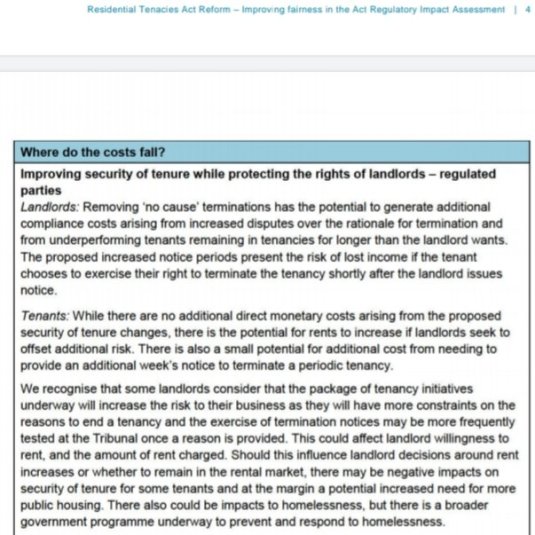
.@MBIEgovtnz warns of more homelessness from fairer tenancy reforms by @jacindaardern
18 Nov 2019 Leave a comment
in applied price theory, applied welfare economics, economics of regulation, income redistribution, law and economics, politics - New Zealand, property rights, Public Choice, rentseeking Tags: anti-market bias, offsetting behaviour, regressive left, The fatal conceit, unintended consequences
On this day in 1554 – Queen Mary I married Prince Philip of Spain
18 Nov 2019 Leave a comment

On 25th July 1554 Queen Mary I married Philip of Spain, the son of her cousin, the Holy Roman Emperor, Charles V. Philip was the heir apparent to many countries across Europe and the New World so was an appealing match, as part of the marriage negotiations 37 year old Mary was sena portrait of her new husband to be.
The marriage proposal was unpopular in England and led to many of Mary’s advisors urging her to marry an Englishman. A rebellion also broke out led by Thomas Wyatt the younger led a small army from Kent in an attempt to place Elizabeth on the throne. The biggest fear that many of the rebels held was that whoever Mary married would instantly become King of England and assume all the powers of the monarchy. This led to Mary introducing Queen Mary’s Marriage Act.
Under the terms of the Marriage…
View original post 671 more words
November 17, 1558: Death of Queen Mary I of England and Ireland.
18 Nov 2019 Leave a comment

Mary I (February 18, 1516 – November 17, 1558), also known as Mary Tudor, was the queen of England and Ireland from July 1553 until her death. She is best known for her aggressive attempt to reverse the English Reformation, which had begun during the reign of her father, Henry VIII. The executions that marked her pursuit of the restoration of Roman Catholicism in England and Ireland led to her denunciation as “Bloody Mary” by her Protestant opponents.
Mary was the only child of Henry VIII by his first wife, Catherine of Aragon, to survive to adulthood. Her younger half-brother Edward VI (son of Henry VIII and Jane Seymour) succeeded their father in 1547 at the age of nine. When Edward became mortally ill in 1553, he attempted to remove Mary from the line of succession because he supposed, correctly, that she would reverse the Protestant reforms that had begun during…
View original post 370 more words
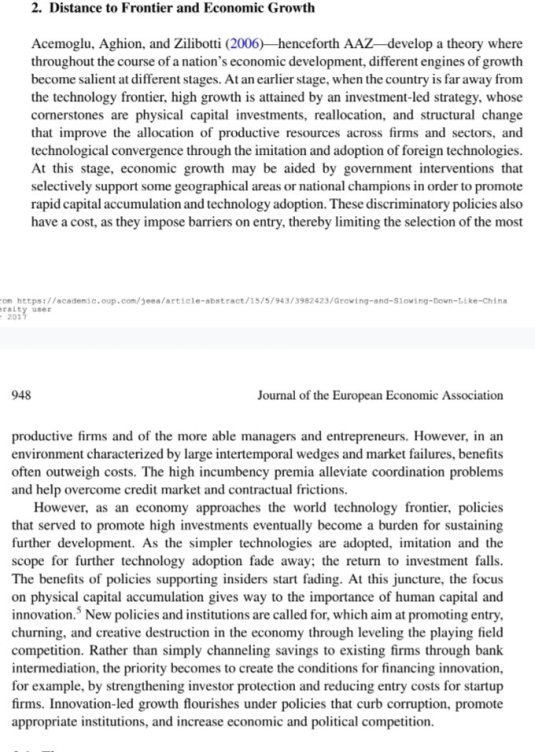
Zilibotti on Schumpeterian endogenous growth theory
18 Nov 2019 Leave a comment
in applied price theory, development economics, economic history, economics of bureaucracy, economics of information, entrepreneurship, growth disasters, growth miracles, industrial organisation, Public Choice, public economics, rentseeking, survivor principle Tags: creative destruction, endogenous growth theory
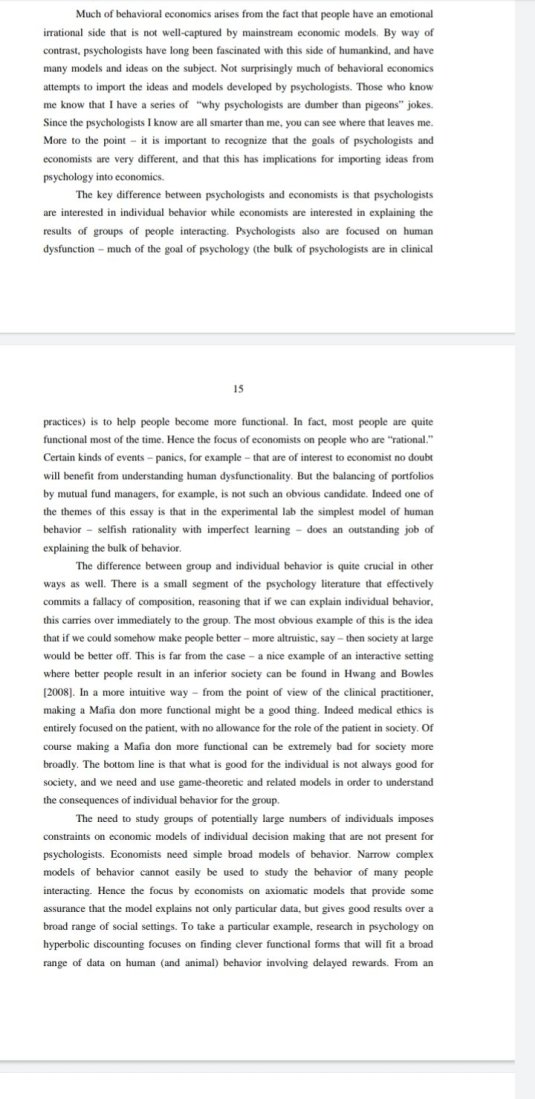
David Levine on psychology and economics
17 Nov 2019 Leave a comment
in applied price theory, behavioural economics, economics of information Tags: methodology of economics
Duke University Pushes Back Against PETA Label
17 Nov 2019 Leave a comment

By Matthew Wang, November 15, 2019, The Chronicle
Animal rights organization People for the Ethical Treatment of Animals ranked Duke among the worst schools in the country for animal testing, but Duke professors and students argued that the University meets ethical standards for research.
PETA’s new “Failed Tests” feature rates colleges and universities as “bad,” “worse” or “worst” in animal testing. Duke is in the “worst” category, along with dozens of other universities, including prestigious research institutions like Princeton, Yale, Stanford and the University of North Carolina at Chapel Hill.
Michael Schoenfeld, vice president for public affairs and government relations, wrote in an email to The Chronicle that Duke has “a rigorous process in place to ensure that all animal-related research adheres to the highest standards set by the U.S. Department of Agriculture, the National Institutes of Health and [Association for Assessment and Accreditation of Laboratory Animal Care]…
View original post 56 more words
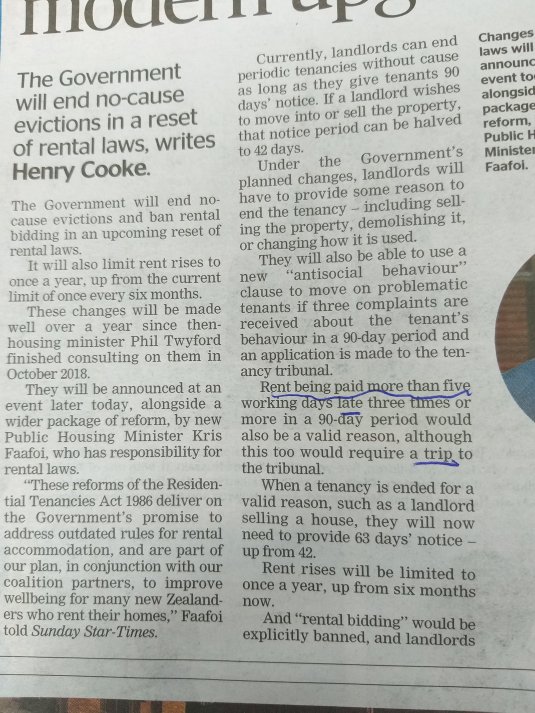
No landlord with rent to tenants with less than stellar credentials from now on.
17 Nov 2019 Leave a comment
in applied price theory, applied welfare economics, economics of regulation, politics - New Zealand, Public Choice, rentseeking Tags: offsetting behaviour, rent control, The fatal conceit, unintended consequences
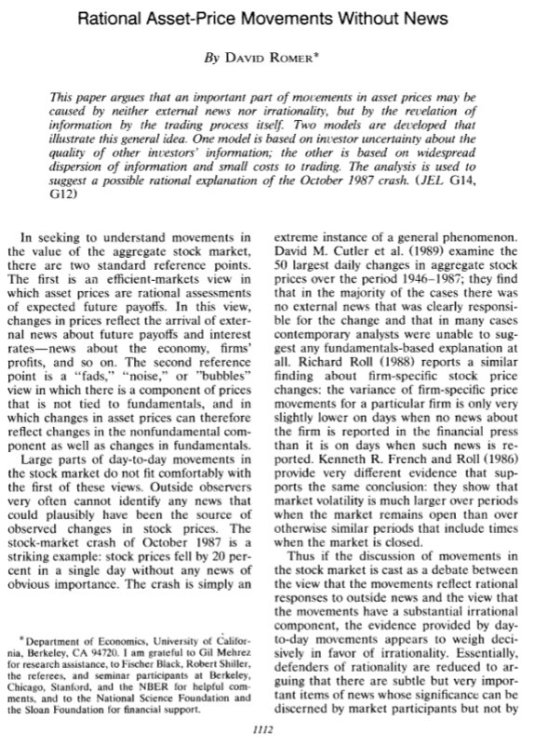
Bubbles and crash without news
17 Nov 2019 Leave a comment
in applied price theory, economic history, entrepreneurship, financial economics, industrial organisation, survivor principle Tags: efficient markets hypothesis, rational expectations
Why the new Speaker may not always be able to play a straight bat
17 Nov 2019 Leave a comment

 On 4 November, the House of Commons elected Lindsay Hoyle to serve as Speaker, following the resignation of John Bercow. It has been treated as accepted wisdom that a different approach to the Speakership is called for. However, Bercow has taken decisions about the Commons’ handling of Brexit in circumstances where several – or all – of the available choices were potentially controversial. Jack Simson Caird argues that his successor might therefore find that trying to ‘play a straight bat’ is not as easy or appropriate as it might appear.
Lindsay Hoyle is the new Speaker of the House of Commons. Hoyle, like many of his fellow candidates for the role, sought to emphasise that he would be very different from John Bercow. One of the main narratives around the election was that the Speaker should be, in the words of Chris Bryant, ‘an umpire and not a player’…
View original post 1,811 more words
Renewable Energy Regrets: Intermittent Wind & Solar Delivers Grid Chaos for Californians
16 Nov 2019 Leave a comment


The only thing that’s inevitable about the so-called ‘transition’ to wind and solar is rocketing prices and grid chaos.
The inability to deliver electricity as and when it’s needed, mean wind and solar have no commercial value – apart from the massive subsidies they attract.
Being commercially worthless is one thing, but dumping volumes of wind and solar into the grid one-minute, and watching their output completely collapse the next, comes with a staggering hidden cost.
To that end, Donn Dears unpacks the story behind California’s duck curve.
The Incredible, Amazing Duck
Power for USA
Donn Dears
29 October 2019
The Duck Curve was born in California, when the California Independent System Operator (CAISO) needed to explain how the addition of renewables affected the grid.
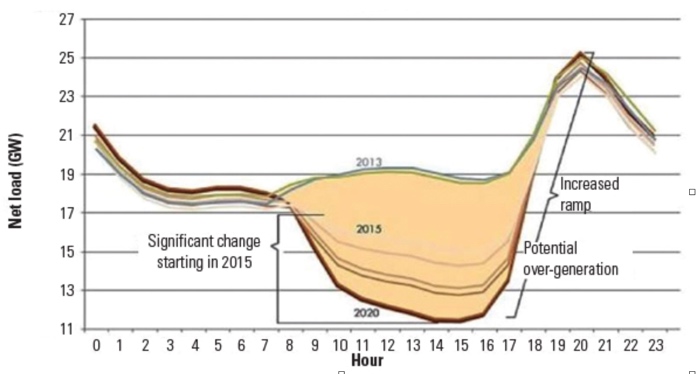 Duck Curve developed by CAISO
A quick explanation of the anatomy of the Duck Curve:
- The topmost line is the hour by hour electric load…
View original post 532 more words
New theory explains how the moon got there
16 Nov 2019 Leave a comment

 A key point of the new theory is that as the Moon migrated outwards from Earth, its orbit reached a critical distance where the Sun’s gravitational influence overtook that of the Earth, as Phys.org explains. Needless to say there’s more to it than that.
Earth’s Moon is an unusual object in our solar system, and now there’s a new theory to explain how it got where it is, which puts some twists on the current “giant impact” theory. The work is published Oct. 31 in the journal Nature.
The Moon is relatively big compared to the planet it orbits, and it’s made of almost the same stuff, minus some more volatile compounds that evaporated long ago. That makes it distinct from every other major object in the Solar System, said Sarah Stewart, professor of earth and planetary sciences at the University of California, Davis and senior author on the…
View original post 584 more words
BBC News website adheres zealously to editorial guidelines
16 Nov 2019 Leave a comment

In the 48 hours during which terrorists in the Gaza Strip fired over 450 rockets and mortars at civilian targets in Israel the BBC News website produced four written reports about the events.
Although missile attacks against civilians are clearly an act of terrorism and the people responsible for such attacks are terrorists, the BBC chose not to inform its audience of that fact and instead adhered to its much criticised editorial guidelines.
 Israel kills top Palestinian Islamic Jihad militant in Gaza12/11/2019, all versions here, version 1 discussed here
The word militant or militants were used 6 times in this report in relation to the Palestinian Islamic Jihad or Hamas. The words terrorist appeared twice, exclusively in a quote from an Israeli official.
“Israeli Prime Minister Benjamin Netanyahu called Abu al-Ata an “arch-terrorist” and said he was “the main instigator of terrorism from the Gaza Strip”.
“He…
View original post 481 more words
Wealth Taxation and Confiscatory Effective Tax Rates
16 Nov 2019 3 Comments

With their punitive proposals for wealth taxes, Bernie Sanders and Elizabeth Warren are leading the who-can-be-craziest debate in the Democratic Party.
But what would happen if either “Crazy Bernie” or “Looney Liz” actually had the opportunity to impose such levies?
At the risk of gross understatement, the effect won’t be pretty.
Based on what’s happened elsewhere in Europe, the Wall Street Journalopined that America’s economy would suffer.
Bernie Sanders often points to Europe as his economic model, but there’s one lesson from the Continent that he and Elizabeth Warren want to ignore. Europe has tried and mostly rejected the wealth taxes that the two presidential candidates are now promising for America. …Sweden…had a wealth tax for most of the 20th century, though its revenue never accounted for more than 0.4% of gross domestic product in the postwar era.
…The relatively small Swedish tax…
View original post 1,283 more words
Do the World’s Energy Policies Make Sense?
16 Nov 2019 Leave a comment

The world today has a myriad of energy policies. One of them seems to be to encourage renewables, especially wind and solar. Another seems to be to encourage electric cars. A third seems to be to try to move away from fossil fuels. Countries in Europe and elsewhere have been trying carbon taxes. There are alsoprograms to buy carbon offsets for energy uses such as air travel.
Maybe it is time to step back and take a look. Where are we now? Where are we really headed? Have the policies implemented since the Kyoto Protocol in 1997 had any positive impact?
Let’s look at some of the issues involved.
[1] We have had very little success in reducing CO2 emissions.
CO2 emissions for all countries, in total, have been spiraling upward, year after year.
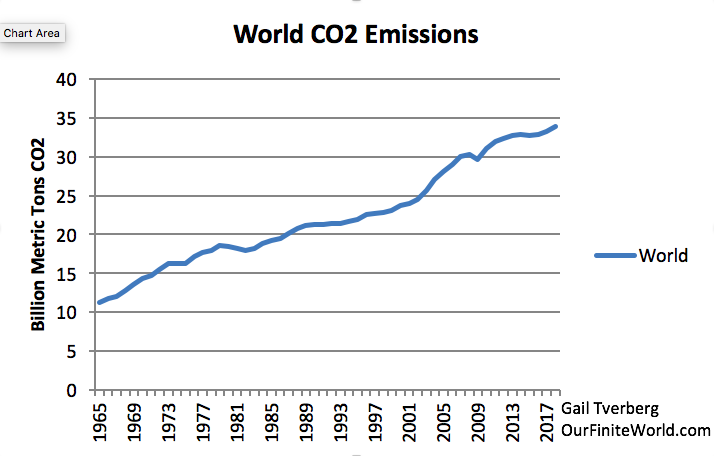 Figure 1. Carbon dioxide emissions for the world, based on BP’s 2019 Statistical Review of World Energy
View original post 2,761 more words
Cutting the cake not baking a bigger one
16 Nov 2019 Leave a comment

There has been a series of Tuesday events (“Tax on Tuesday”) held at Victoria Univerisity recently, jointly promoted by Tax Justice Aotearoa, the PSA, and the university’s own Institute for Governance and Policy Studies. I wrote about one of the earlier events here.
The final event was held this week, marketed as “Where’s the party at?” Political parties that is. In an event moderated by the Herald’s Hamish Rutherford, speakers from four political parties (NZ First declined the invitation) each spoke about some aspect of tax policy for 8-10 minutes, with plenty of time for questions. It wasn’t a hugely well-attended event, but it is pretty safe to assume that the overwhelming bulk of the audience was on the left of the political spectrum, and I guess the speakers recognised that in what they chose to say.
First up was ACT’s David Seymour. He started well…
View original post 2,046 more words


Recent Comments