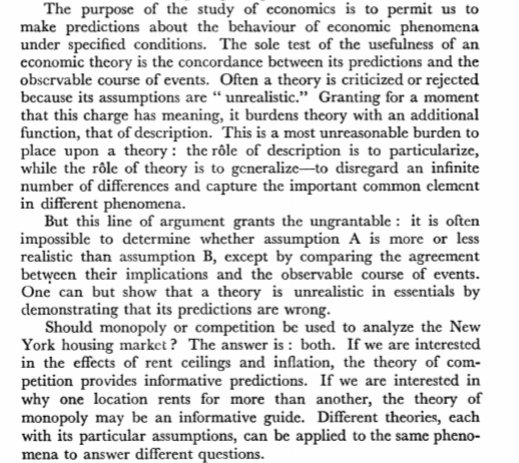
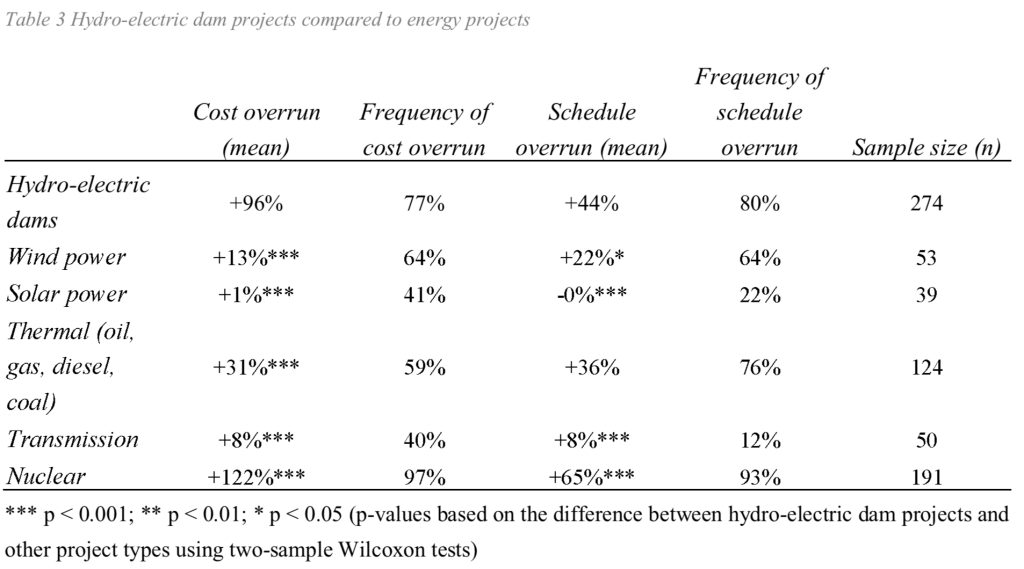
Energy project cost overruns
15 Nov 2019 Leave a comment
in applied price theory, economic history, economics of bureaucracy, energy economics, entrepreneurship, managerial economics, organisational economics, Public Choice Tags: megaprojects
Real Extinction Rebellion: Environmentalists Furious as Wind Industry Slash & Burn Entire Forests
15 Nov 2019 Leave a comment


In Germany, real environmentalists are mounting a well-drilled revolt against the destruction of forests – the natural habitat of apex predators, like the endangered Red Kite. Environmentalists are also furious at the fact that Kites, Eagles and dozens of threatened bat species are being sliced and diced with impunity across Europe.
Rural residents, driven mad in their homes or driven out of them by practically incessant turbine generated low-frequency noise and infrasound have taken their cases to law seeking injunctions and damages.
The result being is that new wind farm construction in Germany has ground to a halt: so far this year a trifling 35 onshore wind turbines have been erected.
The fact that chaotically intermittent wind power can’t be delivered as and when power consumers need it means the wanton destruction of pristine wilderness, bucolic landscapes, rural communities, and millions of birds and bats (including plenty of species…
View original post 503 more words
Why don’t the people in safety demonstrations act scared?
15 Nov 2019 Leave a comment

This question, which of course is fatuous, struck me because, owing to my recent flights and cruises, which exposed me to many safety demonstrations, I was struck by how calm people are in these videos and photos.
If you’ve ever seen a cellphone video of the interior of an airplane cabin in which people think they’re going to crash, it’s pandemonium. People are crying, screaming, making what they think are their last phone calls, and so on. That’s to be expected, especially if the plane is lurching, or an engine’s on fire, or the aircraft is plummeting downward.
But in the safety demonstrations, people putting on oxygen masks or bracing themselves or donning lifejackets are calm as cucumbers. They even look placid, and move with assuredness.
I can tell you, though, that if the eight-tone “abandon ship” signal sounded on this cruise, and I had to put on one of…
View original post 170 more words
Bernie Sanders’ Guardian op-ed in the Guardian has one big blind spot
15 Nov 2019 Leave a comment

In his recent Guardian op-ed, US presidential candidate Bernie Sanders (“Fighting antisemitism is at the heart of the left’s struggle against oppression”, Nov. 12) aptly defines antisemitism thusly:
“it is important to understand that that is what antisemitism is: a conspiracy theory that a secretly powerful minority exercises control over society”.
Whilst Sanders, whose father left Poland at age 17 due to antisemitism, and who lost family in the Holocaust, clearly has a personal connection to the subject, he also seems to have a big blind spot, as he appears convinced that those who peddle Jewish conspiracy theories come entirely from the political right.
Like other forms of bigotry – racism, sexism, homophobia – antisemitism is used by the right to divide people from one another and prevent us from fighting together for a shared future of equality, peace, prosperity and environmental justice.
Conversely, he sees the left (progressiveness) as…
View original post 330 more words
Sweatshops, Robber Barons, and Capitalist Exploitation
15 Nov 2019 Leave a comment

The hard part about being a libertarian is that there are endless opportunities to be frustrated. Especially if you’re job is trying to convince politicians to restrain the size and scope of government when that’s not in their self interest.
One of my special frustrations, though, is that many people don’t understand economic history.
- They blame the Great Depression on capitalism when it was largely the result of bad government policy.
- They blame the financial crisis on capitalism when it was largely the result of bad government policy.
Today, let’s talk about another example of bad economic history. Many people think corporations are rapacious entities that – in the absence of wise government – will create monopolies that screw workers with sweatshop conditions and screw consumers with ever-higher prices.
Much of this mythology goes back to the era of supposed “Robber Barons” in the late 1800s.
Fortunately…
View original post 1,200 more words
Innovation and Growth Cycles David Levine
15 Nov 2019 Leave a comment
in applied price theory, comparative institutional analysis, development economics, econometerics, economic history, economics of bureaucracy, economics of regulation, Federalism, financial economics, growth disasters, growth miracles, history of economic thought, income redistribution, industrial organisation, law and economics, Public Choice, rentseeking, survivor principle
A World Energy Revolution: the first phase 1820-1913
14 Nov 2019 Leave a comment

By Paolo Malanima (University «Magna Graecia» in Catanzaro)
The full article from this blog post is scheduled to be published by the Economic History Review
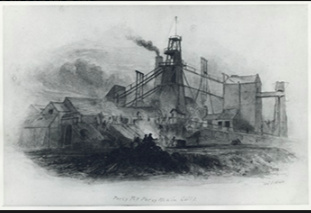 Thomas Hair, “Percy Main Colliery”, Newcastle University Library. Available on Archives Portal Europe
In 2016 any human being consumed every day 57,000 kilocalories (kcal) on the average; but in western Europe he/she consumed more than 100,000 kcal, in USA and Canada 200,000 and in Africa 22-23,000 (Figure 1). The remarkable increase in the capacity to do work, due to the rise in the energy consumption, marked a discontinuity in the course of the World economy and was a decisive support of Modern Growth.
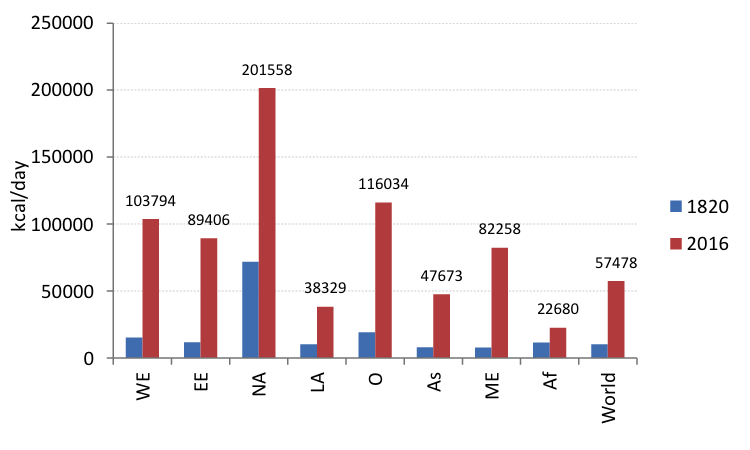 Figure 1. Per capita energy consumption per macroarea in 1820 and 2016 (kcal). Note: WE is Western Europe, EE is Eastern Europe, NA is North America, LA is Latin America, O is Oceania, As is Asia, ME is Middle East, and Af…
View original post 521 more words
Economic Freedom and Spontaneous Orders | Lynne Kiesling
14 Nov 2019 Leave a comment
in applied price theory, Austrian economics, comparative institutional analysis, entrepreneurship, history of economic thought, industrial organisation
Climate Models vs Observations: 2019 Update – by Ross McKitrick
14 Nov 2019 Leave a comment

 Earth and climate – an ongoing controversy
Below are a few quotes from the GWPF article. More discussion with graphics via the link. Is the handbrake about to be re-applied to so-called human-caused warming of the planet, in contradiction of alarmist ‘projections’?
Back around 2014 many people, me included, were commenting on the discrepancy between climate models and observations [writes Ross McKitrick].
. . .
The IPCC itself in the 5th Assessment Report (2013) noted that out of 114 model runs, 111 had overstated observed warming since the late 1990s.
View original post 159 more words
Delingpole: Greta Thunberg Could Not Be More Wrong About the Australian Bush Fires
13 Nov 2019 12 Comments
Legacy of Climategate – 10 years later
13 Nov 2019 Leave a comment

by Judith Curry
My reflections on Climategate 10 years later, and also reflections on my reflections of 5 years ago.
View original post 4,025 more words
A Little Useful Basic Information from Real Scientists
13 Nov 2019 Leave a comment

This is an older video, but a very good one. Dr. Richard Lindzen is one of our most respected scientists, and this simple video does a good job of clarifying the situation.
Here’s another (also older) from”Conversations that Matter” with Dr. William Happer, from Princeton University.
Most of the warming, rise of the oceans, all the stuff you hear so much panic about is measured in millimeters. If you don’t have a ruler that includes millimeters look it up. And as to warming:
The world’s 76 best Tide gauges show a mean 0.34 mm per year rise. “negligible acceleration”. There is no sign of climate models predicting sharply warming acceleration or sea level rise.
There are now around 31 different climate computer programs (the serious ones). They put in what we know, and what we think maybe we know, and a bunch of intelligent guesses. And they especially don’t know…
View original post 174 more words
Transition to electric vehicles puts heavy pressure on production of critical metals
12 Nov 2019 Leave a comment
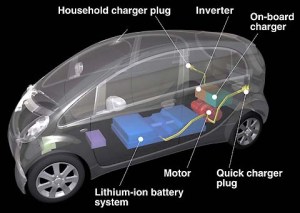 Typical electric car set-up
Critics of fuel power speak of the finite nature of oil and natural gas discoveries. A reminder here that resources are far from unlimited for EVs, in the short term at least. No sign of much appetite for switching to smaller cars either, with SUV demand rising fast.
The current production of a number of critical metals is insufficient for the large-scale transition to electric vehicles.
This is the conclusion of a report by environmental scientists Benjamin Sprecher and organisations Copper8 and Metabolic, reports TechXplore.
As a solution, they advocate more electric car-sharing, cars with a smaller battery and improved recycling.
Small country, big impact
The Dutch Climate Policy aims for 1.9 million electric cars in the Netherlands by 2030, compared to 171,000 at this moment—a growth of more than 1000 percent in less than 11 years.
But according to the report “Critical Metals Demand…
View original post 334 more words


Recent Comments