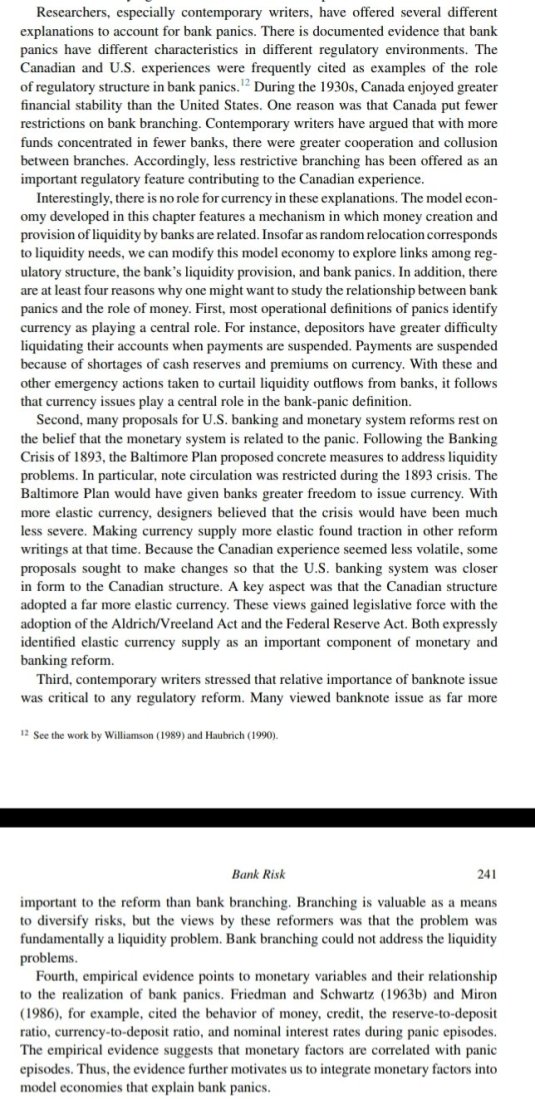
A balanced sample of views on the minimum wage

Averting the prorogation of Parliament, May 1641

Vivienne Larminie's avatarThe History of Parliament

In light of the attempt of the current government to prorogue Parliament, we thought it would be appropriate to offer examples of prorogation or the aversion thereof in Parliament’s past. Today, Dr Vivienne Larminie, Assistant Editor of our House of Commons 1640-1660 project explains how prorogation was narrowly avoided in 1641 during a crisis in the early months of the Long Parliament. In an earlier blog, Vivienne has also explored how, a few months later in January 1642, the king deployed an alternative tactic to gain control over Parliament when he attempted to ‘decapitate’ Parliament by seeking to arrest prominent adversarial MPs.

Sir Thomas Wentworth, 1st Earl of Strafford

In early May 1641, six months in to what became the Long Parliament, Members sensed that a crisis point had been reached.On the one hand it had become clear that enormous sums had to be found to pay for…

View original post 729 more words

Economics Of Migration Alan Manning

Author of article on “the case for colonialism” withdraws it after death threats and social-media mobbing; academics are mostly silent

whyevolutionistrue's avatarWhy Evolution Is True

In today’s political and social climate, trying to defend colonialism is just asking for trouble—in fact, even for death threats. That’s what happened to associate professor Bruce Gilley at Portland State University, who recently published an article—actually, a “Viewpoint”, the academic equivalent of an op-ed, but refereed like a regular article—called “The case for colonialism” in a journal called the Third World Quarterly. If you go to the link, though, you won’t find the article; you’ll find this:

According to Andy Ngo, who’s been reporting this in Quillette, Gilley’s article said this:

First published on September 8, “The case for colonialism” argues Western colonialism has created net-good in some instances, particularly through establishing governance, institutions and infrastructure. Gilley argues that nations who embraced and built on their Western colonial legacy, for example, Singapore, have fared better than those who followed anti-colonial nationalist ideologies. The article also…

View original post 1,196 more words

Orwell & John Stewart Mill: Limitations Of Pacifism

William Holland's avatarWilliam Holland

“War is an ugly thing, but not the ugliest of things.  The decayed and degraded state of moral and spiritual feeling which thinks that nothing is worth war is much worse.  The person who has nothing for which he is willing to fight, nothing which is more important than his own personal safety, is a miserable creature and has no chance of being free unless made and kept free so by exertions of better men than himself.”  John Start Mill

“Intellectuals in society such as our own, it is not unusual for an intellectual to feel no attachment to his own country.  This type is mostly deeply cynical, disaffected.  Most strike a pretense of imitativeness or sheer cowardice.  Most are members of religious sects or humanists who have not bothered to think of the consequences.  The real though unadmitted motive is pure hatred for Democracy and liberty.”  George Orwell

View original post

The Outsider: My Life in Intrigue by Frederick Forsyth (2015)

Simon's avatarBooks & Boots

The chief reporter was the veteran Frank Keeler, a terrific journalist who became my mentor. He was a stickler for accuracy, dunning into all cubs he ever mentored his personal philosophy: check, check and check again. Then write. I still do. (p.107)

This is a very entertaining, amusing, informative and life-affirming book. What a great life Forsyth has had and with what brio he sets it down in his brisk, non-nonsense style.

The challenge of autobiography

We think and feel and speak and interact with other people all the time in a myriad of complex ways. Just writing down everything that happens in a day would be challenging, because so much of our interactions have a long history of interactions preceding them, and ramify out in all directions. So if describing everything that happens in a day would be challenging, how do you go about writing about your entire life

View original post 4,668 more words

MERKEL DECIDES GERMANY TO BE NET ZERO CO2 EMISSIONS BY 2050 AT HUGE COST

Iowa Climate Science Education's avatarIowa Climate Science Education

This piece spells out the cost of Angela Merkel’s decision to make Germany have net zero CO2 emissions by 2050.

“People remember 2011 and Markel’s rash decision to prematurely abandon nuclear power. When the German chancellor believes that Germans want to save the world, she decides very quickly, whatever the cost. Only votes and public mood counts.  Economic or other rational considerations no longer play any role – just like her decision to open the border for all and sundry. And now the jump onto the climate bandwagon because of demonstrating pupils and singing Protestants”.

“The Chancellor’s new promise to achieve the last ten percentage points of CO2 reduction (from 90% to 100%) increases the additional energy costs from 4,600 to around 7,600 billion euros by 2050. This is an astronomical figure: it is more than double the amount of all goods and services produced in Germany in 2018″. This is…

View original post 39 more words

New Commonwealth Religious Freedom Laws

neilfoster's avatarLaw and Religion Australia

The Commonwealth Attorney-General has released Exposure Drafts of a package of Federal Bills designed to improve religious freedom protections under Australian law, along with associated explanatory information. The legislation responds to the recommendations of the Ruddock Panel into Religious Freedom, released late in 2018. Public comment has been invited by 2 October, 2019.

The main item is the Religious Discrimination Bill 2019 (“RDB”), which broadly replicates the existing pattern of anti-discrimination laws enacted by the Commonwealth, but picking up for the first time at the Federal level the “protected characteristics” of “religious belief or activity”. Two ancillary Bills propose consequential amendments to other legislation, add some specific matters to be taken into account in objects clauses for other discrimination laws, and slightly amend or clarify the laws on charities and marriage.

The RDB is a lengthy document (68 clauses over 52 pages), with some complexities that will need to be…

View original post 2,086 more words

August 29, 1864: Democrat Party Platform

Jeff King: Can Royal Assent to a Bill Be Withheld If So Advised by Ministers?

Constitutional Law Group's avatarUK Constitutional Law Association

An article in the Sunday Times by Professor Richard Ekins and Sir Stephen Laws QC advised that the Monarch could withhold Royal Assent to a bill passed if advised to do so by ministers.  Robert Craig  has also argued for that position in a blog post, making clear why in his view that is the democratically legitimate position.  Professors Mark Elliott and Thomas Poole both refute these views, but recognize a prima facie tension between a constitutional convention that the Monarch follow ministerial advice on the one hand, and a convention that the Monarch almost automatically give Royal Assent to duly passed bills on the other.  Poole assumes for the sake of argument that they might be in conflict, and argues that were it so, the convention on Royal Assent would prevail.  I agree with him so far as that argument goes. (Professor Poole also alludes to the view that…

View original post 2,178 more words

Why innovation is getting harder

Hyperinflation is always and everywhere a fiscal phenomenon

Image

The Cavalier Parliament

Paul Seaward's avatarThe History of Parliament

Our ‘Named Parliaments’ series continues. Today Paul Seaward, British Academy/Wolfson Research Professor at the History of Parliament Trust explores the Cavalier Parliament, the first Parliament after the Restoration of the monarchy in 1660…

The Parliament elected in April 1661 was designed to sweep away the last vestiges of the English Revolution and restore the monarchy to its pre-Civil War glory. It was the Convention of 1660, elected a year earlier, that had brought the Interregnum to an end, summoning Charles II back from his continental exile; but men who had fought for the king and his father had been deliberately excluded from it. As far as the king was concerned, the Convention needed to be replaced as soon as possible with something more vigorously reactionary. His new Parliament fitted the bill: ‘no man’, wrote his lord chancellor and chief minister, the earl of Clarendon, ‘could wish a more active spirit…

View original post 778 more words

No Monetary Policy Is Not Just Another Name for Fiscal Policy

David Glasner's avatarUneasy Money

I just read John Cochrane’s essay “Inflation and Debt” in the Fall 2011 issue of National Affairs. On his webpage, Cochrane gives this brief summary of what the paper is about.

An essay summarizing the threat of inflation from large debt and deficits. The danger is best described as a “run on the dollar.” Future deficits can lead to inflation today, which the Fed cannot control. I also talk about the conventional Keynesian (Fed) and monetarist views of inflation, and why they are not equipped to deal with the threat of deficits. This essay complements the academic (equations) “Understanding Policy” article (see below) and the Why the 2025 budget matters today WSJ oped (see below).

And here’s the abstract to his “Understanding Policy in the Great Recession” article:

I use the valuation equation of government debt to understand fiscal and monetary policy in and following the great recession…

View original post 1,034 more words

The Truth About Global Warming

The Elephant's Child's avatarAmerican Elephants

Mark Levin asks Dr.Patrick Michaels to explain Climate Change and why it seems to be a major crisis just now. AOC claims that we have just 12 years left, which gets lots of attention because she is “click-bait” for the media, largely because she is so ignorant about the Constitution, and how the government works. But we have Climate Marches, lots of people who, never having learned anything about the science, believe that there is a crisis and we have to save the planet or we’re all doomed.

This is what I was trying to explain in my previous post. The internet, and the ability to “surf,” picking up little bits and pieces, has given us the illusion that we know more than we do. We no longer understand things in depth, because we don’t stick around long enough. The talking-heads and the ideas change with a click of the…

View original post 72 more words

Previous Older Entries Next Newer Entries

Thoughts from the North

Celebrating humanity's flourishing through the spread of capitalism and the rule of law

Fardels Bear

A History of the Alt-Right

Vincent Geloso

Econ Prof at George Mason University, Economic Historian, Québécois

Bassett, Brash & Hide

Celebrating humanity's flourishing through the spread of capitalism and the rule of law

Truth on the Market

Scholarly commentary on law, economics, and more

The Undercover Historian

Beatrice Cherrier's blog

Matua Kahurangi

Celebrating humanity's flourishing through the spread of capitalism and the rule of law

Temple of Sociology

Celebrating humanity's flourishing through the spread of capitalism and the rule of law

Velvet Glove, Iron Fist

Celebrating humanity's flourishing through the spread of capitalism and the rule of law

Why Evolution Is True

Why Evolution is True is a blog written by Jerry Coyne, centered on evolution and biology but also dealing with diverse topics like politics, culture, and cats.

NoTricksZone

Celebrating humanity's flourishing through the spread of capitalism and the rule of law

Homepaddock

A rural perspective with a blue tint by Ele Ludemann

Kiwiblog

DPF's Kiwiblog - Fomenting Happy Mischief since 2003

The Dangerous Economist

Celebrating humanity's flourishing through the spread of capitalism and the rule of law

Watts Up With That?

The world's most viewed site on global warming and climate change

The Logical Place

Tim Harding's writings on rationality, informal logic and skepticism

Doc's Books

A window into Doc Freiberger's library

The Risk-Monger

Let's examine hard decisions!

Uneasy Money

Commentary on monetary policy in the spirit of R. G. Hawtrey

Barrie Saunders

Thoughts on public policy and the media

Liberty Scott

Celebrating humanity's flourishing through the spread of capitalism and the rule of law

Point of Order

Politics and the economy

James Bowden's Blog

A blog (primarily) on Canadian and Commonwealth political history and institutions

Science Matters

Reading between the lines, and underneath the hype.

Peter Winsley

Economics, and such stuff as dreams are made on

A Venerable Puzzle

"The British constitution has always been puzzling, and always will be." --Queen Elizabeth II

The Antiplanner

Celebrating humanity's flourishing through the spread of capitalism and the rule of law

Bet On It

Celebrating humanity's flourishing through the spread of capitalism and the rule of law

History of Sorts

WORLD WAR II, MUSIC, HISTORY, HOLOCAUST

Roger Pielke Jr.

Undisciplined scholar, recovering academic

Offsetting Behaviour

Celebrating humanity's flourishing through the spread of capitalism and the rule of law

JONATHAN TURLEY

Res ipsa loquitur - The thing itself speaks

Conversable Economist

In Hume’s spirit, I will attempt to serve as an ambassador from my world of economics, and help in “finding topics of conversation fit for the entertainment of rational creatures.”

The Victorian Commons

Researching the House of Commons, 1832-1868

The History of Parliament

Articles and research from the History of Parliament Trust

Books & Boots

Reflections on books and art

Legal History Miscellany

Posts on the History of Law, Crime, and Justice

Sex, Drugs and Economics

Celebrating humanity's flourishing through the spread of capitalism and the rule of law

European Royal History

Exploring the Monarchs of Europe

Tallbloke's Talkshop

Cutting edge science you can dice with

Marginal REVOLUTION

Small Steps Toward A Much Better World

NOT A LOT OF PEOPLE KNOW THAT

“We do not believe any group of men adequate enough or wise enough to operate without scrutiny or without criticism. We know that the only way to avoid error is to detect it, that the only way to detect it is to be free to inquire. We know that in secrecy error undetected will flourish and subvert”. - J Robert Oppenheimer.

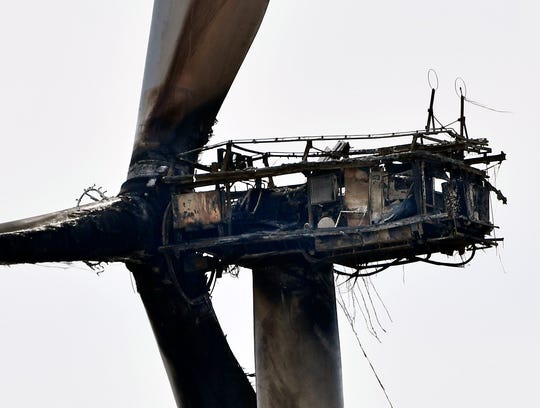
STOP THESE THINGS

The truth about the great wind power fraud - we're not here to debate the wind industry, we're here to destroy it.

Lindsay Mitchell

Celebrating humanity's flourishing through the spread of capitalism and the rule of law

Alt-M

Celebrating humanity's flourishing through the spread of capitalism and the rule of law