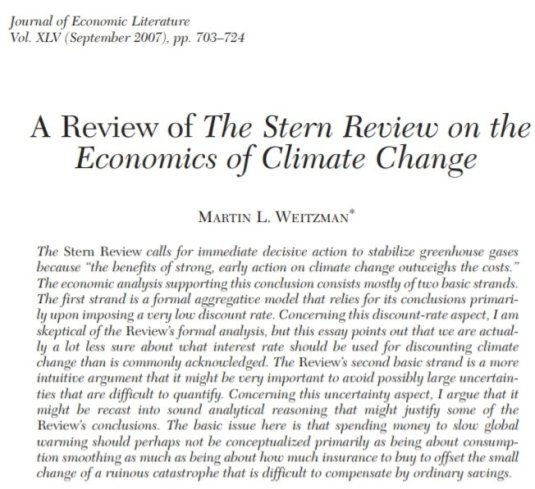
Weitzman on the fragile basis of the Stern review
15 Sep 2019 Leave a comment
in applied price theory, applied welfare economics, comparative institutional analysis, economic history, economics of bureaucracy, economics of natural disasters, energy economics, environmental economics, global warming, law and economics, Public Choice, public economics Tags: climate alarmists
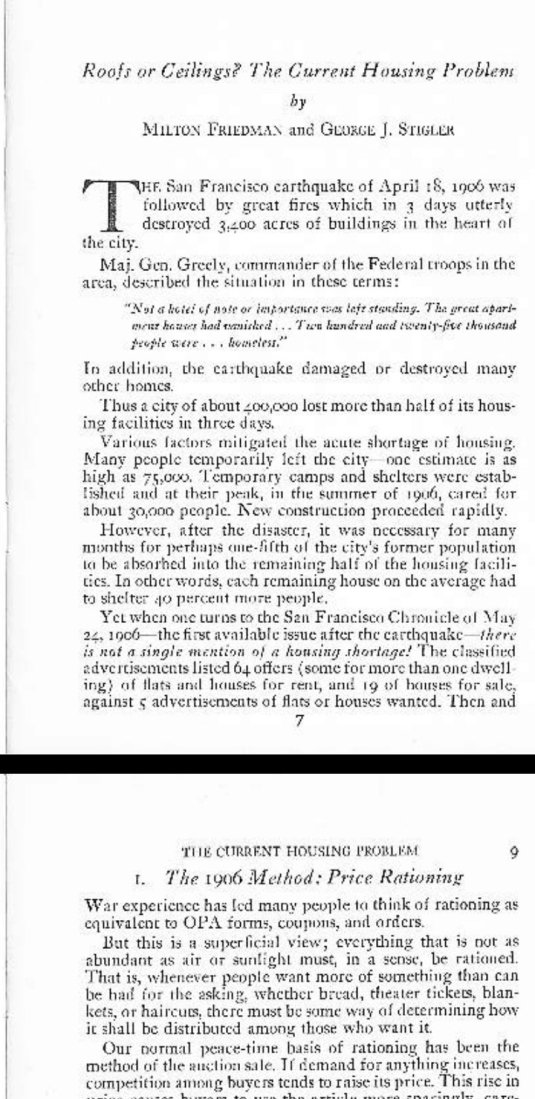
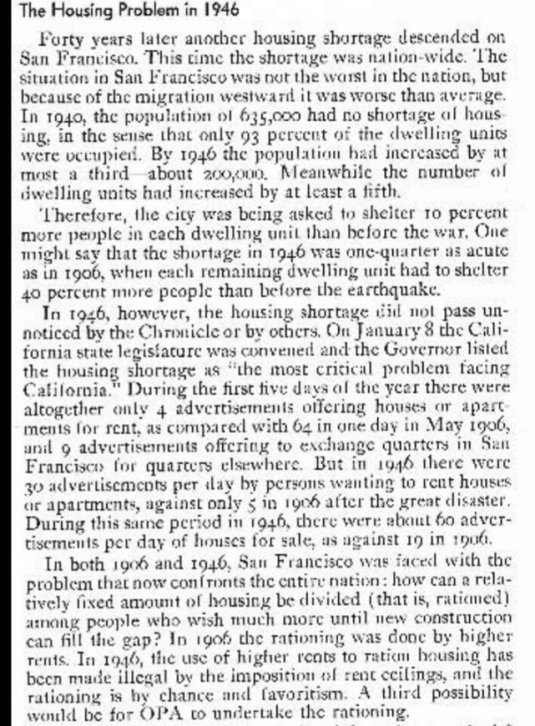
Roofs or Ceilings? The Current Housing Problem
15 Sep 2019 Leave a comment
in applied price theory, comparative institutional analysis, economics of regulation, George Stigler, income redistribution, law and economics, Milton Friedman, politics - USA, property rights, Public Choice, public economics, rentseeking Tags: offsetting behaviour, rent control, The fatal conceit, unintended consequences
“Green” Energy Has Increased Emissions Of The Most Powerful Greenhouse Gas
15 Sep 2019 Leave a comment
Global Warming Theory and the Tests It Fails
15 Sep 2019 Leave a comment


Many people commenting both for and against reducing emissions from burning fossil fuels assume it has been proven that rising GHGs including CO2 cause higher atmospheric temperatures. That premise has been tested and found wanting, as this post will describe. First below is a summary of Global Warming Theory as presented in the scientific literature. Then follows discussion of several unsuccessful attempts to find evidence of the hypothetical effects from GHGs in the relevant datasets. Concluding is the alternative theory of climate change deriving from solar and oceanic fluctuations.
Scientific Theory of Global Warming
The theory is well described in an article by Kristian (okulaer) prefacing his analysis of “AGW warming” fingerprints in the CERES satellite data. How the CERES EBAF Ed4 data disconfirms “AGW” in 3 different ways by okulaer November 11, 2018. Excerpts below with my bolds. Kristian provides more detailed discussion at his blog (title in red…
View original post 2,415 more words
Timothy Endicott: Don’t Panic
14 Sep 2019 Leave a comment

 The brilliant accident of our form of constitutionalism is not just that the executive came to be accountable to an assembly. It is that the assembly came to be responsible for the executive –for its membership, its policy, its operation, everything. Prorogation, in particular, concerns the operation of the proceedings of Parliament, and it is the representatives of the people (and the people themselves in an election) who ought to have, and to exercise, responsibility for holding the Prime Minister to account for misconduct in proroguing. If the judges were to accept the novel claims in Petition of Cherry and other/s [2019] CSIH __ and R (Miller) v Prime Minister No 2 [2019] EWHC 2381 (QB), and forbid the Prime Minister to stymie Parliament with a prorogation, they would disrupt that responsibility.
And the present political crisis is no time to be changing the constitution. It would be better…
View original post 1,767 more words
Alan Greene: Miller 2, Non-justiciability and the Danger of Legal Black Holes
14 Sep 2019 Leave a comment
 In R (Miller) and Others v The Prime Minister (hereinafter Miller No.2), the High Court of England and Wales found that the decision of the Prime Minister to advise the Queen to prorogue parliament was non-justiciable. In doing so, the judgment reveals the propensity of the judiciary to be much more protective of its own empire than that of the legislature. Ultimately, however, it is an approach that undermines both due to the creation of a legal black hole.
Legal holes and Miller No.2
Legal black holes are zones formally created by law within which, no recourse to the law can be made. A legal black hole is thus created when there is no legal control on the body exercising the power in question, leaving the decision-maker free to exercise their absolute discretion. At best, all the judiciary can ask is whether the legal black hole was validly created…
View original post 1,162 more words
Economic Lessons from Ancient Rome
14 Sep 2019 Leave a comment

I’ve been in Rome the past few days with my charming and beautiful daughter.
We visited the usual tourists spots, including the Coliseum and other remnants of Ancient Rome.
And I couldn’t help but wonder how such a powerful empire could collapse, driving people from relative prosperity to the economic misery of the Dark Ages.
I briefly addressed this topic in early 2016, but only to make a point about the (myriad) problems of modern Italy.
So let’s take a closer look at this issue and learn how excessive government helped bring down the Roman Empire.
The Foundation for Economic Education has an excerpt of Will Durant’s book, The Story of Civilization, Vol. 3: Caesar and Christ. And here are my excerpts from that article.
Diocletian, with his aides, faced the problems of economic decay. …he substituted a managed economy for the law of supply and…
View original post 1,592 more words
Alison Young: Prorogation, Politics and the Principle of Legality
14 Sep 2019 Leave a comment
 Constitutional lawyers often point to key cases as milestones in public law. Recently, the Supreme Court decision in Privacy International joined the ranks of leading public law cases, adding to the cases discussing ouster clauses and the extent to which courts can review decisions of inferior courts and tribunals in Anisminic and Cart. As Privacy International also demonstrated, milestone cases often take on a life of their own. The judges in Anisminic may be surprised at how the case was later interpreted. But this is how the common law works. Anisminic was interpreted in a series of later cases to demonstrate that all legal errors are jurisdictional errors. This then became part of the common law.
CCSU (or the GCHQ case) has long been regarded as a milestone case regarding judicial control over prerogative powers. In R (Miller) v Prime Minister, (Miller 2) the High Court…
View original post 2,090 more words
Felicity Huffman given prison sentence (a light one)
14 Sep 2019 Leave a comment
Like every member of the educated middle class, they’ll be now ratout to the authorities every friend they’ve ever had that they ever suspected of doing anything illegal to gain leniency in their own sentencing.

Actor Felicity Huffman, who pleaded guilty in the college-admissions scandal, was sentenced today to 14 days in jail beginning October 25, along with a $30,000 fine, 250 hours of community service and one year supervised release.
Although this was a compromise between the jail time her own lawyers wanted (none) and what the prosecution requested (a month in stir), the fine is actually $10,000 higher than the $20K asked for by both sides. The prosecution had also asked for a year’s probation, while her lawyers asked for 250 hours of community service. It looks as if the prosecution got more of what it wanted than did the defense. And I think the sentence is about right, for it shows that nobody, now matter how rich and famous, is above the law.
Federal court Judge Indira Talwani said she thinks Felicity Huffman’s punishment is “the right sentence here.”
She…
View original post 192 more words
CLIMATE CRISIS AUSTRALIA : ‘2019 Is Officially Perisher’s Longest Ski Season In Memory’
14 Sep 2019 Leave a comment


SNOWFALL will become “A very rare and exciting event…
Children just aren’t going to know what snow is.”
Dr David Viner – Senior scientist, climatic research unit (CRU)
“Good bye winter. Never again snow?” Spiegel (2000)
“Milder winter temperatures will decrease heavy snowstorms” IPCC (2001)
“End of Snow?” NYTimes (2014)
“Good bye winter. Never again snow?” Spiegel (2000)
•••
FROM a previous ‘conclusion’ about snow, comes a natural introduction…
LISTEN to what the ‘experts’ promised you back then. Because, if they got it wrong then, how can you trust what they are foretelling today or tomorrow? The answer is you cannot, because they have no idea what long-range conditions Mother Nature is going to serve up in such a “chaotic” and complex system as our climate.
AND, most importantly, does the CSIRO and “97% of all climate experts” still stand by their “end of snow” predictions? Or is…
View original post 2,238 more words
Piketty wants to abolish billionaires even though most all are self-made
14 Sep 2019 Leave a comment
in applied price theory, entrepreneurship, industrial organisation, Marxist economics, poverty and inequality, public economics Tags: creative destruction, envy, top 1%

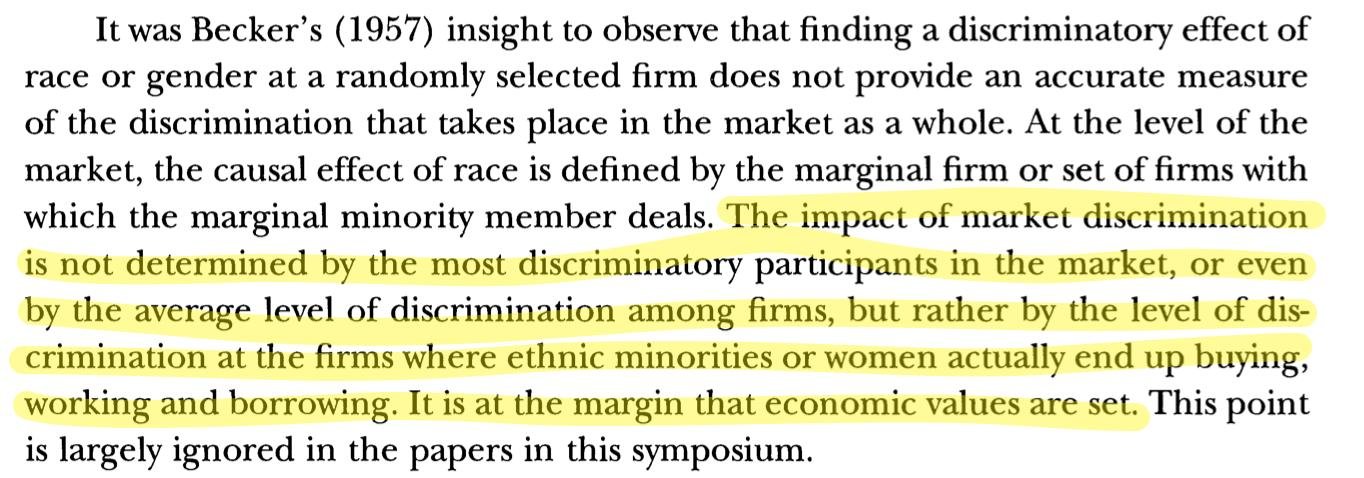
Preferences, Self Interest, Subtle Choices – Gary Becker
14 Sep 2019 Leave a comment
in applied price theory, comparative institutional analysis, economics of education, economics of information, Gary Becker
In defence of the Fixed-term Parliaments Act
13 Sep 2019 Leave a comment

The Fixed-term Parliaments Act has come in for a lot of criticism of late, but is it as badly designed and drafted as some commentators would have us believe? The House of Lords Constitution Committee recently commenced an inquiry into the effectiveness of the Act to seek answers to this question. Robert Hazell and Nabila Roukhamieh-McKinna explain the background to the inquiry, and some of the key issues being addressed.
Background
With perfect timing, the House of Lords Constitution Committee announced on 25 July, the day after Boris Johnson became Prime Minister, that they planned to conduct an inquiry into the Fixed-term Parliaments Act 2011 (FTPA). With even more exquisite timing, the Committee held their first evidence session on 4 September, the day that Johnson tried but failed to persuade the House of Commons to vote for an early general election under section 2(1) of the Act. Robert Hazell gave…
View original post 2,180 more words


Recent Comments