Labor Ethics | Political Philosophy with Jason Brennan
24 May 2019 Leave a comment
in applied price theory, applied welfare economics, comparative institutional analysis, development economics, economic history, economics of education, health and safety, history of economic thought, human capital, income redistribution, industrial organisation, international economics, labour economics, labour supply, law and economics, minimum wage, occupational choice, poverty and inequality, Public Choice, survivor principle, technological progress Tags: distributive justice
Asymmetric Information and Health Insurance
24 May 2019 Leave a comment
in applied price theory, applied welfare economics, comparative institutional analysis, economics of information, entrepreneurship, health economics Tags: adverse selection, health insurance, moral hazard
Seymour should consult some American judges to avoid being denounced as a bully who speaks in inflammatory code
23 May 2019 Leave a comment

In case you missed it, the Speaker of the House of Representatives, Trevor Mallard, reckons Act leader David Seymour is a bully.
The Speaker spoke on TV One’s Breakfast yesterday after publication of the review which found bullying is widespread in Parliament.
Interviewer John Campbell couldn’t resist dragging Seymour into considerations: he asked if it had been bullying or robustness, when Seymour described Green MP Golriz Ghahraman as “a real menace to freedom in this country.”
Mallard replied:
“In my opinion it did step over the line. Its not a breach of privilege because it didn’t happen in the House. It’s not a criminal offence but I think it showed poor judgement….”
Campbell: “Do you think it was bullying?”
Mallard: “Ah, yes…”
View original post 1,198 more words
Why Winston Peters should be paying heed to the outcome of Australia’s climate change election
23 May 2019 1 Comment

Winston Peters is too astute a politician to be oblivious to the outcome in what Opposition parties across the Tasman labelled the “climate change election”. Almost certainly, when he spoke in the debate of the Climate Change Response (Zero Carbon) Amendment Bill on Tuesday afternoon, he was thinking of how the Australian Federal Labor Party lost the “unloseable” election simply because it campaigned so hard on what voters assessed as too demanding, and too costly, measures to combat global warming.
How else to explain his rambling defence of NZ First’s support for the bill? It was, almost word by word, as if he could feel support for NZ First in the rural regions evaporating.
He started by asking why the House was having the debate. His answer: because the previous National government had signed up to the Paris Agreement.
He went on to say the bill fulfills…
View original post 588 more words
Jesus ‘n’ Mo ‘n’ “Islamophobia”
23 May 2019 Leave a comment

Well, here we go again: another Jesus and Mo strip that the Pakistani government will eventually deem “blasphemous,” forcing WordPress to block this post in Pakistan. So it goes:
Today’s Jesus and Mo strip, called “tax”, has this caption:
The story behind the problematic new definition of Islamophobia is here.
That story gives the definition of “Islamophobia” by the APPG (all parliamentary party group) as this:
The APPG’s definition, which was proposed in a report in November, says “Islamophobia is rooted in racism and is a type of racism that targets expressions of Muslimness or perceived Muslimness”.
Note the problem: conflating bigotry against Muslims with “target expression of Muslimness”, which could be Islamic doctrine itself. As the National Secular Society (NSS) reports, there are objections, expressed in an open letter to Home Secretary Sajid Javid:
The NSS’s chief executive Stephen Evans was one of a diverse range…
View original post 61 more words
Jason Brennan: Why Not Capitalism? (April 9, 2019)
23 May 2019 Leave a comment
in applied price theory, Austrian economics, comparative institutional analysis, constitutional political economy, development economics, economic history, economics of crime, economics of education, entrepreneurship, industrial organisation, labour economics, law and economics, property rights, Public Choice, Rawls and Nozick Tags: Jason Brennan
Gary Becker — The Economist’s Economist
22 May 2019 Leave a comment
in applied price theory, budget deficits, business cycles, comparative institutional analysis, constitutional political economy, economics of regulation, entrepreneurship, financial economics, fiscal policy, Gary Becker, global financial crisis (GFC), great recession, health economics, law and economics, macroeconomics, monetary economics, politics - USA, Public Choice, rentseeking
Looking beyond BBC Two’s portrayal of the Gaza Strip
22 May 2019 Leave a comment
Gaza has two borders

As recorded here last week, the recent BBC Two film ‘One Day in Gaza’ told viewers that: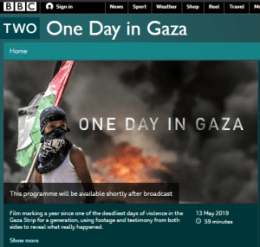
“…Israel tightened its blockade on the region citing security concerns and strictly controlling all movement of goods and people in and out of the Gaza Strip. Today the economy is in freefall. More than half of Gaza’s two million inhabitants live in poverty and rely on aid. And they’re prevented from leaving what is one of the most densely populated regions on earth.” [emphasis added]
That misleading claim is of course not novel to BBC content and neither is the related and not infrequently seen politicised framing of the Gaza Strip as an ‘open-air prison’ – see examples here, here and here.
At the Erez crossing into Israel:
“Every day an average of 1,000 Gazan residents enter Israel through Erez Crossing. The vast majority of these people are those…
View original post 287 more words
Freedom, Friedman, & Family Trajectory: David Friedman – Blue Frontiers Podcast E09
22 May 2019 Leave a comment
in applied price theory, comparative institutional analysis, constitutional political economy, David Friedman, defence economics, economics of crime, economics of regulation, history of economic thought, law and economics, libertarianism, property rights Tags: anarchocapitalism
Why do central bankers buy and collect art?
21 May 2019 Leave a comment
The reserve bank of Australia has a magnificent collection of Australian aboriginal art. It was purchased cheaply in the mid-20th century. there is very little accountability for how the bank was budgeted back then

Jens Weidmann of Bundesbank in this speech:
It gives me great pleasure to join you here today in opening this exhibition of artworks from the collections of the National Bank of Belgium and the Deutsche Bundesbank. I must say, this is an impressive and exceptionally pleasing space for an exhibition of this kind. We jumped at the chance of sending exhibits from our collection on a journey to Brussels, to our friends at the National Bank of Belgium in the capital city of Europe. It’s a premiere for us – never before have we shown our works outside Germany.
Both the National Bank of Belgium and the Bundesbank have been avid collectors of art for many decades now. Over the years, we have each gathered quite sizeable collections which shed some light on how art has evolved in Belgium and Germany. But why do central banks collect art in…
View original post 282 more words
Open letter to associate professor sharpens the focus on Treaty of Waitangi and its influence on governance
21 May 2019 Leave a comment
maori sought British colonisation to bring an end to the risk of another musket war and because the alternatives of French colonisation was worse

A champion of the growing practice of appointing iwi representatives to sit with elected representatives on local authority decision-making bodies didn’t have a great deal to say, when questions were emailed to her.
Much of the little she did say – published on Point of Order last month – has been challenged by Bruce Moon in an open letter posted on Breaking Views.
The thrust and parry were triggered by governance changes on the Hastings District Council, which last month voted to appoint Māori representatives with speaking and voting rights to its four standing committees.
The council press statement which announced the decision noted 25 per cent of the local population is Māori and five of the council’s 14 elected members (33 per cent of the total) have identified as being of Maori descent.
The council voted in favour of appointing more Maori to join the elected ones “to be…
View original post 920 more words
WordPress once again helps the Pakistani government block my “blasphemous” Jesus and Mo posts
21 May 2019 Leave a comment
I think this must be the third time that WordPress has cooperated with the Pakistani government in blocking “blasphemous” content on my site. The blasphemy, as you’ll see from the three links singled out, involves reproducing Jesus and Mo cartoons, which have apparently hurt the feelings of Muslims. Indeed, I seem to have committed a crime.
Here’s the letter from WordPress, with the Pakistani complaint below:
Hello,
A Pakistan authority has demanded that we disable the following content on your WordPress.com site:
https://whyevolutionistrue.files.wordpress.com/2012/03/2012-03-14.png?w=1000
https://whyevolutionistrue.files.wordpress.com/2012/10/2012-10-31.png
https://whyevolutionistrue.files.wordpress.com/2015/02/2015-02-25.png?w=522&h=522Unfortunately, we must comply to keep WordPress.com accessible for everyone in the region. As a result, we have disabled this content only for Internet visitors originating from Pakistan. They will instead see a message explaining why the content was blocked.
Visitors from outside of Pakistan are not affected.
You and your readers may be interested in these suggestions for bypassing Internet restrictions.
For your…
View original post 201 more words
Sam Peltzman Regulation and the wealth of nations
21 May 2019 Leave a comment
in applied price theory, development economics, economic growth, economic history, economics of regulation, environmental economics, health economics, industrial organisation, labour economics, law and economics, Public Choice, Sam Peltzman, transport economics


Recent Comments