The Coase Theorem
04 Mar 2019 Leave a comment
in applied price theory, applied welfare economics, comparative institutional analysis, economics of regulation, environmental economics, history of economic thought, industrial organisation, law and economics, property rights, Ronald Coase Tags: Coase theorem
Unresolved biology question of the day: Why do cats sprint out of the litter box?
04 Mar 2019 Leave a comment

Not all cats do this, but many of them do. After defecating, a cat will exit the litter box on the gallop, sometimes running like crazy around the house. (They don’t seem to do it after urinating.) Some of mine did it, too, and I’ve seen this behavior in many other cats. But why? There are many reasons given and many sites purporting to answer this vexing question (see here and here, for instance), but most of them don’t satisfy me. Perhaps there is a panoply of explanations, each of which might apply for some cats or some post-poop dashes, but I think the phenomenon is so general that there has to be an overarching explanation.
To show you how it looks, I wanted to put a YouTube video of the phenomenon here, and I was certain there would be one (after all, it’s the Internet and cats). But…
View original post 129 more words
A Critical Framework For Climate Change
03 Mar 2019 Leave a comment

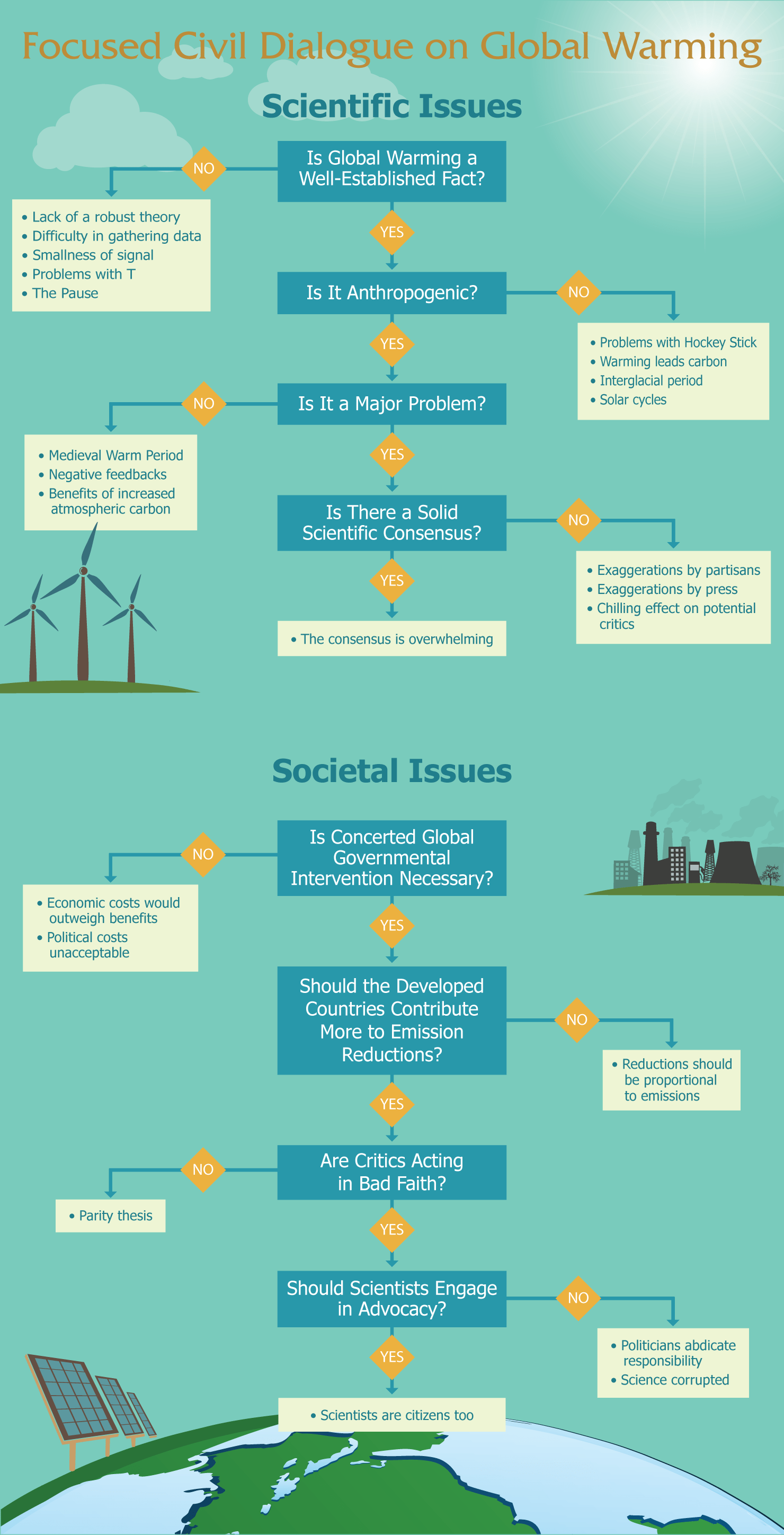
This dialogue framework was proposed for a debate between William Happer and David Karoly sponsored by The Best Schools. As you can see it reads like an high hurdle course for alarmists/activists. There are significant objections at every leap in connecting the beliefs.
Happer’s Statement: CO₂ will be a major benefit to the Earth
Earth does better with more CO2. CO2 levels are increasing
Atmospheric transmission of radiation: Tyndall correctly recognized in 1861 that the most important greenhouse gas of the Earth’s atmosphere is water vapor. CO2 was a modest supporting actor, then as now.
Radiative cooling of the Earth: Clouds are one of the most potent factors controlling Earth’ s surface temperature.
The Schwarzschild equation: The observed intensity I of upwelling radiation comes from the radiation emitted by the surface and by greenhouse gases in the atmosphere above the surface. The rate of change of the intensity with altitude…
View original post 1,553 more words
Gary Becker – “The Challenge of Immigration: A Radical Solution”
03 Mar 2019 Leave a comment
in applied price theory, economics of education, Gary Becker, human capital, labour economics, labour supply, politics - USA, Public Choice Tags: economics of immigration
Ronald Coase speaking about George Stigler’s Coase Theorem
03 Mar 2019 Leave a comment
in applied price theory, comparative institutional analysis, economics of regulation, environmental economics, history of economic thought, law and economics, public economics, Ronald Coase, Ronald Coase Tags: Coase theorem
Economically Speaking: Government Regulation (B1208) – George Stigler
03 Mar 2019 Leave a comment
in applied price theory, comparative institutional analysis, economics of regulation, George Stigler
The Folly of Rent Control
03 Mar 2019 Leave a comment

People sometimes ask me how I’ve managed to write a column every single day since November 2009.
Sadly, the answer has a lot to do with politicians having a vote-buying and power-grabbing incentive to produce a never-ending supply of bad policies.
Consider what just happened in Oregon.
Oregon Gov. Kate Brown signed into law a first-in-the-nation rent control bill Thursday…Senate Bill 608′s rent control and
eviction protections go into effect immediately. …The law caps annual rent increases to 7 percent plus inflation throughout the state, which amounts to a limit of just over 10 percent this year. …The bill passed quickly through the House and Senate amid a Democratic supermajority.
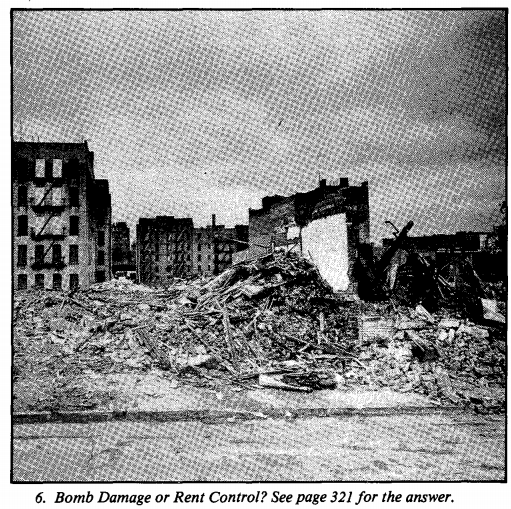
This is spectacularly bad policy.
- My first reaction is that such laws should be unconstitutional since politicians are violating a provision of the Bill of Rights
 by taking part of the value of private property without compensation.
 - My second…
View original post 1,649 more words
MONEYBALL – breaking biases – FREQUENCY BASED PROBABILITY / STATISTICS – MATHEMATICS in the Movies
03 Mar 2019 Leave a comment
WIND TURBINES Are Neither Clean Nor Green And They Provide Zero Global Energy
02 Mar 2019 Leave a comment


SCIENCE WRITER and best-selling author Matt Ridley discusses Wind Power in a must read piece out of the Speccie…
The Global Wind Energy Council recently released its latest report, excitedly boasting that ‘the proliferation of wind energy into the global power market continues at a furious pace, after it was revealed that more than 54 gigawatts of clean renewable wind power was installed across the global market last year’.
You may have got the impression from announcements like that, and from the obligatory pictures of wind turbines in any BBC story or airport advert about energy, that wind power is making a big contribution to world energy today. You would be wrong. Its contribution is still, after decades — nay centuries — of development, trivial to the point of irrelevance.
Here’s a quiz; no conferring. To the nearest whole number, what percentage of…
View original post 1,385 more words
Ban the box, no questions on criminal records, increased statistical discrimination against young black male job applicants
01 Mar 2019 Leave a comment
in applied price theory, discrimination, economics of crime, economics of information, labour economics, labour supply, law and economics, politics - USA Tags: asymmetric information, racial discrimination, statistical discrimination

The Oxford comma wins in court
01 Mar 2019 Leave a comment
The Oxford comma is a comma before the final item in a list. For example, it’s the one after “toast” in this sentence: “We had eggs, toast, and oatmeal for breakfast.” If you left out the Oxford comma, it would read “We had eggs, toast and oatmeal for breakfast.”
It’s also called the “serial comma,” and there’s a big article about it on Wikipedia. Why? Because there’s an ongoing squabble among writers and grammarians about whether one should use it. A summary of the issues at hand is in the Wikipedia article, to wit:
Common arguments for consistent use of the serial comma:
- Use of the comma is consistent with conventional practice.
- It matches the spoken cadence of sentences better.
- It can resolve ambiguity (see examples below).
- Its use is consistent with other means of separating items in a list (for example, when semicolons are used to separate items, a semicolon is consistently included…
View original post 713 more words
Milton Friedman Redistribution of Wealth and the Death Tax
01 Mar 2019 Leave a comment
in applied price theory, Milton Friedman, Public Choice, public economics
Europe’s Fossil-Fuelled Future: Winter Wind & Solar Collapse Means Coal & Gas Here to Stay
28 Feb 2019 Leave a comment

 Just don’t expect power as and when you need it.
The zealots that pump up the future for wind and solar power are programed to ignore the present and bound to ignore the past.
For a few centuries in human history, windmills were the only game in town.
Then, in the 18th Century, the captains of British scientific and engineering endeavour harnessed thermal power, the Industrial Revolution followed, and the rest, as they say, is history.
Except that a deluded band of halfwits are determined to take us back to an age the developed world was happy to see the back of. One entirely dependent upon the weather.
Among their more fanciful claims, wind and sun worshippers assert that nature’s wonder fuels are already making an outstanding contribution to satisfying the world’s energy demands; and go further by gushing that a world run entirely on sunshine and breezes is not…
View original post 340 more words
Gangs in Control of American Prisons: “The Social Order of the Underworld”
28 Feb 2019 Leave a comment
in applied price theory, comparative institutional analysis, constitutional political economy, economics of bureaucracy, economics of crime, law and economics, property rights, Public Choice Tags: crime and punishment, law and order
The BBC ‘expert’ contributor and the UK Hizballah designation
27 Feb 2019 Leave a comment

Here are some tweets from a person obviously not pleased by the British Home Secretary’s decision to classify Hizballah as a terrorist group.



 If the name of the writer of those Tweets sounds familiar, that may be because Sharmine Narwani – formerly of Oxford University’s St Anthony’s College – has appeared in BBC content in the past and some of her contributions are still available online.
As was noted here in 2013:
“In addition to some aggressive anti-Americanism, Narwani peddles anti-Israel, pro Assad, pro-Iranian regime and pro-Hizballah rhetoric. As well as having blogged at the Huffington Post – until her pro-Assad stance apparently became too much – Narwani has written for the Guardian and the pro-Hizballah/pro-Assad Lebanese outlet Al Akhbar English.
She also appears to have something of an affinity with antisemitic conspiracy theorists, writing for the ‘Veterans Today‘ website – which has links, via its editor, to Iran’s Press TV – and its sister site ‘Veterans News Now’ as well as – according to her Twitter account –…
View original post 44 more words


Recent Comments