Jokes that teach economics – David Friedman
06 Mar 2019 Leave a comment
in applied price theory, David Friedman, economics of crime, law and economics
Victoria’s Victims: Wind & Solar Obsession Sees 60,000 Families Cut From the Grid After (Another) 16% Power Price Hike
06 Mar 2019 Leave a comment


An obsession with chaotically intermittent wind and solar has sent Victorian power prices through the roof: a 16% increase in 2018 follows a 12% increase the year before that.
Given its Labor government’s push for a 50% RET, Victorians will soon catch up with their neighbours in Australia’s wind and solar capital, South Australia – the place that suffers the world’s highest power prices.
The relationship between heavily subsidised and inherently unreliable wind and solar and spiralling power prices is pretty clear: see above the graphic from Dr Michael Crawford.
Making it evident that ‘green’ energy virtue signalling is a rich man’s sport, RE zealots still trumpet the purportedly ‘inevitable’ transition to an all wind and sun powered future: to hell with the cost, and to hell with those who can no longer afford electricity.
With power prices rocketing out of control, no end in sight, there are already
View original post 1,147 more words
On Revolutions
06 Mar 2019 Leave a comment

A paper that I wrote with Alexander Salter entitled, “A Theory of Why the Ruthless Revolt” is now forthcoming in Economics & Politics. Here is the abstract:
We examine whether ruthless members of society are more likely to revolt against an existing government. The decision of whether to participate can be analyzed in the same way as the decision to exercise an option. We consider this decision when there are two groups in society: the ruthless and average citizens. We assume that the ruthless differ from the average citizens because they invest in fighting technology and therefore face a lower cost of participation. The participation decision then captures two important (and conflicting) incentives. The first is that, since participation is costly, there is value in waiting to participate. The second is that there is value in being the first-mover and capturing a greater share of the “spoils of war” if…
View original post 84 more words
Towards an Alchian-type Approach to Political Economy
06 Mar 2019 Leave a comment
In my previous post, I discussed what I called the sleight of hand of an Olson-approach to political economy. The basic idea of that post was that Olson’s theory of concentrated benefits and dispersed costs is often used to malign policies deemed to be inefficient. The sleight of hand aspect is as follows. First, the economist deems a particular policy to be inefficient using a standard theoretical model. Second, the economist hypothesizes that the reason we have such an inefficient policy is due to special interests getting what they want because the costs are dispersed. Third, the economist examines either in historical detail or through regression analysis the role of special interests in getting the policy implemented. Fourth, if special interests are found to have had an effect on the policy being put into place, the economist concludes that the reason we have this inefficient policy is due to special…
View original post 1,144 more words

“The 30 billion dollar whim”
06 Mar 2019 Leave a comment

A week or two back I foreshadowed a forthcoming paper by my former colleague Ian Harrison reviewing the Reserve Bank’s proposals under which the banks would have to greatly increase the volume of capital simply to carry on doing the business they are doing now.
Like me, Ian spent decades at the Reserve Bank. But much of his time was spent specifically in the area of banking regulation and bank supervision, including leading much of the modelling work done a few years ago as part of the Basle III process, which resulted in something like the current bank capital requirements. He knows the detail in this area, has consulted on this sort of stuff since leaving the Bank, and has invested a great deal of time and effort over the last couple of months in getting to grips with the Bank’s proposals, reviewing the various papers they’ve published, and…
View original post 1,228 more words
2019 David Friedman Talk How Libertarians can be successful in the current political climate
05 Mar 2019 Leave a comment
in applied price theory, David Friedman, economics of crime, law and economics, politics - USA, property rights, Public Choice
The economics of @AOC @SenSanders @jeremycorbyn explained
05 Mar 2019 Leave a comment
in applied price theory, entrepreneurship, income redistribution, industrial organisation, labour economics, labour supply, law and economics, Marxist economics, Public Choice, rentseeking Tags: distributive justice, envy

Cost-Effective Approaches to Save the Environment, with Bjorn Lomborg
05 Mar 2019 Leave a comment
in applied price theory, applied welfare economics, development economics, energy economics, environmental economics, global warming, politics - USA Tags: climate alarmism
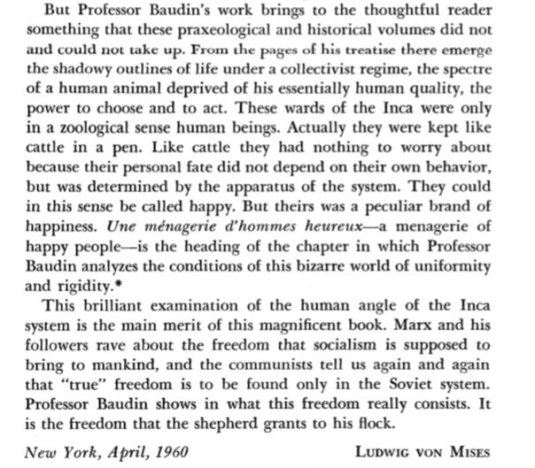
Mises on the socialism of the Incas
05 Mar 2019 Leave a comment
in applied price theory, Austrian economics, comparative institutional analysis, development economics, economic history, industrial organisation, labour economics, law and economics, Ludwig von Mises, Marxist economics, property rights
“My Hometown Fanatics”: A film about Muslims and Luton
05 Mar 2019 Leave a comment

I became aware of this video from a tw**t by Richard Dawkins sent me by reader Merilee. Clearly Richard thought it was a very important film, so I watched it.

At only 28, Stacey Dooley has a substantive record of investigative journalism, and in this film wanted to profile two groups that she considered “extremists”: the radical Muslims of Luton and the members of the right wing “English Defense League” (EDL) who protest Islamists’ attempt to impose their values on British society. The film is not new; it was posted on YouTube in May, 2013 and was broadcast by the BBC a year before that. It’s thus about 3½ years old, though I doubt it’s out of date.
Here are the YouTube notes.
Stacey Dooley investigates what is going on in her hometown of Luton and finds out why it is known as the extremist capital of Britain.
Stacey has spent her whole life in…
View original post 355 more words
Ronald Coase’s Theory of the Firm and the Family
05 Mar 2019 Leave a comment
in applied price theory, comparative institutional analysis, economics of information, economics of love and marriage, law and economics, property rights, Ronald Coase, theory of the firm Tags: marriage and divorce
David Friedman – Trying to stop Global Warming may not be the solution
04 Mar 2019 Leave a comment
in applied price theory, applied welfare economics, David Friedman, energy economics, environmental economics, global warming
Banking crises are not bolts from the blue
04 Mar 2019 Leave a comment
The Herald’s economics columnist Brian Fallow devoted his column last Friday to the Reserve Bank’s proposal to massively increase the proportion of their balance sheets banks would have to fund by equity. He ended on what seemed to be a moderately sceptical note.
So we are left trying to weigh a highly debatable but significant cost against an incalculable benefit.
As I’ve noted here, the sort of cost-benefit calculus we can glean from various Reserve Bank publications just doesn’t stack up at all. In his speech the other day (which a couple of readers have suggested I was too generous towards), the Deputy Governor indicated that the level of GDP might be up to 0.3 per cent lower (permanently) as a result of these change. Call it an annual insurance premium of 0.25 per cent of GDP (and bear in mind that the estimates Bascand is using don’t…
View original post 2,469 more words


Recent Comments