The Alien Act of 1705

dreid1746's avatarCulloden Battlefield

The start of the 1700’s saw many acts of parliament coming into place, one of the last ones before the Act of Union was the Alien Act of 1705. This act sadly has nothing to do with strange green men from another planet but it is an important act in the history of Scotland and the UK.

The Alien Act was passed by the parliament of England and basically blocked Scottish imports into England and treated any Scottish nationals in England as foreign nationals, or aliens. The Act came about in response to the Scottish parliament passing the Act of Security in 1704.

When the English parliament named the House of Hanover as the successor to Queen Anne they did so without consulting with the Scottish parliament. Since the time of James VII & II the ruler of Scotland and England had been the same but they ruled two separate thrones and two…

View original post 286 more words

JAPAN ACKNOWLEDGES THE GLOBAL WARMING ‘PAUSE’ : Sanctions 35 New Coal Power Plants Added To The 100 Currently Operational

Jamie Spry's avatarClimatism

sushi-sake-coal-1200x630 Sushi, Sake, and Coal: Japan’s Peculiar Response to the Climate Conundrum » BarbWire


“The fact is that we can’t account for the lack of warming
at the moment and it is a travesty that we can’t.”

– Kevin Trenberth, National Center For Atmospheric Research, USA (2009)

“Observations do not show rising temperatures throughout the
tropical troposphere … This is just downright dangerous.”
– Peter Thorne, Hadley Centre, Met Office, UK (2007)

***

THE Japanese government has identified and acknowledged the current ~20 year-long global warming “pause” or “hiatus”. The (inconvenient) atmospheric phenomenon that has been the subject of much research and debate in peer-reviewed scientific journals for many years now.

BASED on data from the Japan Meteorological Agency (JMA), the government has justified the expansion of its global-leading, ultra-supercritical HELE coal-fired power plant technology both domestically and abroad.

PRIME MINISTER Abe has sanctioned the addition of 35 new coal power…

View original post 1,794 more words

The Sopranos – Tony Talks To Christopher Moltisanti And Brendan Filone

James I and the duke of Buckingham: love, power and betrayal

Paul Hunneyball's avatarThe History of Parliament

Today is the first in a trio of blogs to celebrate LGBT+ History Month. Paul M. Hunneyball, Associate Editor of the House of Lords 1604-1629 project, kicks off with a sequel to his blog from last LGBTHM, ‘James I and his favourites: sex and power at the Jacobean Court’. In this new blog he explores the evolution of the duke of Buckingham’s position at court in the 1610s and 1620s and explores the intricacies of his relationship with James I…

George
Villiers, 1st duke of Buckingham, is probably best known today for his
decade-long liaison with James I. However, in historical terms he is equally
notable for being the principal court favourite of two successive monarchs,
James and his son Charles I, an unparalleled feat in Europe during that era.
When one considers the very different nature of his relationships with the two
kings, Buckingham’s achievement seems…

View original post 1,104 more words

Capital gains taxes: some thoughts

Michael Reddell's avatarcroaking cassandra

It is a day for repeating some material from old posts. I haven’t yet read any more than a few news reports on the Tax Working Group’s report.  But I have debated capital gains taxes for years.   This was a post on the topic from 2017.  Here was the gist of my comments.   My bottom-line is that capital gains taxes aren’t the worst thing in the world, but mostly are a distraction from what should be the real issues.

Anyway, here are some of the points I make:

  • in a well-functioning efficient market, there are typically no real (ie inflation adjusted) expected capital gains.    An individual participant might expect an asset price to rise for some reason, but that participant will be balanced by others expecting it to fall.  If it were not so then, typically, the price would already have adjusted.  In well-functioning markets, there aren’t…

View original post 1,749 more words

Michael-James Clifton: Parliament’s Role in Withdrawing from the EEA, and Difficulties in Ratifying the EEA EFTA Separation Agreement

Constitutional Law Group's avatarUK Constitutional Law Association

Introduction

The importance and role of the European Economic Area (EEA) Agreement has often been overlooked. Yet, as the UK exits the European Union, the question of the UK’s desired relationship with not only the EU27 but also the EEA30 has never been more live. In a previous blog post I argued that the UK has not notified its intention to leave the EEA as required. This post examines the domestic law implications of this conclusion.

On 20th December 2018, the day after Parliament rose, the Government published an ‘EEA EFTA Separation Agreement’. This was accompanied by an ‘EEA EFTA Explainer’. To date, the EEA EFTA Separation Agreement has been ‘agreed,’ but not ‘signed’. Subsequently, on 8th February 2019, the Government published another draft agreement, the ‘EEA EFTA No Deal Citizens’ Rights Agreement’.

Turning to the intended ratification of the EEA EFTA…

View original post 1,712 more words

Renewables Reality Check: Giant Batteries No Solution to Wind Power’s Chaotic Delivery

stopthesethings's avatarSTOP THESE THINGS

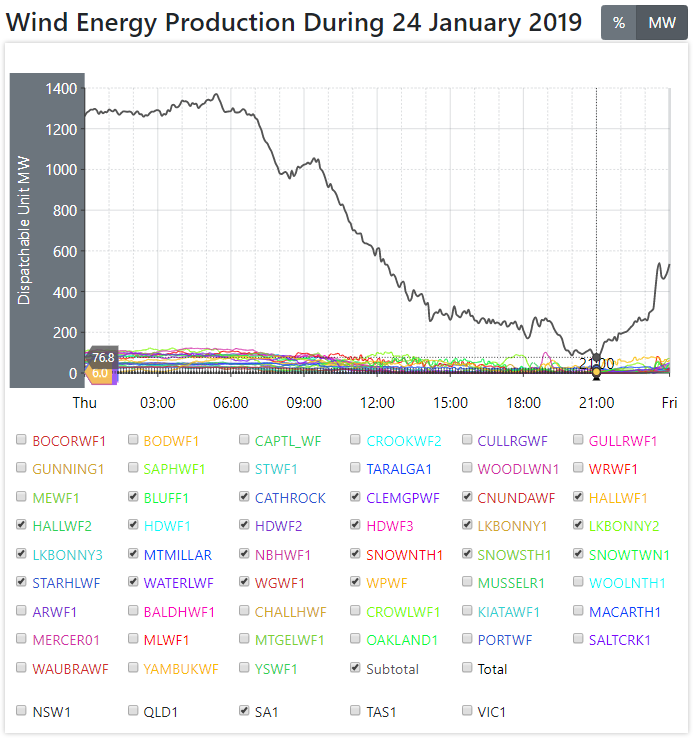
South Australia is Australia’s wind and solar capital: resulting in an unstable grid and the world’s highest power prices.

One wheeze in purported answer to the debacle above was Elon Musk’s giant 100 MW lithium-ion battery. It cost taxpayers a cool $150,000,000 and delivers occasional spurts of power to the grid, whenever the sun sets and/or calm weather sets in.

Its principal purpose is to allow the nearby 200 MW Hallett Power Station a few minutes lead time to fire up its 12 unit, open cycle gas turbine plant, to thereby avoid a total grid collapse when wind power output collapses – as it did on 24 January (see above), when the state was hit by heatwave and 29,000 households were left powerless.

The dual fuel plant can run on gas, but, more often than not, it’s running on diesel and spewing tonnes of filthy, noxious, particulate matter into…

View original post 546 more words

Do people want a new centrist party?

Rick's avatarFlip Chart Fairy Tales

Seven Labour MPs have resigned the party whip. It’s not clear what they plan to do next but many commentators assume that the formation of a new centrist party will be the eventual outcome

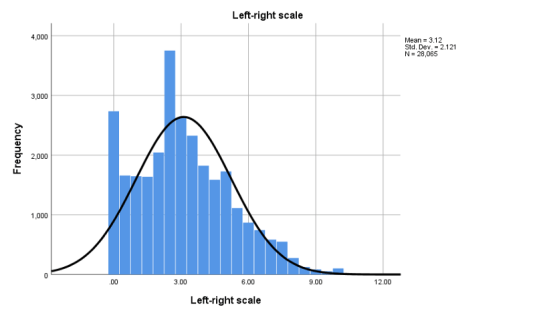
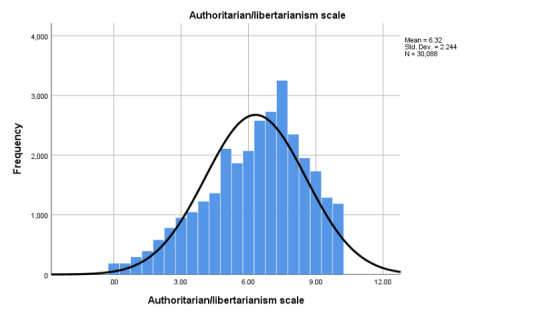
Is there a market for a new centrist party though? Nick Barlow thinks not. He wrote a piece on ‘the centrist fallacy’ last year in which he looked at data from the British Election Survey. He found that most people think their own political views are in the centre ground even when they are not. So lots of people might say they would support a centrist party but wouldn’t actually like its policies when it came to an election. He also found that, based on the questions in the BES, the electorate skews to the left on economic issues and to the right on social issues.

The FT’s John Burn-Murdoch plotted the same data on a…

View original post 1,340 more words

Image

book spotlight: the coddling of the american mind by lukianoff and haidt

fabiorojas's avatarorgtheory.net

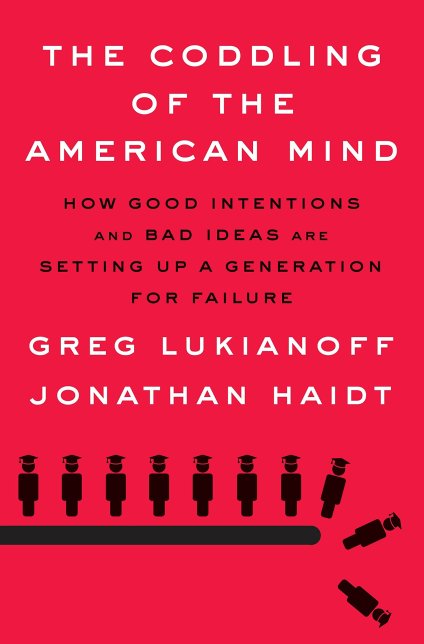
coddlingDisclaimer: I’m a member of Heterodox Academy and I spoke with Jonathan about the book while it was being written. I am totally biased but don’t blow out of proportion!

The Coddling of the American Mindis a book about two things. The first might be called the “rise of sensitive people.” That is, people now seem to be a bit on the fragile side. Say something awkward on Twitter and you might have thousands of people mocking you. Or say something about race or gender in a class, and people will get on your case. In my business, the Trustees of your university might go on a rant if you are on the wrong side of the discussion on the Israeli/Palestinian conflict.

Surprisingly, the book is also a self-help book. This is because Haidt and Lukianoff ascribe the rise of sensitive people to the counter-productive ways of thinking…

View original post 420 more words

Originalism and defamation

Ethan Blevins's avatarNotes On Liberty

Today, Justice Clarence Thomas issued a solo opinion urging the Supreme Court to reconsider a hallmark case in First Amendment law–New York Times v. Sullivan. That case held that defamation claims brought by public figures had to meet a heightened standard of proof by showing “actual malice” by the alleged defamer. The basic premise is that muscular use of private defamation suits discourages criticism of public figures and thus clashes with First Amendment interests.

Justice Thomas’s primary complaint with this standard is that judges created it with a wave of the wand rather than a serious analysis of the original understanding of the First Amendment. He points out that the ratifiers of the Constitution gave no indication that they intended to abrogate the long-standing common law of libel that had existed in the colonies and England for centuries. For those who believe that the Constitution’s meaning should reflect…

View original post 18 more words

California’s continued marijuana black market

Labour’s Decarbonisation Plan

KiwiBuild: the Reserve Bank and crowding out

Michael Reddell's avatarcroaking cassandra

Last week, in association with the Monetary Policy Statement, the Reserve Bank published a short separate paper outlining how it was treating KiwiBuild for forecasting and monetary policy purposes.   The bottom line was

The Bank has assumed that half to three quarters of what KiwiBuild contributes to residential investment will be offset by crowding out of other private investment over the forecast horizon.

It isn’t that different an assumption than they have been making since the current government first took office.   This was what they wrote in the November 2017 Monetary Policy Statement

The Government has announced an intention to build 100,000 houses in the next decade…..our working assumption is that around half of the proposed increase will be offset by a reduction in private sector activity.

But, of course, then they refused to show us their workings or give us any supporting analysis.

I made brief…

View original post 1,826 more words

Romer v. Lucas

David Glasner's avatarUneasy Money

A couple of months ago, Paul Romer created a stir by publishing a paper in the American Economic Review “Mathiness in the Theory of Economic Growth,” an attack on two papers, one by McGrattan and Prescott and the other by Lucas and Moll on aspects of growth theory. He accused the authors of those papers of using mathematical modeling as a cover behind which to hide assumptions guaranteeing results by which the authors could promote their research agendas. In subsequent blog posts, Romer has sharpened his attack, focusing it more directly on Lucas, whom he accuses of a non-scientific attachment to ideological predispositions that have led him to violate what he calls Feynman integrity, a concept eloquently described by Feynman himself in a 1974 commencement address at Caltech.

It’s a kind of scientific integrity, a principle of scientific thought that corresponds to a kind of utter…

View original post 3,596 more words

Top 5 Gun Myths That Hollywood Taught Us

Previous Older Entries Next Newer Entries

Coordination Problem

Celebrating humanity's flourishing through the spread of capitalism and the rule of law

Libertarian Land

Celebrating humanity's flourishing through the spread of capitalism and the rule of law

Arin’s Substack

Celebrating humanity's flourishing through the spread of capitalism and the rule of law

David Andolfatto

Celebrating humanity's flourishing through the spread of capitalism and the rule of law

Monetary Non-Neutrality

Celebrating humanity's flourishing through the spread of capitalism and the rule of law

Reason Magazine

Celebrating humanity's flourishing through the spread of capitalism and the rule of law

Coyote Blog

Celebrating humanity's flourishing through the spread of capitalism and the rule of law

Thoughts from the North

Celebrating humanity's flourishing through the spread of capitalism and the rule of law

Fardels Bear

A History of the Alt-Right

Vincent Geloso

Econ Prof at George Mason University, Economic Historian, Québécois

Bassett, Brash & Hide

Celebrating humanity's flourishing through the spread of capitalism and the rule of law

Truth on the Market

Scholarly commentary on law, economics, and more

The Undercover Historian

Beatrice Cherrier's blog

Matua Kahurangi

Celebrating humanity's flourishing through the spread of capitalism and the rule of law

Temple of Sociology

Celebrating humanity's flourishing through the spread of capitalism and the rule of law

Velvet Glove, Iron Fist

Celebrating humanity's flourishing through the spread of capitalism and the rule of law

Why Evolution Is True

Why Evolution is True is a blog written by Jerry Coyne, centered on evolution and biology but also dealing with diverse topics like politics, culture, and cats.

NoTricksZone

Celebrating humanity's flourishing through the spread of capitalism and the rule of law

Homepaddock

A rural perspective with a blue tint by Ele Ludemann

Kiwiblog

DPF's Kiwiblog - Fomenting Happy Mischief since 2003

The Dangerous Economist

Celebrating humanity's flourishing through the spread of capitalism and the rule of law

Watts Up With That?

The world's most viewed site on global warming and climate change

The Logical Place

Tim Harding's writings on rationality, informal logic and skepticism

Doc's Books

A window into Doc Freiberger's library

The Risk-Monger

Let's examine hard decisions!

Uneasy Money

Commentary on monetary policy in the spirit of R. G. Hawtrey

Barrie Saunders

Thoughts on public policy and the media

Liberty Scott

Celebrating humanity's flourishing through the spread of capitalism and the rule of law

Point of Order

Politics and the economy

James Bowden's Blog

A blog (primarily) on Canadian and Commonwealth political history and institutions

Science Matters

Reading between the lines, and underneath the hype.

Peter Winsley

Economics, and such stuff as dreams are made on

A Venerable Puzzle

"The British constitution has always been puzzling, and always will be." --Queen Elizabeth II

The Antiplanner

Celebrating humanity's flourishing through the spread of capitalism and the rule of law

Bet On It

Celebrating humanity's flourishing through the spread of capitalism and the rule of law

History of Sorts

WORLD WAR II, MUSIC, HISTORY, HOLOCAUST

Roger Pielke Jr.

Undisciplined scholar, recovering academic

Offsetting Behaviour

Celebrating humanity's flourishing through the spread of capitalism and the rule of law

JONATHAN TURLEY

Res ipsa loquitur - The thing itself speaks

Conversable Economist

In Hume’s spirit, I will attempt to serve as an ambassador from my world of economics, and help in “finding topics of conversation fit for the entertainment of rational creatures.”

The Victorian Commons

Researching the House of Commons, 1832-1868

The History of Parliament

Articles and research from the History of Parliament Trust

Books & Boots

Reflections on books and art

Legal History Miscellany

Posts on the History of Law, Crime, and Justice

Sex, Drugs and Economics

Celebrating humanity's flourishing through the spread of capitalism and the rule of law

European Royal History

Exploring the Monarchs of Europe